

2021-2023 Toyota Venza ABS Module: Recalls, Programming, and Replacement Guide
This guide covers the critical safety recalls and mandatory programming requirements for the second-generation Toyota Venza's Anti-lock Brake System (ABS) control module.
- A safety recall (NHTSA ID 22V-888) exists for the Vehicle Stability Control software on 2021-2022 models; check your VIN before any repairs.
- Any replacement ABS module, new or used, MUST be professionally programmed and calibrated to your vehicle's VIN to function.
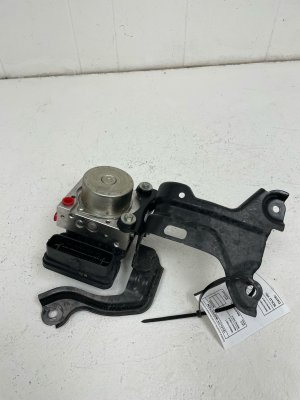
- The ABS module, pump, and actuator are sold as a single integrated unit known as the Brake Actuator Assembly.
- Driving with a faulty module disables anti-lock brakes, traction control, and stability control, compromising vehicle safety.
Known Issues, TSBs, and Recalls
The 2021-2023 Toyota Venza is subject to a significant safety recall that directly involves the system controlled by the ABS module. It is crucial to check if your vehicle is affected before purchasing or replacing any parts.
NHTSA Recall 22V-888: Vehicle Stability Control May Not Default ON
Toyota issued a recall for certain 2021-2022 Venza models because the Vehicle Stability Control (VSC) system may not automatically turn on the next time the car is started if it was manually turned off by the driver. This fails to comply with Federal Motor Vehicle Safety Standards. The VSC system is essential for preventing skids and loss of control. The remedy involves a software update of the Skid Control ECU (which is part of the ABS assembly) performed by a Toyota dealer, free of charge.
Pro Tip: Before diagnosing or replacing your ABS module, always check for open recalls. You can do this by entering your vehicle's 17-digit Vehicle Identification Number (VIN) on the NHTSA website (nhtsa.gov/recalls) or Toyota's official recall site. A recall-related repair is performed at no cost to you by an authorized dealer.
Symptoms of a Failing ABS Control Module
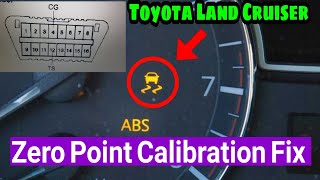
A faulty ABS module will typically make its presence known through clear warnings on your dashboard. 🎬 Watch: See what these ABS and TCS dashboard lights look like. Because it's tied into other safety systems, a single failure can disable multiple features.
- ABS, VSC, and TRAC Warning Lights: The most common symptom is the illumination of the ABS warning light on the dashboard. Often, the traction control (TRAC) and vehicle stability control (VSC) lights will also come on, as these systems rely on the ABS module to function.
- Brakes Locking Up: The primary function of ABS is to prevent your wheels from locking during hard braking. If the module fails, this feature is disabled, and your wheels may lock up and skid, especially on wet or gravel roads.
- Unresponsive or Hard Brake Pedal: In some cases, a failing module can lead to a change in brake pedal feel, making it feel unresponsive or requiring more effort to press.
- Inconsistent Speedometer: The ABS module uses wheel speed sensor data, which is sometimes shared with the speedometer. A faulty module can occasionally cause the speedometer to behave erratically or stop working altogether.
Common Diagnostic Trouble Codes (DTCs)
A professional OBD-II scanner capable of reading ABS codes can help pinpoint the issue. Common codes associated with ABS module failure include:
- U0121: Lost Communication with ABS Module
- C0265: ABS Module Relay Circuit Malfunction
- C0110: ABS Pump Motor Circuit Failure
- Codes indicating failures of multiple wheel speed sensors simultaneously can also point to a faulty module rather than individual sensor issues.
Programming and Calibration Requirements
Warning: A replacement ABS control module—whether new or used—is NOT a plug-and-play part. It must be programmed and calibrated to your specific vehicle to function correctly and safely.
Modern ABS modules are coded to the vehicle's VIN. Installing a module without programming will result in warning lights on the dash and a non-functional ABS system. The process typically involves:
- VIN Programming: The replacement module's software must be configured to match your vehicle's VIN.
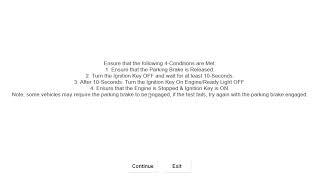
- System Calibration: After installation, a calibration procedure, often called a "Zero Point Calibration," is required. This process syncs the ABS module with other critical sensors, such as the steering angle sensor and yaw rate sensor, which are 🎬 Watch: How to perform a Zero Point Calibration for code C1336. essential for the VSC system to work correctly.
Who Can Program the Module?
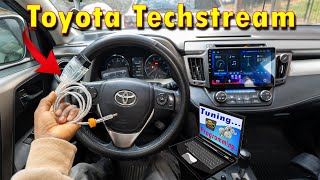
This procedure requires a professional-grade diagnostic scan tool with advanced capabilities, such as Toyota's Techstream software. While a Toyota dealership can always perform this service, many independent repair shops that specialize in Toyotas or have advanced diagnostic equipment can also program and calibrate a replacement ABS module. Most DIY mechanics will not have access to the necessary tools.
Buying a Used ABS Control Module
Purchasing a used OEM ABS module assembly is a cost-effective way to repair your Venza, but careful inspection and verification are key.
- Match Part Numbers Exactly: The most critical step is to match the part number on your original module with the used replacement. The provided OEM part numbers (e.g., 44050-48C20, 44050-48C21, 44050-48C24) often supersede one another. Always verify with the seller that the part is a direct replacement for your specific number.
- Inspect for Damage: Carefully examine the used module for any signs of physical damage, such as cracks in the plastic housing or bent connector pins. Check for corrosion on all electrical connectors. Any sign of water intrusion is a major red flag.
- Understand It's an Assembly: For the Venza, the ABS control module is typically sold as a complete unit with the hydraulic pump and actuator, often called the "Brake Actuator Assembly." Ensure you are buying the complete assembly.
- Factor in Programming Costs: Remember that the cost of the part is not the final cost. You must budget for professional installation, brake fluid bleeding, and the mandatory programming and calibration service.
Cost Comparison
The price of an ABS module can vary significantly depending on the source. Here are typical cost estimates:
| Part Source | Estimated Cost |
|---|---|
| New OEM | $960 - $1,200 |
| Used OEM | $250 - $500 |
| Remanufactured | $350 - $600 (Limited availability) |
| Shop Labor (Install & Program) | $150 - $300 |
Frequently Asked Questions (FAQ)
Do I have to program a used ABS module for my Venza?
Yes, absolutely. All replacement ABS modules, whether new or used, must be electronically programmed to your vehicle's specific VIN and calibrated to work with the steering and stability sensors. Failure to do so will result in a non-functional system and persistent warning lights.
Can I drive my Venza with a bad ABS module?
You can, but it is not recommended for safety reasons. While your standard brakes will still function, you will not have anti-lock brakes, traction control, or vehicle stability control. This significantly increases the risk of losing control in an emergency stop or on slippery roads.
What is the difference between the ABS module and the ABS pump?
The ABS module is the electronic computer that controls the system. The ABS pump (or hydraulic actuator) is the mechanical part with valves and a motor that physically modulates brake pressure. In the 2021-2023 Venza, these two components are integrated into a single unit called the Brake Actuator Assembly.
Could my ABS light be on for a simpler reason, like a sensor?
Yes. A single faulty wheel speed sensor is a very common reason for the ABS light to come on. A diagnostic scan is necessary to read the specific trouble codes. 🎬 Watch: How to use Techstream to diagnose and clear ABS codes. If the codes point to a single sensor, that is a much simpler and cheaper repair. However, if the scanner shows communication errors or codes for multiple sensors at once, the module itself is the more likely culprit.
Helpful Videos

Technical Specifications
OEM Part Numbers: 44050-48C20 44050-48C21 44050-48C22 44050-48C23 44050-48C24 44510-48110 89541-48661
The part is an integrated Brake Actuator Assembly that includes the electronic control module and the hydraulic pump/actuator unit.
We Have This Part in Stock

The information in this article is provided for general reference and educational purposes only. Vehicle specifications, procedures, and part compatibility can vary by production date, trim level, and region. Always consult your vehicle's factory service manual and verify part numbers before purchasing or performing repairs. Safety-critical components such as airbags, seat belts, and braking systems should be installed by a qualified professional.
- Toyota Venza:
- 🎬 Helpful Videos
- 🛍️ Shop This Part
- Known Issues, TSBs, and Recalls
- NHTSA Recall 22V-888: Vehicle Stability Control May Not Default ON
- Symptoms of a Failing ABS Control Module
- Common Diagnostic Trouble Codes (DTCs)
- Programming and Calibration Requirements
- Who Can Program the Module?
- Buying a Used ABS Control Module
- Cost Comparison
- Frequently Asked Questions (FAQ)
- 🎟️ Get 5% Off