

2013-2018 Nissan Altima Alternator: Diagnosing Whining Noises & Charging Failures
This guide covers the common failure symptoms, replacement costs, and what to look for when buying a used alternator for your 2013-2018 Nissan Altima with the 2.5L engine.
- The most common failure symptoms are a whining noise that changes with engine speed, dimming/flickering lights, and a battery warning light on the dash.
- This alternator fits the 2.5L 4-cylinder engine only. For 2018 models, it may only fit vehicles built before September 2017.
- A simple multimeter test can confirm if the alternator is bad: voltage should be ~12.6V with the engine off and jump to 13.7V-14.7V with the engine running.
- When replacing, it is highly recommended to also replace the serpentine belt. Key torque specs are 18 ft-lbs for the mounting bolts and 83 ft-lbs for the wheel lug nuts.
Symptoms of a Failing 2013-2018 Altima Alternator


When the alternator in your Altima begins to fail, it will usually provide several warning signs. Ignoring these can leave you stranded, as the vehicle will only run off the battery for a short time before it's completely drained.
Common Failure Indicators:
- Whining or Grinding Noises: One of the most common symptoms is a distinct whining or grinding sound coming from the engine bay. This noise is often caused by worn-out bearings inside the alternator and will typically change pitch with the engine's speed.
- Dimming or Flickering Lights: If you notice your headlights, interior lights, or dashboard lights seem dim, flicker, or get brighter as you accelerate, it's a classic sign the alternator isn't producing a consistent electrical current.
- Battery Warning Light: The most direct indicator is the battery warning light (often shaped like a battery or labeled "ALT") illuminating on your dashboard. This light specifically signals a problem within the charging system.
- Slow or Malfunctioning Electronics: Power windows that operate slower than usual, a radio that cuts out, or other strange electrical behavior can point to an alternator that can't keep up with the vehicle's power demands.
- Difficulty Starting or a Dead Battery: A failing alternator cannot properly recharge the battery. This can lead to a weak or dead battery, making the car difficult to start. If you need to jump-start your car frequently, the alternator is a likely culprit.
- Burning Smell: A smell of burning rubber or hot wires can indicate an overworked alternator or a slipping drive belt.
Pro Tip: A high-pitched whining noise on these Altimas can also be caused by the electronic power steering pump. If the noise gets louder when you turn the steering wheel while stationary, the power steering system is the more likely cause.
Known Issues, TSBs, and Recalls
While research did not uncover any widespread recalls or Technical Service Bulletins (TSBs) specifically for alternator failure on the 2013-2018 Altima, it's always a good practice to check for any open recalls on your specific vehicle. There was a recall for the hood latch mechanism on these models (NHTSA Campaign Number: R21A6) which is unrelated to the alternator but important for safety.
Compatibility Warning: This alternator fits 2013-2018 Nissan Altima sedans equipped with the 2.5L 4-cylinder engine. For the 2018 model year, fitment may be limited to vehicles manufactured before September 2017. Always verify the OEM part number from your original unit before purchasing a replacement.
Diagnosing the Alternator

You can perform a simple test with a multimeter to check the health of your charging system.
- Test Battery Voltage (Engine Off): Set your multimeter to DC volts. With the engine off, connect the red probe to the positive battery terminal and the black probe to the negative terminal. A healthy, fully charged battery should read around 12.6 volts. If it's below 12 volts, the battery may be the issue.
- Test Alternator Output (Engine Running): Start the engine. The multimeter reading should jump to between 13.7 and 14.7 volts. This indicates the alternator is charging the battery.
- Load Test (Engine Running): With the engine still running, turn on all major electrical accessories: headlights on high beam, A/C or heater fan on high, radio, etc. The voltage should remain steady, above 13 volts. If the voltage drops significantly (e.g., back down to battery voltage), the alternator is likely failing under load.
Buying a Used 2013-2018 Altima Alternator
A quality used OEM alternator can be a reliable and cost-effective alternative to expensive new parts or lower-quality aftermarket units. Here’s what to inspect:
- Verify Part Numbers: The most crucial step is to match the OEM part number. The original alternator is made by Mitsubishi. Look for numbers like A2TJ1881, 23100-3TA1A, 23100-3TA1B, or 23100-9HU0A on the casing.
- Check the Pulley: Spin the pulley by hand. It should spin smoothly and freely in one direction with no grinding, roughness, or wobble. The internal clutch mechanism should prevent it from spinning easily in the reverse direction.
- Inspect the Casing: Look for any cracks, heavy corrosion, or signs of fluid leaks (oil or coolant) on the alternator's body. A casing saturated with oil can lead to premature failure.
- Examine Electrical Connections: The main B+ terminal stud should be straight and the threads should be clean. The plastic connector housing should be intact, without any cracks or broken locking tabs.
- Consider Mileage: Alternators on these vehicles typically last between 80,000 and 150,000 miles. A used unit from a lower-mileage vehicle (under 100,000 miles) is a safer bet and offers a better service life.
Cost to Replace a 2013-2018 Altima Alternator
The cost can vary significantly based on the type of part you choose and local labor rates. A DIY replacement can save you a considerable amount in labor costs.
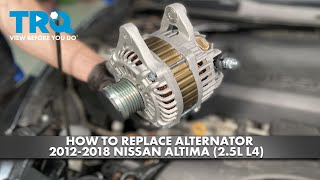
🎬 Watch this step-by-step guide to replacing your Altima's alternator.| Part Type | Estimated Part Cost |
|---|---|
| New OEM | $430 - $510 |
| Remanufactured OEM | $340 - $430 (+ core charge) |
| New Aftermarket | $186 - $444 |
| Used OEM | $50 - $125 |
| Shop Labor | $98 - $147 |
Replacement Overview & Torque Specs

Replacing the alternator on a 2.5L Altima is an intermediate-level job that can be done at home with the right tools. The estimated time is between 1.5 and 3 hours.
Key Steps:
- Disconnect the Battery: Always disconnect the negative battery terminal first using a 10mm wrench to prevent electrical shorts.
- Remove Serpentine Belt: You will likely need to remove the front passenger-side wheel and a plastic splash shield to access the belt tensioner. Use a wrench (often 17mm) on the tensioner to relieve pressure and slip the belt off the alternator pulley.
- Disconnect Electrical Connectors: Remove the rubber boot and unbolt the main power cable from the B+ terminal (12mm nut). Unplug the smaller wiring harness connector.
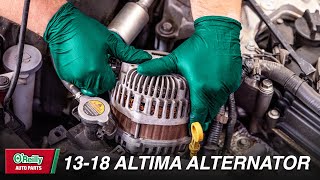
- Unbolt the Alternator: The alternator is held in place by two 13mm bolts. Remove these to free the unit. 🎬 See a visual walkthrough of removing and installing the unit.
- Installation and Torque: Installation is the reverse of removal. When tightening the new alternator:
- Alternator Mounting Bolts (13mm): 18 ft-lbs
- B+ Terminal Nut (12mm): 8 ft-lbs (or 96 in-lbs). Be careful not to overtighten.
- Wheel Lug Nuts (21mm): 83 ft-lbs
Pro Tip: Since you have to remove the serpentine belt anyway, this is the perfect time to inspect it for cracks or wear and replace it if necessary. It's a low-cost part that is much easier to replace while the alternator is out.
Frequently Asked Questions (FAQ)
How do I know if it's the alternator or just a bad battery?
A simple test is to jump-start the car. If the car starts but dies immediately after the jumper cables are removed, it's a classic sign of a failed alternator. If the car continues to run fine after being jumped, but won't start again on its own later, the battery is more likely the problem as it isn't holding a charge. The multimeter test described above is the most definitive way to tell.
🎬 Watch a mechanic demonstrate how to swap out the alternator.Is it safe to drive with a failing alternator?
It is not recommended. A failing alternator will not recharge the battery, meaning your car is running on battery power alone. This can cause the vehicle to stall unexpectedly at any time, potentially in a dangerous situation like an intersection or on the highway.
Does this alternator fit the V6 Nissan Altima?
No, this alternator is specific to the 2.5L 4-cylinder engine (QR25DE). The 3.5L V6 engine uses a different alternator with a different part number and mounting configuration.
Is rebuilding my old alternator a good option?
Rebuilding an alternator, which involves replacing internal components like the bearings or voltage regulator, can sometimes be cheaper than a full replacement. However, finding a local auto-electric shop that performs this service can be difficult. For most DIY mechanics, replacing the entire unit with a quality used or remanufactured part is a faster and more reliable solution.
Helpful Videos
![2013-2018 Nissan Altima Alternator Replacement [2.5L QR25DE]](https://img.youtube.com/vi/GzKIwE6bfA0/mqdefault.jpg)

Technical Specifications
OEM Part Numbers: A2TJ1881 23100-3TA1A 23100-3TA1B 23100-9HU0A 2310M-3TA1BRW 2310M-9HU0ARW
Amperage: 110 Amp or 130 Amp options available. The alternator is driven by the vehicle's serpentine belt.
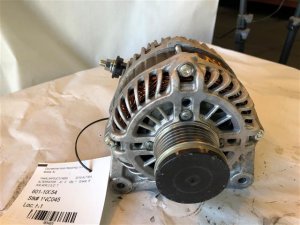
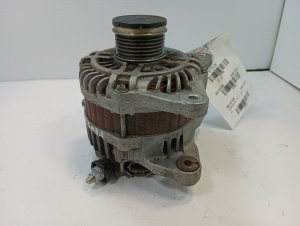
We Have This Part in Stock

The information in this article is provided for general reference and educational purposes only. Vehicle specifications, procedures, and part compatibility can vary by production date, trim level, and region. Always consult your vehicle's factory service manual and verify part numbers before purchasing or performing repairs. Safety-critical components such as airbags, seat belts, and braking systems should be installed by a qualified professional.
- Nissan Altima:
- 🎬 Helpful Videos
- 🛍️ Shop This Part
- Symptoms of a Failing 2013-2018 Altima Alternator
- Common Failure Indicators:
- Known Issues, TSBs, and Recalls
- Diagnosing the Alternator
- Buying a Used 2013-2018 Altima Alternator
- Cost to Replace a 2013-2018 Altima Alternator
- Replacement Overview & Torque Specs
- Key Steps:
- Frequently Asked Questions (FAQ)
- 🎟️ Get 5% Off