

2010-2018 Mazda 3 Drive Axle Shaft: Diagnosing Clicks, Squeaks, and Fitment Confusion
This guide explains how to diagnose the tell-tale clicking of a failing CV joint, understand a key factory service bulletin, and navigate the critical differences between axle shafts for various engines and transmissions.
- The most common failure symptom is a rhythmic clicking noise during low-speed turns, which points to a bad outer CV joint.
- Compatibility is critical and complex; axles differ between automatic/manual transmissions, 2.0L/2.5L engines, and Skyactiv/non-Skyactiv models. Always verify the part number with your VIN.
- When buying a used axle, the condition of the rubber CV boots is the most important factor. Any cracks or tears mean the part should be rejected.
- A Technical Service Bulletin (TSB 03-001/19) exists for a squeaking noise from the right front axle on automatic models, caused by the axle's dust cover and the transaxle seal.
Symptoms of a Failing Drive Axle Shaft

A failing drive axle on a 2010-2018 Mazda 3 provides several distinct warning signs. The most common symptoms are related to the constant velocity (CV) joints wearing out, usually after the protective rubber boot tears and allows the lubricating grease to escape and dirt to enter.
1. Clicking or Popping Noise When Turning
This is the most common and classic sign of a worn outer CV joint. You will hear a rhythmic clicking or popping sound that gets faster as the vehicle speeds up. The noise is most obvious during slow, sharp turns, like in a parking lot or when making a U-turn. A good way to diagnose which side is failing is to listen carefully: a clicking noise when turning left usually points to a bad left (driver's side) axle, while a noise when turning right indicates a problem with the right (passenger's side) axle.
2. Vibration While Driving or Accelerating
A vibration felt through the floor, seats, or steering wheel that gets worse with acceleration can point to a worn inner CV joint or a bent axle shaft. Unlike a tire imbalance vibration that may be noticeable only at certain speeds, an axle-related vibration is often more pronounced under load as you accelerate.
3. Clunking or Knocking Sound
A loud clunk or knock when you shift from Park to Drive, or when you accelerate or decelerate, can indicate excessive play in a worn inner or outer CV joint. This sound is the result of the joint's internal components slamming together as the drivetrain load changes.
4. Grease on the Inside of the Wheel
If you see dark, heavy grease splattered on the inside of your wheel, on the suspension components, or in the fender well, it's a clear sign that a CV boot has torn. The boot's job is to hold grease in and keep dirt and water out. Once it's compromised, the joint's failure is inevitable.
🎬 Watch: See these 5 common symptoms of a bad CV axle.Known Issues, TSBs, and Recalls

While there are no major safety recalls for the drive axle shafts on the 2010-2018 Mazda 3, Mazda did issue a Technical Service Bulletin (TSB) for a related noise issue.
TSB 03-001/19: Squeak Noise From Right Front Driveshaft
Some owners of 2012-2018 Mazda 3 models with an automatic transmission may experience a squeaking noise from the right front driveshaft area. This noise typically occurs at speeds between 37-50 mph (60-80 km/h) when the transmission fluid is at normal operating temperature. According to Mazda, the noise is caused by a 'stick/slip' condition between the transaxle's oil seal and the driveshaft's dust cover. The official fix involves replacing the original dust cover and the converter housing side oil seal with new, modified parts that have different material properties to prevent the squeak. This is a powertrain warranty repair, so if your vehicle is still covered, a dealer should perform the fix.
Buying a Used Drive Axle Shaft: What to Look For

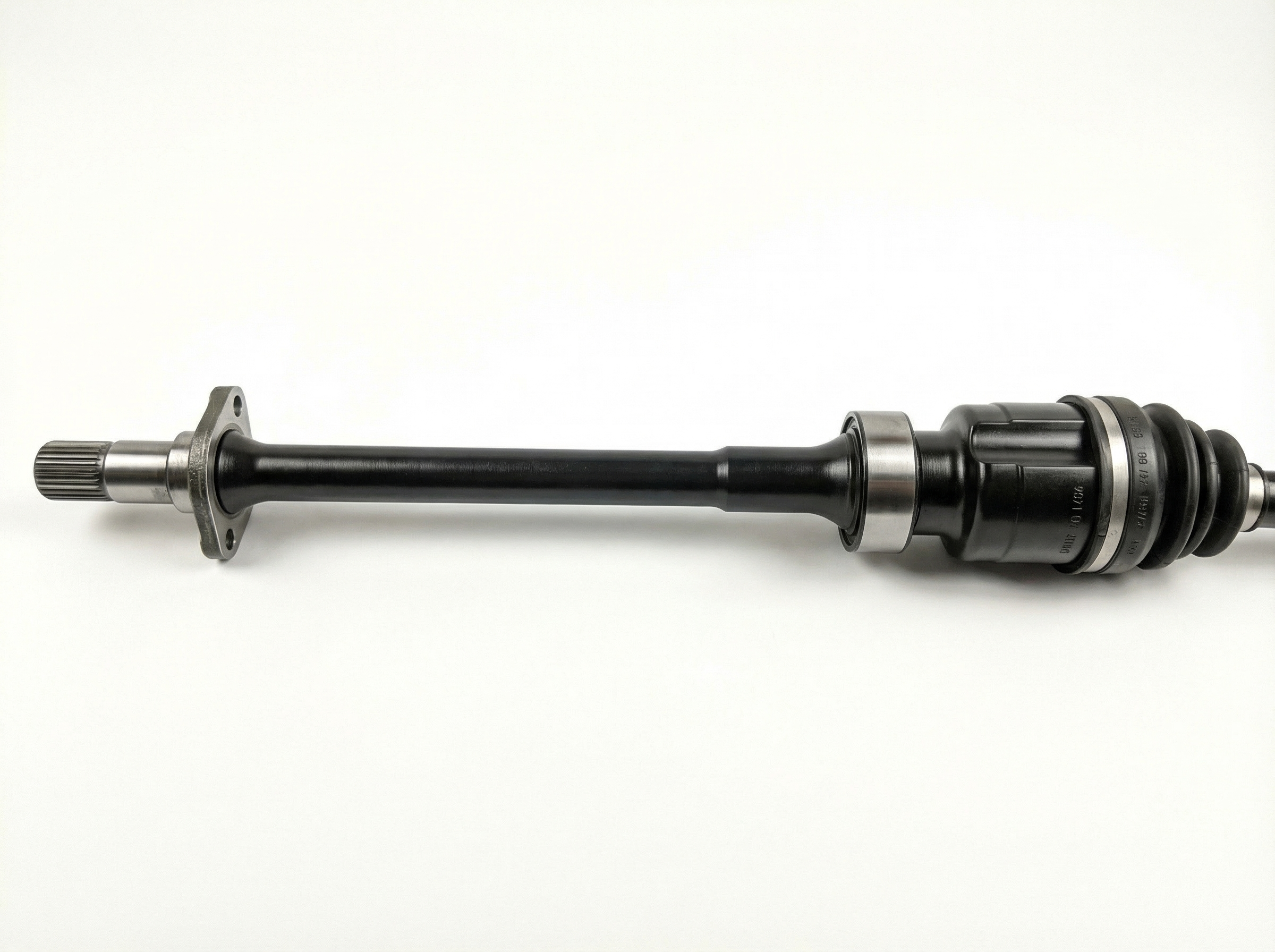
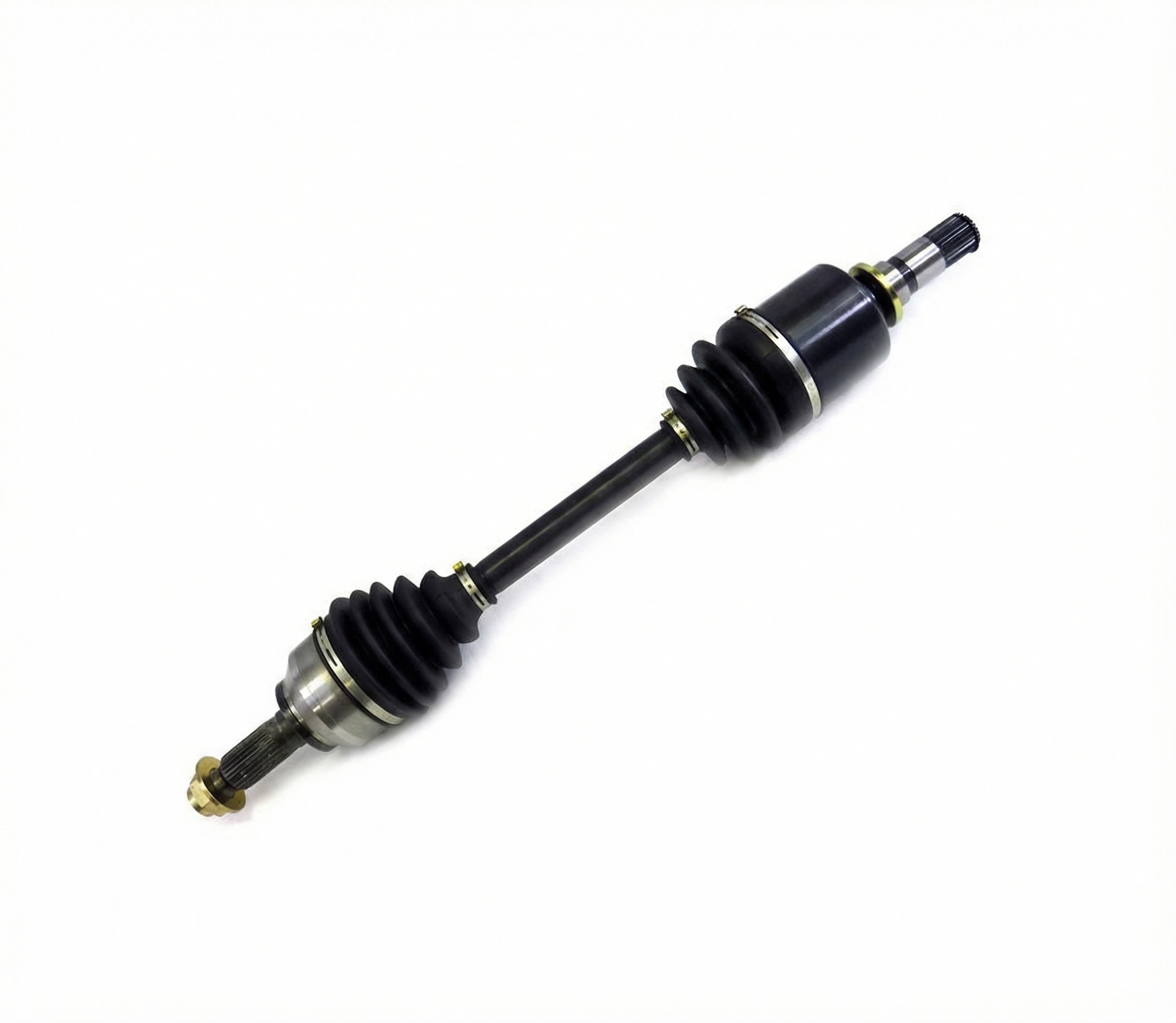
For this part, a high-quality used OEM axle is often a better choice than a cheap, new aftermarket part. Aftermarket axles are notorious for causing vibrations that weren't present with the original part. When inspecting a used OEM axle, focus on these key areas:
- Inspect the CV Boots: This is the most important check. Carefully bend and squeeze both the inner and outer rubber boots. They must be pliable and completely free of any cracks, splits, or pinholes. If a boot is torn, the joint is contaminated and the axle is junk. Reject it immediately.
- Check for Grease Leaks: Look for any signs of grease being slung from the boots. A clean axle is good, but be wary if it looks like it was just pressure washed, as this can hide evidence of leaks.
- Feel for Joint Play: Hold the shaft and try to move the outer joint. There should be no clicking or clunking. The inner joint is designed to plunge in and out, so that movement is normal, but there should not be excessive up-and-down or side-to-side play.
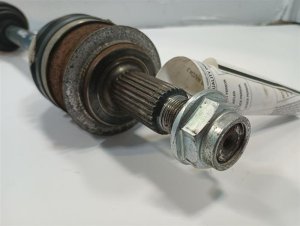
- Examine the Splines and Threads: Check the splines on both ends for any twisting or damage. The threads on the outer end where the axle nut attaches must be clean and undamaged.
Compatibility & Part Numbers: A Critical Detail
The initial data provided for this part contained conflicting information, and for good reason: axle shaft fitment for the 2010-2018 Mazda 3 is complex. You cannot assume an axle from one Mazda 3 will fit another. Fitment depends on the model year, engine (2.0L, 2.5L, Skyactiv vs. non-Skyactiv), and transmission type (automatic vs. manual).
Warning: Always verify the exact part number for your vehicle's VIN before purchasing. The information below is a guide, but there are many variations.
Here are some examples to illustrate the differences:
| Part Number | Position | Fitment Details | Source |
|---|---|---|---|
| FTA3-25-60X | Left (Driver Side) | Fits 2012-2013 Mazda 3 with 2.0L Skyactiv-G engine and Automatic Transmission. | |
| FTC3-25-50X | Right (Passenger Side) | Fits 2014-2018 Mazda 3 with 2.0L engine and Automatic Transmission. |
This shows that axles are specific not only to the driver/passenger side but also to engine generation (Skyactiv) and model year ranges. The initial warning that an axle fits both 2.0L and 2.5L engines is generally incorrect for this generation; they often use different parts.
Replacement Overview & Torque Specs

Replacing a drive axle is a moderately difficult job that is feasible for an experienced DIY mechanic. The basic process involves safely lifting and supporting the vehicle, removing the wheel, and then accessing the axle.
Pro Tip: When the axle is removed from the transmission, some automatic transmission fluid will leak out. Have a drain pan ready and be prepared to top off the fluid after the new axle is installed. It is also highly recommended to replace the axle seal at the transaxle at the same time to prevent future leaks.
Key steps include:
- Removing the large central axle nut. This often requires a breaker bar.
- Separating the lower ball joint from the steering knuckle to allow the knuckle to swing out of the way.
- Using a pry bar to pop the inner end of the axle out of the transaxle.
- Installation is the reverse of removal. Ensure the new axle clicks securely into the transaxle.
Critical Torque Specs: Using a torque wrench is mandatory for this job, especially for the axle nut.
| Fastener | Torque Specification | Source |
|---|---|---|
| Front Axle Nut | 174 - 235 ft-lbs (236 - 319 Nm). Varies by year. Always verify. | |
| Wheel Lug Nuts | 80 - 108 ft-lbs (typically torqued to 100 ft-lbs) | |
| Outer Tie Rod End Nut | ~43 ft-lbs |
Warning: Do not use an impact gun to tighten the new axle nut. Doing so can damage the new axle and the wheel bearing. The nut must be tightened with a torque wrench to the correct specification.
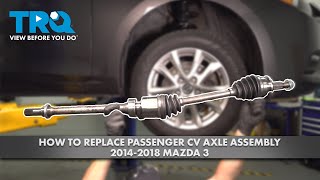
🎬 Watch: How to replace the passenger side axle on 2014-2018 models.Cost Comparison
The cost to replace a Mazda 3 drive axle can vary significantly based on the parts you choose and who does the work.
| Item | Estimated Cost | Source |
|---|---|---|
| New OEM Axle | $400 - $590 | |
| New Aftermarket Axle | $60 - $250 | |
| Used OEM Axle | $75 - $150 | |
| Shop Labor for Replacement | $140 - $250 | |
| Total Dealer Replacement | $800 - $1100+ |
Frequently Asked Questions (FAQ)
Can I drive with a clicking CV axle?
You can, but it's not recommended for long. The clicking indicates wear, and the joint will continue to degrade. If the joint fails completely, it can separate, leaving the wheel without power and potentially causing you to lose control of the vehicle. It will leave you stranded.
Should I just replace the torn CV boot instead of the whole axle?
While CV boot kits are available, replacing only the boot is a very messy and labor-intensive job. More importantly, if the joint has already started clicking or making noise, it means dirt has gotten in and the joint is already damaged. A new boot will not fix a worn-out joint. For this reason, it is almost always faster, cleaner, and more reliable to replace the entire axle assembly.
Do I need a wheel alignment after replacing a drive axle?
No. If you are only replacing the drive axle, a wheel alignment is not necessary as the procedure does not change the vehicle's alignment angles. However, if you replace other suspension components at the same time, like the control arm or tie rod ends, then an alignment will be required.
What fluid do I need to check after replacing an axle?
You need to check and top off the automatic transmission fluid. When you pull the axle out of the transaxle, a small amount of red or pinkish transmission fluid will drain out. After installing the new axle, you must check the fluid level via the transmission dipstick (on applicable models) and add the correct type of ATF to bring it back to the full mark.
Helpful Videos
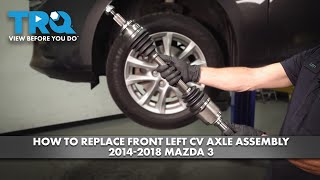
Technical Specifications
OEM Part Numbers: FTA3-25-60X FTC3-25-50X FTC3-25-60X FTC32550X FTU8-25-60X GDA3-25-60X GDC1-25-60X GG2625600H GG6225600B
Axle Nut Torque: 174-235 ft-lbs (Varies by year and model, must be verified). Wheel Lug Nut Torque: ~100 ft-lbs.
We Have This Part in Stock

The information in this article is provided for general reference and educational purposes only. Vehicle specifications, procedures, and part compatibility can vary by production date, trim level, and region. Always consult your vehicle's factory service manual and verify part numbers before purchasing or performing repairs. Safety-critical components such as airbags, seat belts, and braking systems should be installed by a qualified professional.
- Mazda MAZDA 3:
- 🎬 Helpful Videos
- 🛍️ Shop This Part
- Symptoms of a Failing Drive Axle Shaft
- 1. Clicking or Popping Noise When Turning
- 2. Vibration While Driving or Accelerating
- 3. Clunking or Knocking Sound
- 4. Grease on the Inside of the Wheel
- Known Issues, TSBs, and Recalls
- TSB 03-001/19: Squeak Noise From Right Front Driveshaft
- Buying a Used Drive Axle Shaft: What to Look For
- Compatibility & Part Numbers: A Critical Detail
- Replacement Overview & Torque Specs
- Cost Comparison
- Frequently Asked Questions (FAQ)
- 🎟️ Get 5% Off