

2012 Ford F-150 3.5L EcoBoost ECM: A Guide to Programming, Recalls, and Replacement
Replacing the brain of your 2012 F-150 EcoBoost requires more than just swapping parts; here's what you need to know about programming and anti-theft systems.
- A replacement ECM requires mandatory VIN programming and PATS anti-theft synchronization for the truck to start.
- Verify that Ford Safety Recall 19S07 (sudden transmission downshift) has been performed; the fix is a critical PCM software update.
- Always match the full engineering ID number (e.g., CL3A-12A650-AUF) from your original ECM's sticker to ensure compatibility.
- The ECM is located on the passenger-side firewall and can be damaged by water leaking from the cowl or windshield.
Symptoms of a Failing 2012 F-150 ECM
A failing ECM can cause a wide range of problems, from a simple check engine light to a no-start condition. Because the ECM controls so many different systems, symptoms can sometimes be mistaken for other issues. Look out for these common signs:
- Engine Stalling or No-Start: The truck may stall unexpectedly while driving or refuse to start at all. This can be intermittent, especially when the engine is warm.
- Check Engine Light: The most obvious sign is an illuminated Malfunction Indicator Lamp (MIL). Common ECM-related codes include P0351-P0356 (Ignition Coil Circuit Malfunction), P0606 (ECM/PCM Processor Fault), and other communication errors like U0100.
- Poor Engine Performance: You might notice a significant drop in power, hesitation during acceleration, rough idling, and decreased fuel economy as the ECM struggles to manage the engine correctly.
- Transmission Shifting Problems: Since the PCM also controls the transmission, you might experience hard or erratic shifting.
- Inability to Communicate with Scan Tool: If a diagnostic scan tool cannot connect to the ECM, it's a strong indicator that the module itself has failed.
Known Issues, Recalls, and Technical Service Bulletins (TSBs)
The 2012 F-150 was subject to a significant recall and several TSBs related to the Powertrain Control Module.
Safety Recall 19S07: Sudden Transmission Downshift
This is the most critical issue affecting these trucks. A faulty signal from the transmission's Output Shaft Speed (OSS) sensor could cause the PCM to command an abrupt downshift into first gear, regardless of vehicle speed. This can cause the rear wheels to lock up or slide, leading to a loss of vehicle control.
- Vehicles Affected: 2011-2013 Ford F-150s with the 6R80 6-speed automatic transmission.
- The Fix: Ford dealers perform a mandatory PCM software update. 🎬 Watch: How Ford dealers perform the 19S07 recall reprogramming. This new calibration prevents the downshift even if the OSS signal is lost.
- What to Do: Before purchasing a used ECM or if you are experiencing this issue, it is crucial to verify with a Ford dealer if this recall has been performed on your truck. Any replacement ECM should have the latest software installed to prevent this dangerous condition.
Other TSBs and Common Problems
- Water Intrusion: The ECM is located on the passenger-side firewall in the engine bay. Its location makes it susceptible to water damage from a leaking windshield or cowl, which can lead to corrosion and failure.
- Software Updates: Over the years, Ford has released numerous software updates to fix bugs related to engine performance, ignition, and shifting. An older ECM may not have these critical updates.
- Ignition Coil Failure: A shorted ignition coil can sometimes send excessive voltage back to the PCM, damaging the internal driver circuits for that coil. This often results in a persistent misfire code for a specific cylinder that cannot be fixed by replacing the coil or spark plug.
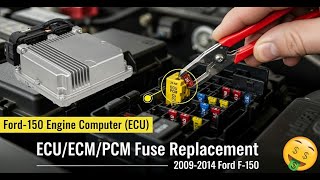
Warning: Before condemning the ECM, always check the basics first. A weak battery, corroded ground wires, or a blown PCM fuse can mimic 🎬 See this guide to find and check your PCM fuse. the symptoms of a complete module failure.
Buying a Used 2012 F-150 EcoBoost ECM: What You Must Know
Replacing the ECM on this truck is not a simple plug-and-play repair. Due to complex programming and anti-theft systems, several steps are required for the vehicle to function.
1. Match the Part Number EXACTLY
The most critical step is to match the engineering ID number on the sticker of your original ECM. This number typically looks like CL3A-12A650-AUF. While the first part of the number (CL3A-12A650) identifies the part type, the last three letters (AUF) are a suffix indicating the specific hardware and software calibration. While some suffixes may supersede others (e.g., AUG replaces AUF), it is always safest to match the entire number.
2. VIN Programming is MANDATORY
A used or remanufactured ECM must be programmed with your truck's 17-digit Vehicle Identification Number (VIN). Without this step, the module will not be able to communicate correctly with the other computers in the vehicle, and it will not start.
3. PATS Anti-Theft Synchronization is REQUIRED
Ford vehicles use a Passive Anti-Theft System (PATS) that links the ignition keys, the instrument cluster, and the ECM. When you install a new ECM, this link is broken, and the engine will be immobilized. The system must be synchronized through a process called a 'parameter reset' or 'key relearn' to allow the engine to start.
Who Can Program the ECM?
- Ford Dealership: The most reliable, but also the most expensive option. They use the Ford Integrated Diagnostic System (IDS) to perform the programming and ensure all software is up to date.
- Independent Repair Shops: Many professional shops have high-end scan tools (like Autel or Snap-on) or J2534 pass-thru devices that can perform VIN programming and PATS functions.
- Automotive Locksmiths: Some advanced locksmiths have the tools to perform the PATS key relearn procedure after the ECM has been installed and VIN-programmed.
- Mail-In Services / Pre-Programmed Units: Many online sellers of used or remanufactured ECMs offer to pre-program the unit with your VIN before shipping it. While this simplifies the process, you will still likely need a locksmith or shop to perform the final PATS key relearn once the part is installed in the truck.
Pro Tip: When ordering a pre-programmed unit, always provide your VIN and the full part number from your original ECM to ensure compatibility.
Cost Breakdown for ECM Replacement
Prices can vary based on location and the specific services required. Programming is often a separate charge from the physical installation.
| Part / Service | Estimated Cost |
|---|---|
| New OEM (Ford Dealer) | $650 - $1,000+ (plus programming) |
| Remanufactured Aftermarket | $300 - $500 (often includes VIN programming) |
| Used OEM | $100 - $250 (requires separate programming) |
| Shop Labor (Physical Swap) | $100 - $200 |
| Shop Labor (Programming & PATS Sync) | $150 - $400 |
Frequently Asked Questions (FAQ)
Do I have to program a replacement ECM for my 2012 F-150?
Yes, absolutely. All replacement ECMs—whether new, used, or remanufactured—must be programmed with your vehicle's VIN and synchronized with the PATS anti-theft system. The truck will not start without this procedure.
Where is the ECM located on a 2012 Ford F-150?
The ECM is located in the engine compartment, mounted to the firewall on the passenger side, near the battery. It has three large electrical connectors attached to it.
Why won't my truck start after installing a used ECM?
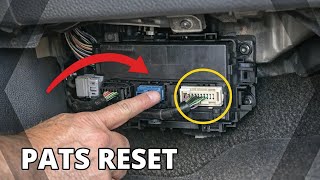
The most common reason is that the PATS anti-theft system has not been synchronized. The security light on your dashboard may be flashing rapidly. You will need 🎬 Watch: How to perform the PATS key relearn procedure. a dealership, capable independent shop, or an automotive locksmith to perform a parameter reset to link the new ECM to your keys.
What's the difference between an ECM and a PCM?
The terms are often used interchangeably. ECM stands for Engine Control Module, while PCM stands for Powertrain Control Module. For most modern vehicles like the F-150, PCM is more accurate because the single module controls both the engine and the automatic transmission.
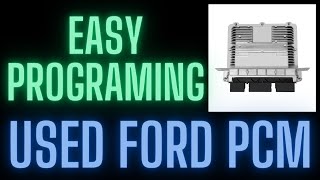
Helpful Videos
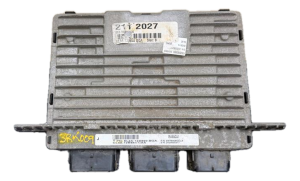
Technical Specifications
OEM Part Numbers: CL3A12A650AUC CL3A12A650AUD CL3A12A650AUE CL3A12A650AUF CL3A12A650AUG CL3A12B684AA CL3Z12A650AUF CL3Z12A650AUG
Controls 3.5L DOHC TIVCT EcoBoost engine with 6R80 automatic transmission. Located on passenger-side firewall.
We Have This Part in Stock

The information in this article is provided for general reference and educational purposes only. Vehicle specifications, procedures, and part compatibility can vary by production date, trim level, and region. Always consult your vehicle's factory service manual and verify part numbers before purchasing or performing repairs. Safety-critical components such as airbags, seat belts, and braking systems should be installed by a qualified professional.
- Ford F-150:
- 🎬 Helpful Videos
- 🛍️ Shop This Part
- Symptoms of a Failing 2012 F-150 ECM
- Known Issues, Recalls, and Technical Service Bulletins (TSBs)
- Safety Recall 19S07: Sudden Transmission Downshift
- Other TSBs and Common Problems
- Buying a Used 2012 F-150 EcoBoost ECM: What You Must Know
- 1. Match the Part Number EXACTLY
- 2. VIN Programming is MANDATORY
- 3. PATS Anti-Theft Synchronization is REQUIRED
- Who Can Program the ECM?
- Cost Breakdown for ECM Replacement
- Frequently Asked Questions (FAQ)
- 🎟️ Get 5% Off