

2015-2018 Audi A8, S6, S7, RS7 & S8 4.0T Intake Manifold: Failure, Flap Codes & Replacement Cost
This guide covers the common failures, symptoms, and extensive labor involved in replacing the passenger side intake manifold on the Audi 4.0L Twin-Turbo V8 engine.
- Replacement is an extremely labor-intensive job (8-12 hours) requiring the front of the car to be put in 'service mode', making labor the biggest expense.
- The PCV valve (oil separator) is located under the manifold and is a common failure point. It should ALWAYS be replaced at the same time to avoid doing the job twice.
- Carbon buildup on the intake valves is a guaranteed issue. The only time to clean it is when the manifold is off, making it an essential part of the repair.
- Standard aftermarket replacements are not available, making a thoroughly inspected used OEM part a strong value alternative to an expensive new dealer part.
Symptoms of a Failing Intake Manifold
A problem with the passenger side intake manifold on the 2015-2018 Audi A8, 2016-2017 S6, 2016-2017 S7, 2016-2017 RS7, or 2015-2017 S8 can manifest in several ways. These symptoms often overlap with other common issues on the 4.0T engine, so careful diagnosis is key.
- Rough Idle and Misfires: This is one of the most common signs. A vacuum leak from a cracked manifold or bad gasket can throw off the air-fuel mixture, causing the engine to shake, stumble, or run unevenly at idle. This will often be accompanied by misfire codes for the passenger side cylinders (Cylinders 1, 2, 3, 4), such as P0300, P0301, P0302, P0303, and P0304.
- Check Engine Light with Flap-Related Codes: The intake runner flaps can get stuck due to carbon buildup or actuator failure. This will trigger a Check Engine Light with specific Diagnostic Trouble Codes (DTCs) like P2006 (Intake Manifold Runner Control Stuck Closed Bank 1) or P2007 (Intake Manifold Runner Control Stuck Closed Bank 2 - Note: Bank 1 is typically the passenger side on Audis). In some cases, the vehicle may enter a limited power mode, preventing the engine from revving past 4000 RPM.
- Loss of Power and Poor Acceleration: If the runner flaps are stuck in the 'long runner' (low RPM) position, the engine will feel sluggish and breathless at higher speeds. Conversely, if they are stuck in the 'short runner' position, low-end torque and throttle response may suffer. A vacuum leak will also cause a general loss of performance.
- Hissing or Whistling Noises: A crack in the plastic manifold or a failed gasket can create a vacuum leak, which often produces a distinct hissing or sucking sound from the engine bay that may change with engine RPM.
Important: A loud, high-pitched squeal or whistle from the engine bay is a classic symptom of a failed PCV (Positive Crankcase Ventilation) valve, also known as the oil separator. This part is located directly underneath the intake manifold and intercooler assembly. Due to the extreme labor involved, the PCV valve is almost always replaced at the same time as the intake manifold. Driving with a failed PCV valve is not recommended as the excessive crankcase pressure can blow out engine seals, leading to major oil leaks and far more expensive repairs.
Known Issues, TSBs, and Recalls
While there are no widespread recalls specifically for the intake manifold itself, it is involved in or related to several known issues with the 4.0T V8 engine.
Carbon Buildup
Like all Audi direct-injection (FSI/TFSI) engines, the 4.0T is prone to significant carbon buildup on the intake valves and in the intake ports. Because fuel is injected directly into the cylinder, it never washes over the intake valves to clean them. Over time, oil vapors from the PCV system bake onto the hot valves, forming hard carbon deposits. These deposits restrict airflow, causing misfires, hesitation, and a gradual loss of power. The intake manifold must be removed to perform a 'walnut blasting' service to clean the valves. This is a critical 'while you're in there' job.
Intake Runner Flap Failure
The internal flaps can become caked with carbon and stick, or the external vacuum actuators and linkages can fail. This is what typically causes the P2006 and P2007 fault codes. While a Technical Service Bulletin (TSB) exists for this issue on the 3.0T engine pointing to actuator failure, the principle is identical for the 4.0T.
Related Recalls and Service Campaigns
It's crucial for any owner of these vehicles to be aware of related issues in the same area of the engine:
- Turbocharger Oil Strainer (Recall 21H7): Many of these vehicles were recalled because a small oil strainer for the turbochargers can become clogged, starving the turbos of oil and leading to catastrophic failure. The repair involves replacing the strainer and changing the oil. This is a critical issue for the longevity of the 4.0T engine.
- PCV Valve Warranty Extension: Audi has issued warranty extensions for the PCV valve on some 3.0T and 4.0T engines. Owners should check with an Audi dealer to see if their vehicle is covered, as a failure can be very expensive to repair out-of-pocket.
Buying a Used Engine Intake Manifold
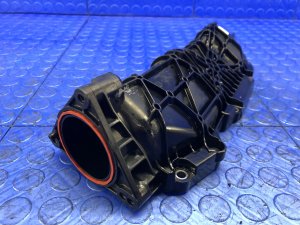
Given the high cost of a new OEM manifold and the lack of standard aftermarket replacements, a quality used OEM part is an excellent option. However, due to the potential for hidden issues, careful inspection is critical.
- Verify Part Numbers: Ensure the part you are buying is correct. Known OEM part numbers for the passenger side lower manifold are 079133110BF, 079133110BP, and 079133110BQ. Newer revisions may exist, such as 079133110CA.
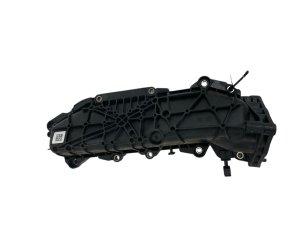
- Check for Cracks: Meticulously inspect the entire plastic housing for hairline cracks, especially around the mounting bolt holes and seams. The constant heat cycles in the 'hot-vee' can make the plastic brittle.
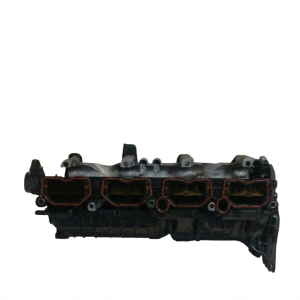
- Inspect the Mating Surface: Check the surface that mates to the cylinder head for flatness. Use a straight edge to ensure it is not warped, which would prevent a proper seal and cause a vacuum leak.
- Test the Runner Flaps: Manually move the external actuator arm to ensure the internal flaps move freely without binding or sticking. If there is significant resistance, the flaps are likely gummed up with carbon and the manifold may not be usable without extensive cleaning.
- Look for Signs of Coolant or Oil: The intercooler (charge air cooler) sits on top of the intake manifolds and can leak coolant internally into the intake. Inspect the inside of the manifold runners for any chalky green or pink residue, which indicates a leaking intercooler that has contaminated the manifold.
- Compatibility Warning (Audi S8): For 2015-2017 Audi S8 models, this part is only specified to fit vehicles with the engine ID 'CTFA'. Verify the engine code of the donor or target vehicle before purchasing.
Pro Tip: Because this is such a labor-intensive job, buying a used manifold is only recommended if you can thoroughly inspect it or purchase from a reputable recycler with a good warranty. The risk of installing a faulty used part and having to do the entire job twice is too high otherwise.
Installation and Replacement
Difficulty: 5 out of 5 (Expert/Professional)
Replacing the intake manifold on the 4.0T V8 is a highly complex and labor-intensive procedure not recommended for novice mechanics. The manifold is buried deep in the engine valley, beneath the turbochargers, intercooler, and a web of fuel lines, coolant hoses, and electrical connectors.
The official procedure often requires putting the vehicle's front end into the 'service position,' which involves removing the front bumper and sliding the entire radiator and core support assembly forward on special guide pins to create enough clearance. The job takes many hours, with reports of 7+ hours for just the disassembly by an experienced DIYer. A professional shop will likely book 8-12 hours of labor for the job.
Parts to Replace at the Same Time:
Due to the massive labor overlap, it is considered essential to replace several other components 'while you're in there':
- PCV / Oil Separator (079103542E): This is non-negotiable. It sits under the manifold and is a common failure item.
- Intake Manifold Gaskets: Always use new gaskets.
- Intercooler Gaskets: The charge air cooler must be removed, so its gaskets should be replaced.
- Thermostat and Water Pump: While not strictly required, access is significantly improved, making it a wise preventative measure.
- Carbon Cleaning: This is the perfect and only time to perform a walnut blast cleaning of the intake valves.
Cost Breakdown
The cost for this repair is driven almost entirely by the high labor charge. Aftermarket options for a standard replacement manifold are not readily available, leaving buyers with the choice of new OEM or used OEM parts.
| Part/Service | Estimated Cost |
|---|---|
| New OEM Manifold | $1,300 - $1,600 |
| New Aftermarket Manifold | Not Available (only high-performance racing versions for $4,500+) |
| Used OEM Manifold | $150 - $400 |
| Shop Labor (Manifold R&R) | $1,200 - $2,000+ (8-12 hours) |
| Related Service Costs | |
| PCV / Oil Separator Part | $200 - $350 |
| Carbon Cleaning Service | $750 - $1,200 |
| Total Estimated Job Cost (with related services) | $2,500 - $4,500+ |
Frequently Asked Questions (FAQ)
Can I just clean my intake manifold instead of replacing it?
Yes, if the manifold is not cracked or warped, but is simply clogged with carbon, it can be cleaned. However, the labor to remove it is the same. If the internal runner flaps are the point of failure, replacement is usually the only option as the flap assemblies are not typically sold separately.
Is the passenger side manifold the same as the driver side?
No, they are separate, mirror-image parts and have different part numbers. This guide and the part numbers listed are specifically for the right (passenger) side manifold.
My car has a loud squealing noise. Is that the intake manifold?
A loud, high-pitched squeal is the classic sign of a failed PCV valve (oil separator), not the intake manifold itself. However, since the PCV valve is located under the intake manifold, the repair requires removing the manifold, and the two jobs are almost always done together.
Why is the replacement so expensive?
The cost is high due to the part's location. The 4.0T engine uses a 'hot-vee' design where the turbochargers and intake manifolds are placed in the valley between the cylinder banks. Access requires removing the intercooler, fuel lines, and many other components, resulting in 8+ hours of professional labor.
Technical Specifications
OEM Part Numbers: 079133110BF 079133110BP 079133110BQ 079133110CA
Fits the right (passenger) side of the 4.0L TFSI V8 engine. For Audi S8 models, fits engine code 'CTFA' only.
We Have This Part in Stock

The information in this article is provided for general reference and educational purposes only. Vehicle specifications, procedures, and part compatibility can vary by production date, trim level, and region. Always consult your vehicle's factory service manual and verify part numbers before purchasing or performing repairs. Safety-critical components such as airbags, seat belts, and braking systems should be installed by a qualified professional.
- Audi A8:
- Audi S6:
- Audi S7:
- Audi RS7:
- Audi S8:
- 🛍️ Shop This Part
- Symptoms of a Failing Intake Manifold
- Known Issues, TSBs, and Recalls
- Carbon Buildup
- Intake Runner Flap Failure
- Related Recalls and Service Campaigns
- Buying a Used Engine Intake Manifold
- Installation and Replacement
- Parts to Replace at the Same Time:
- Cost Breakdown
- Frequently Asked Questions (FAQ)
- 🎟️ Get 5% Off