

2005-2012 Subaru Legacy & Outback Intake Manifold: Fixing Lean Codes & PZEV Traps
This guide covers the common failures, symptoms, and critical compatibility differences for the 2.5L non-turbo engine intake manifold in the 2005-2012 Subaru Legacy and Subaru Outback.
- The most critical step before buying is to verify if your car needs a Federal (FED) or California (PZEV) emissions manifold; they are not interchangeable.
- A Check Engine Light with code P0171 (System Too Lean) is the number one symptom of a failed intake manifold or gasket.
- Always replace the intake manifold gaskets when replacing the manifold; they are a common failure point and are not reusable.
- When buying used, carefully inspect the plastic seams and all vacuum hose connections for cracks, as this is where they most often fail.
Symptoms of a Failing Intake Manifold
A problem with the intake manifold on a 2005-2012 Subaru Legacy or Outback with the 2.5L non-turbo engine will almost always manifest as a vacuum leak. The symptoms are caused by extra, unmeasured air entering the engine, which makes the engine run 'lean' (too much air, not enough fuel).
- Check Engine Light with Code P0171: This is the most common and definitive symptom. The code P0171 (System Too Lean Bank 1) means the engine's oxygen sensor is detecting too much oxygen in the exhaust, prompting the engine computer to add more fuel to compensate. If left unaddressed, this can lead to long-term engine and catalytic converter damage.
- Rough or Unstable Idle: The engine may shake, idle erratically, or feel like it's about to stall when you're stopped at a light.
- Engine Hesitation or Stumbling: When you accelerate, the car may hesitate or stumble, especially under light throttle. This is due to the incorrect air-fuel mixture.
- Hissing Noise: You may hear a distinct hissing or whistling sound coming from 🎬 Watch: How to find a vacuum leak using professional techniques. the engine bay while the engine is running. This is the sound of air being sucked through a crack in the manifold or a failed gasket.
- Poor Fuel Economy: The engine computer tries to correct the lean condition by injecting more fuel, which can lead to a noticeable decrease in your miles per gallon.
Critical Compatibility Warning: Federal vs. California (PZEV) Emissions
Before purchasing a replacement manifold, you MUST determine if your vehicle was built to Federal (FED) or California (PZEV - Partial Zero Emissions Vehicle) standards. They use different intake manifolds and they are not interchangeable. PZEV models were initially sold in California and other states that adopted its stricter emissions laws. Using the wrong manifold will result in check engine lights and failed emissions tests.
How to tell the difference:
- Check the Emissions Sticker: There is a Vehicle Emission Control Information sticker under the hood. It will explicitly state if the vehicle conforms to California (PZEV) or U.S. EPA (Federal) regulations.
- Part Numbers: Federal and PZEV manifolds have different OEM part numbers. For example, 14001AB65A is a common Federal part, while 14015AA430 is a PZEV part. Always verify the part number from your original manifold if possible.
- Physical Differences: PZEV systems may have additional sensors or ports for emissions equipment. Compare a potential replacement to your old part to spot any differences.
Buying a Used Engine Intake Manifold
A used OEM intake manifold from a low-mileage vehicle can be an excellent value, often outlasting new aftermarket alternatives. However, a thorough inspection is key.
What to Inspect Before You Buy:
- Check for Cracks: These plastic manifolds are two-piece designs, bonded together at a central seam. Carefully inspect this seam all the way around for any signs of hairline cracks or separation. Also check around all bolt holes and sensor mounting points.
- Inspect Gasket Surfaces: The surfaces where the manifold bolts to the cylinder heads must be perfectly flat and free of deep scratches or gouges.
- Verify All Ports and Nipples: Check every vacuum port and hose nipple. Ensure none are cracked, broken off, or plugged with debris. A broken vacuum nipple can render an entire manifold useless.
- Look for Previous Repairs: Be wary of manifolds showing signs of epoxy, JB Weld, or other sealants. These are temporary fixes that indicate the part was already failing.
- Confirm Compatibility: Double-check that you are buying the correct manifold for your vehicle's emissions type (Federal or PZEV). Do not trust a seller's description alone; compare part numbers and photos to your original part.
Known Issues, TSBs, and Recalls
For the 2005-2012 Legacy and Outback, the primary known issue is not typically the manifold plastic cracking, but rather the gaskets failing.
- Intake Manifold Gasket Failure: The gaskets that seal the manifold to the cylinder heads can become hard and brittle over time, eventually cracking and causing a vacuum leak. This is the most common cause of a P0171 code 🎬 See this walkthrough on how to replace your intake gaskets. on these vehicles. It is mandatory to use new gaskets whenever the manifold is removed or replaced.
- Recalls: There are no major recalls issued by the NHTSA for the intake manifold on this generation of Legacy and Outback. Recalls for these vehicles typically involve other components like airbags or brake lines.
- Technical Service Bulletins (TSBs): While no specific TSB for this exact model and part was found, other Subaru models have had TSBs related to Tumble Generator Valves (TGVs) inside the manifold failing. This can cause codes like P2004 or P2006. While less common on the 2.5L non-turbo, it is a potential point of failure within the assembly.
Cost Comparison for Replacement
Prices can vary based on your location and supplier. The following is an estimated breakdown of costs:
| Part/Service | Estimated Cost |
|---|---|
| New OEM Manifold | $320 - $1000 |
| New Aftermarket Manifold | $150 - $250 |
| Used OEM Manifold | $65 - $175 |
| Intake Gasket Set | $30 - $70 |
| Shop Labor Cost | $250 - $600 |
Replacement Difficulty & Procedure
Replacing the intake manifold on a 2.5L non-turbo Subaru engine is a moderately difficult job that is feasible for an experienced DIY mechanic.
- Difficulty Rating: 3 out of 5
- Estimated Time: 2.5 - 4 hours
The general procedure involves disconnecting the battery, relieving fuel pressure, removing the air intake system, carefully unplugging numerous electrical connectors and vacuum hoses, unbolting the fuel rail and lifting it aside, and finally, unbolting the manifold from the cylinder heads. The process is often described as tedious due to the number of connections in a tight space. 🎬 Watch: A step-by-step guide to removing the intake manifold. Always use a torque wrench for reinstallation to avoid cracking the plastic manifold, and always install new intake gaskets.
Frequently Asked Questions (FAQ)
Can I repair a cracked intake manifold?
While some try to use high-temperature epoxy or plastic welding, these are not recommended as permanent solutions. The constant temperature changes and vibration of the engine will likely cause the repair to fail, leading to the same vacuum leak problem. Replacement is the only reliable fix.
Do I have to replace the intake gaskets at the same time?
Yes, absolutely. The intake manifold gaskets are a one-time-use part. They crush to create a seal and will not seal properly if reused. Given that gasket failure is a primary cause of leaks on these cars, skipping this step will almost guarantee a repeat failure.
What is PZEV and why does it matter so much for this part?
PZEV stands for Partial Zero Emissions Vehicle. It's a set of strict emissions standards first required in California. PZEV-equipped Subarus use a different intake manifold, tighter-sealing fuel injectors, and other changes to prevent any fuel vapors from escaping. A PZEV manifold will not work correctly on a Federal emissions car, and vice-versa. You must buy the correct part for your car's specific emissions system.
Is a used OEM manifold better than a new aftermarket one?
Often, yes. A visually inspected, crack-free used OEM manifold is guaranteed to have the correct fitment and sensor locations. Some new aftermarket parts can have slight variations in shape or use lower-quality plastic that becomes brittle more quickly. For this part, a good used OEM unit is a very safe and cost-effective choice.
Helpful Videos


Technical Specifications
OEM Part Numbers: 14001AB65A 14003AC320 14003AC321 14015AA430
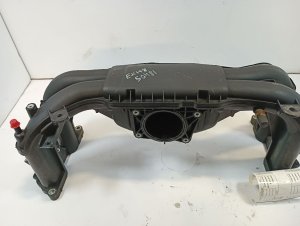
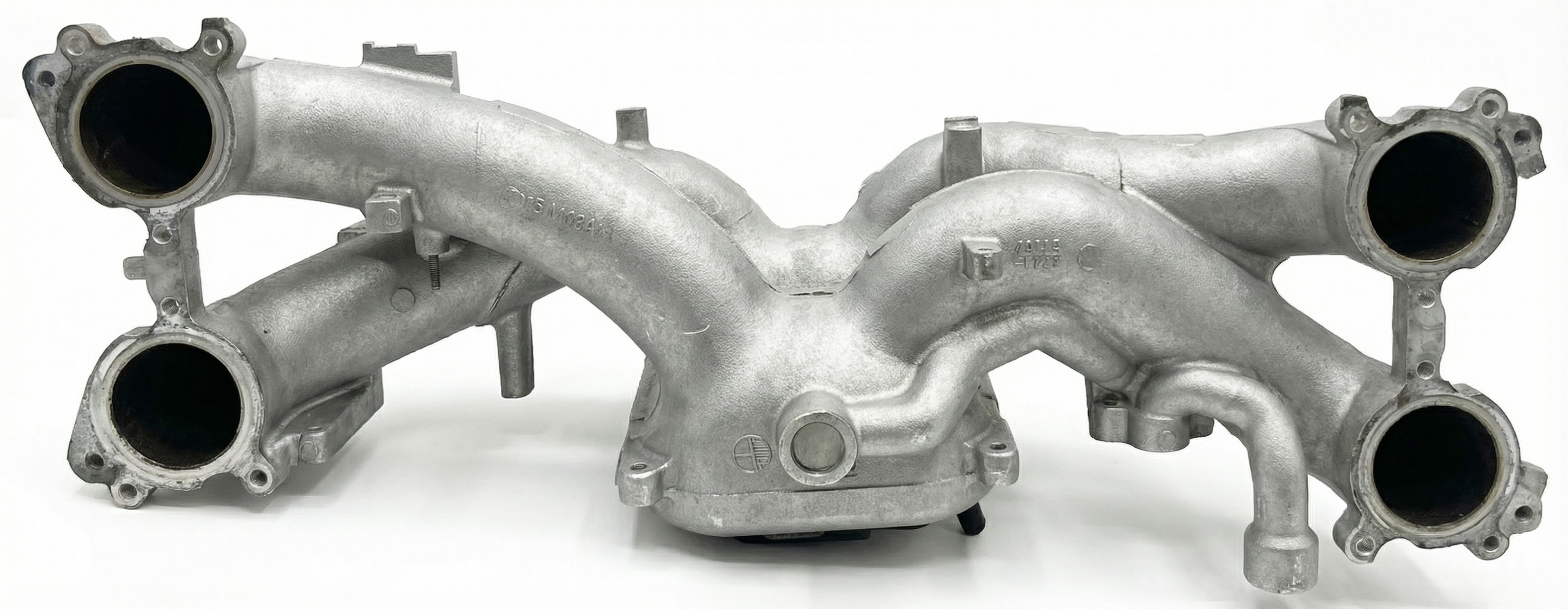
Fits 2.5L SOHC non-turbocharged EJ25 series engines. Made of a two-piece bonded composite plastic. Specific versions exist for Federal and PZEV emissions systems.
We Have This Part in Stock

The information in this article is provided for general reference and educational purposes only. Vehicle specifications, procedures, and part compatibility can vary by production date, trim level, and region. Always consult your vehicle's factory service manual and verify part numbers before purchasing or performing repairs. Safety-critical components such as airbags, seat belts, and braking systems should be installed by a qualified professional.
- Subaru Legacy:
- Subaru Outback: