

Ford Edge & Lincoln MKX Underhood Fuse Box (2007-2015): Solving Electrical Gremlins and No-Start Issues
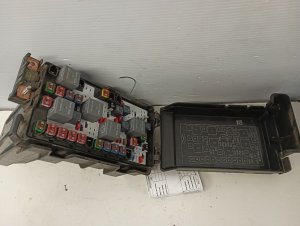
This guide covers the common failures, symptoms, and replacement of the underhood fuse box, also known as the Battery Junction Box (BJB), for the 2007-2014 Ford Edge and 2007-2015 Lincoln MKX.
- The number one cause of failure is water intrusion leading to corrosion; replacement is the only reliable fix.
- Compatibility is critical. The replacement fuse box MUST match your vehicle's engine (3.5L/3.7L), headlamps (Halogen/HID), and tow package options.
- This underhood fuse box (BJB) does NOT require any dealer programming or special setup; it is a direct swap.
- When buying a used part, always inspect photos of the internal terminals to ensure there is no corrosion.
Symptoms of a Failing Fuse Box
A failing BJB often leads to a variety of strange and intermittent electrical issues. Because it controls so many unrelated systems, the symptoms can be confusing and seem random. The root cause is almost always corrosion inside the box caused by water intrusion.
- No-Crank or No-Start: The engine may not crank at all, or it may crank but fail to start. This can happen if the relays or circuits for the starter motor or fuel pump are compromised.
- Sudden Stalling: The engine may shut off while driving if power to the fuel pump or ignition system is interrupted.
- Dead Battery: A common symptom is a battery that repeatedly dies overnight. A short circuit within the BJB can create a parasitic drain, drawing power even when the vehicle is off.
- Electrical "Gremlins": This is the most common complaint. You may experience multiple, unrelated issues at once, such as:
- The horn blaring on its own.
- Headlights or interior lights staying on or not working at all.
- Wipers activating by themselves or not turning off.
- "Door Ajar" light staying on (though this can also be a separate issue with the door latch itself).
- Power windows or radio not working.
- Visible Corrosion: If you open the fuse box cover, you may see white or greenish powder on the fuses, relays, or the terminals they plug into. This is a sure sign of water damage.
Associated OBD-II Codes
A failing fuse box rarely sets a code for itself. Instead, it typically causes a flood of communication errors (U-codes) or codes in other modules related to low voltage or circuit faults. Common codes include:
- U-series codes (e.g., U0100, U0140): Indicating loss of communication with the ECM, BCM, or other modules.
- P-series codes: Codes related to specific components not receiving power, such as P0230 (Fuel Pump Primary Circuit Malfunction) or P0685 (ECM/PCM Power Relay Control Circuit).
- B-series codes: Codes related to body electronics, often showing low voltage faults.
Pro Tip: Many symptoms of a bad fuse box mimic a failing battery or alternator. If you have replaced the battery and are still having issues, the BJB is a likely culprit. Check the battery terminals and main power connections to the fuse box for corrosion or looseness first.
Known Issues, TSBs, and Recalls
The primary known issue for the 2007-2014 Ford Edge and 2007-2015 Lincoln MKX fuse box is its susceptibility to water damage. The BJB is located in the engine bay on the driver's side, underneath the cowl panel area. Over time, seals for the windshield or cowl can degrade, allowing water to drip directly onto and into the fuse box, causing corrosion on its internal multi-layered circuit board.
While no specific recall has been issued for this fuse box failure on the Edge or MKX, Ford has issued Technical Service Bulletins (TSBs) for nearly identical issues on other vehicles like their F-Series trucks (TSB 20-2298 / 21-2176 / 23-2133). These bulletins acknowledge that an improperly seated BJB cover can lead to water intrusion, causing symptoms like a dead battery, no-start conditions, and the horn staying on. The repair procedure involves inspecting for corrosion and replacing the BJB if damage is found.
Buying a Used Fuse Box: What to Look For
A used OEM fuse box is an excellent, cost-effective alternative to an expensive new unit. However, because water damage is the primary failure mode, careful inspection is critical.
- Verify Compatibility (The #1 Priority): This is the most important step. These fuse boxes are NOT one-size-fits-all. Compatibility depends on your vehicle's specific options. You must match the new fuse box to your vehicle's configuration. Check these three options:
- Engine: 3.5L or 3.7L V6
- Headlamps: Standard Halogen or Xenon (HID)
- Tow Package: With or without the factory tow package
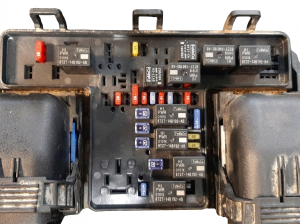
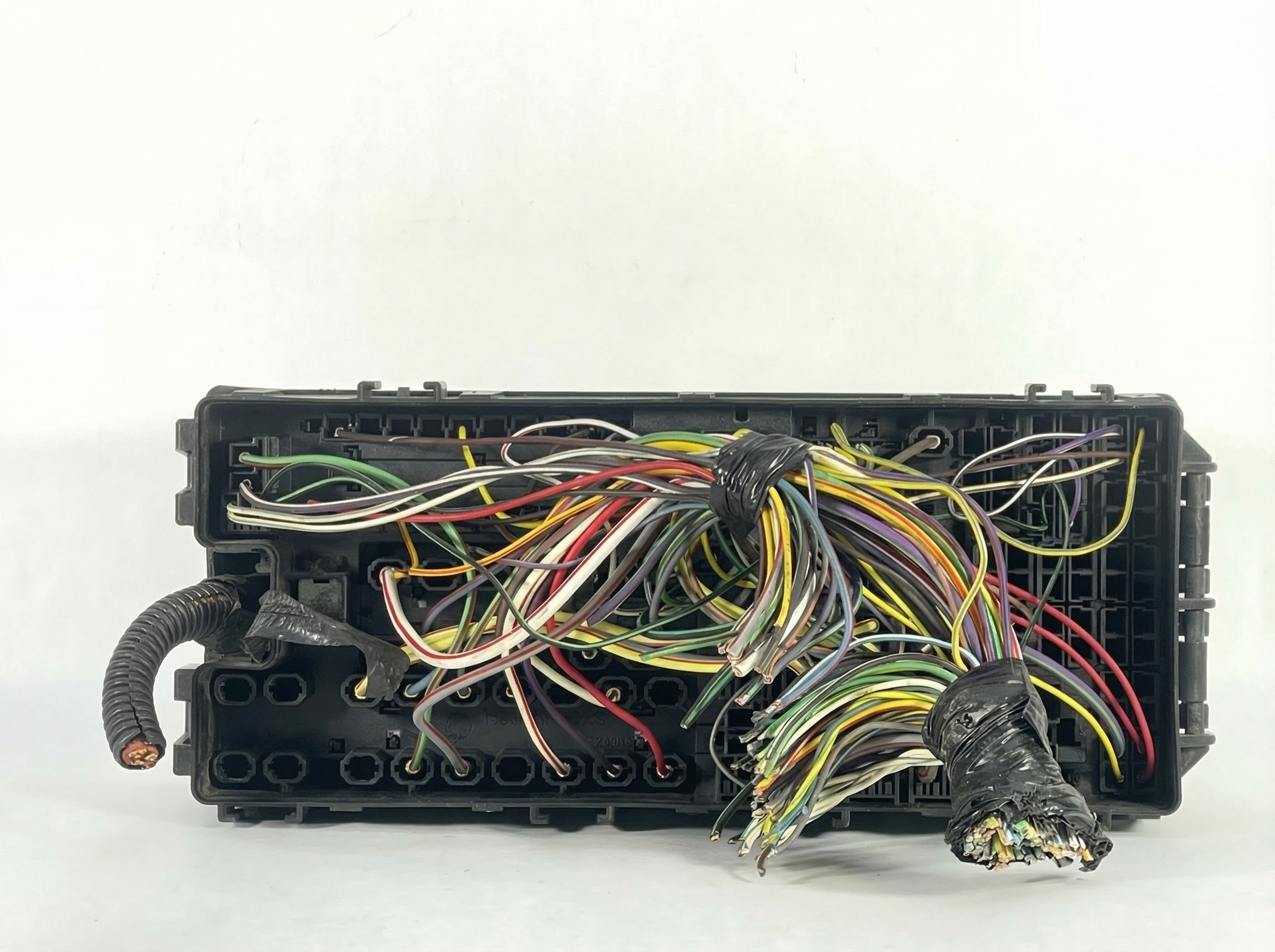
- Demand Pictures of the Inside: Do not buy a used fuse box without seeing clear pictures of the internal terminals where the fuses and relays plug in. Look for any signs of white or green corrosion. A clean, corrosion-free used OEM part is a much better choice than a new, lower-quality aftermarket unit.
- Check the Connectors: Inspect the large electrical connector ports on the sides and bottom of the fuse box. The pins should be straight and clean. Any signs of corrosion or melted plastic are major red flags.
- Mileage is Not a Major Factor: Unlike mechanical parts, a fuse box's age or mileage is less important than its condition. A low-mileage unit from a wet climate can be in worse shape than a high-mileage one from a dry climate. Condition and lack of corrosion are what matter.
Warning: Installing a fuse box from a vehicle with different options will cause certain features to not work. For example, a box from a car without a tow package installed on a car with one will result in no power to the trailer light circuits. Always match the part number or verify the donor vehicle's options.
Replacement Overview & Programming
Does the fuse box need to be programmed?
No. The underhood fuse box (BJB) on the 2007-2014 Ford Edge and 2007-2015 Lincoln MKX does not require any programming or flashing. It is a direct-swap component. This is different from the interior fuse panel (called the Smart Junction Box or SJB), which is a control module that often does require programming.
Replacement Steps
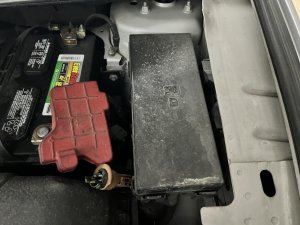
Replacing the BJB is a straightforward job that a DIY mechanic can typically complete in about an hour. The fuse box is located in the engine compartment on the driver's side, next to the battery.
- Disconnect the Battery: Always disconnect the negative battery terminal before working on any major electrical components.
- Remove the Cover: Unclip the plastic cover from the top of the fuse box.
- Disconnect Main Power: There is a primary power cable from the battery attached to a stud on the fuse box. Remove the nut (typically 10mm or 13mm) and detach this cable.
- Unplug the Connectors: There are several large multi-pin connectors attached to the sides and bottom of the BJB. Each has a locking tab or lever that must be released. Be gentle, as old plastic can be brittle.
- Unbolt the Fuse Box: Remove the bolts holding the fuse box assembly to the vehicle's chassis.
- Swap and Reassemble: Install the new fuse box and reconnect everything in the reverse order. It's a good practice to apply a small amount of dielectric grease to the connector pins to help prevent future corrosion.
Cost of Replacement
The cost to replace the BJB can vary significantly depending on the part source.
| Part Source | Estimated Part Cost |
|---|---|
| New OEM | $650 - $1100 |
| New Aftermarket | $250 - $450 |
| Used OEM | $75 - $200 |
| Shop Labor | $120 - $250 |
Frequently Asked Questions (FAQ)
Can I just clean the corrosion off my old fuse box?
While you can try cleaning surface corrosion with a terminal brush and contact cleaner, it is usually a temporary fix. The corrosion you see on top is often a sign of much worse damage on the internal layers of the fuse box's printed circuit board. Once water gets inside, it wicks between the layers, and the damage cannot be fully repaired. Replacement is the only reliable, long-term solution.
Is the underhood fuse box the same as the Smart Junction Box (SJB)?
No. These are two different parts. The underhood fuse box is the Battery Junction Box (BJB), which is the main power distribution center. The Smart Junction Box (SJB) is the interior fuse panel located under the driver's side dashboard. The SJB is a computer module that controls interior functions and often requires programming, while the BJB does not.
Why does my horn go off randomly? Is it the fuse box?
Yes, this is a very common symptom of a water-damaged BJB. A short circuit inside the box can energize the horn relay circuit, causing the horn to sound continuously, even with the vehicle turned off. If this happens, you can temporarily disable it by pulling the horn fuse or relay until the BJB is replaced.
Is this problem related to the fuel pump driver module recall?
No, this is a separate issue. Many of these vehicles were recalled for a faulty Fuel Pump Driver Module (FPDM), which could also cause stalling or a no-start condition. However, the FPDM is a separate, smaller module typically located elsewhere on the vehicle. A failing BJB will usually present with multiple, varied electrical problems, not just a fuel pump issue.
Technical Specifications
OEM Part Numbers: 37LCA1T14290FF 7T4T14A003AA 7T4Z14A003A 7T4Z14A067A FU5Z-14A067-A CA1T14290AA CA1T14290AB CA1T14290AC CA1T14290AD CA1T14290AE CA1T14290AF CA1T14290AG CA1T14290AH CA1T14290AJ CA1T14290AK CA1T14290JA
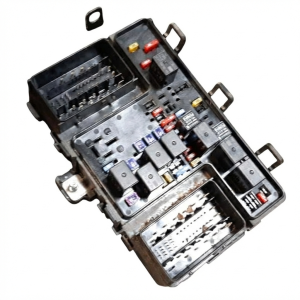
Also known as the Battery Junction Box (BJB). Located in the engine compartment, driver's side, next to the battery.
We Have This Part in Stock

The information in this article is provided for general reference and educational purposes only. Vehicle specifications, procedures, and part compatibility can vary by production date, trim level, and region. Always consult your vehicle's factory service manual and verify part numbers before purchasing or performing repairs. Safety-critical components such as airbags, seat belts, and braking systems should be installed by a qualified professional.
- Ford Edge:
- Lincoln MKX:
- 🛍️ Shop This Part
- Symptoms of a Failing Fuse Box
- Associated OBD-II Codes
- Known Issues, TSBs, and Recalls
- Buying a Used Fuse Box: What to Look For
- Replacement Overview & Programming
- Does the fuse box need to be programmed?
- Replacement Steps
- Cost of Replacement
- Frequently Asked Questions (FAQ)
- 🎟️ Get 5% Off