

2006-2007 Pontiac G6 Fuse Box: Solving 'No Start When Hot' & Critical Part Number Mismatches
This guide details the common failure points, repair procedures, and critical, engine-specific part numbers for the 2006-2007 Pontiac G6 underhood fuse box.
- Compatibility is critical: The fuse box part number MUST match your vehicle's specific year and engine size.
- The common 'no start when hot' issue is caused by a repairable cracked solder joint inside the fuse box.
- This underhood fuse box does NOT require dealer programming; it is plug-and-play.
- Electrical issues like faulty brake lights are more likely caused by the Body Control Module (BCM), which was under a separate recall.
Critical Compatibility Warning: Match Your Part Number!
Critical Compatibility Warning: Match Your Part Number!
The single most important factor when replacing the underhood fuse box on a 2006-2007 Pontiac G6 is matching the OEM part number exactly. Unlike many other parts, these fuse boxes are specific to both the model year AND the engine installed in the vehicle. Installing the wrong fuse box will lead to immediate problems, including warning lights, non-functional features, and diagnostic trouble codes. The internal circuit boards are different.
Before ordering a replacement, locate the part number on your original fuse box. It is typically on a sticker on the side or top of the plastic housing.
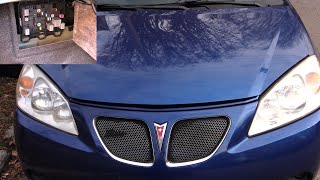
🎬 Watch: A quick guide to finding all G6 fuse box locations.| Part Number | Vehicle Fitment |
|---|---|
| 15269825 | 2006 Pontiac G6 with 3.5L V6 Engine |
| 15269824 | 2006 Pontiac G6 with 2.4L I4 or 3.9L V6 Engine |
| 15858845 | 2007 Pontiac G6 with 3.5L or 3.9L V6 Engine |
| 15859580 | 2007 Pontiac G6 with 2.4L I4 Engine |
Do not assume a part will work based on year alone. A fuse box for a 2.4L engine installed in a 3.5L vehicle will cause errors because it lacks the correct internal connections and relay positions.
Common Failure Symptoms
Intermittent No-Crank, No-Start When Hot
This is the most common and well-documented failure for this part. The vehicle starts perfectly when cold, but after driving and reaching full operating temperature, it will not restart. After the engine cools down for 30-60 minutes, it starts up again as if nothing is wrong. This is not a starter or battery issue.
The Cause: A cracked solder joint on the fuse box's internal circuit board. This crack is located on the circuit that sends the 'start' signal to the starter relay. When the engine bay gets hot, thermal expansion causes the crack to widen, breaking the electrical connection. As the box cools, the crack closes, and the connection is restored.
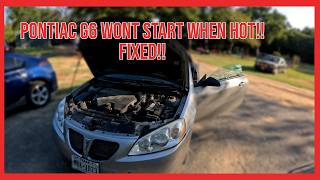
Pro Tip: This issue can be permanently fixed by disassembling the fuse box and re-soldering the cracked joint on the circuit board. 🎬 Watch: How to fix the 'no start when hot' issue yourself. This is a much cheaper alternative to replacing the entire unit.
Erratic Electrical Behavior
A failing fuse box can cause a wide range of bizarre electrical problems as circuits lose power intermittently. Symptoms may include:
- Headlights, wipers, or radio not working or turning on by themselves.
- Fuel pump not engaging, causing a crank-but-no-start condition.
- Cooling fans failing to turn on, leading to overheating.
- Warning lights for ABS, Traction Control, or Check Engine illuminating, especially if the wrong fuse box has been installed.
These issues are often caused by internal corrosion from water intrusion (often from a missing fuse box cover) or from internal circuit board failure.
Known Issues, Recalls, and TSBs
It is important to distinguish fuse box failures from other common G6 electrical issues. Many symptoms overlap, but the recalls below apply to different components.
- NHTSA Recall 14V252000 (BCM): This major recall concerns the Body Control Module (BCM), not the underhood fuse box. It can cause brake lights to malfunction (staying on or not coming on), cruise control to fail, and make it difficult to shift out of Park. This is caused by a poor connection at the BCM, which is located inside the car.
- NHTSA Recall 15V064000 (Power Steering): Many G6 models were recalled for a sudden loss of electric power steering (EPS) assist. This is due to a faulty torque sensor in the steering column and is unrelated to the fuse box.
- TSB for Electrical Grounds: GM issued technical service bulletins regarding proper ground repairs. Poor grounding can cause a host of electrical issues that can mimic a failing fuse box, so checking the main battery and chassis grounds is always a good first step.
Buying a Used 2006-2007 G6 Fuse Box
Given the high cost of a new OEM unit and the availability of used parts, buying a recycled fuse box is a very popular option. Here's what to look for:
- Verify the Part Number: This is the most critical step. Bring your original part number and match it exactly to the used unit.
- Inspect for Corrosion: Carefully examine all the metal pins and terminals on the bottom of the box where the wiring harnesses connect. Look for any signs of green or white crusty corrosion, which indicates water damage. A corroded box should be rejected immediately.
- Check for Physical Damage: Look for melted plastic around the fuse or relay sockets, which indicates a severe short circuit. Ensure all mounting tabs and the cover clips are intact.
- Ask About the 'No Start' Fix: If possible, ask the seller if the unit was tested or if the common solder joint issue has been inspected or repaired. A seller specializing in these parts may have already reinforced the weak point.
- Why Used OEM is a Good Choice: For this part, a used OEM unit is often superior to a new aftermarket one (if you could even find one). The OEM box has the correct layout, high-quality original relays, and guaranteed fitment. The only common failure point is a repairable solder joint.
Programming and Installation
The underhood fuse box does NOT require any programming or flashing. It is a 'plug-and-play' component. If a shop tells you it needs to be programmed, they are likely confusing it with the Body Control Module (BCM), which is a separate part located inside the vehicle that does require dealer programming.
Replacement Overview
- Disconnect the Battery: Always disconnect the negative battery terminal before working on any major electrical components.
- Remove the Cover: Unclip the plastic cover of the fuse box.
- Disconnect Main Power Feeds: There are one or two large power cables attached to studs on the fuse box. Remove the nuts (typically 10mm or 13mm) and move the cables aside.
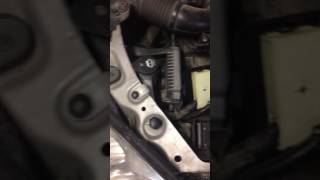
- Unbolt the Connectors: The large wiring harness connectors are secured to the bottom of the fuse box with small bolts (typically 7mm or 8mm). Loosen these bolts until the connector's lever arm lifts and ejects the plug. 🎬 See this walkthrough on how to remove the fuse box completely. You do not need to remove the bolts completely.
- Remove the Box: Release the plastic tabs holding the fuse box to its bracket and lift it out.
- Installation: Installation is the reverse of removal. Seat the new box, plug in the connectors and tighten the bolts to draw them in, re-attach the main power cables, and finally, reconnect the battery.
Cost Comparison
| Part Type | Estimated Cost |
|---|---|
| New OEM | $350 - $550+ |
| New Aftermarket | Generally not available as a complete assembly |
| Used OEM | $50 - $175 |
| Shop Labor | $100 - $200 |
Frequently Asked Questions (FAQ)
Does the 2006-2007 G6 fuse box need to be programmed?
No. The underhood fuse box (UBEC) is a non-programmable, plug-and-play part. The separate Body Control Module (BCM), which is inside the car, is the component that requires programming.
What causes the 'no start when hot' problem?
A cracked solder joint on the internal circuit board is the most common cause. Heat from the engine bay causes the crack to expand and break the electrical circuit for the starter signal. When it cools, the connection is restored. The fuse box can be opened and the joint re-soldered to fix the issue.
Can I use a fuse box from a G6 with a different engine?
No. The fuse boxes are specific to the engine and model year. Using the wrong one will result in missing fuse/relay slots for essential components, leading to warning lights and system malfunctions. You must match the OEM part number from your original unit.
My brake lights are acting weird. Is it the fuse box?
While possible, it is more likely related to the Body Control Module (BCM), which was subject to a recall for this exact issue. Check if NHTSA recall 14V252000 has been performed on your vehicle before replacing other parts.
Helpful Videos
Technical Specifications
OEM Part Numbers: 15269825 15859580 15269824 15858845
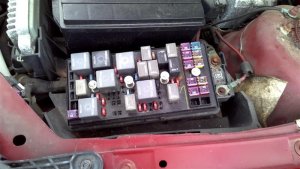
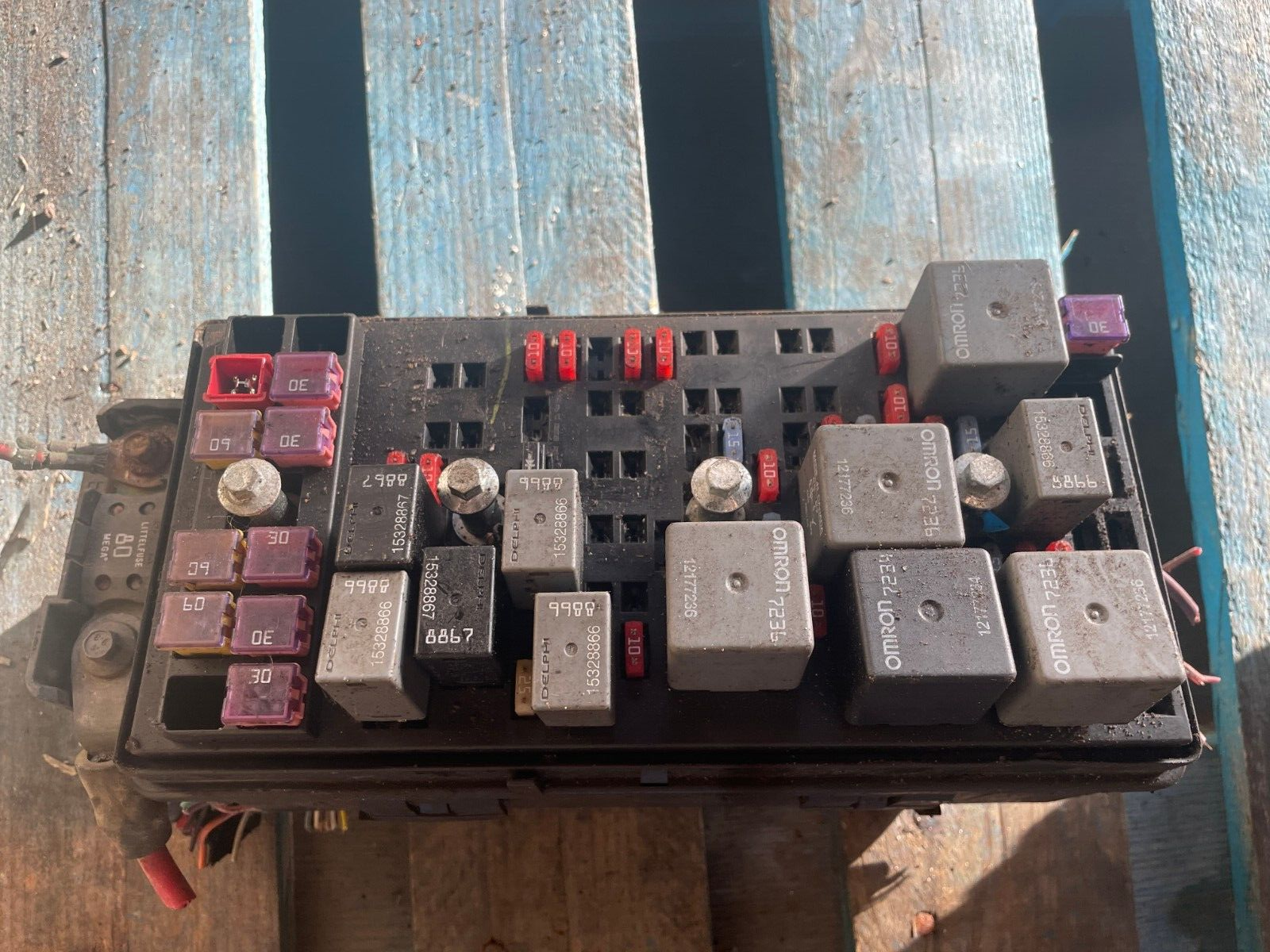
Located in the engine bay, next to the battery. Contains a mix of mini fuses, J-case fuses, and relays to control engine and chassis functions.
We Have This Part in Stock

The information in this article is provided for general reference and educational purposes only. Vehicle specifications, procedures, and part compatibility can vary by production date, trim level, and region. Always consult your vehicle's factory service manual and verify part numbers before purchasing or performing repairs. Safety-critical components such as airbags, seat belts, and braking systems should be installed by a qualified professional.
- Pontiac G6:
- 🎬 Helpful Videos
- 🛍️ Shop This Part
- Critical Compatibility Warning: Match Your Part Number!
- Common Failure Symptoms
- Intermittent No-Crank, No-Start When Hot
- Erratic Electrical Behavior
- Known Issues, Recalls, and TSBs
- Buying a Used 2006-2007 G6 Fuse Box
- Programming and Installation
- Replacement Overview
- Cost Comparison
- Frequently Asked Questions (FAQ)
- 🎟️ Get 5% Off