

B0050 on 2015-2021 Jeep Renegade: Driver Seatbelt Buckle Fault Causes and Fixes
This code indicates a fault with the driver's seatbelt buckle sensor circuit. The most common cause is a poor connection under the seat or a faulty buckle assembly. A specific TSB points to corrosion on the connector pins. Check and clean the wiring first, but expect to replace the driver's seatbelt buckle or the inline connector.
- B0050 means there is a problem in the driver's seatbelt buckle circuit, which is a critical safety issue that can disable the airbag system.
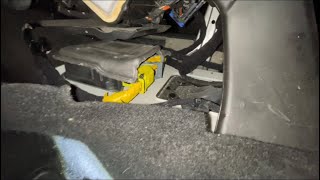
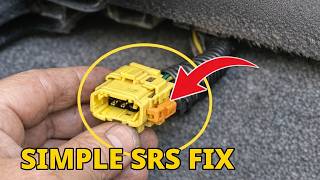
- Before buying any parts, always check the large yellow connector under the driver's seat. It is often loose or has corroded pins, and simply cleaning and re-seating it can fix the problem.
- If the connector is not the issue, the most likely fix is to replace the entire driver's side seatbelt buckle assembly.
- This is a safety system. If you are not comfortable working with SRS components, professional service is strongly recommended.
- The code must be cleared with an SRS-capable scan tool after the repair is complete.
What's Unique About the 2015-2021 Jeep RENEGADE
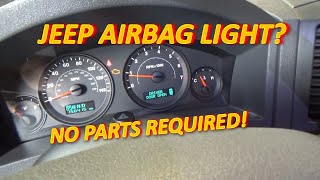
On the Jeep Renegade and related FCA/Stellantis platforms like the Fiat 500X, this code is frequently caused by a poor electrical connection rather than a complete failure of the buckle itself. A manufacturer TSB (10-001-23) points to micro-vibrations causing fretting corrosion on the connector pins between the seat harness and the buckle. Another STAR Case file (S2208000089) also notes that the connector simply not being fully seated is a common trigger for the B0050-13 variant. This suggests that checking, cleaning, and properly seating the connector under the driver's seat is a critical first step before replacing parts. 🎬 Watch: How to fix the airbag light without buying parts A recent safety recall (24V-510) for 2019-2023 models also identifies a disrupted connector on the buckle switch hall effect sensor as a potential defect.
Diagnostic Flowchart
Tap your situation to follow the diagnostic path that matches what you're seeing on this vehicle.
Symptoms You May Notice
- Airbag warning light is on
- Seatbelt reminder light stays on or flashes, even when buckled
- Seatbelt reminder chime may sound continuously
- Start/Stop system may be disabled
- "Service Parking Brake" or similar warning light may appear simultaneously
- Replacing the seatbelt retractor (the part that spools the belt) when the issue is with the buckle (the part the belt latches into). The sensor is in the buckle.
- Immediately replacing the buckle assembly without first thoroughly inspecting and cleaning the inline connector under the seat, which is the more common failure point according to TSB 10-001-23.
Most Likely Causes
- Poor Connection at Seat Harness Connector 🔴 High Probability A specific TSB (10-001-23) identifies that micro-vibrations can cause fretting corrosion on the connector pins, leading to an open or out-of-range circuit. An FCA STAR case also points to the connector simply being loose. This is the most common point of failure.
How to confirm: Visually inspect the main yellow connector under the driver's seat. Disconnect (after disabling the SRS system) and check for corrosion, backed-out pins, or damage. Wiggling the connector while observing live data on a scan tool can show fluctuating resistance, confirming a bad connection. Re-seating the connector firmly may resolve the issue temporarily.
Typical fix: The official TSB repair involves replacing the male and female inline seat connectors by splicing in new pigtails (Part numbers 68601668AA and 68602011AA). After replacement, the pins on the female connector should be treated with a small amount of dielectric grease (specifically WURTH Silicone Spray 0893223 or equivalent) before reconnecting. A simpler, initial fix attempt is to clean the existing connector pins with electrical contact cleaner and apply grease.
Est. part cost: $10-$50 - Faulty Driver's Seatbelt Buckle Assembly 🟡 Medium Probability The internal switch within the buckle is a mechanical part that can wear out over time from repeated use. Debris can also enter the buckle mechanism and interfere with the switch.
How to confirm: If the wiring and connector are confirmed to be good, the buckle itself is the likely culprit. A technician can test the switch's continuity with a multimeter while latching and unlatching the belt. A failed switch will show an open circuit (infinite resistance) when it should be closed. A user on a Jeep forum confirmed that replacing the seatbelt assembly fixed both B0050-13 and P1495 codes.
Typical fix: Replace the entire driver's side seatbelt buckle assembly. This is typically held to the seat frame by a single large bolt. It is a critical safety component and should not be repaired. It is crucial to get the correct part number for the vehicle's VIN, as several variations exist.
Est. part cost: $80-$150 - Damaged Wiring Under the Driver's Seat ⚪ Low Probability Wires under the seat can be kicked, snagged by items stored under the seat, or damaged by the seat's movement, leading to a break or short in the circuit. The wires are part of the yellow, protected SRS harness.
How to confirm: Perform a thorough visual inspection of the entire harness running from the floor to the seatbelt buckle connector. Look for any pinched, stretched, or broken wires. Check for continuity from the connector back to the ORC module if damage is suspected.
Typical fix: Repair the damaged section of wire by splicing, soldering, and heat-shrinking the affected area. Per FCA/Stellantis guidelines, SRS wiring repairs are permissible but must be done with extreme care to ensure a reliable connection.
Est. part cost: $0-$10
Rare But Worth Checking
- Faulty Occupant Restraint Controller (ORC): → Shop Air Bag Control Module This is the airbag system's main computer, located under the center console. It is an uncommon failure point but should be considered if a new buckle and confirmed-good wiring do not resolve the code.
- Low Battery Voltage: Some owners report multiple, seemingly unrelated warning lights, including the airbag light, when the vehicle's main battery is failing. While not a direct cause of B0050, it can create confusing electrical issues and should be ruled out if multiple other warnings are present.
Diagnosis Steps
- Read the specific fault code with a scanner capable of reading SRS/airbag modules, noting the suffix (e.g., -13 for open circuit or -1D for out of range).
- Perform a visual inspection under the driver's seat for any obvious damage to the yellow-taped wires or connectors. Check for items stored under the seat that could have caused damage.
- Following proper safety procedures to disable the SRS system (disconnect the negative battery terminal and wait at least 10-15 minutes), disconnect the main yellow connector under the driver's seat.
- Inspect the male and female pins for any signs of green or white corrosion, looseness, or damage.
- Clean the connector pins with electrical contact cleaner and a small brush. Apply a small amount of dielectric grease (WURTH Silicone Spray 0893223 or equivalent) to the female connector pins and re-seat it firmly until it clicks and the locking tab is secure.
- If the code returns, the TSB procedure calls for replacing the inline connector pigtails, which requires cutting and splicing wires.
- Alternatively, if the connector seems fine, test the buckle. Use a multimeter to test the continuity of the switch inside the buckle. The resistance should change state (e.g., from open to closed) when the belt is latched and unlatched.
- If the switch fails the continuity test, the buckle assembly needs to be replaced.
- If the switch and connector are good, check the wiring harness for continuity between the seat connector and the ORC module.
- After any repair, clear the codes using a capable scan tool. The airbag light will not turn off on its own, though some systems may self-clear after several key cycles if the fault is gone.
Parts You'll Likely Need
- Driver's Side Seatbelt Buckle
(OEM #6KL82JXWAA (example for some trims, verify by VIN))— The internal switch that detects if the belt is latched is the second most common point of failure after the connector. The switch is integrated into the buckle and is not sold separately. Part number varies significantly by trim and year.
Trusted brands: Mopar
OEM price range: $100-$150
Aftermarket price range: $80-$120 - Seat Harness Inline Connector (Male)
(OEM #68601668AA)— TSB 10-001-23 specifically calls for replacing this connector if corrosion is found, as it is a known failure point due to vibration. This is the male side of the pigtail.
Trusted brands: Mopar
OEM price range: $10-$25 - Seat Harness Inline Connector (Female)
(OEM #68602011AA)— This is the female side of the connector pigtail, also replaced as part of the TSB 10-001-23 repair procedure.
Trusted brands: Mopar
OEM price range: $10-$25
Related Codes That Often Appear With This One
- P1495 — P1495 is a powertrain code for the 'Left Front Seatbelt Switch Circuit'. It often appears with B0050-13 because both the engine computer (for Start/Stop) and the airbag computer monitor the same switch.
- B0052 — This is the equivalent code for the passenger side ('Passenger Seatbelt Sensor Circuit'). If work has been done under both seats or there is a common wiring issue, both might appear. STAR Case S2208000089 mentions both codes can be caused by unseated connectors.
Technical Service Bulletins (TSBs) & Recalls
- 10-001-23 (also listed as NHTSA #1000123): Addresses MIL illumination due to DTCs B0050-1D (Driver Front Buckle Switch - Out of Range) and B0050-13 (Driver Front Buckle Switch - Circuit open). Details the cause as micro-vibrations causing corrosion and provides a repair procedure involving connector replacement.
Platform-Specific Known Issues
- Technical Service Bulletin (TSB) #10-001-23 was issued for 2015-2022 Renegades and Fiat 500X models, noting that codes B0050-1D and B0050-13 can be caused by terminal corrosion in the inline seat connector due to micro-vibrations. The prescribed fix is to replace the connector pigtails and apply silicone grease.
- FCA STAR Case S2208000089 also addresses B0050-13, advising technicians to first check that the seat belt connector is fully seated before replacing any parts, as this is a common oversight.
Mechanic-Grade Diagnostic Values
- Continuity of the Driver Seat Belt Buckle Switch (buckled) — expected: Low resistance (a few ohms). Failure: High or infinite resistance (OL) when buckled indicates a failed open switch.
- Continuity of the Driver Seat Belt Buckle Switch (unbuckled) — expected: Open circuit / infinite resistance (OL). Failure: Low resistance when unbuckled indicates a shorted switch.
- Resistance of the wiring harness between the buckle connector and the ORC module — expected: Less than 1.0 Ω. Failure: Resistance greater than 1.0 Ω indicates an open or high resistance in the harness.
Scan Tool Commands That Help
- wiTECH or equivalent bidirectional scanner: View Live Data for Seat Belt Buckle Status — Use this to see in real-time if the ORC module recognizes the switch changing state from 'Not Inserted' to 'Inserted' when the belt is buckled. It is crucial for confirming a good repair and for performing a 'wiggle test' on the under-seat harness to find intermittent connection issues.
- wiTECH or equivalent bidirectional scanner: Clear ORC/SRS DTCs — This is mandatory after any repair. B-prefix codes in the SRS system are often 'latched' or 'hard faults' and will not clear on their own, even after the physical fault is fixed. The code must be manually cleared from the Occupant Restraint Controller.
- wiTECH or equivalent bidirectional scanner: Restore Vehicle Configuration / Proxi Configuration Alignment — This function may be necessary if the Occupant Restraint Controller (ORC) module is replaced. It ensures that the new module is correctly configured to the vehicle's specific options.
Wiring & Ground Locations
- Driver's Seat Belt Buckle Inline Connector — Under the driver's seat, part of the yellow-taped SRS harness connecting the buckle pigtail to the main seat harness.. This is the primary failure point identified in TSB 10-001-23 and Safety Recall 24V-510. Micro-vibrations cause corrosion on the pins, leading to an open or out-of-range circuit for B0050.
- Main Battery Ground — Connects the negative battery terminal to the vehicle's chassis, typically on the passenger side fender in the engine bay.. While not a direct cause, a poor main ground connection can cause widespread, intermittent electrical issues and phantom warning lights across multiple modules, including the SRS system.
Real Owner Repair Stories
- YouTube channel 'Professor Mecânico Parceiro' (Jeep Renegade T270 Flex Turbo) — Airbag light on, Start/Stop system not working, codes B0050-13 and P1495 present.
❌ Tried (didn't work) The technician first advises checking the green connector under the driver's seat to ensure it is properly plugged in.
✅ What actually fixed it After confirming the connector was secure, the technician condemned the driver's seatbelt buckle assembly due to an internal resistance fault. Replacing the buckle assembly resolved both fault codes and extinguished the warning lights. - Reddit user in r/JeepRenegade (Jeep Renegade (year not specified)) — Alarms for e-brake, airbags, and 'help calls' appearing simultaneously.
✅ What actually fixed it The user had the same issue and it was resolved by replacing the driver's seatbelt buckle under warranty. They noted that the combination of seemingly unrelated warnings made the root cause (the buckle sensor) unintuitive.
Model Year Variations Within This Range
- 2019-2023: A safety recall (NHTSA 24V-510) was issued for some 2019-2023 Jeep Renegade models due to a potentially defective connector on the buckle switch hall effect sensor. The issue can cause the airbag light to illuminate and may prevent proper airbag function. The fix involves repairing the seat belt connector.
Helpful Videos

The information in this article is provided for general reference and educational purposes only. Vehicle specifications, procedures, and part compatibility can vary by production date, trim level, and region. Always consult your vehicle's factory service manual and verify part numbers before purchasing or performing repairs. Safety-critical components such as airbags, seat belts, and braking systems should be installed by a qualified professional.
- Jeep RENEGADE:
- 🧭 Diagnostic Flowchart
- 🎬 Helpful Videos
- What's Unique About the 2015-2021 Jeep RENEGADE
- Symptoms You May Notice
- Most Likely Causes
- Rare But Worth Checking
- Diagnosis Steps
- Parts You'll Likely Need
- Related Codes That Often Appear With This One
- Technical Service Bulletins (TSBs) & Recalls
- Platform-Specific Known Issues
- Mechanic-Grade Diagnostic Values
- Scan Tool Commands That Help
- Wiring & Ground Locations
- Real Owner Repair Stories
- Model Year Variations Within This Range
- 🎟️ Get 5% Off