

B3060 on 2015-2022 Chevrolet Equinox: Causes for Security Light and No-Start
Code B3060 on a Chevy Equinox means the vehicle's security system doesn't recognize the key, causing a no-start and an illuminated security light. The most common fixes are trying a spare key, checking for radio-frequency interference from other devices on your keychain, or replacing a faulty ignition lock cylinder. A key relearn procedure may also be required.
- B3060 means your Equinox's anti-theft system has locked you out, usually due to a key recognition problem.
- Before calling a tow truck, try using your spare key and remove all other fobs or cards from your keychain to rule out simple causes.
- The '10-minute key relearn' procedure can sometimes resolve software glitches without any tools.
- If simple fixes don't work, the most likely failed part is the ignition lock cylinder/reader coil, which requires professional replacement and programming.
- Do not immediately assume the starter or battery is bad if you see the security light; this code points specifically to the immobilizer system.
What's Unique About the 2015-2022 Chevrolet EQUINOX

The 2015-2022 Equinox, spanning two vehicle generations, is noted for intermittent security system issues. A GM Technical Service Bulletin (TSB) directly addresses concerns of a no-crank, no-start, or start-and-stall condition accompanied by the security light and code B3060. This bulletin highlights that the problem can be frustratingly intermittent and difficult for technicians to duplicate. It also points to a high sensitivity to radio frequency (RF) interference from other devices on the owner's keychain, a point heavily emphasized across a wide range of GM models.
Diagnostic Flowchart

Tap your situation to follow the diagnostic path that matches what you're seeing on this vehicle.
Generation note: The 2015-2022 year range includes the end of the second generation (2010-2017) and the start of the third generation (2018-2022). While both generations use a transponder key system, the third generation more commonly features push-button start. The diagnostic principles are similar, but part numbers for ignition switches and lock cylinders will differ. For example, the 2nd gen often uses an ignition lock cylinder like ACDelco D1464G, while the 3rd gen's security is more integrated into the BCM (e.g., part 13522387).
Symptoms You May Notice

- Engine will not crank or start.
- Engine starts briefly and then immediately stalls.
- Security indicator light is on or flashing on the dashboard.
- A "No Fob Detected" message may appear on the driver information center (for models with push-button start).
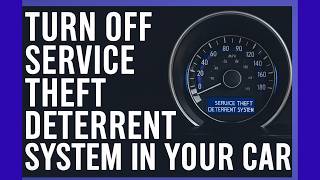
- A "Service Theft Deterrent System" message may appear on the DIC.
- Replacing the battery or starter motor. A no-crank condition caused by the security system is often mistaken for a dead battery or a failed starter. Always check for the security light on the dash first.
Most Likely Causes

- Radio Frequency (RF) Interference 🔴 High Probability As noted in GM TSBs PIC5650B and PIC5650M, the immobilizer system is highly sensitive to interference from other RFID devices like building access cards, gas station speed-pass fobs, or even other car keys on the same keychain.
How to confirm: Remove all other keys and electronic devices from the vehicle's keychain. Try starting the vehicle with the key by itself. If it starts, interference was the cause. This is the first step recommended by GM.
Typical fix: Keep other RFID-enabled cards and fobs separate from the vehicle key.
Est. part cost: $0 - Defective or Unprogrammed Ignition Key 🟡 Medium Probability → Shop Ignition Switch The transponder chip inside the key can fail, or an aftermarket key may not be programmed correctly. This is a common scenario discussed in owner forums when a new key fails the relearn procedure.
How to confirm: Attempt to start the vehicle with a known-good spare key. If the spare key works, the primary key is faulty. A scan tool would show an invalid key signal.
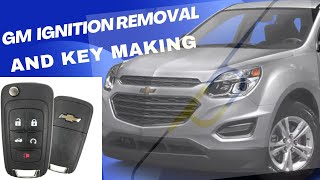
Typical fix: Replace the faulty key and perform the key relearn procedure. This often requires a locksmith or dealer with the proper programming tools, though DIY methods can sometimes work.
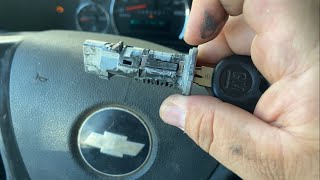
Est. part cost: $50-$200 - Faulty Ignition Lock Cylinder / Transponder Reader 🟡 Medium Probability → Shop Ignition Switch The exciter coil that surrounds the ignition lock cylinder and reads the key chip can fail over time, preventing it from communicating with the transponder. This is a common wear-and-tear item.
How to confirm: This requires diagnostic testing with a scan tool to monitor data from the Theft Deterrent Module. If no key is detected even with a known-good key, the reader is suspect.
Typical fix: Replace the ignition lock cylinder and/or the housing which often contains the reader coil. The new components will require a key relearn procedure.
Est. part cost: $50-$150 - Wiring or Connector Issue ⚪ Low Probability Corrosion or a loose connection in the wiring between the ignition lock cylinder's reader coil and the Body Control Module (BCM) can cause an intermittent signal loss. Forum users have reported issues with connectors at the BCM itself becoming loose or corroded after vehicle repairs or due to moisture.
How to confirm: Visually inspect the wiring harness and connectors at the base of the steering column and at the BCM for damage or looseness. A multimeter can be used to check for continuity.
Typical fix: Repair the damaged wire or clean and secure the connector.
Est. part cost: $5-$50
Rare But Worth Checking
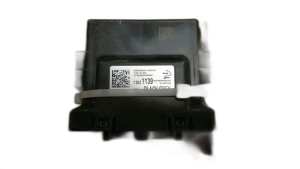
- Faulty Body Control Module (BCM): → Shop Body Control Module While rare, the BCM itself can fail internally, causing it to lose communication or improperly process the key signal. This is usually the last item to suspect after all other components in the immobilizer system have been tested and ruled out. Replacement requires programming to the vehicle's VIN.
Diagnosis Steps
- Check for the security light on the dashboard. If it's on or flashing, the issue is likely with the anti-theft system.
- Try starting the vehicle with a different, known-good key. If it starts, the first key is the problem.
- Remove all other fobs, cards, and electronic devices from the keychain and try starting again to rule out RF interference, as recommended by GM TSB PIC5650M.
- For vehicles with a traditional key, attempt the '30-Minute Relearn Procedure': Turn the key to the 'ON' position (without starting), and wait for the security light to turn off (approx. 10-11 minutes). Turn the key off for 5 seconds. Repeat this process two more times for a total of three 10-minute cycles. After the third cycle, the key should be learned.
- For vehicles with push-button start, a different relearn procedure may be required if all fobs are lost, often involving turning the physical key in the driver's door lock multiple times to initiate programming mode.
- Scan the vehicle for other related trouble codes, such as B3055 or B3935, which can help pinpoint the issue.
- Inspect the wiring and connectors for the ignition lock cylinder and the Body Control Module (BCM) for any visible damage or loose connections.
- If the above steps fail, professional diagnosis with a scan tool is needed to monitor the immobilizer system's data (e.g., 'Valid Key' parameter) and test individual components like the reader coil and BCM.
Parts You'll Likely Need
- Ignition Lock Cylinder
(OEM #ACDelco D1464G (for 2015-2017 models with keyed ignition))— The reader coil that detects the key's transponder chip is often part of the ignition lock cylinder assembly and is a common failure point for keyed ignition models.
Trusted brands: ACDelco, Dorman, Standard Motor Products
OEM price range: $80-$150
Aftermarket price range: $30-$100 - Transponder Key — The electronic chip within the key can fail, or a new key may be needed if the original is lost or damaged. An incorrectly cloned aftermarket key can also be the source of the problem.
Trusted brands: ACDelco
OEM price range: $70-$150
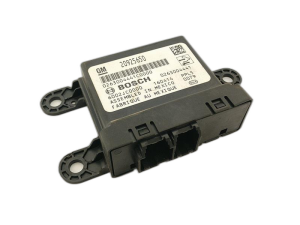
Aftermarket price range: $40-$80 - Body Control Module (BCM)
(OEM #13522387, 13594646 (for 2018+ models))— In later models, especially with push-button start, the BCM is the central hub for the security system. A fault in the BCM can cause this code, though it's a less common and more expensive repair.
Trusted brands: ACDelco (GM Genuine)
OEM price range: $250-$500
Aftermarket price range: $200-$350 (Remanufactured)
Related Codes That Often Appear With This One
- B3055 — This code means 'No Transponder Modulation or No Transponder Detected,' which is a closely related fault indicating the system received no signal at all, often seen alongside B3060 when the key isn't read at all.
- B3935 — This code for 'Transponder Authentication Error' can also be set with B3060, pointing to a failure in the security handshake between the key and the vehicle.
Technical Service Bulletins (TSBs) & Recalls
- PIC5650M: Addresses intermittent no crank, no start, or start stall concern with the security light coming on, listing B3060 as a potential DTC. It advises checking for RF interference from devices on the keychain.
- PIC5650B: An earlier version of the same TSB, covering models from 2010-2015, including the Equinox and its platform mate, the GMC Terrain. It explicitly l
Platform-Specific Known Issues
- An official GM Technical Service Bulletin (PIC5650M, and earlier versions) specifically addresses an intermittent no-crank/no-start with security light on and DTC B3060 for the 2015-2022 Equinox, noting that RF interference is a primary diagnostic consideration.
- For 2010-2017 models, a loose or corroded main fuse block under the hood can cause a wide range of electrical issues, including intermittent power to the BCM, which can mimic security system problems. One owner on chevyequinoxforum.com noted that moving the battery cover assembly and cables would temporarily fix their complete electrical cutout.
Mechanic-Grade Diagnostic Values
- Passlock Sensor Signal Voltage — expected: Approximately 5 volts with key on, dropping to a specific, learned voltage value when the key is turned to 'CRANK'.. Failure: Voltage does not drop, or drops to an incorrect value, indicating a fault in the lock cylinder sensor.
- Fuel Enable Signal from BCM/TDM to PCM — expected: A 5V/0V square wave pulse with a 50% duty cycle.. Failure: Signal is missing or does not have the correct pulse/duty cycle, indicating the BCM/TDM has not validated the key.
Hidden / Shadow Codes Worth Checking
- B3060 00: The '00' is a symptom byte or sub-type. For this DTC, it indicates 'No Sub Type Information,' meaning the primary code description is the complete fault description. (see via A professional scan tool like the GM GDS2 will display the code with its symptom byte.)
Scan Tool Commands That Help
- GM GDS2: Immobilizer Data Display — Use this to view live data parameters like 'TDM Valid Key'. This parameter should change to 'Yes' when a known-good, programmed key is turned in the ignition, confirming the TDM is reading and accepting the key.
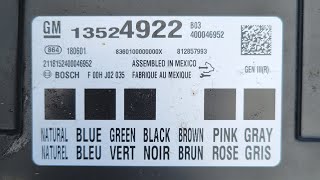
- GM GDS2: Immobilizer Learn — This function is required after replacing the Body Control Module (BCM), Theft Deterrent Module (TDM), or adding new keys. It guides the technician through the process of programming the components and keys to the vehicle.
- GM GDS2: Output Control Functions — Allows a technician to command various BCM outputs (like door locks, lights) to test the functionality of the BCM itself, helping to determine if the module is faulty or if the issue is isolated to the theft system.
Wiring & Ground Locations
- BCM Location (2018-2022) — Under the front of the center console, typically accessed by removing the right side (passenger) trim panel.. The BCM is the central module for the theft deterrent system in this generation. Knowing its location is critical for checking connectors for corrosion/damage or for replacement.
- BCM Location (2015-2017) — Under the driver's side of the dashboard.. On the second generation, the BCM is in a different location. Accessing it is necessary for checking connections or performing a replacement.
- BCM Connector C4, Pin 23 (2017) — On the Body Control Module under the driver's dash.. This pin provides the 'wake up' signal on the low-speed GMLAN. A faulty BCM may not send this signal, causing multiple modules to be offline. A technician can manually apply voltage here with a test light to confirm if the BCM is the source of a wider communication failure.
- Data Link Connector (DLC), Pin 1 — The OBD-II port under the driver's side dashboard.. This is the pin for the Low-Speed GMLAN (SW-CAN) serial data line, typically a Dark Green wire. The BCM, TDM, and other modules use this network to communicate. Issues on this circuit can cause security system faults.
Real Owner Repair Stories
- ScannerDanner Forum (2017 Chevrolet Equinox) — Widespread CAN communication failure. Multiple modules were offline, including PSCM, ABS, AWD, and TPMS. Only primary modules like the PCM, TCM, and BCM were communicating.
❌ Tried (didn't work) Initial diagnosis was confusing due to the number of offline modules. The BCM was reporting a code for a short circuit that did not actually exist.
✅ What actually fixed it The technician identified that the BCM was failing to send the 12V 'wake up' signal to the offline modules. By using a test light to manually apply voltage to the wake-up circuit (Pin 23 of BCM connector C4), all other modules came online. This confirmed the BCM itself was faulty and was the root cause of the communication breakdown. Replacing the BCM resolved all issues. - chevyequinoxforum.com user (2018 Chevrolet Equinox LT) — The 'Service Theft Deterrent System' light came on and the vehicle would not start.
❌ Tried (didn't work) The first attempt to program an aftermarket keyless fob failed.
✅ What actually fixed it The issue occurred immediately after a failed attempt to program a new aftermarket fob. This highlights that an incorrect programming procedure or an incompatible aftermarket part can directly trigger the anti-theft system and set codes like B3060. The resolution requires a successful programming sequence or using a compatible key/fob.
"I Checked Everything" — The Actual Cause
- In a case on a 2017 Equinox, all standard wiring checks could appear normal, yet the vehicle would have widespread communication issues alongside potential security codes. The root cause was a faulty BCM that was internally failing to send the low-speed GMLAN 'wake up' signal to other modules. The BCM even created a 'phantom' short circuit code, sending the technician down the wrong path. The problem was only isolated by manually energizing the specific BCM wake-up pin with a test light, which forced the other modules online and proved the BCM was the culprit.
OEM Part Supersession History
13522387→13594646, 13534188— Standard part revision and consolidation by the manufacturer.
Heads up: These BCMs are used across multiple GM platforms (Equinox, Terrain, Traverse, Acadia). While physically interchangeable, they are locked to the original vehicle's VIN and options. A replacement BCM, whether new or used, MUST be reprogrammed to the new vehicle using a tool like GM GDS2 and the SPS2 programming system for it to function.
Model Year Variations Within This Range
- 2015-2017 (Second Generation): This generation primarily uses a traditional keyed ignition with a transponder chip. The BCM is located under the driver's side dashboard. The security system is generally referred to as Pass-Key III+ or a transponder immobilizer.
- 2018-2022 (Third Generation): This generation commonly uses push-button start and features a more complex 'Advanced Theft Deterrent' system which can include an electronic steering column lock and inclination sensors. The BCM, which integrates the theft deterrent functions, is located in the center console and uses different part numbers (e.g., 13522387) than the previous generation.
Helpful Videos
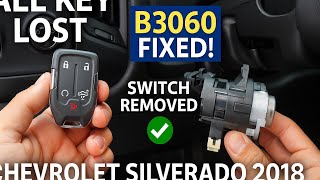
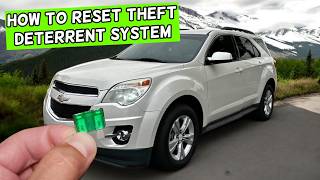

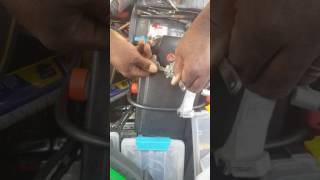
We Have This Part in Stock

The information in this article is provided for general reference and educational purposes only. Vehicle specifications, procedures, and part compatibility can vary by production date, trim level, and region. Always consult your vehicle's factory service manual and verify part numbers before purchasing or performing repairs. Safety-critical components such as airbags, seat belts, and braking systems should be installed by a qualified professional.
- Chevrolet EQUINOX:
- 🧭 Diagnostic Flowchart
- 🎬 Helpful Videos
- 🛍️ Shop This Part
- What's Unique About the 2015-2022 Chevrolet EQUINOX
- Symptoms You May Notice
- Most Likely Causes
- Rare But Worth Checking
- Diagnosis Steps
- Parts You'll Likely Need
- Related Codes That Often Appear With This One
- Technical Service Bulletins (TSBs) & Recalls
- Platform-Specific Known Issues
- Mechanic-Grade Diagnostic Values
- Hidden / Shadow Codes Worth Checking
- Scan Tool Commands That Help
- Wiring & Ground Locations
- Real Owner Repair Stories
- "I Checked Everything" — The Actual Cause
- OEM Part Supersession History
- Model Year Variations Within This Range
- 🎟️ Get 5% Off