

B3935 on 2024-2025 Buick Enclave: No Start, Security Light Causes & Fixes
Code B3935 on a 2024-2025 Buick Enclave almost always means a no-start condition due to Radio Frequency (RF) interference. Before any repairs, remove all other keys, fobs, and RFID cards from your keychain. This is a known GM issue, and the fix is usually free and requires no parts.
- B3935 means your Enclave's security system is preventing it from starting due to a key authentication failure.
- The most likely cause is NOT a broken part, but interference from other electronic devices on your keychain or in your car (other fobs, access cards, phone chargers).
- The first and most important diagnostic step is to remove all other items from your Buick key fob and try to start the vehicle again. This fix is free and often works.
- Do not replace expensive components like the BCM or starter until you have exhaustively ruled out RF interference and a faulty key fob (by testing your spare).
- If a new key is needed, it must be professionally programmed to your vehicle.
What's Unique About the 2024-2025 Buick ENCLAVE
On modern Buick platforms like the Enclave (built on the GM C1XX platform), the immobilizer system is known to be highly sensitive to external radio frequencies. General Motors has issued multiple, evolving Technical Service Bulletins (TSBs), including the PIC5650 series, specifically warning technicians that intermittent no-start conditions with code B3935 are frequently caused by RF interference, not a faulty vehicle component. The official advice is to investigate and remove all sources of RFI before attempting any parts replacement.
Diagnostic Flowchart
Tap your situation to follow the diagnostic path that matches what you're seeing on this vehicle.
Generation note: The 2024-2025 model years span the end of the second generation (ending in 2024) and the beginning of the third generation (starting in 2025) of the Buick Enclave. However, the issue of RF interference causing immobilizer problems is common across many GM model years and platforms (Lambda and C1XX), making the primary cause and diagnostic steps consistent for both generations.
Symptoms You May Notice
- Engine will not crank (no-crank, no-start)
- Engine starts and immediately stalls
- Security indicator light is illuminated or flashing on the dashboard
- "No Remote/Fob Detected" message on the driver information center
- "Service Theft Deterrent System 🎬 Watch: How to perform a GM security lockout reset procedure" message on the driver information center
- Replacing the starter motor
- Replacing the Body Control Module (BCM) without ruling out RFI
- Replacing the ignition switch or push-to-start button
- Replacing the main vehicle battery without proper testing
Most Likely Causes
- Radio Frequency Interference (RFI) 🔴 High Probability As documented in the extensive GM TSB PIC5650 series, the Pass-Key III+ and later immobilizer systems are sensitive to external radio signals. TSB PIC5650M lists numerous sources, including other vehicle fobs, toll passes, building access cards, aftermarket LED lights, and even certain USB phone chargers.
How to confirm: Remove all other keys, key fobs, RFID-enabled office access cards, toll passes, and RFID-blocking wallets from the keychain and from near the start button/ignition area. Unplug any aftermarket devices from 12V or USB ports. Attempt to start the vehicle with only the single Buick key fob present. If it starts, RFI was the cause.
Typical fix: Isolate the vehicle's key fob from other electronic devices. No parts are replaced. This is the official first step recommended by GM.
Est. part cost: $0 - Weak or Defective Key Fob 🟡 Medium Probability → Shop Keyless Entry Transmitter The internal transponder chip in the key can fail over time, especially if dropped. The key's battery can also become too weak to respond to the BCM's challenge, though placing the fob in the backup slot can often overcome a weak battery.
How to confirm: After ruling out RFI, try starting the vehicle with your spare key fob. If the spare key works consistently, the original key is likely faulty. You can also try replacing the battery (CR2032) in the problematic key. 🎬 See this quick guide on replacing your key fob battery
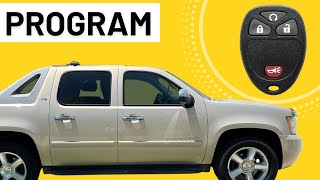
Typical fix: Replace the faulty key fob and have the new one programmed to the vehicle by a dealer or qualified locksmith. If the battery is the issue, simply replace it. The vehicle may require a 30-minute relearn procedure after key replacement. 🎬 Watch: How to program a new GM key and fob
Est. part cost: $5-$15 for a battery, $150-$400 for a new key fob including programming.
Rare But Worth Checking
- Body Control Module (BCM) Software Glitch: → Shop Body Control Module In some cases, particularly when B3935 is found with code B2955, GM has issued software updates for the BCM to correct intermittent no-start conditions. This requires a dealer to reprogram the module using the Service Programming System (SPS).
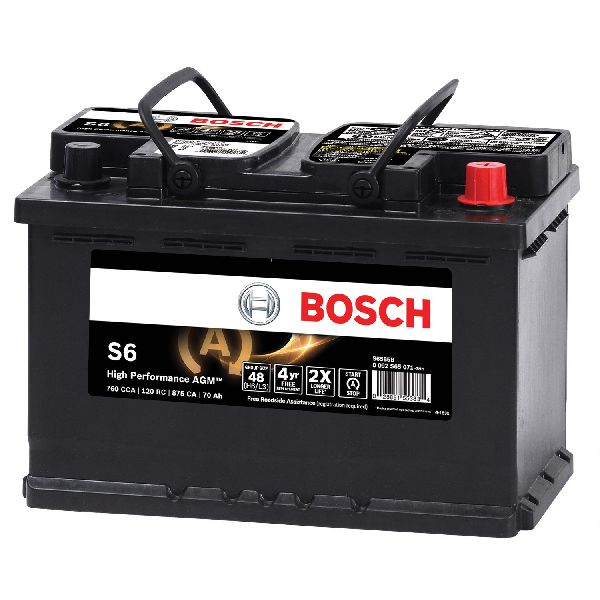
- Weak Vehicle Battery: → Shop Vehicle Battery Low system voltage during startup can cause various electronic modules, including the BCM, to malfunction and set erroneous codes. If the battery is old or weak, have it tested. A poor ground at G218 can also cause low voltage conditions and numerous electrical faults.
- Faulty Body Control Module (BCM) or Wiring: → Shop Body Control Module While rare, a hardware failure in the BCM or a wiring issue (like a poor ground at G218) between the BCM and the immobilizer antenna can cause this code. This should only be considered after all other possibilities are exhausted, as TSBs strongly advise against premature parts replacement.
Diagnosis Steps
- Check for active Technical Service Bulletins (TSBs) for your vehicle's VIN. TSBs PIC5650M and PIC5650L are highly relevant. [Bulletin #PIC5650M, Bulletin #PIC5650L]
- Question the driver about any new devices on their keychain or in the car. TSB PIC5650M lists phone chargers, toll passes, aftermarket LED lights, and other fobs as common culprits.
- Remove ALL other keys, fobs, access cards, and electronic devices from the Buick key fob.
- Unplug all aftermarket devices from 12V and USB ports (e.g., dash cams, chargers).
- Attempt to start the vehicle with only the isolated Buick key fob inside the car. If it starts, you have confirmed RF interference.
- If the vehicle still does not start, try using the spare key fob. If the spare works, the primary key fob is likely faulty.
- Replace the battery (CR2032) in the non-working key fob as a low-cost diagnostic step.
- If the vehicle has a key fob slot (often in the center console or glovebox), place the fob in the slot and attempt to start. This can overcome a weak fob battery or mild interference. For 2022-2025 models, this is often in the storage bin at the front of the center console.
- If none of the above steps work, the issue may be more complex, such as a BCM software glitch or a hardware fault, and requires professional diagnosis with a GM-specific scan tool (GDS2).
Parts You'll Likely Need
- No parts needed — The most common cause is RF interference, which is resolved by removing the source of the interference, not by replacing parts. TSB #PIC5650L explicitly states 'Technician should not replace any parts for this concern.'
OEM price range: $0
Aftermarket price range: $0 - Key Fob / Remote Key
(OEM #13530511)— If one key is faulty (confirmed by using the spare), it will need to be replaced and programmed. The FCC ID is typically HYQ4ES for this model range.
Trusted brands: ACDelco, GM Genuine
OEM price range: $150-$400
Aftermarket price range: $75-$200 - Key Fob Battery
(OEM #CR2032)— A weak battery can cause intermittent communication failures. It's the cheapest part to replace as a diagnostic step.
Trusted brands: Duracell, Energizer, Panasonic
OEM price range: $5
Aftermarket price range: $2
Related Codes That Often Appear With This One
- B3055 — This code relates to a problem with the key transponder itself (No Transponder Modulation) and is often set with B3935 during the same security fault event, as noted in TSB PIC5650M.
- B3060 — Indicates an issue with the transponder antenna or its circuit ('Unprogrammed Transponder'). It can be triggered by the same RF interference that causes B3935.
- C0750, C0755, C0760, C0765, C0775 — These codes are related to tire pressure monitoring but are listed alongside B3935 in TSB #PIC5650M, suggesting that significant RFI can disrupt multiple vehicle systems that operate on similar radio frequencies, like the Remote Control Door Lock Receiver (RCDLR) which processes both TPMS and key fob signals.
- B2955 — When seen with B3935, this combination can point to a specific BCM software anomaly that GM has addressed with a software update (TSB PI1180A).
Technical Service Bulletins (TSBs) & Recalls
- PIC5650M: Addresses intermittent no-crank/no-start with security light on and DTCs including B3935 for 2024 models. Lists numerous RFI sources like aftermarket LEDs, USB chargers, and toll passes.
- PIC5650L: Addresses the same concern for older models, specifically advising against parts replacement and pointing to RF interference.
- PI1180A: Notes that when B3935 is found with B2955 on some GM models, a BCM software update is the required fix.
Platform-Specific Known Issues
- A series of GM Technical Service Bulletins (PIC5650) have been released over many years, warning that intermittent no-start conditions with code B3935 are often caused by Radio Frequency Interference.
- TSB #PIC5650M specifically lists B3935 in relation to an intermittent no crank, no start, or start stall concern with the security light on for the 2024 model year. [Bulletin #PIC5650M, 8]
- TSB #PIC5650L, covering earlier models, explicitly advises technicians not to replace any parts for this concern and to ask the customer about Radio Frequency Identification devices. [Bulletin #PIC5650L, 8]
- Owners on forums for platform-mate vehicles like the Chevy Traverse report the exact same issue, with the fix almost always being the removal of other fobs or cards from the keychain.
Mechanic-Grade Diagnostic Values
- High-Speed GMLAN (CAN Bus) Network Resistance — expected: Approximately 60 Ohms (measured between pins 6 and 14 of the DLC with battery disconnected). Failure: A reading of 120 Ohms indicates an open circuit in the bus wiring or a failed terminating module. A reading near 0 Ohms indicates a short circuit between the CAN High and CAN Low wires.
Hidden / Shadow Codes Worth Checking
- B3935 57: This is a GM-specific symptom byte meaning 'Invalid or Mismatched Key' or 'Transponder Authentication Error'. It specifies that the key's transponder was read successfully, but the cryptographic challenge-and-response calculation failed. This points specifically to a key chip fault, a BCM calculation error, or strong RFI corrupting the data exchange, rather than an unprogrammed key. (see via A professional GM-specific scan tool like a Tech 2 or GDS2 is required to view symptom bytes.)
Scan Tool Commands That Help
- GDS2 (Global Diagnostic System 2): Immobilizer Learn (or Vehicle Theft Deterrent Learn) — This function is required after replacing a key fob, the Body Control Module (BCM), or the Engine Control Module (ECM). It guides the technician through the process of programming new keys/modules to the vehicle's immobilizer system.
- GDS2 (Global Diagnostic System 2): Add/Replace Key Fobs — Located under 'Remote Control Door Lock Receiver' > 'Configuration/Reset Functions', this command is used to program the remote functions (lock/unlock) of the fobs. All fobs to be used must be programmed in a single session.
Wiring & Ground Locations
- G218 — On the driver's side of the instrument panel frame, typically behind the kick panel or under the dash.. This is a primary ground point for the Body Control Module (BCM). A loose or corroded G218 ground can cause a wide range of intermittent electrical issues, including no-start conditions, module communication errors (U-codes), and erroneous security codes like B3935. GM has issued TSBs (e.g., PIT5405C) for other platforms noting that this ground being compromised by trapped insulation can cause these exact symptoms.
- Remote Control Door Lock Receiver (RCDLR) — The location varies, but it is often found in the headliner, on a pillar, or behind the instrument panel.. This module receives signals from both the key fob for remote functions and the transponder for immobilizer authentication in many modern GM systems. It also receives signals from the Tire Pressure Monitoring System (TPMS) sensors. A fault in the RCDLR or its wiring can cause B3935 and may also set TPMS codes simultaneously.
- BCM X4 Connector — One of the main multi-pin connectors on the Body Control Module.. This connector contains the Run/Crank Relay Coil Control wire (typically Pin 15, GN/VT). A poor connection at this pin could prevent the BCM from properly signaling the powertrain to crank, mimicking a security lockout.
Real Owner Repair Stories
- Go-Parts.com citation for a 2007-2014 Chevrolet Malibu (2007-2014 Chevrolet Malibu (similar GM immobilizer logic)) — Intermittent no-start with security light active, more likely to occur after the vehicle sat overnight.
❌ Tried (didn't work) Using a spare key produced the same intermittent failure, ruling out a single bad key.
✅ What actually fixed it The immobilizer module itself was failing intermittently. It would energize the antenna but fail the authentication process. Replacing the immobilizer module resolved the B3935 code and no-start condition.
Model Year Variations Within This Range
- 2024 vs 2025: The 2024 Enclave is the final year of the second generation, while the 2025 model marks the start of the third generation with a significant redesign. While the underlying cause of RFI sensitivity is likely similar, physical locations for components like the BCM, RCDLR, ground points (G218), and the key fob backup slot may have changed. For 2022-2025 models, the backup slot is often in the storage bin at the front of the center console, whereas older models might have it in the cupholder or glovebox.
Helpful Videos

We Have This Part in Stock

The information in this article is provided for general reference and educational purposes only. Vehicle specifications, procedures, and part compatibility can vary by production date, trim level, and region. Always consult your vehicle's factory service manual and verify part numbers before purchasing or performing repairs. Safety-critical components such as airbags, seat belts, and braking systems should be installed by a qualified professional.
- Buick ENCLAVE:
- 🧭 Diagnostic Flowchart
- 🎬 Helpful Videos
- 🛍️ Shop This Part
- What's Unique About the 2024-2025 Buick ENCLAVE
- Symptoms You May Notice
- Most Likely Causes
- Rare But Worth Checking
- Diagnosis Steps
- Parts You'll Likely Need
- Related Codes That Often Appear With This One
- Technical Service Bulletins (TSBs) & Recalls
- Platform-Specific Known Issues
- Mechanic-Grade Diagnostic Values
- Hidden / Shadow Codes Worth Checking
- Scan Tool Commands That Help
- Wiring & Ground Locations
- Real Owner Repair Stories
- Model Year Variations Within This Range
- 🎟️ Get 5% Off