

B3935 on 2007-2011 Cadillac DTS: Causes for No-Start & Security Light
On a 2007-2011 Cadillac DTS, code B3935 almost always indicates radio frequency (RF) interference with the key's transponder, not a failed part. This causes a no-start and illuminates the security light. The fix is typically free: remove other keys, fobs, and electronics from near the ignition.
- Code B3935 on a Cadillac DTS is a security system fault, not an engine or transmission problem.
- Before spending any money, your first and most important step is to remove EVERYTHING from your keychain and unplug all aftermarket electronics inside the car.
- This code is an explicit example where official manufacturer bulletins advise *against* replacing parts as the first step.
- The problem is almost always caused by interference from another electronic device, and the fix is usually free.
What's Unique About the 2007-2011 Cadillac DTS
For this generation of Cadillac DTS and its platform-mate, the Buick Lucerne, General Motors issued specific Technical Service Bulletins (TSBs) warning technicians *not* to replace parts for this code initially. The TSBs, most notably PIC5650 in its various revisions (L, M, etc.), state the problem is most often caused by external Radio Frequency (RF) interference from devices on the owner's keychain or inside the car. This is a crucial distinction, as the default reaction for many technicians would be to replace expensive components like the key, ignition switch, or Body Control Module.
Diagnostic Flowchart
Tap your situation to follow the diagnostic path that matches what you're seeing on this vehicle.
Symptoms You May Notice
- Intermittent no-crank, no-start condition. 🎬 Watch this diagnostic walkthrough for a DTS no-start condition.
- Engine starts and then immediately stalls.
- Security indicator light is illuminated or flashing on the dashboard.
- Message on the driver information center like 'Service Theft Deterrent System'.
- Ignition Switch Replacement
- Body Control Module (BCM) Replacement
- Theft Deterrent Module (TDM) Replacement
- Starter Replacement
Most Likely Causes
- Radio Frequency (RF) Interference 🔴 High Probability The vehicle's immobilizer system (PASS-Key III+) operates at 125 kHz and can be disrupted by other electronic devices that emit signals, such as other key fobs, office access cards, or aftermarket phone chargers. GM TSBs PIC5650L and PIC5650M specifically call this out as the primary cause, listing dozens of potential sources including toll passes, aftermarket LED lights, and even decorative trim rings around the ignition.
How to confirm: Remove all other keys, fobs, access cards, and aftermarket electronic devices (like phone chargers or dash cams) from the keychain and the area around the ignition switch. Attempt to start the vehicle with only the single Cadillac key. If the vehicle starts reliably, the interference was the cause.
Typical fix: Identify and permanently remove the interfering device from the keychain or proximity to the ignition switch. Common culprits found by owners include other vehicle keys, building access cards, and cheap USB chargers.
Est. part cost: $0
Rare But Worth Checking
- Defective Ignition Key Transponder: → Shop Ignition Switch While less common than RF interference for this specific vehicle, the transponder chip inside the key can fail, sometimes due to being dropped or water damage. If the problem persists with all interference sources removed but is resolved by using a spare key, the original key is faulty. A new key must be cut and programmed to the vehicle.
- Faulty Theft Deterrent Module (TDM) or Body Control Module (BCM): → Shop Anti-Theft Control Module This should be considered a last resort after all other possibilities, especially RF interference, have been eliminated. TSBs specifically warn against replacing parts unnecessarily. A module failure is rare but possible if the issue persists with multiple known-good keys and no sources of interference. A faulty BCM is a common cause for a 'Service Theft System' message.
- Wiring Harness Issue: A damaged or corroded wire between the ignition lock cylinder (where the key is read) and the theft deterrent module can cause intermittent signal loss, leading to this code. This is more likely if other electrical issues are present or if there's visible damage under the dash or in the steering column. 🎬 Check this guide on fixing a common rear fuse block issue.
- Low Vehicle Battery Voltage: → Shop Vehicle Battery A weak or failing car battery can cause a multitude of seemingly unrelated electronic issues, including problems with the theft deterrent system. If the battery voltage is below 10-11 volts during cranking, modules may not communicate correctly, potentially triggering a B3935 code. This can happen after replacing a dead battery if the system needs to relearn.
Diagnosis Steps
- Verify the security light is on or flashing when the no-start condition occurs.
- Scan for all DTCs in the BCM and other modules. Note if B3055, B3060, or TPMS codes are also present.
- CRITICAL STEP: Remove ALL items from the ignition key ring. This includes other car keys, house keys, office fobs, and decorative items.
- Unplug any aftermarket devices from the power outlets (e.g., phone chargers, dash cams, GPS units, aftermarket LED lighting).
- Attempt to start the vehicle with only the single Cadillac key. If it starts, the issue is RF interference.
- If the problem is resolved, re-introduce items one by one to identify the source of the interference.
- If the problem persists, try using a spare key (if available) to rule out a single faulty key.
- If a spare key is not available and the key is suspected, a 30-minute relearn procedure can be attempted. Insert the key, turn to 'ON' for 10 minutes until the security light stops flashing, turn OFF, and repeat two more times for a total of 30+ minutes. 🎬 See how to program a new transponder key yourself.
- If the issue still occurs with no interference and with a spare key, inspect the wiring and connectors around the ignition lock cylinder and BCM for any visible damage or corrosion.
- As a final step, professional diagnosis may be required to test the Theft Deterrent Module and BCM, but this is rare.
Parts You'll Likely Need
- No Parts Needed — Based on GM Technical Service Bulletin PIC5650M, this code is most frequently caused by RF interference and requires removing the source of the interference, not replacing parts.
OEM price range: $0
Aftermarket price range: $0 - Key Fob Battery — While not the primary cause for a transponder error (the chip is passive), a weak battery in the key fob could cause erratic signals from the fob itself, contributing to the general RF noise. It's an inexpensive and easy item to replace as part of the diagnostic process.
Trusted brands: Energizer, Duracell
OEM price range: $5-$15
Aftermarket price range: $2-$10
Related Codes That Often Appear With This One
- B3055 — This code means 'Key Not Present'. It often appears with B3935 because RF interference can prevent the key from being detected or authenticated correctly.
- B3060 — This code means 'Unprogrammed Key'. It can be set alongside B3935 when the authentication process fails due to interference or a faulty key.
- C0750, C0755, C0760, C0765, C0775 — These are Tire Pressure Monitor (TPMS) sensor codes. The TSB PIC5650M notes they can appear with B3935. This is likely because both the immobilizer (125 kHz) and TPMS (315 MHz) systems use RF communication, and a strong source of interference can disrupt both simultaneously.
Technical Service Bulletins (TSBs) & Recalls
- PIC5650M: Notes the intermittent no-crank/start-stall concern with security light and lists associated DTCs B3055, B3060, B3935, and various C-codes (TPMS). Provides a long list of potential RFI sources.
- PIC5650L: An earlier version of the TSB that explicitly warns technicians: 'Technician should not replace any parts for this concern. If unable to duplicate the concern ask if the customer uses any Radio Frequency Identifica...' This strongly points to RF interference as the intended diagnosis.
- 01-00-89-010O: A general GM bulletin for reducing repeat service visits that specifically references using the latest version of PIC5650 for intermittent no-start issues caused by aftermarket devices.
Platform-Specific Known Issues
- GM issued TSBs #PIC5650L and #PIC5650M specifically addressing this code on the DTS and other models. The bulletins highlight an intermittent no-crank/no-start or start/stall condition with the security light on.
- TSB #PIC5650M provides an exhaustive list of potential RFI sources, including other vehicle keys, toll passes, building access cards, aftermarket LED lights, and various USB-powered devices.
- The vehicle was also subject to recall 14V355000, which addressed the ignition switch moving out of the 'run' position due to key ring weight. While a separate issue, it trained owners to remove excess items from their key rings, which would also inadvertently solve the RF interference problem for many.
- The immobilizer system used is the GM PASS-Key III+, which is a transponder-based system that does not use the older VATS resistor pellet in the key blade.
Scan Tool Commands That Help
- Tech 2 / GDS2: Setup SDM Primary Key in BCM — This procedure is required after replacing the Body Control Module (BCM) to synchronize it with the airbag module (SDM) and prevent the airbag warning light from illuminating.
- Tech 2 / GDS2: BCM Reprogramming (SPS) — On some newer GM models, a software update was released to address a no-start condition with B3935. While not specifically documented for the 2007-2011 DTS, if all other diagnostics fail, checking for an updated BCM calibration via the Service Programming System (SPS) is a valid final step.
Wiring & Ground Locations
- BCM (Body Control Module) — Located behind the glove box, to the right side of the center dash area.. The BCM is a central component of the theft deterrent system. All communication from the key and Theft Deterrent Module (TDM) passes through it. A poor connection or faulty ground at the BCM can cause this code.
- G304 — Under the front passenger's seat.. This is a ground point for the Body Control Module (BCM). A loose or corroded ground here can cause a variety of electrical issues, including theft system problems.
- G305 — Under the driver's seat.. This is another ground point for the Body Control Module (BCM). GM issued a specific bulletin (07-08-47-004E) warning technicians to disconnect the negative battery cable before servicing BCM grounds to prevent module damage.
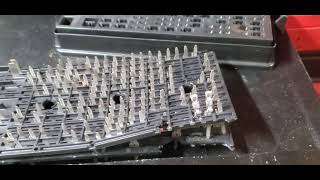
- Rear Fuse Block — Under the rear seat cushion.. While not directly setting B3935, a common failure on the DTS is a melted fuel pump relay socket in the rear fuse block, causing a crank-no-start condition that can be misdiagnosed as a theft system issue. If the car cranks but won't start, this is a primary location to inspect.
Real Owner Repair Stories
- YouTube channel 'Chris D' (2000-2011 Cadillac Deville/DTS) — Crank but no start.
❌ Tried (didn't work) Initially suspecting a theft system issue or other common causes.
✅ What actually fixed it The fuel pump relay in the rear fuse block (under the back seat) had overheated and melted the fuse block terminal. The high current draw was caused by a failing fuel pump. The fix was to replace both the rear fuse block and the fuel pump.
OEM Part Supersession History
15822351, 89024257→Unknown current P/N— Standard part evolution for the ignition lock cylinder assembly.
Heads up: When replacing the ignition lock cylinder or housing, it must be specified for the Pass-Key III+ transponder system. Some aftermarket parts are listed as 'uncoded' and require a locksmith or dealer to match them to the existing key.10382479, 15819552, 25892622→22860591, 20815898— Standard part evolution and software updates for the Body Control Module (BCM).
Heads up: A replacement BCM must be programmed with the vehicle's VIN and specific options. After installation, a 'Setup SDM Primary Key in BCM' procedure is often required with a scan tool to sync with the airbag system.
Model Year Variations Within This Range
- 2006-2008 vs 2009-2011: Minor differences exist in wiring diagrams for components like the driver window switch, which can be relevant when tracing circuits related to the BCM. However, the core Pass-Key III+ system and the causes of B3935 remained consistent throughout the 2007-2011 range.
Helpful Videos
We Have This Part in Stock


The information in this article is provided for general reference and educational purposes only. Vehicle specifications, procedures, and part compatibility can vary by production date, trim level, and region. Always consult your vehicle's factory service manual and verify part numbers before purchasing or performing repairs. Safety-critical components such as airbags, seat belts, and braking systems should be installed by a qualified professional.
- Cadillac DTS:
- 🧭 Diagnostic Flowchart
- 🎬 Helpful Videos
- 🛍️ Shop This Part
- What's Unique About the 2007-2011 Cadillac DTS
- Symptoms You May Notice
- Most Likely Causes
- Rare But Worth Checking
- Diagnosis Steps
- Parts You'll Likely Need
- Related Codes That Often Appear With This One
- Technical Service Bulletins (TSBs) & Recalls
- Platform-Specific Known Issues
- Scan Tool Commands That Help
- Wiring & Ground Locations
- Real Owner Repair Stories
- OEM Part Supersession History
- Model Year Variations Within This Range
- 🎟️ Get 5% Off