

C0035 on 2013-2018 Hyundai Santa Fe: Left Front Wheel Speed Sensor Causes and Fixes
Code C0035 on a 2013-2018 Hyundai Santa Fe means there is a problem with the left front wheel speed sensor circuit. The most common fix is replacing the faulty sensor itself, which costs about $40-$90 for an aftermarket part and is a straightforward DIY repair. This is a common failure point due to the sensor's exposure to the elements.
- C0035 means your Santa Fe has a fault with the front-left wheel speed sensor circuit, which disables your ABS and stability control.
- The most likely fix is replacing the sensor itself, a task a DIYer can often do in under an hour with basic tools.
- Always verify the correct part number for your specific Santa Fe model (Sport vs. LWB, 2WD vs. AWD) using your VIN.
- Check for open recalls on your vehicle, as some Santa Fe models have a serious fire risk recall related to the ABS module.
What's Unique About the 2013-2018 Hyundai Santa Fe
The 2013-2018 Santa Fe (generation DM) includes both the 5-seat 'Sport' and the 7-seat long-wheelbase (LWB) models, later named Santa Fe XL. While the cause of code C0035 is consistent across both, the exact part number for the wheel speed sensor may differ based on 2WD vs AWD configurations, so it is critical to verify the correct part using your vehicle's VIN. Owners have reported recurring issues with wheel speed sensors on this platform, suggesting the sensors themselves are a common failure point, often due to corrosion and exposure to road debris.
Symptoms You May Notice
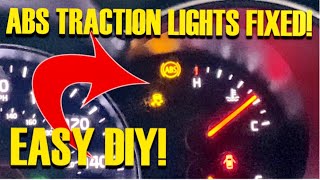
- ABS warning light is on
- ESC (Electronic Stability Control) or TCS (Traction Control System) warning light is on
- Downhill Brake Control (DBC) warning light may be on
- Anti-lock brakes do not activate during hard braking (wheels may lock up)
- Traction control system is disabled or overactive
- Brake pedal may feel different or pulse unexpectedly at low speeds
- Speedometer may behave erratically or show 0 MPH while moving (less common)
- Replacing the wheel hub/bearing when only the inexpensive sensor is bad.
- Replacing the ABS module when the actual fault is a simple broken wire or corroded connector.
- Replacing the correct part (left sensor) but using a cheap, unreliable aftermarket sensor that fails quickly or is dead on arrival.
Most Likely Causes
- Failed Left Front Wheel Speed Sensor 🎬 Watch: A quick breakdown of C0035 causes and fixes. 🔴 High Probability The sensor is an exposed electronic component located in the harsh environment of the wheel well. Constant exposure to water, road salt (especially in winter climates), dirt, and vibration leads to internal corrosion and failure. This is overwhelmingly the most common cause reported by owners.
How to confirm: Use an ABS-capable scan tool to monitor live data from all four wheels. While driving slowly or spinning the wheel by hand, confirm the Left Front sensor's speed reading is zero, erratic, or does not match the other three sensors. A multimeter can also be used to check resistance across the sensor's pins; a typical reading is between 800-2000Ω, while an open circuit (infinite resistance) indicates a failed sensor.
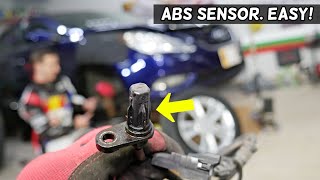
Typical fix: Replace the left front wheel speed sensor. The sensor is held to the steering knuckle by a single 10mm or 12mm bolt. The wire is then unclipped from the strut and routed to a connector in the engine bay or wheel well.
Est. part cost: $40 - $90 - Damaged Wiring or Connector 🟡 Medium Probability The wiring harness runs down the suspension and is vulnerable to damage from road debris, improper securing after prior repairs, or animal chewing. The connector pins can also corrode from moisture intrusion, causing a poor connection.
How to confirm: Visually inspect the entire length of the wiring from the sensor to its main connection point. Look for chafing, breaks, melting, or green/white corrosion on the connector pins. Perform a 'wiggle test' on the harness while watching live data for any signal change. Use a multimeter to check for continuity from the sensor connector back to the ABS module connector.
Typical fix: Repair the broken section of wire with solder and heat shrink. Replace a corroded connector pigtail. In severe cases, the entire sensor harness may need replacement.
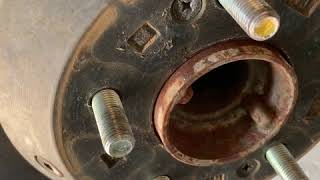
Est. part cost: $10 - $120 - Damaged or Debris-Covered Tone Ring ⚪ Low Probability The tone ring (or reluctor ring) is integrated into the wheel hub bearing assembly on this vehicle. While generally protected, severe corrosion can cause the ring to swell, crack, or delaminate, altering the signal. Large debris can also become lodged between the ring and sensor.
How to confirm: With the wheel speed sensor removed, use a flashlight and a small mirror to inspect the tone ring through the sensor mounting hole. Look for cracks, missing teeth, heavy rust buildup, or wobbling as you spin the hub. A damaged tone ring is a definitive sign.
Typical fix: Cleaning the tone ring with a brush or compressed air may work if it's just dirty. If the ring is damaged, the entire front wheel hub and bearing assembly must be replaced as the ring is not serviced separately.
Est. part cost: $150 - $300
Rare But Worth Checking
- Faulty ABS Control Module: → Shop ABS Control Module This is the least likely cause and should only be considered after exhausting all other possibilities (sensor, wiring, hub). The module itself can fail, but it's an expensive part that often requires dealer programming. A module failure might also present with multiple wheel speed sensor codes or communication codes.
Diagnosis Steps
- Connect an ABS-capable OBD-II scanner to confirm C0035 is the active code and check for any other related codes.
- Access the live data stream for all four wheel speed sensors.
- Safely drive the vehicle slowly (under 15 mph) or raise the front end on jack stands and spin the wheel by hand. Observe the speed readings. Confirm that the Left Front sensor reads 0 mph, is erratic, or lags significantly compared to the others.
- Raise and secure the front driver's side of the vehicle and remove the wheel.
- Visually inspect the wheel speed sensor and its wiring harness for any obvious signs of damage, such as cut wires, melting, corrosion, or improper routing.
- Disconnect the sensor at the harness connector. Inspect the pins on both sides for corrosion, moisture, or damage. Clean with electrical contact cleaner if necessary.
- If visual inspection is inconclusive, test the sensor. Using a multimeter set to Ohms (Ω), measure the resistance between the two pins on the sensor side of the connector. A good sensor should read between 800-2000Ω. An open circuit (OL) or short (0Ω) indicates a bad sensor.
- If the sensor tests good, test the wiring. Check for voltage (typically 5V or 12V reference) at the harness connector with the ignition on. Check for continuity to ground on the ground wire.
- If wiring and sensor are confirmed good, remove the sensor (usually one bolt) and inspect the tone ring inside the hub for damage or heavy debris.
- After replacing the faulty component (most often the sensor), clear the codes with the scanner. Perform a test drive, exceeding 15-20 mph to allow the ABS system to self-test and confirm the warning lights turn off 🎬 See this step-by-step diagnosis and repair for Santa Fe models. and stay off.
Parts You'll Likely Need
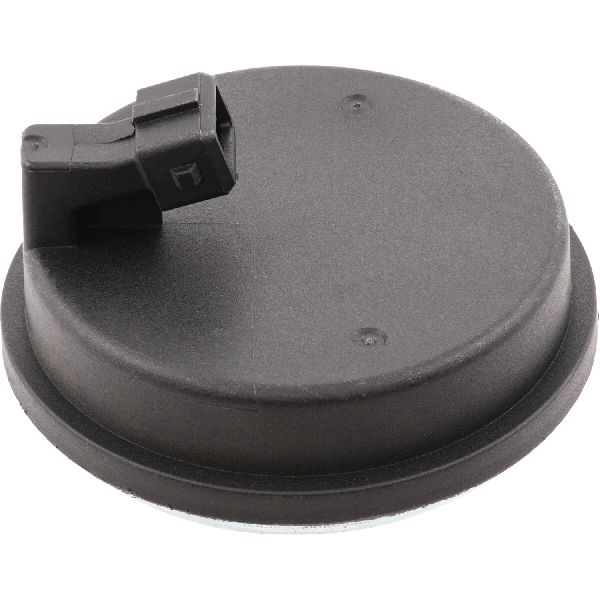
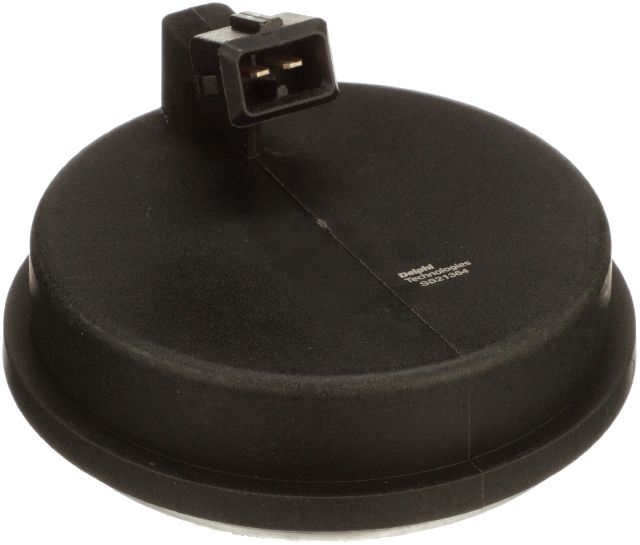
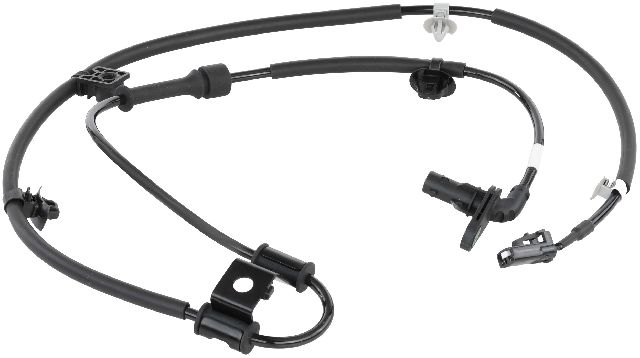
- Front Left ABS Wheel Speed Sensor
(OEM #95670-2W000)— This is the most common failure point for code C0035. It is a non-serviceable electronic component 🎬 Watch: How to replace the wheel speed sensor yourself. exposed to the elements. The right side is part number 95671-2W000 for reference.
Trusted brands: Hyundai (OEM), Mando (often the OEM supplier), Beck/Arnley, Duralast, Standard Motor Products (SMP)
OEM price range: $80-$120
Aftermarket price range: $40-$90
Technical Service Bulletins (TSBs) & Recalls
- TSB-17-ST-002: Addresses a clicking noise from the steering column due to a worn flexible coupler, a common issue on this platform. While not directly related to C0035, it's a frequent steering/chassis area repair.
Platform-Specific Known Issues
- There is a major safety recall for some 2013-2015 Santa Fe Sport models concerning the ABS module, which can leak brake fluid internally, short circuit, and cause an engine compartment fire, even when the vehicle is parked. Owners are advised to park outside and away from structures until the recall repair (NHTSA #21V-303) is performed. This highlights the critical importance of addressing any ABS-related faults promptly. Owners should use the NHTSA website to check their VIN for open recalls.
Mechanic-Grade Diagnostic Values
- Wheel Speed Sensor Resistance — expected: 800-2000Ω (Ohms). Failure: An open circuit (OL or infinite resistance) or a short circuit (near 0Ω) indicates a failed sensor.
- Voltage supply at sensor connector (harness side) — expected: 4.5V - 5.5V with key on, engine off.. Failure: Voltage below 4.0V points to a wiring or ABS module supply problem.
- AC Voltage Signal (for passive sensors) — expected: Generates AC voltage pulses that increase in amplitude with wheel speed (e.g., ~0.2–1.5 V AC at low speed).. Failure: No voltage or an erratic signal when the wheel is spun indicates a faulty sensor or tone ring issue.
Wiring & Ground Locations
- E13 (Front Wheel Sensor LH Connector) — The sensor connects to the main harness in the driver's side front wheel well. The harness is routed up the strut and fender liner.. This is the primary connector to inspect for corrosion or damage. A wiring diagram shows Pin 1 (Green) is the signal and Pin 2 (Blue) is the voltage supply from the ESC module.
- GE01 / GE05 (Ground Points) — Common ground points for the front harness are located in the engine compartment, often on the left side near the fuse box or on the chassis frame rail.. A corroded or loose ground for the ABS/ESC module can cause erratic behavior and various fault codes, including C0035. Cleaning these grounds is a low-cost diagnostic step.
Real Owner Repair Stories
- YouTube Channel 'Auto Repair Procedures' (Hyundai Santa Fe (year not specified, but DM generation)) — ABS and Traction Control lights on, code C0035 stored.
✅ What actually fixed it A visual inspection revealed the sensor wire was completely broken off flush with the wheel bearing where it is integrated. The entire front left wheel hub assembly had to be replaced to fix the issue, as the sensor and wire were not serviceable separately in this specific failure.
OEM Part Supersession History
95670-2W000→No official supersession found, this remains the primary part number.— N/A
Heads up: Part number 95670-2W000 is specified for the Left Front (Driver's side) on both Santa Fe Sport and Santa Fe XL models. However, some listings specify it for 2WD/FWD models only. It is critical to verify the part number with the vehicle's VIN, as AWD models may use a different part, although the physical difference is not well-documented in aftermarket sources.
Diagnostic Flowchart
Other Known Issues on This Vehicle
Issues unrelated to this code that are worth knowing about as an owner of this generation:
- Theta II Engine Failure 🔴 High — Widespread across 2.0L Turbo & 2.4L GDI engines. Can occur at various mileages, often under 100k miles. Subject of multiple class-action lawsuits and recalls. (Ref: Multiple recalls and a lifetime warranty extension for the engine short block were issued for qualifying vehicles that received a required Knock Sensor Detection System (KSDS) software update.)
- ABS Module Fire Risk 🔴 High → Shop ABS Control Module — Affects certain 2013-2015 Santa Fe Sport models. The module can short circuit due to internal fluid leaks, creating a fire risk even when the vehicle is parked and off. (Ref: NHTSA Recall 20V520000 (Hyundai recall 194), later superseded by NHTSA Recall 21V-303. Another recall (NHTSA 20V-568) also addresses ABS fire risk.)
- Worn Steering Coupler 🟠 Medium — Common issue causing a clicking or 'clunking' noise in the steering wheel when turning. Typically appears after 60,000 miles. (Ref: Hyundai issued a technical service bulletin (TSB-17-ST-002) and extended the warranty for this part on some models, but not all affected Santa Fe VINs were included.)
- Excessive Oil Consumption 🟠 Medium — Reported on both 2.4L and 2.0T engines, often becoming noticeable after 80,000 miles. Can be a precursor to more serious engine issues.
- Steering Wheel Assembly Failure 🔴 High — Specific to 2018 models, the steering wheel itself could detach from the column while driving. (Ref: NHTSA Recall 18V-118 (Hyundai Recall 173).)
Used vs. New Parts: Buying Guide for This Vehicle
When a used part is the smart pick: For this repair, buying a used wheel speed sensor is not recommended. The part is a common failure item due to exposure, and a new aftermarket sensor is inexpensive. The labor to replace it makes gambling on a used part's remaining life impractical.
What to inspect on the donor part:
- Not applicable, as used purchase is not advised.
OEM-only on this vehicle (don't cheap out):
- While not strictly 'OEM-only', using a known-good brand is critical. Avoid unbranded, 'white-box' sensors as they have a high rate of being dead-on-arrival or failing prematurely.
Aftermarket brands forum-validated for this vehicle:
- Mando (often the OEM supplier for Hyundai)
- NTK
- Standard Motor Products (SMP)
- Beck/Arnley
- Duralast
Brands owners have reported issues with on this vehicle:
- Unbranded or generic sensors from online marketplaces without warranties or clear return policies.
Real Owner Stories
Aggregated from forums and TSBs cited above. Mileages and costs reflect what owners reported in those sources.
2017 Hyundai Santa Fe
Symptoms: ABS, ESC, and Downhill Assist lights all illuminated simultaneously.
What fixed it: Replacement of the left front wheel speed sensor.
Source hint: hyundai-forums.com/threads/abs-esc-and-downhill-brake-assist-lights-on.681128/
2017 Hyundai Santa Fe
Symptoms: Recurring wheel speed sensor issues and dashboard warning lights.
What fixed it: Replacement of the faulty wheel speed sensor.
Source hint: reddit.com/r/AskMechanics
2013-2015 Hyundai Santa Fe Sport
Symptoms: Internal brake fluid leak in the ABS module leading to a short circuit risk.
What fixed it: Recall repair (NHTSA #21V-303 / Hyundai Recall 194).
Source hint: NHTSA Recall 21V-303
Related OBD-II Codes
Frequently Asked Questions
Is there a recall for the ABS system on my 2013-2015 Santa Fe Sport?
My Santa Fe has ABS, ESC, and Downhill Brake Control lights on at the same time. What is the most likely cause?
Does TSB-17-ST-002 relate to my ABS warning light?
Can I just clean the sensor, or do I need to replace the whole wheel hub?
Are there any other major issues I should watch for while fixing this ABS code on my Santa Fe?
Helpful Videos
We Have This Part in Stock


The information in this article is provided for general reference and educational purposes only. Vehicle specifications, procedures, and part compatibility can vary by production date, trim level, and region. Always consult your vehicle's factory service manual and verify part numbers before purchasing or performing repairs. Safety-critical components such as airbags, seat belts, and braking systems should be installed by a qualified professional.
- Hyundai Santa Fe:
- 🧭 Diagnostic Flowchart
- 🎬 Helpful Videos
- 🛍️ Shop This Part
- What's Unique About the 2013-2018 Hyundai Santa Fe
- Symptoms You May Notice
- Most Likely Causes
- Rare But Worth Checking
- Diagnosis Steps
- Parts You'll Likely Need
- Technical Service Bulletins (TSBs) & Recalls
- Platform-Specific Known Issues
- Mechanic-Grade Diagnostic Values
- Wiring & Ground Locations
- Real Owner Repair Stories
- OEM Part Supersession History
- Other Known Issues on This Vehicle
- Used vs. New Parts: Buying Guide for This Vehicle
- Real Owner Stories
- 2017 Hyundai Santa Fe
- 2017 Hyundai Santa Fe
- 2013-2015 Hyundai Santa Fe Sport
- Related OBD-II Codes
- Frequently Asked Questions
- 🎟️ Get 5% Off