

C0040 on 2013-2018 Hyundai Santa Fe: Right Front ABS Sensor Causes and Fixes
Code C0040 on a 2013-2018 Santa Fe means there's a problem with the right front wheel speed sensor circuit. This is most often a failed sensor or damaged wiring. Expect to pay $40-$100 for an aftermarket sensor and about an hour of labor if you don't DIY.
- Code C0040 means your Santa Fe's right front wheel speed sensor or its circuit is faulty, which disables your ABS and stability control.
- The most likely fix is replacing the right front wheel speed sensor, which is a relatively inexpensive part and a manageable DIY job for many.
- Before any repair, inspect the wiring harness between the sensor and the car's body for damage, as this is also a common point of failure.
- CRITICAL: Check if your vehicle has had the free safety recall service performed for the main ABS module, which can pose a fire risk. This is a separate but more urgent issue.
What's Unique About the 2013-2018 Hyundai Santa Fe
The 2013-2018 Santa Fe (Generation DM) uses wheel speed sensors that are known to fail from exposure to the elements. While the C0040 code points to a specific sensor, it is critical for owners to be aware of a major, separate safety recall concerning the main ABS module on these vehicles, which can short circuit and pose a fire risk. [Pass 2] If you have any ABS-related warning lights, you should check your vehicle's VIN for open recalls immediately, even though the recall is for a different part than the one causing this specific code.
Symptoms You May Notice
- ABS warning light is on.
- Electronic Stability Control (ESC) or Traction Control (TCS) warning light is on.
- Downhill Brake Control (DBC) warning light may be on
- Cruise control is disabled or does not work.
- Brake pedal may feel different or pulse at low speeds in rare cases.
- Speedometer may fluctuate or read incorrectly in some vehicles, though less common on this platform.
- Replacing the ABS module when the actual fault is a simple wiring break or failed sensor.
- Replacing the wheel speed sensor without inspecting the wiring harness, leading to a recurring code.
- Replacing the wheel bearing when the issue is just the sensor or its wiring.
Most Likely Causes
- Failed Right Front Wheel Speed Sensor 🔴 High Probability → Shop ABS Wheel Speed Sensor The sensors are exposed to weather, road salt, and debris, which can cause internal electronic failure over time. Being magnetic, they can also attract metallic debris from brake wear, which can obscure the signal.
How to confirm: Use an ABS-capable scan tool to monitor live data from all four wheel speed sensors while driving. The right front sensor will show an erratic, incorrect, or zero MPH reading compared to the others. A multimeter can also be used to check for resistance (typically 800-2,500Ω) or an AC voltage signal while spinning the wheel (should generate 0.5V-2V AC).
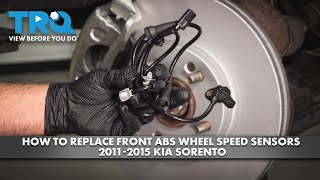
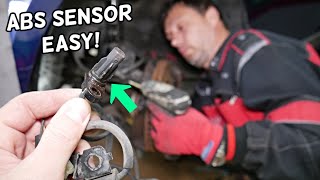
Typical fix: Replace the right front wheel speed sensor. The sensor is held in by a single 10mm bolt on the steering knuckle. 🎬 See: Front ABS sensor removal and replacement walkthrough
Est. part cost: $40-$100 - Damaged Wiring or Connector 🟡 Medium Probability The sensor's wire harness runs down the suspension and is subject to constant movement, flexing, and exposure. Wires can break internally near the connector or chafe against suspension components, leading to an open or short circuit. This is a very common failure point on many vehicles, not just Hyundai.
How to confirm: Visually inspect the entire length of the wire from the sensor to the first chassis connector. Look for breaks, chafing, or green/white corrosion in the connector. A common failure is an internal wire break that isn't visible; gently stretching the wire may reveal the break as the insulation stretches like a rubber band. Perform a continuity test on the wires between the sensor connector and the ABS module connector.
Typical fix: Repair the broken section of wire with a solder and heat shrink butt connector, or replace the pigtail connector if it's corroded. Ensure the repaired harness is properly secured away from moving parts and has enough slack for suspension travel.
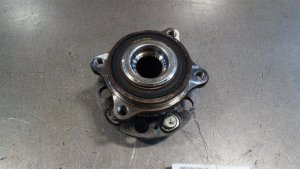
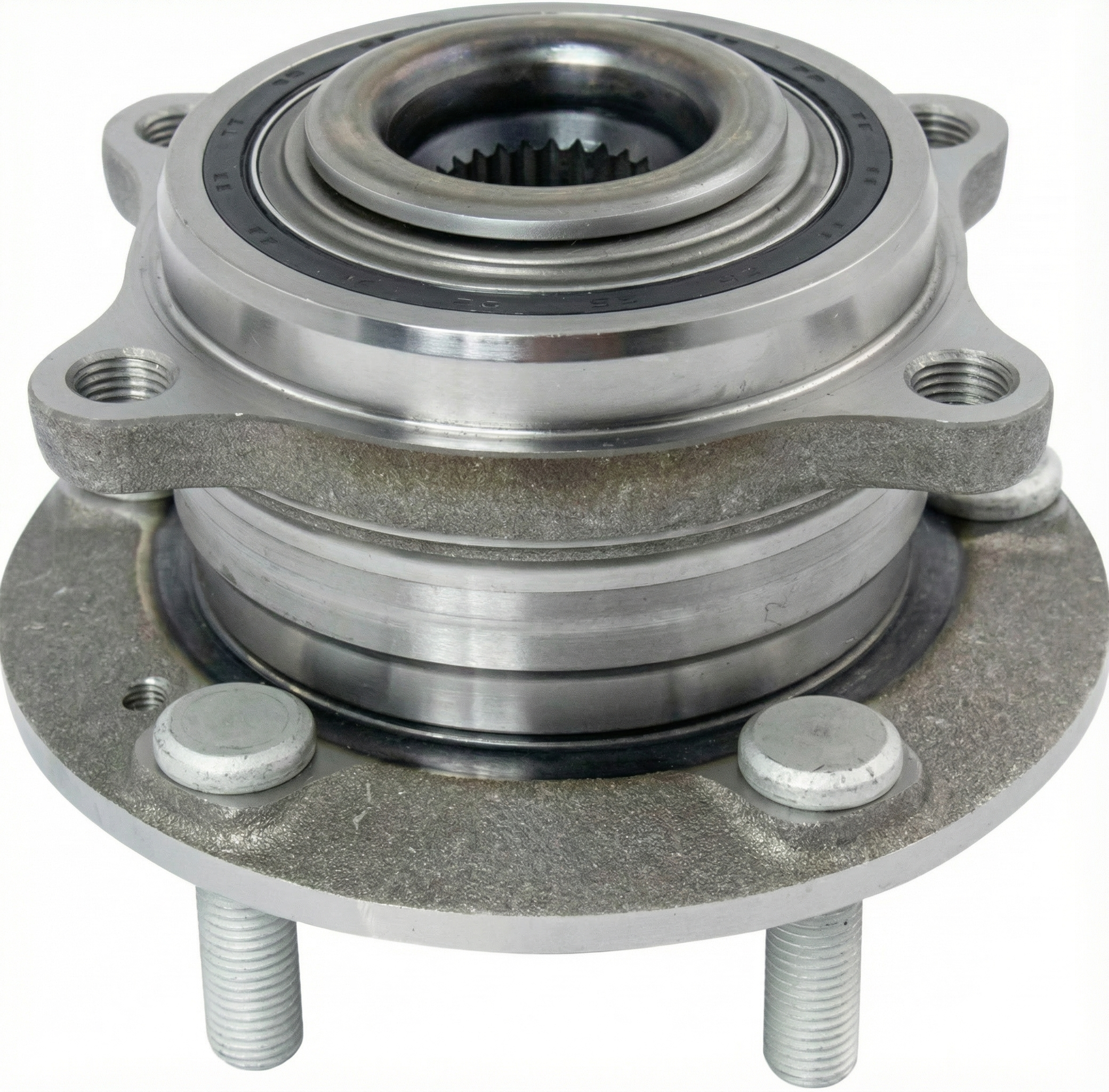
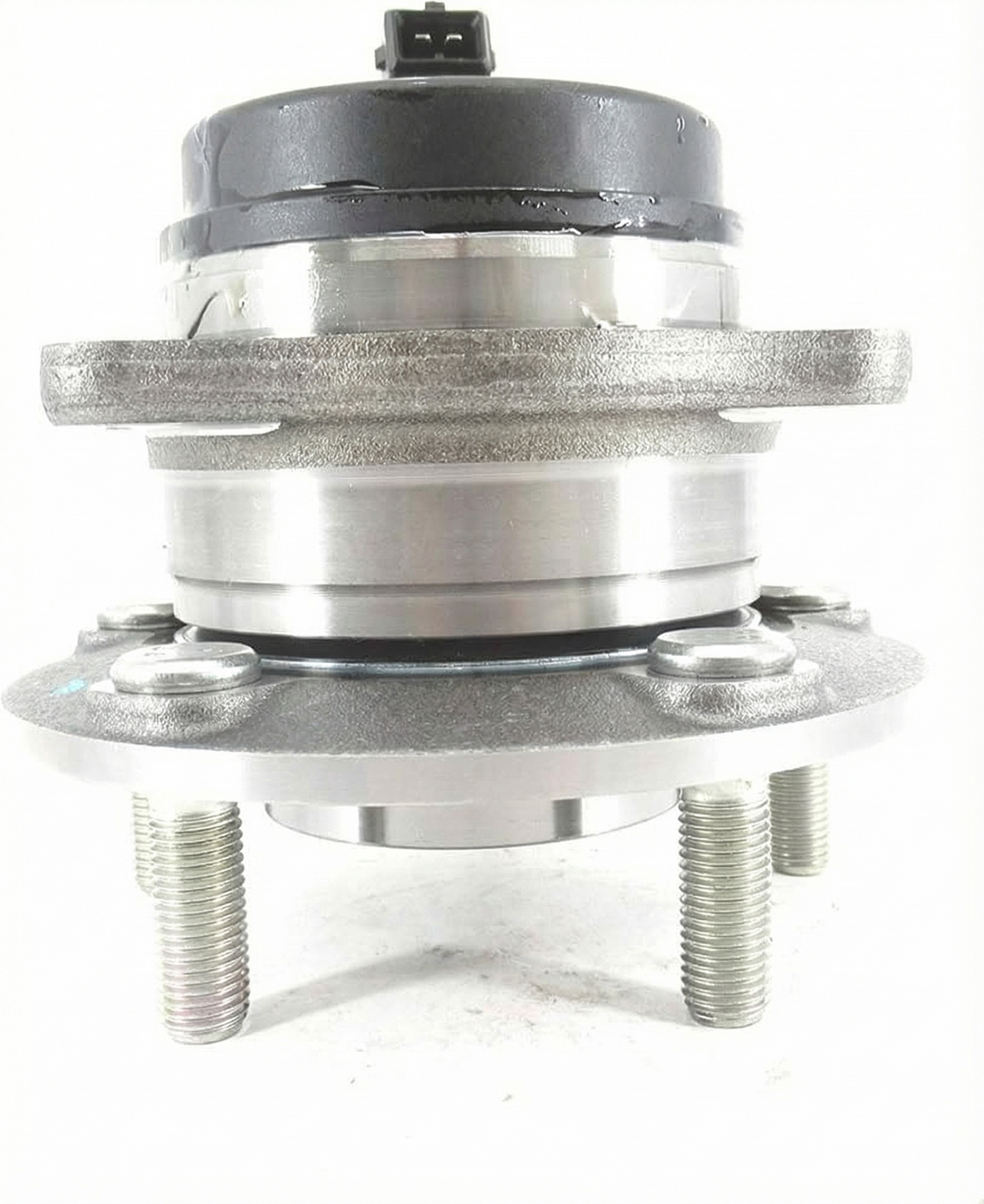
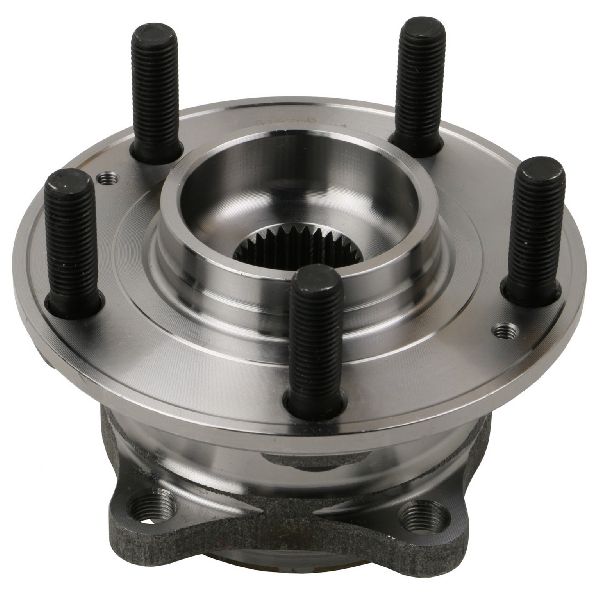
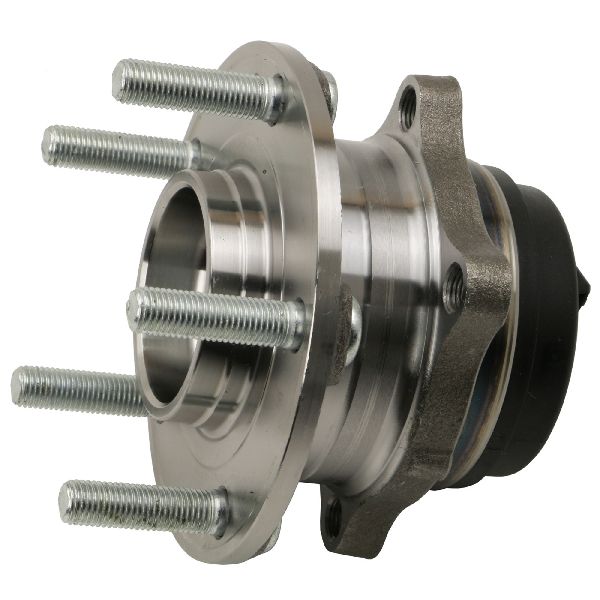
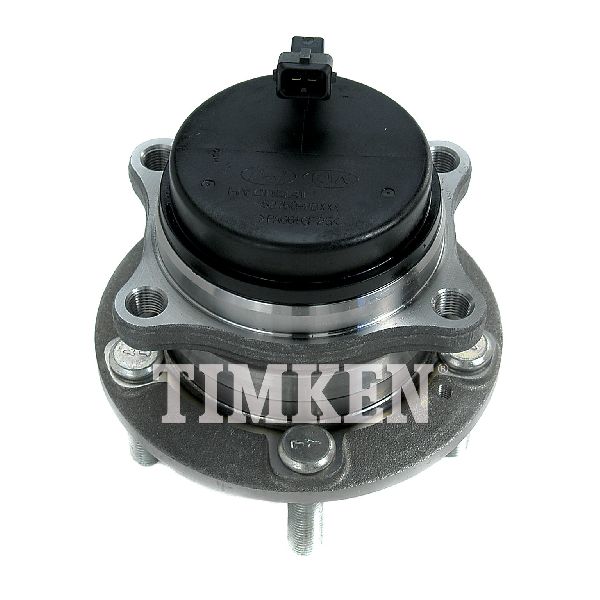
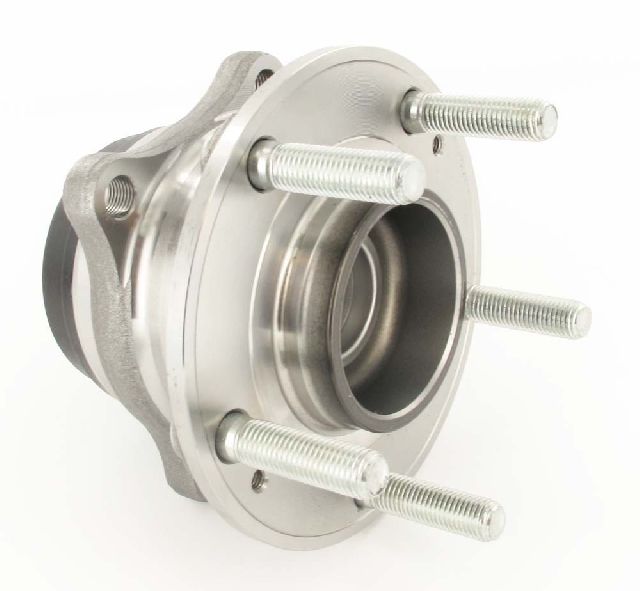
Est. part cost: $15-$55 - Damaged Wheel Bearing / Hub Assembly ⚪ Low Probability The magnetic reluctor ring (or tone ring) that the sensor reads is integrated into the wheel bearing/hub assembly. A worn-out bearing can introduce excessive play ('wobble'), which alters the air gap between the sensor and the ring, causing an erratic signal. The ring can also become damaged or contaminated with metallic debris.
How to confirm: With the vehicle raised, check the right front wheel for excessive play by grabbing it at the 12 and 6 o'clock positions and trying to rock it. A humming or grinding noise while driving that changes with speed or when turning is also a strong indicator of a bad wheel bearing.
Typical fix: Replace the entire front wheel hub and bearing assembly. The wheel speed sensor should also be inspected and likely replaced at the same time, as removal can damage it.
Est. part cost: $100-$250
Rare But Worth Checking
- Faulty ABS Control Module: → Shop ABS Control Module This is very rare and should only be considered after the sensor, wiring, and hub have all been confirmed to be in good working order. The ABS module is the computer that processes the sensor signals. A failure here is unlikely to isolate to just one sensor circuit.
Diagnosis Steps
- Scan for Codes: Use an ABS-capable OBD-II scanner to confirm C0040 is the active code. Note any sub-codes (e.g., C0040-02 for a short to ground) which can help pinpoint the issue.
- Check Live Data: With the scanner, view the live data stream for all four wheel speed sensors. Drive the vehicle slowly (above 5 mph) and observe the reading for the 'Right Front Wheel Speed'. It will likely be 0 mph or read erratically compared to the other three.
- Visual Inspection: Raise and secure the vehicle. Visually inspect the right front wheel speed sensor, its wiring harness, and connector. Look for obvious damage, chafing, corrosion, or loose connections. Pay close attention to where the wire flexes near the strut.
- Inspect Wheel Bearing: Check for any play in the wheel bearing by attempting to rock the wheel. Listen for grinding noises when spinning the wheel by hand.
- Test the Sensor Circuit: Disconnect the sensor harness. With a multimeter, check for resistance across the two pins on the sensor side (should be 800-2500 ohms, check service manual for spec). Then, check for proper voltage and ground on the harness side coming from the ABS module.
- Check for Wire Integrity: A common failure is an internal wire break. Gently pull on each wire in the pigtail harness; if it stretches like a rubber band, the copper inside is broken. Perform a continuity test from the sensor connector back to the ABS module connector to rule out a break further up the harness.
- Replace the Faulty Component: Based on your findings, replace the failed component. The most common repairs are replacing the wheel speed sensor itself 🎬 Watch: Hyundai Santa Fe ABS sensor replacement demo or repairing the wiring pigtail.
Parts You'll Likely Need
- Front Right ABS Wheel Speed Sensor
(OEM #95671-2W000)— This is the most common failure point for the C0040 code. The sensor is an electronic component that fails over time due to heat and environmental exposure.
Trusted brands: Hyundai (OEM), Mando, Bosch, Delphi, Standard Motor Products (SMP)
OEM price range: $150-$275
Aftermarket price range: $40-$100 - Front Wheel Hub and Bearing Assembly
(OEM #51750-2W000)— Needed if the integrated magnetic tone ring is damaged or if the bearing has failed, causing the sensor to read incorrectly.
Trusted brands: Hyundai (OEM), Timken, SKF, MOOG
OEM price range: $250-$400
Aftermarket price range: $100-$250 - ABS Wheel Speed Sensor Wiring Harness (Pigtail) — Needed if the connector is corroded or the wires are broken near the sensor, which is a common point of failure due to suspension movement.
Trusted brands: Carquest Premium, Dorman
OEM price range: N/A (part of main harness)
Aftermarket price range: $20-$55
Technical Service Bulletins (TSBs) & Recalls
- TSB 17-ST-001: Details the replacement of the flexible steering coupler in the Motor Driven Power Steering (MDPS) system for 2013-2016 Santa Fe models to fix a clicking noise. This is unrelated to the C0040 code but is a common issue on this platform. [Pass 2]
- TSB 22-01-029H-2: Details the procedure for the ABS module fire risk recall (Recall 218), which involves replacing the multi-fuse. [Pass 2]
Platform-Specific Known Issues
- CRITICAL RECALL: Many 2013-2018 Santa Fe models are under a safety recall for the ABS Hydraulic Control Unit (HECU), which can leak internally, cause an electrical short, and potentially lead to a fire, even with the vehicle off. [Pass 2] This is a separate issue from the C0040 code but involves the same system. It is vital to have a Hyundai dealer check your VIN and perform the free recall service (NHTSA 22V-056 / Hyundai Recall 218) if it has not been done. The remedy involves installing a revised multi-fuse. [Pass 2]
Mechanic-Grade Diagnostic Values
- Wheel Speed Sensor Resistance — expected: 800 - 2,500 Ω (general); more specifically ~1.0 kΩ for Hyundai.. Failure: An open circuit (infinite resistance) or a reading far outside the expected range indicates a failed sensor.
- Wheel Speed Sensor AC Voltage Generation — expected: 0.5V - 2.0V AC when spinning the wheel by hand.. Failure: Little to no AC voltage produced while the wheel is spinning points to a failed sensor or an excessive air gap.
- Sensor-to-Tone Ring Air Gap — expected: Approximately 0.5 mm - 2.0 mm.. Failure: An excessive gap, often caused by rust jacking under the sensor mount or a loose wheel bearing, can cause a weak or lost signal.
- Sensor Mounting Bolt Torque — expected: 5 - 8 Nm. Failure: An improperly torqued bolt can lead to incorrect sensor seating and air gap issues.
Hidden / Shadow Codes Worth Checking
- C0040-02: Indicates the ABS module has detected a short to ground in the right front wheel speed sensor circuit. (see via Advanced ABS-capable scan tool.)
- C0040-05: Indicates the ABS module has detected a short to power or an open circuit in the right front wheel speed sensor circuit. (see via Advanced ABS-capable scan tool.)
- C0040-0F: Indicates the ABS module has detected an erratic signal from the right front wheel speed sensor. (see via Advanced ABS-capable scan tool.)
- C0040-18: Indicates the ABS module has detected the right front wheel speed sensor signal amplitude is below the minimum threshold. (see via Advanced ABS-capable scan tool.)
Scan Tool Commands That Help
- Hyundai GDS (Global Diagnostic System): Fault Code Diagnosis Guide / Live Data Analysis — After retrieving the C0040 code, the GDS software provides a step-by-step guided diagnostic procedure. It shows expected values for sensor signals, wiring harness inspection steps, and circuit tests, effectively walking a technician through the entire troubleshooting process for that specific code.
Wiring & Ground Locations
- ABS/ESC Module (Mando System) — Located behind the engine, toward the firewall.. This is one of two possible locations for the main computer that receives the C0040 sensor signal. Knowing this location is critical for testing wire continuity from the sensor connector to the module.
- ABS/ESC Module (Bosch System) — Located low in the engine bay, requiring the removal of the air filter box for access.. This is the second possible location for the ABS module. Technicians must identify which system the vehicle has (Mando or Bosch) to find the module for testing.
- Ground Point GE01 — Left side of the engine compartment.. A poor ground connection for the ABS module can cause various erratic electrical issues, including false sensor codes. This is a primary ground point to inspect for corrosion or looseness.
- Ground Point GF01 — Left kick panel area, inside the cabin.. This is an interior ground point for various electronic modules. While less likely to be the cause than an engine bay ground, it's part of the complete electrical circuit.
"I Checked Everything" — The Actual Cause
- A common scenario analogous to a 'smoke test clean' for this electronic fault is when the sensor and wiring both test perfectly with a multimeter for resistance and continuity. The actual cause is often mechanical: a failing wheel bearing introduces excessive play, which constantly changes the air gap between the sensor and the tone ring, generating an erratic signal that the module flags as a fault. The individual components are electrically fine, but their mechanical relationship is compromised.
OEM Part Supersession History
95671-2W000→No supersession found.— The part number appears to be consistent for the entire 2013-2018 model range, including the 2019 Santa Fe XL.
Model Year Variations Within This Range
- 2013-2018: The primary variation is not year-based but component-based. Hyundai used two different ABS system suppliers: Mando and Bosch. This changes the physical location of the ABS control module in the engine bay, which is critical for advanced electrical diagnosis. The Mando module is behind the engine, while the Bosch module is under the airbox.
Diagnostic Flowchart
Other Known Issues on This Vehicle
Issues unrelated to this code that are worth knowing about as an owner of this generation:
- Theta II Engine Failure 🔴 High — Widespread across 2.0L and 2.4L engines. Failure can occur at various mileages, often preceded by knocking sounds. Subject to class-action lawsuits and extended warranties. (Ref: Multiple recalls and a warranty extension to 10 years/120,000 miles. A Knock Sensor Detection System (KSDS) software update was also issued to detect early signs of failure.)
- ABS Module Fire Risk 🔴 High → Shop ABS Control Module — Affects a large number of 2013-2018 models. The failure can occur while the vehicle is parked and turned off. (Ref: Hyundai Recall 218 / NHTSA Recall 22V-056.)
- Worn Steering Coupler 🟡 Low — Very common. Owners report a clicking or clunking noise from the steering column when turning the wheel. The rubber coupler wears out over time. (Ref: TSB 17-ST-001 provides a repair procedure. The part (56315-2K000-FFF) is inexpensive but labor can be significant.)
- Secondary Hood Latch Corrosion 🟠 Medium — Common enough to warrant a recall. The secondary latch cable can corrode and fail to engage, creating a risk of the hood opening while driving if the primary latch fails. (Ref: Yes, a recall was issued for 2013-2017 Santa Fe and Santa Fe Sport models.)
- Excessive Oil Consumption 🟠 Medium — Frequently reported on models with the Theta II engine, sometimes related to the same issues causing catastrophic failure, but can also occur independently. (Ref: Covered under the same engine class-action lawsuit settlement and extended warranties as engine failure.)
Used vs. New Parts: Buying Guide for This Vehicle
When a used part is the smart pick: For this repair, sourcing used parts is generally not recommended. A used wheel hub assembly carries a high risk of having significant wear or a compromised bearing, and its remaining lifespan is unknown. A used electronic sensor is never advisable.
Donor-vehicle mileage cap: roughly under 60000 miles for the part to have meaningful remaining life.
What to inspect on the donor part:
- For a wheel hub assembly, verify the donor vehicle's mileage is low.
- Inspect the hub for any signs of corrosion, especially around the tone ring and sensor mounting area.
- Spin the bearing by hand; it should be completely silent and smooth with zero play or notchiness.
OEM-only on this vehicle (don't cheap out):
- ABS Control Module (HECU): If this were to fail, a new OEM unit is required due to the need for VIN-specific programming and calibration to the vehicle's safety systems.
Aftermarket brands forum-validated for this vehicle:
- Mando (often the Original Equipment supplier)
- Bosch
- Delphi
- Standard Motor Products (SMP)
- Timken (for wheel bearings)
- SKF (for wheel bearings)
Brands owners have reported issues with on this vehicle:
- Avoid no-name, 'white-box' sensors from online marketplaces. These often use inferior internal components and materials that can lead to incorrect signal voltage, premature failure, and recurring trouble codes.
Documented NHTSA Reports
While C0040 is a standard code for the right front wheel speed sensor, cross-manufacturer records indicate it can occasionally be associated with other brake system faults. For instance, NHTSA ODI #11191073 describes a scenario where the code was present alongside a stuck brake switch and overheating brakes. Similarly, NHTSA ODI #11645269 notes a "brake lamp switch failure stuck" associated with a C0040 sub-code. In other cases, such as NHTSA ODI #10629708, the code was confirmed to be caused by a front wheel hub dropping the signal, requiring a full hub replacement. Multiple sensor failures can also occur simultaneously; NHTSA ODI #11228687 and NHTSA ODI #10440851 both document instances where C0040 appeared alongside C0035 (left front sensor), indicating broader circuit or debris issues.
Real Owner Stories
Aggregated from forums and TSBs cited above. Mileages and costs reflect what owners reported in those sources.
2013-2014 Kia Sorento (Platform Mate)
Symptoms: ABS warning light on with a C0040 code; investigation revealed the same front ABS wheel speed sensor failure seen on the Santa Fe.
What fixed it: Replacement of the front ABS wheel speed sensor (Part No: 95671-2W000).
Source hint: Platform Mates section citing Kia Sorento shared component failures
2013-2018 Hyundai Santa Fe
Symptoms: ABS light on; technician found the sensor circuit was open but the sensor itself tested fine.
What fixed it: Repairing a broken section of wire in the harness pigtail using a solder and heat shrink butt connector.
Source hint: Common Causes - Damaged Wiring or Connector
Related OBD-II Codes
Frequently Asked Questions
Is there a recall for the ABS system on my 2013-2018 Hyundai Santa Fe that could be related to code C0040?
My Santa Fe is making a clicking noise in the steering wheel along with the ABS light; is this part of the C0040 code?
Can I just replace the sensor (part 95671-2W000) to fix C0040, or could it be the wiring?
Will a bad wheel bearing cause the C0040 code on my Santa Fe?
Why is my Cruise Control and Downhill Brake Control (DBC) disabled when the ABS light is on?
Helpful Videos

Used OEM Parts in Stock
New Aftermarket Parts Available


The information in this article is provided for general reference and educational purposes only. Vehicle specifications, procedures, and part compatibility can vary by production date, trim level, and region. Always consult your vehicle's factory service manual and verify part numbers before purchasing or performing repairs. Safety-critical components such as airbags, seat belts, and braking systems should be installed by a qualified professional.
- Hyundai Santa Fe:
- 🧭 Diagnostic Flowchart
- 🎬 Helpful Videos
- 🛍️ Shop This Part
- What's Unique About the 2013-2018 Hyundai Santa Fe
- Symptoms You May Notice
- Most Likely Causes
- Rare But Worth Checking
- Diagnosis Steps
- Parts You'll Likely Need
- Technical Service Bulletins (TSBs) & Recalls
- Platform-Specific Known Issues
- Mechanic-Grade Diagnostic Values
- Hidden / Shadow Codes Worth Checking
- Scan Tool Commands That Help
- Wiring & Ground Locations
- "I Checked Everything" — The Actual Cause
- OEM Part Supersession History
- Model Year Variations Within This Range
- Other Known Issues on This Vehicle
- Used vs. New Parts: Buying Guide for This Vehicle
- Documented NHTSA Reports
- Real Owner Stories
- 2013-2014 Kia Sorento (Platform Mate)
- 2013-2018 Hyundai Santa Fe
- Related OBD-II Codes
- Frequently Asked Questions
- 🎟️ Get 5% Off