

C0045 on 2006-2010 Hummer H3: Left Rear Wheel Speed Sensor Circuit Fault Guide
On a 2006-2010 Hummer H3, code C0045 indicates a problem with the left rear wheel speed sensor circuit. This usually means the sensor itself has failed or there's a wiring issue between the sensor and the ABS module. Unlike the front wheels where the sensor is integrated into the hub, the rear sensor is a separate, replaceable part. The most common fixes are replacing the sensor or repairing a damaged wire.
- Code C0045 on a Hummer H3 means there is a fault in the left rear wheel speed sensor circuit, which will disable your ABS and traction control.
- The most likely cause is a failed standalone wheel speed sensor, which is different from the front hubs that have integrated sensors.
- The second most likely cause is a damaged wire or corroded connector between the sensor and the EBCM.
- Diagnosis should start with a scan tool to confirm the left rear wheel is not reporting speed correctly, followed by resistance checks (4500-5400 Ohms is a good reading) and wiring inspection.
- When replacing the sensor, be prepared for it to be seized in the axle housing and potentially break, requiring the remainder to be drilled out.
What's Unique About the 2006-2010 Hummer H3
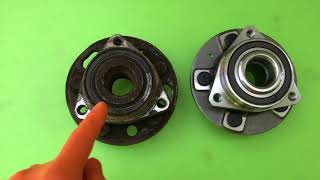
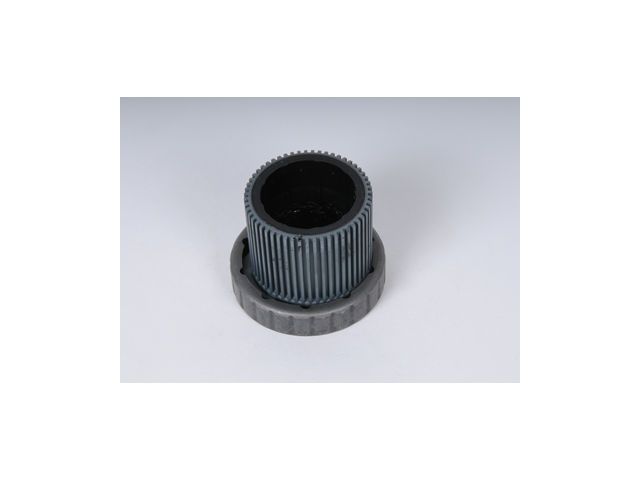
Unlike the front axle of the H3 and many other GM trucks which integrate the wheel speed sensor into the hub assembly, the rear axle of the Hummer H3 uses a separate, individually replaceable wheel speed sensor. This sensor mounts to the axle housing and reads a tone ring (reluctor ring) on the axle shaft. This is a significant distinction, as a rear sensor failure does not require replacing the entire hub assembly. However, the wiring for these sensors is exposed and follows the frame and suspension, making it a common point of failure due to chafing, corrosion, or damage from road debris.
Symptoms You May Notice
- ABS warning light illuminated
- Traction Control or Stability Control (StabiliTrak) warning light illuminated
- "Service ABS System" or similar message on the driver information center
- ABS and traction control systems are disabled
- In some cases, the 4WD system may not engage or show an error, as it relies on wheel speed data.
- Replacing the EBCM first. 🎬 Watch: Why these modules are rarely the actual problem The module is rarely the cause of a single sensor circuit fault; the problem is almost always at the wheel end or in the wiring leading to it.
- Replacing the rear wheel hub assembly. Unlike the front, the rear sensor is not integrated into the hub, so replacing the hub is unnecessary for a sensor fault.
Most Likely Causes
- Failed Left Rear Wheel Speed Sensor 🔴 High Probability → Shop ABS Wheel Speed Sensor The rear sensors are exposed to harsh conditions (water, dirt, salt, heat from the nearby brakes) and can fail internally. They are held in by a single bolt and sealed with an O-ring, but moisture can still cause corrosion. The plastic sensor body can also become brittle and break during removal.
How to confirm: Use a scan tool to monitor live data from all four wheel speed sensors while driving. If the left rear sensor reads 0 MPH or has an erratic signal while the others read correctly, the sensor is the likely culprit. A forum user on Hummer Forums noted that a good rear sensor should have a resistance between 4500-5400 Ohms. Spinning the wheel should also generate a small AC voltage (around 100mV). 🎬 See this guide on testing wheel speed sensor output
Typical fix: Replace the left rear wheel speed sensor. This involves removing the wheel, unbolting the sensor (typically a T30 Torx), and tracing its wire to a connector on the frame rail to unplug it.
Est. part cost: $40-$80 - Wiring Harness or Connector Damage 🟡 Medium Probability The wiring runs along the frame and down the axle tube, making it susceptible to damage from road debris, corrosion from water and salt, or chafing against suspension components. The connector on the frame rail is a frequent point of failure.
How to confirm: Visually inspect the wiring harness from the wheel sensor up to the main connector on the frame for any signs of breaks, chafing, or corrosion. Unplug the connector at the sensor and the EBCM and check for continuity on the two wires using a multimeter. A user on a Hummer H2 forum identified the relevant pins on the EBCM plug as #22 and #23, which may be similar for the H3. Wiggling the harness while checking continuity can help expose intermittent breaks.
Typical fix: Repair the damaged section of wire or replace the pigtail connector. In severe cases, a new harness section may be needed. The pigtail connector is available as a separate part.
Est. part cost: $20-$100
Rare But Worth Checking
- Damaged or Debris-Covered Tone Ring: The tone ring (or reluctor ring) is on the axle shaft inside the axle tube. While protected, it's possible for metal shavings or thick differential fluid to obscure the ring, causing an erratic signal. This is less common than sensor or wire failure.
- Failed Electronic Brake Control Module (EBCM): → Shop ABS Control Module This is rare and should only be considered after the sensor, tone ring, and wiring have been thoroughly tested and ruled out. EBCM failure usually triggers multiple wheel speed sensor codes or communication codes, not just one. One owner sent their module for repair only to find it was not the issue.
Diagnosis Steps
- Connect an ABS-capable scan tool and confirm C0045 is the active or stored code.
- Use the scan tool's live data function to view the wheel speed from all four wheels while driving in a straight line above 10 MPH. 🎬 Watch: Professional diagnostic steps for ABS sensor codes
- Observe the Left Rear (LR) wheel speed reading. If it is 0, erratic, or significantly different from the other three, proceed with inspecting that corner.
- Safely raise and support the vehicle. Remove the left rear wheel.
- Visually inspect the wheel speed sensor wiring harness for any obvious damage, chafing, or corrosion from the sensor up to the connector on the frame rail.
- Inspect the connector itself for corrosion, moisture, or bent pins. Disconnect it and apply dielectric grease upon reassembly.
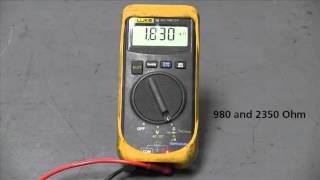
- If wiring looks good, disconnect the sensor. Test its internal resistance with a multimeter. According to forum discussions, it should be between 4500-5400 Ohms. Compare to the right rear sensor for a reference.
- If the sensor resistance is out of spec or open, it needs to be replaced. Be prepared for the T30 Torx bolt to be seized and for the plastic sensor to break upon removal, which may require drilling out the remaining piece.
- If the sensor tests good, check for continuity and shorts in the wiring harness between the sensor connector and the EBCM connector. A known-good wiring path should have very low resistance (under 1 ohm).
- If wiring and sensor are confirmed good, the issue could be the tone ring inside the axle or, very rarely, the EBCM itself.
Parts You'll Likely Need
- Rear Wheel Speed Sensor
(OEM #19367001 (replaces 15271077, 15822874, 15862988))— This is the most common failure point for a C0045 code on the rear axle. The sensor is exposed to the elements and fails electronically or seizes in its bore.
Trusted brands: ACDelco (GM Original Equipment), Standard Motor Products, NTK, Dorman
OEM price range: $70-$90
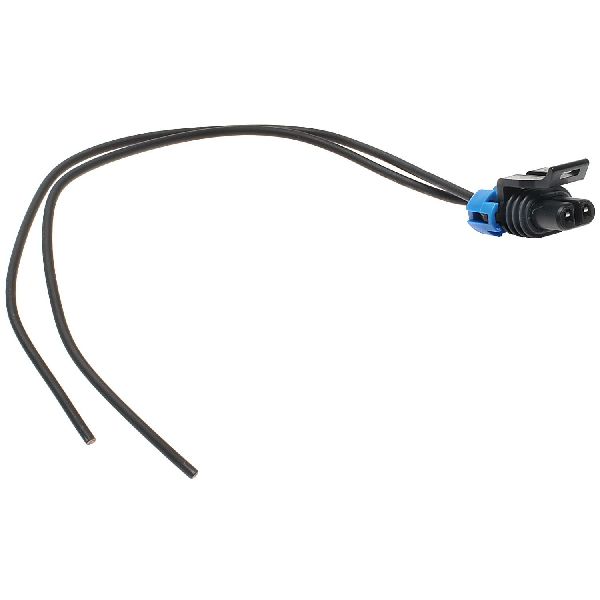
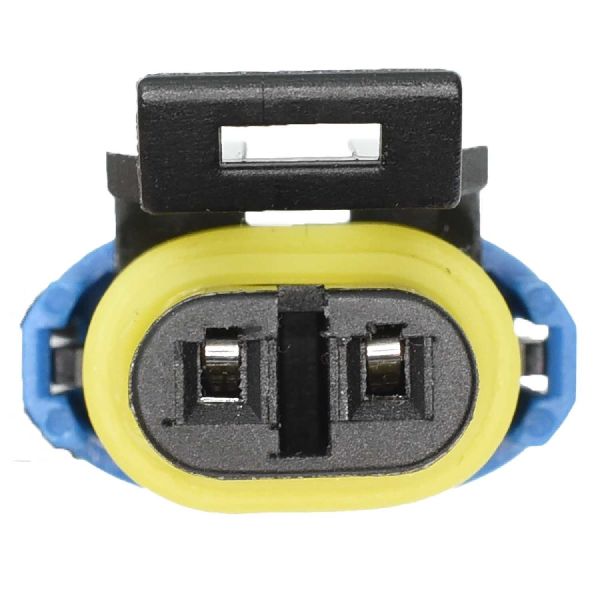
Aftermarket price range: $40-$60 - Rear Wheel Speed Sensor Pigtail Connector
(OEM #ACDelco PT2830)— The connector on the frame rail or the wiring leading to it can become corroded or damaged, causing an open or short in the circuit.
Trusted brands: ACDelco, Dorman, Standard Motor Products (S-575)
OEM price range: $30-$50
Aftermarket price range: $15-$30
Platform-Specific Known Issues
- Sensor Seizure and Breakage: Due to corrosion between the sensor's metal sleeve and the axle housing, the sensor often seizes in place. When attempting to remove it, the plastic top breaks off, leaving the body of the sensor stuck. Owners frequently report having to drill out the remaining plastic piece to install the new sensor. Applying rust penetrant beforehand is highly recommended.
- Owner Repair Story: Chasing the Fault: On HummerForums.net, a user with code C0045 went through an extensive diagnosis. They replaced the sensor with an aftermarket part with no change, then had the EBCM rebuilt with no change. The solution was ultimately found to be a faulty aftermarket sensor, highlighting the importance of using quality OEM parts (like ACDelco) or reputable aftermarket brands and verifying the part's resistance before installation.
Documented NHTSA Reports
While the Hummer H3 uses a specific rear sensor setup, other GM platforms and manufacturers provide insight into how C0045 manifests across different systems. For instance, NHTSA ODI #11219167 describes a case where the C0045 code was triggered by a broken left rear wheel speed sensor encoder ring, requiring replacement of both the sensor and the hub assembly. In another GM-related report, NHTSA ODI #11165895 notes that a service center recommended replacing the left rear hub assembly to resolve C0045, though the owner observed that online references for the solution were varied. Additionally, NHTSA ODI #11399819 shows C0045 appearing alongside fuel system codes P0463 and P069E, and NHTSA ODI #10382746 records C0045 occurring in conjunction with several other codes (C0057, C0231, C0232, C0282) following a vehicle shifting event.
Mechanic-Grade Diagnostic Values
- Rear Wheel Speed Sensor Internal Resistance — expected: 4500 - 5400 Ohms. Failure: A reading of OL (open circuit), 0 (short circuit), or a value significantly outside the expected range.
- Rear Wheel Speed Sensor AC Voltage Output — expected: >= 100 mV (0.1V) AC. Failure: No AC voltage generated when spinning the wheel by hand indicates a dead sensor.
- EBCM Harness Continuity Check — expected: 4500 - 5400 Ohms. Failure: An open or significantly different resistance reading when measured at the EBCM connector indicates a wiring problem between the EBCM and the sensor.
Scan Tool Commands That Help
- GM Tech 2 / Professional Scan Tool: Live Data - Wheel Speed Sensors — This is the primary diagnostic step to confirm the fault. It allows you to view the speed reading from all four sensors simultaneously while driving or spinning the wheels to see if the left rear sensor is dropping out, erratic, or reading zero.
- GM Tech 2 / Professional Scan Tool: Clear DTCs — After performing a repair (e.g., replacing the sensor or fixing a wire), this function is used to erase the stored C0045 code from the EBCM's memory. The warning lights should not return on the subsequent test drive if the fix was successful.
Wiring & Ground Locations
- EBCM (Electronic Brake Control Module) — Located in the engine compartment, on the driver's side, attached to the ABS hydraulic block, to the left of the master cylinder.. This is the control unit that receives the signal from the wheel speed sensor. All circuit testing ultimately leads back to the connector at this module.
- EBCM Connector Pins (Left Rear WSS) — On the main harness connector at the EBCM.. According to a Hummer forum discussion, pins 20 & 21 on the EBCM harness connector correspond to the left rear wheel speed sensor circuit. These are the specific pins to test for resistance and continuity when diagnosing a circuit fault from the module side.
- G100 / G105 — G100 is on the left front inner fender, behind the battery. G105 is on the left inner front wheelwell, behind the battery.. These are primary chassis ground points in the engine bay. The EBCM relies on a clean ground connection to function properly. While a bad ground typically causes multiple or communication errors, checking and cleaning these grounds is a good practice during any electrical diagnosis.
- Splice S110 / J110 — In the body harness near the EBCM, approximately 3 inches (7.5 cm) back from the EBCM connector.. This is a splice point in the harness near the EBCM. While not specific to the WSS circuit, corrosion or failure at major harness splices can cause unpredictable electrical issues, including problems with module function.
Real Owner Repair Stories
- Hummer Forums user 'tonyb5150' (Hummer H3 (year not specified)) — ABS and Traction Control lights on, code C0045.
❌ Tried (didn't work) Replacing the left rear speed sensor with an AutoZone part., Having the EBCM rebuilt by UPFIX., Verifying wiring integrity with a shop.
✅ What actually fixed it The user's issue persisted through multiple part swaps. Another forum member provided the GM specification for sensor resistance (4500-5400 Ohms) and noted that the user's measured 500 Ohms was incorrect, strongly implying the aftermarket sensors were faulty or incompatible. The final resolution was not posted, but the clear diagnosis was a bad part, not a complex vehicle fault.
OEM Part Supersession History
15862988→19367001— Part number consolidation and potential design revision by GM.15822874→15862988, then 19367001— Part number consolidation and potential design revision by GM.15271077→15822874, then 15862988, then 19367001— Part number consolidation and potential design revision by GM.
Diagnostic Flowchart
Used vs. New Parts: Buying Guide for This Vehicle
When a used part is the smart pick: For this repair, using used parts is generally not recommended. The primary failure points are an electronic sensor and its wiring pigtail, which are low-cost items when purchased new. A used sensor carries an unknown history and is prone to failure from age and heat cycles. A used wiring harness may have hidden corrosion or brittle insulation.
What to inspect on the donor part:
- Not applicable as used parts are not advised for this repair.
OEM-only on this vehicle (don't cheap out):
- While not strictly 'OEM-only', it is highly recommended to use the ACDelco (GM Original Equipment) sensor. Forum reports indicate that some aftermarket sensors, despite being listed as compatible, have incorrect resistance values, leading to a persistent C0045 code even after replacement.
Aftermarket brands forum-validated for this vehicle:
- ACDelco (GM Original Equipment) is the most trusted brand.
- Standard Motor Products (SMP) and NTK are generally reputable aftermarket brands for sensors.
Brands owners have reported issues with on this vehicle:
- Unbranded, low-cost sensors from online marketplaces (e.g., Amazon, eBay) have been reported by owners to be non-functional or have incorrect specifications out of the box, causing wasted time in diagnosis.
Real Owner Stories
Aggregated from forums and TSBs cited above. Mileages and costs reflect what owners reported in those sources.
2007 Hummer H3 — 90198 miles
Symptoms: ABS/TRACTION light came on.
What fixed it: Replaced the driver's side rear ABS sensor. The old one broke during removal and had to be chipped out.
Cost: $53.99
Source hint: hummerforums.com - Rear abs sensor replacement
Hummer H3
Symptoms: Brake fluid warning light and traction control light would come on intermittently after driving for a short period.
What fixed it: The user mentioned a past C0045 was due to a failed sensor.
Source hint: hummerforums.com - H3 intermittent brake fluid and traction, warning lights
Hummer H3
Symptoms: ABS and Traction Control lights were on with code C0045.
What fixed it: After replacing the sensor with an aftermarket part and having the EBCM rebuilt with no success, the problem was solved by replacing the faulty aftermarket sensor with a quality part.
Source hint: HummerForums.net, 'ABS Traction Control Lights on' (2022)
Related OBD-II Codes
Frequently Asked Questions
My left rear wheel speed sensor broke off in the axle housing while I was trying to remove it. Is this a common problem on the H3?
What resistance reading should I get from a good rear wheel speed sensor on my 2007 Hummer H3?
I replaced the sensor with a new aftermarket part, but the C0045 code and ABS light are still on. What's next?
What tool is needed to remove the bolt holding the wheel speed sensor?
My 4WD system is showing a 'Service 4WD' message along with the ABS light. Are these issues related to code C0045?
Besides the sensor itself, what is another common cause for the C0045 code on an H3?
Helpful Videos
We Have This Part in Stock



The information in this article is provided for general reference and educational purposes only. Vehicle specifications, procedures, and part compatibility can vary by production date, trim level, and region. Always consult your vehicle's factory service manual and verify part numbers before purchasing or performing repairs. Safety-critical components such as airbags, seat belts, and braking systems should be installed by a qualified professional.
- Hummer H3:
- 🧭 Diagnostic Flowchart
- 🎬 Helpful Videos
- 🛍️ Shop This Part
- What's Unique About the 2006-2010 Hummer H3
- Symptoms You May Notice
- Most Likely Causes
- Rare But Worth Checking
- Diagnosis Steps
- Parts You'll Likely Need
- Platform-Specific Known Issues
- Documented NHTSA Reports
- Mechanic-Grade Diagnostic Values
- Scan Tool Commands That Help
- Wiring & Ground Locations
- Real Owner Repair Stories
- OEM Part Supersession History
- Used vs. New Parts: Buying Guide for This Vehicle
- Real Owner Stories
- 2007 Hummer H3 — 90198 miles
- Hummer H3
- Hummer H3
- Related OBD-II Codes
- Frequently Asked Questions
- 🎟️ Get 5% Off