

C0045 on 2017-2020 Hyundai Elantra: Left Rear Wheel Speed Sensor Circuit Fixes
This code means there's a problem with the left rear wheel speed sensor circuit. Most likely, the sensor itself has failed or the wiring to it is damaged. Expect to pay $50-$150 for a new sensor and it's a relatively easy DIY replacement for many.
- C0045 means your Elantra has a fault in the left rear wheel speed sensor circuit, which disables ABS and stability control.
- The most likely cause is a failed wheel speed sensor, which is a relatively inexpensive and easy part to replace.
- Before replacing the sensor, always inspect the wiring and connector for damage or corrosion, as this is another common cause.
- A scan tool that can read ABS codes and live data is extremely helpful for confirming which wheel is at fault.
- Driving with this code is possible, but your vehicle's safety in emergency braking or slippery conditions is compromised.
What's Unique About the 2017-2020 Hyundai Elantra
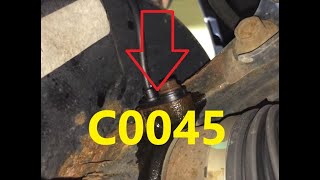
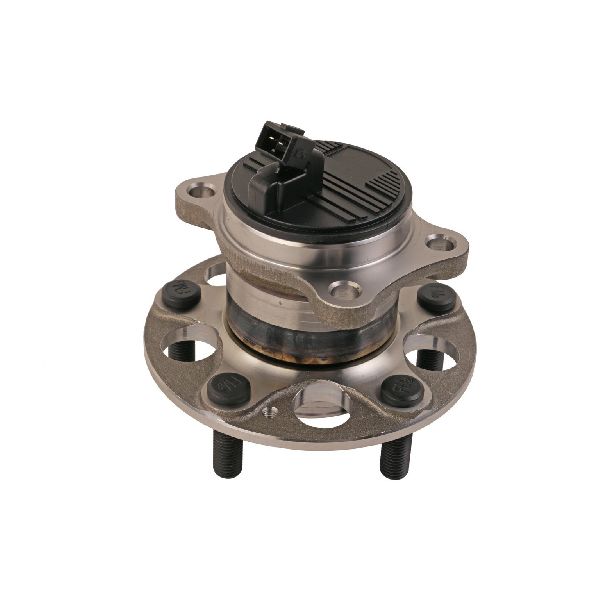
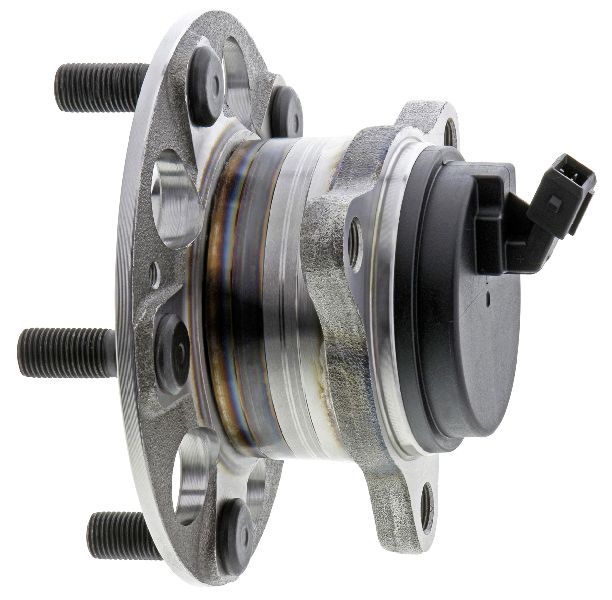
For the 2017-2020 Elantra (part of the 'AD' generation), the C0045 code is a straightforward chassis fault. 🎬 Watch: Understanding the C0045 code and how to fix it The wheel speed sensor is an active Hall-effect type sensor that reads a magnetic encoder ring integrated into the seal of the rear wheel hub/bearing assembly. This design means that while the sensor itself is a common failure point, damage or contamination of the hub's magnetic ring can also cause the code, sometimes requiring replacement of the entire hub assembly. While some Hyundai models have had recalls related to ABS modules, those recalls do not specifically cover this Elantra generation for this particular code. The issue is almost always localized to the wheel corner.
Symptoms You May Notice
- ABS warning light is on
- Traction Control (ESC/ESP) warning light is on
- Stability Control warning light is on
- ABS system is disabled and will not activate during hard braking
- Traction control is disabled
- Cruise control may be disabled
- Replacing the wheel speed sensor without first checking the wiring. A simple visual inspection or continuity test of the wiring harness can save you from buying a part you don't need.
- Replacing the sensor when the actual fault is a damaged or debris-contaminated magnetic ring on the wheel hub assembly.
Most Likely Causes
- Failed Left Rear Wheel Speed Sensor 🔴 High Probability → Shop ABS Wheel Speed Sensor The sensor is exposed to harsh conditions like water, road salt, and vibrations at the wheel hub, leading to internal failure over time.
How to confirm: Use a multimeter to check the sensor's internal resistance; an open or shorted reading indicates failure. A more definitive test is to use an ABS-capable scan tool to monitor live wheel speed data while driving; the left rear should read 0 or have an erratic signal compared to the others.
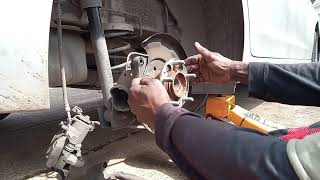
Typical fix: Replace the left rear wheel speed sensor. This usually involves removing one bolt and disconnecting the electrical connector. 🎬 See this walkthrough on replacing the rear wheel speed sensor
Est. part cost: $50-$150 - Damaged Wiring or Corroded Connector 🟡 Medium Probability The wiring harness leading to the sensor can get damaged from road debris, improper repairs, or rubbing against suspension components. The connector pins are also susceptible to corrosion.
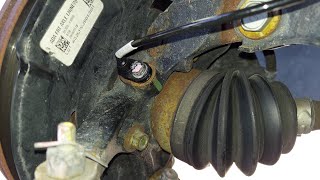
How to confirm: Visually inspect the entire length of the wiring from the sensor to the main harness for any breaks, chafing, or melted sections. A YouTube video for a 2017 Elantra specifically shows a broken wire near the sensor as the cause of failure. Disconnect the connector and check for green or white corrosion on the pins. Perform a continuity test on the wires between the sensor connector and the ABS module connector.
Typical fix: Repair the broken wire section or replace the connector pigtail. Clean any corrosion from the connector pins with an electrical contact cleaner.
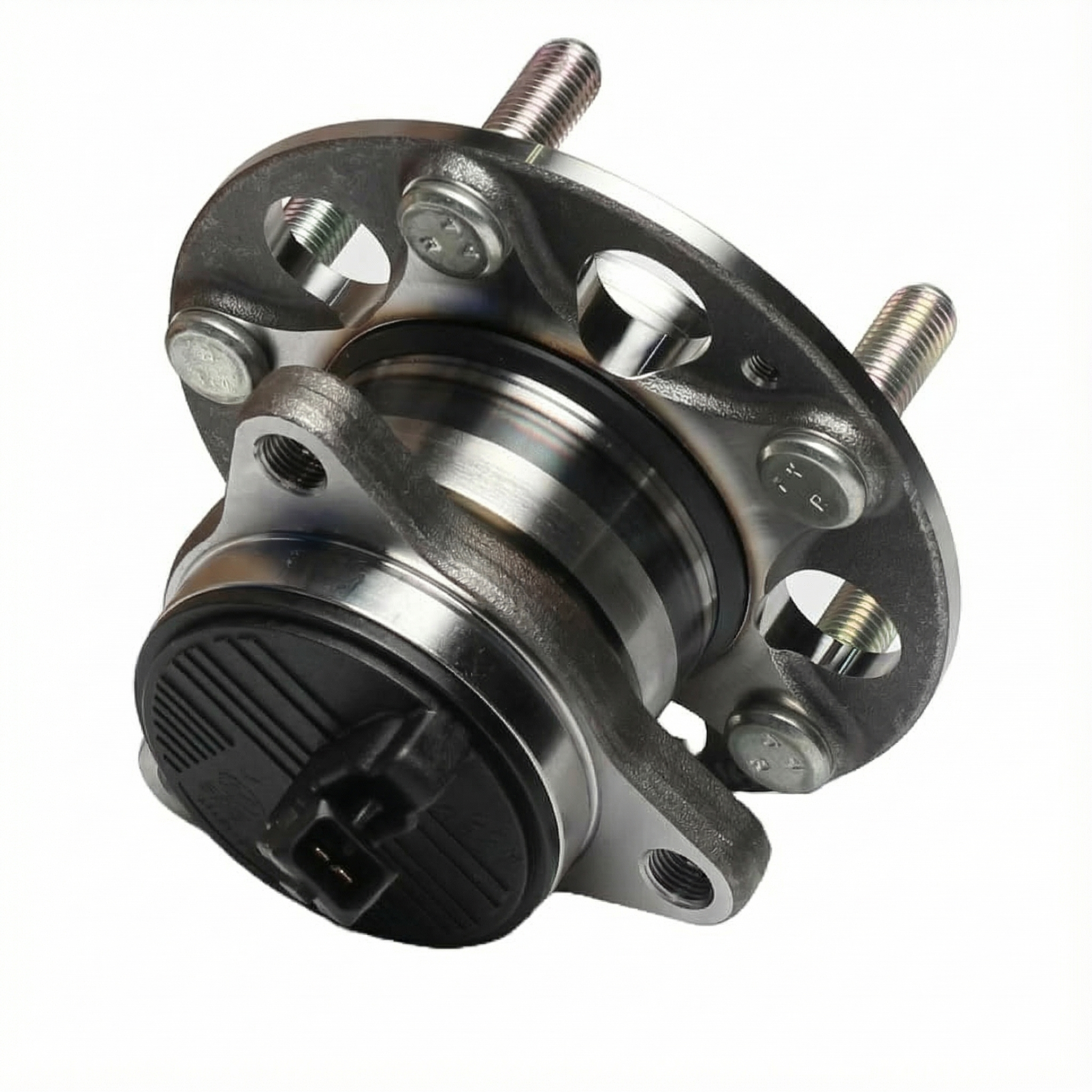
Est. part cost: $10-$40 - Damaged or Contaminated Tone Ring / Hub Assembly ⚪ Low Probability The magnetic tone ring, which the sensor reads, is integrated into the wheel hub/bearing assembly on this Elantra. If the bearing fails or the tone ring gets cracked, rusty, or covered in metallic debris, it can cause an erratic or no-signal condition.
How to confirm: After removing the sensor, visually inspect the magnetic ring on the hub for cracks, or heavy rust/debris. If the wheel bearing has excessive play or is making noise, the hub assembly is the likely cause. A Reddit user with an Equinox (which uses a similar system) noted that cleaning metallic debris from the ring can sometimes resolve the issue.
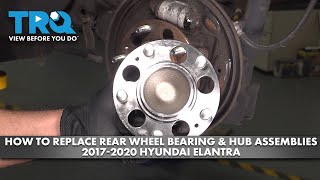
Typical fix: The tone ring is not serviced separately. The entire wheel hub and bearing assembly must be replaced. 🎬 Watch: Step-by-step guide to replacing the rear hub assembly
Est. part cost: $100-$250
Rare But Worth Checking
- Faulty ABS Control Module: → Shop ABS Control Module This is the least likely cause. The ABS module is the computer that processes the sensor signals. While module failure is rare, it should be considered after all other possibilities (sensor, wiring, hub) have been definitively ruled out. In some cross-manufacturer cases, such as NHTSA ODI #10382746, dealers have been instructed to erase codes and re-program software when multiple codes including C0045 appear simultaneously.
Diagnosis Steps
- Connect an ABS-capable scan tool to the OBD-II port.
- Confirm the C0045 code is present and check for any other related codes.
- View the live data stream for all four wheel speed sensors.
- Safely drive the vehicle (or raise the rear wheels and spin them by hand) and observe the speed readings. The left rear sensor will likely show 0 MPH or an erratic reading compared to the other three.
- Raise and safely support the rear of the vehicle. Remove the left rear wheel.
- Visually inspect the wheel speed sensor and its wiring harness for any obvious signs of damage, like broken/chafed wires or a loose connector.
- Disconnect the sensor and inspect the connector terminals for corrosion or pushed-out pins.
- If a visual fault is found in the wiring, repair it. If not, test the sensor. Since this is an active sensor, check for a reference voltage (typically 5V) at the connector with the key on. Then, using an oscilloscope or a multimeter with a frequency setting, check for a square wave signal while spinning the wheel.
- If the sensor tests bad, replace it.
- If the sensor tests good, inspect the magnetic tone ring on the wheel hub for damage, debris, or heavy contamination.
- If the tone ring is okay, perform a continuity test on the wiring harness between the sensor connector and the ABS module.
- If wiring and sensor are confirmed good, the issue may be the wheel hub assembly or, rarely, the ABS module itself.
Parts You'll Likely Need
- Left Rear ABS Wheel Speed Sensor
(OEM #91920-F0000)— This is the most common failure point for the C0045 code due to its exposure to the elements at the wheel.
Trusted brands: Hyundai (Genuine), Bosch, Delphi, Standard Motor Products (SMP), Mando
OEM price range: $100-$180
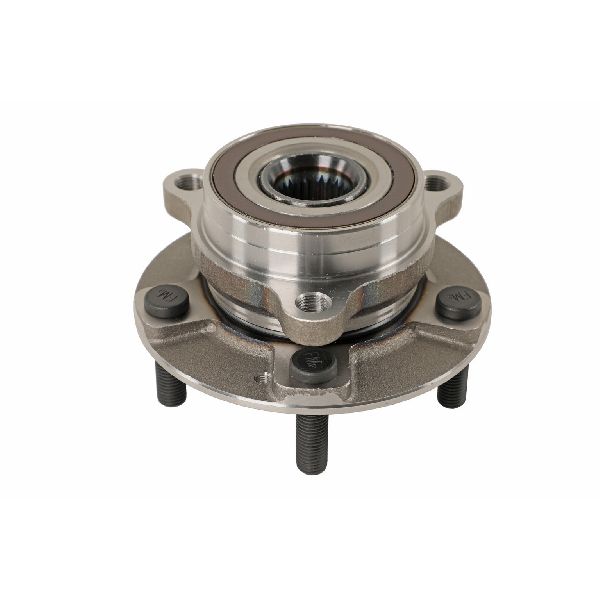
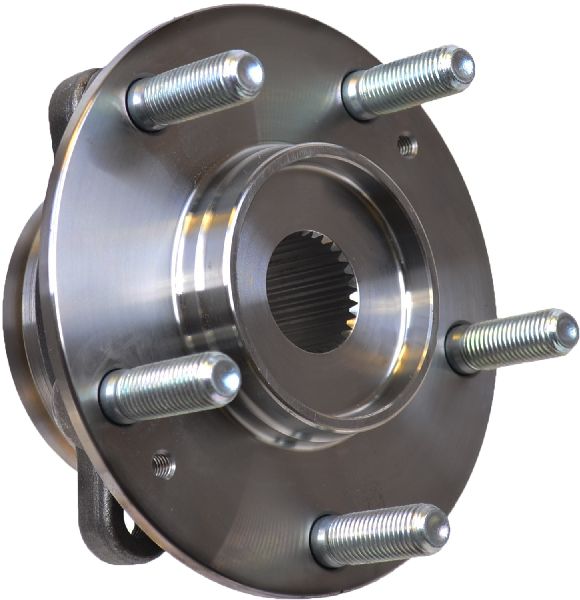
Aftermarket price range: $50-$120 - Rear Wheel Hub and Bearing Assembly — If the magnetic tone ring integrated into the hub is damaged, or the bearing has failed, the entire hub assembly needs to be replaced to restore the sensor's signal.
Trusted brands: Timken, SKF, MOOG, Mando
OEM price range: $180-$300
Aftermarket price range: $100-$200
Technical Service Bulletins (TSBs) & Recalls
- TSB 19-BE-001H-1: While this TSB is for Santa Fe and Veracruz models, it establishes a service precedent for replacing the rear wheel speed sensor as a separate component from the hub assembly, which is relevant to the Elantra's repair philosophy.
- TSB 17-01-009-2: Describes a service campaign for Santa Fe models where salt water intrusion could cause temporary sensor signal interruption, requiring a new sensor cap or silicone spray application. While not directly for the Elantra, it highlights the sensitivity of these sensors to environmental factors.
Mechanic-Grade Diagnostic Values
- Active Wheel Speed Sensor Signal — expected: A square-wave digital pulse, typically switching between 0V and 5V, with frequency increasing proportionally to wheel speed.. Failure: A constant voltage (short), no voltage (open), or a noisy/irregular waveform indicates a fault in the sensor or wiring.
- Sensor Reference Voltage — expected: Approximately 5V to 12V at the sensor connector with the ignition on (vehicle specific).. Failure: No voltage suggests a wiring issue or a problem with the ABS module's power output.
- ABS Module Power Supply Voltage — expected: Approximately battery voltage (B+) at terminal 18 of the ABS control module harness connector, with the ignition on.. Failure: Low or no voltage indicates a problem with the power supply fuse or wiring to the module.
- ABS Module Ground Circuit Continuity — expected: Continuity should exist between terminals 1 and 4 of the ABS control module harness connector and a known good chassis ground.. Failure: No continuity (an open circuit) indicates a broken ground wire or a corroded ground point, which can cause various module-related faults.
Hidden / Shadow Codes Worth Checking
- C0045 06: Indicates 'Left Rear Wheel Speed Sensor Circuit Low Voltage/Open'. This points specifically to an open circuit, likely a broken wire or disconnected connector. (see via Advanced scan tools like the Hyundai GDS or equivalent that can read manufacturer-specific symptom bytes.)
- C0045 0F: Indicates 'Left Rear Wheel Speed Sensor Circuit Signal Erratic'. This suggests the sensor is producing a signal, but it's noisy or inconsistent, often caused by a damaged tone ring or electromagnetic interference. (see via Advanced scan tools like the Hyundai GDS or equivalent that can read manufacturer-specific symptom bytes.)
- C0045 18: Indicates 'Left Rear Wheel Speed Sensor Circuit Low Signal Amplitude'. The signal strength is too weak, which could be due to an excessive air gap between the sensor and tone ring or internal sensor degradation. (see via Advanced scan tools like the Hyundai GDS or equivalent that can read manufacturer-specific symptom bytes.)
- C0045 5A: Indicates 'Left Rear Wheel Speed Sensor Circuit Not Plausible'. The signal from this sensor doesn't make sense when compared to other vehicle data (like the other wheel speeds), pointing to an intermittent signal or a failing hub bearing causing erratic readings. (see via Advanced scan tools like the Hyundai GDS or equivalent that can read manufacturer-specific symptom bytes.)
Scan Tool Commands That Help
- Hyundai GDS (Global Diagnostic System): Live Data / Data Analysis — This is the primary function to use for C0045. It allows a technician to view and graph the signal from all four wheel speed sensors in real-time while driving or spinning the wheels by hand. This will immediately confirm if the left rear sensor is reading 0 or providing an erratic signal compared to the others.
- Hyundai GDS (Global Diagnostic System): DTC and Symptom Analysis — After reading the main C0045 code, the GDS can display the specific symptom byte (e.g., 06, 0F, 5A) which provides critical direction for diagnosis, distinguishing between an open circuit, an erratic signal, or a plausibility fault.
- High-end Bidirectional Scanners (e.g., Launch, Autel): Actuation Tests — While there isn't a direct actuation test for a passive component like a wheel speed sensor, these tools can command the ABS pump and solenoids to cycle. This is useful after a repair to ensure the module is functioning, but it is not a primary diagnostic step for C0045 itself.
Wiring & Ground Locations
- ABS Control Module Connector — The ABS control module (HECU) is located in the engine compartment, typically on the driver's side, with several metal brake lines running into it.. This is the termination point for the wheel speed sensor harness. Testing for power, ground, and signal continuity must be done at this connector to rule out wiring breaks between the wheel and the module.
- ABS Module Power (Terminal 18) — Pin 18 on the main ABS control module harness connector.. This pin supplies battery voltage to the module. A loss of power here can cause multiple fault codes, including C0045, even if the sensor and its wiring are good.
- ABS Module Ground (Terminals 1 and 4) — Pins 1 and 4 on the main ABS control module harness connector.. These are the primary ground paths for the ABS module. A poor ground connection can cause erratic behavior and false circuit codes. Verifying continuity to chassis ground from these pins is a key diagnostic step if the sensor and wiring test good.
OEM Part Supersession History
91920-F0000→91920-F2000— Part number consolidation and potential minor design revision by the manufacturer.
Heads up: Part 91920-F2000 is specified for Elantras with drum brakes or disc brakes that were NOT built in Korea and are not the 'Sport' trim. Another part, 91920-F3000, is listed for other configurations. It is critical to verify the correct part number using the vehicle's VIN.
Model Year Variations Within This Range
- 2017-2020: The left rear wheel speed sensor part number can vary based on the vehicle's build location (Korea vs. US), brake type (disc vs. drum), and trim level (Sport vs. non-Sport). For example, part 91920-F2000 is specified for non-sport models with drum brakes built outside of Korea, while other trims may use 91920-F3000. Always confirm with a VIN.
Diagnostic Flowchart
Other Known Issues on This Vehicle
Issues unrelated to this code that are worth knowing about as an owner of this generation:
- Excessive Engine Oil Consumption 🔴 High — Commonly reported on the 2.0L Nu MPI engine, can lead to engine damage or failure if not monitored. (Ref: NHTSA Campaign 21V301000 (Recall for 2019-2020 models for improperly heat-treated piston oil rings).)
- Knock Sensor Detection System (KSDS) Update 🟠 Medium — A widespread product improvement campaign (Campaign 966/953) to install software that detects early signs of engine bearing wear. Failure to perform the update can void an extended engine warranty. (Ref: Campaign 966, Recall 953)
- Peeling White Paint 🟡 Low — Affects specific white paint codes (e.g., Quartz White Pearl) on 2017-2018 models, typically on the hood and roof. (Ref: TSB 22-BD-010H / Warranty Extension TXXW.)
- Engine Failure/Fire Risk (2.0L Nu MPI) 🔴 High — A recall was issued for 2019-2020 models due to piston oil rings that may not have been properly heat-treated, potentially causing engine damage, stalling, or fire. (Ref: NHTSA Campaign 21V301000)
Used vs. New Parts: Buying Guide for This Vehicle
When a used part is the smart pick: A used wiring harness pigtail from a junkyard is an excellent choice if only the connector is damaged. A complete used hub assembly is risky due to unknown bearing wear but can be a budget-friendly option if sourced from a very low-mileage, collision-damaged vehicle.
Donor-vehicle mileage cap: roughly under 60000 miles for the part to have meaningful remaining life.
What to inspect on the donor part:
- For a wiring pigtail, ensure there is no corrosion on the pins and that the wires are flexible with no signs of cracking or previous repairs.
- For a hub assembly, spin the hub by hand. It should be completely silent and smooth with zero play or roughness.
- Visually inspect the magnetic encoder ring on the hub seal for any cracks, chips, or heavy rust that could disrupt the sensor signal.
OEM-only on this vehicle (don't cheap out):
- ABS Control Module: Due to the need for VIN-specific programming and coding to the vehicle's safety systems, a new OEM or professionally remanufactured and programmed unit is strongly recommended.
Aftermarket brands forum-validated for this vehicle:
- Sensors: Bosch, Delphi, Mando (often an OEM supplier to Hyundai), Standard Motor Products (SMP).
- Hub Assemblies: Timken, SKF, MOOG, Mando.
Brands owners have reported issues with on this vehicle:
- Avoid unbranded, 'white-box' sensors and hub assemblies from online marketplaces. These often have high failure rates, use incorrect magnetic materials for the tone ring, or have poor internal electronics, leading to the code returning shortly after repair.
Documented NHTSA Reports
While C0045 is a standard code, manufacturer records and owner reports across various platforms provide insight into its behavior. NHTSA ODI #11219167 describes a case where the left rear wheel speed sensor encoder ring was broken, requiring replacement of both the sensor and the rear hub assembly. Another report, NHTSA ODI #11165895, mentions that while a service center recommended replacing the hub bearing assembly for code C0045, solutions found online were "all over the place," emphasizing the need for precise diagnosis. Additionally, NHTSA ODI #11399819 notes that C0045 can sometimes appear alongside fuel system codes like P0463 and P069E in certain vehicle architectures.
Real Owner Stories
Aggregated from forums and TSBs cited above. Mileages and costs reflect what owners reported in those sources.
2017 Hyundai Elantra
Symptoms: ABS warning light was on. The owner suspected a bad sensor.
What fixed it: Repairing a broken wire in the sensor harness rather than replacing the sensor itself.
Source hint: YouTube - 'hyundai elantra abs wheel sensor replc'
2017 Kia Forte
Symptoms: A cascade of issues including ABS, traction control, and power steering lights.
What fixed it: Addressing wheel speed sensor related circuit faults.
Source hint: Reddit r/MechanicAdvice - Absolutely lost 2017 kia forte abs sensor multiple issues
2011 Chevrolet Equinox
Symptoms: Recurring C0045 code even after changing the speed sensor.
What fixed it: Cleaning metallic particles off the magnetic ring on the wheel bearing.
Source hint: Reddit r/AskMechanics - C0045 code after changing speed sensor already?
Related OBD-II Codes
Frequently Asked Questions
Does TSB 19-BE-001H-1 mean I have to replace the entire hub assembly on my Elantra?
Could road salt be causing the ABS light on my 2017 Elantra?
Is there a recall for the engine issues on my 2019-2020 Elantra with the 2.0L engine?
What is the 'Knock Sensor Detection System' update I keep hearing about for this generation?
My white 2017 Elantra has paint peeling on the roof; is this a known issue?
Can I just clean the sensor, or do I need to buy a new one?
Helpful Videos
Used OEM Parts in Stock
New Aftermarket Parts Available


The information in this article is provided for general reference and educational purposes only. Vehicle specifications, procedures, and part compatibility can vary by production date, trim level, and region. Always consult your vehicle's factory service manual and verify part numbers before purchasing or performing repairs. Safety-critical components such as airbags, seat belts, and braking systems should be installed by a qualified professional.
- Hyundai Elantra:
- 🧭 Diagnostic Flowchart
- 🎬 Helpful Videos
- 🛍️ Shop This Part
- What's Unique About the 2017-2020 Hyundai Elantra
- Symptoms You May Notice
- Most Likely Causes
- Rare But Worth Checking
- Diagnosis Steps
- Parts You'll Likely Need
- Technical Service Bulletins (TSBs) & Recalls
- Mechanic-Grade Diagnostic Values
- Hidden / Shadow Codes Worth Checking
- Scan Tool Commands That Help
- Wiring & Ground Locations
- OEM Part Supersession History
- Model Year Variations Within This Range
- Other Known Issues on This Vehicle
- Used vs. New Parts: Buying Guide for This Vehicle
- Documented NHTSA Reports
- Real Owner Stories
- 2017 Hyundai Elantra
- 2017 Kia Forte
- 2011 Chevrolet Equinox
- Related OBD-II Codes
- Frequently Asked Questions
- 🎟️ Get 5% Off