

C0045 on 2013-2018 Hyundai Santa Fe: Left Rear Wheel Speed Sensor Fixes
Code C0045 on a 2013-2018 Santa Fe most often means the left rear wheel speed sensor or its wiring is faulty. The wiring harness is a very common failure point and should be inspected thoroughly before replacing parts. Expect to pay $50-$120 for an aftermarket sensor and about an hour of labor. Before replacing parts, inspect the wiring harness for damage, especially where it is exposed near the suspension components.
- Code C0045 disables your ABS and ESC systems, so drive with caution until it's fixed.
- The most likely causes are bad wiring or a failed sensor at the left rear wheel.
- Always inspect the wiring harness for damage before buying a new sensor.
- A humming or grinding noise from the rear indicates the wheel bearing may be the true cause.
- Check if your vehicle is affected by the critical ABS module fire risk recall (Campaign 205) and have it serviced by a dealer immediately if it is.
What's Unique About the 2013-2018 Hyundai Santa Fe
For the 2013-2018 Santa Fe (both Sport and XL models), the rear wheel speed sensor circuit is susceptible to environmental factors. Hyundai issued a service campaign (TSB 17-01-009-2, also known as Campaign 949) for vehicles in coastal areas because salt water could enter the sensor housing and disrupt the signal. Additionally, this generation had a major safety recall (Campaign 205 / NHTSA #21V-303) for the main ABS module on 2013-2015 Sport models, which could leak brake fluid internally, short-circuit, and cause a fire, making any ABS-related code a high-priority diagnosis.
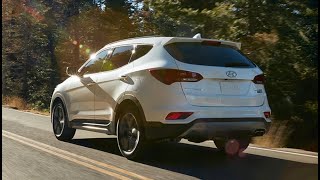
Generation note: The 2013-2018 year range covers the third generation (DM) of the Santa Fe, which was sold in two main versions: the 5-seat 'Santa Fe Sport' (chassis code AN) and the long-wheelbase 6 or 7-seat 'Santa Fe' or 'Santa Fe XL' (chassis code NC). The major ABS fire recall specifically targets 2013-2015 Santa Fe Sport models. The 2017 model year introduced a significant facelift with fresh exterior styling, new wheel designs, and updated safety and infotainment technology.
Symptoms You May Notice
- ABS warning light is on
- Electronic Stability Control (ESC) or Traction Control System (TCS) warning light is on
- ABS and stability control systems are disabled
- Cruise control may be inoperative
- Possible unwanted ABS activation at low speeds if the signal is erratic.
- Replacing the wheel speed sensor without first thoroughly inspecting the wiring harness. A broken wire is just as common as a failed sensor, and replacing the sensor will not fix a wiring problem.
- Replacing the sensor when the actual fault is a failed wheel bearing and damaged integrated tone ring.
Most Likely Causes
- Damaged Wheel Speed Sensor Wiring or Connector 🔴 High Probability → Shop ABS Wheel Speed Sensor The wiring harness is exposed to road debris, moisture, and suspension movement, which can cause wires to chafe, break, or corrode over time. The short pigtail from the sensor to the first connector is a very common point of failure.
How to confirm: Visually inspect the entire length of the wiring from the left rear wheel sensor to where it enters the cabin. Pay close attention to areas where the harness is clipped to the suspension or body. Check for breaks, chafing, and corrosion or bent/pushed-out pins in the connectors. Perform a continuity test on the wires between the sensor connector and the ABS module connector.
Typical fix: Repair the damaged section of wire or replace the pigtail connector. Ensure the repaired harness is properly secured away from moving parts. 🎬 See how to avoid common mistakes when repairing sensor wiring.
Est. part cost: $15-$50 - Failed Left Rear Wheel Speed Sensor 🔴 High Probability → Shop ABS Wheel Speed Sensor The sensor is exposed to harsh conditions like water, salt, and dirt. A specific service campaign (949) was issued for vehicles in coastal states where salt water intrusion could cause signal interruption. The sensor is a magnetic or Hall effect device that can fail internally.
How to confirm: After confirming the wiring is good, test the sensor. Use a scan tool to monitor live data; a faulty sensor will show 0 MPH or an erratic reading from the left rear wheel while the others show speed. Use a multimeter to check its internal resistance against manufacturer specifications (typically 800-1500 Ω for passive sensors). Hyundai uses active-type Hall effect sensors on this model, which should produce a square-wave digital signal viewable with an oscilloscope.
Typical fix: Replace the left rear wheel speed sensor. It is typically held in by a single bolt. 🎬 Watch: A step-by-step guide to replacing the rear speed sensor.
Est. part cost: $80-$250 - Failing Wheel Bearing / Damaged Tone Ring 🟡 Medium Probability The magnetic tone ring (or encoder) that the sensor reads is integrated into the wheel hub bearing assembly. If the bearing fails, it can create excessive play, damaging the ring or increasing the air gap, leading to an incorrect signal. Wheel bearing failure is a known issue on this platform.
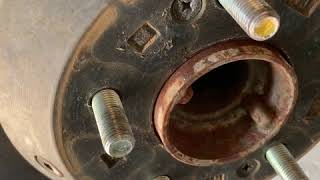
How to confirm: Safely raise the vehicle and check for play by trying to rock the wheel from the top and bottom (12 and 6 o'clock) and side to side (9 and 3 o'clock). A humming, grinding, or 'helicopter' noise while driving that changes pitch when turning is a classic sign of a bad wheel bearing. Visually inspect the tone ring (if visible through the sensor hole) for cracks, debris, or heavy rust jacking.
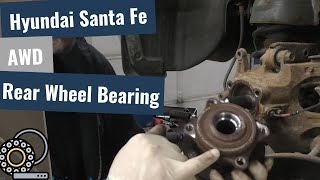
Typical fix: Replace the entire rear wheel hub and bearing assembly. 🎬 Watch: How to replace a failing rear wheel hub assembly.
Est. part cost: $100-$300
Rare But Worth Checking
- Faulty ABS Control Module: → Shop ABS Control Module This is the least likely cause and should only be considered after the sensor, wiring, and wheel bearing have been ruled out. However, given the major fire risk recall on the ABS module for 2013-2015 Santa Fe Sport models where brake fluid can leak internally and cause a short, any ABS issue warrants careful inspection.
- Software and Cross-Manufacturer Considerations: While rare, some manufacturers have addressed C0045 through software updates. For example, NHTSA ODI #10382746 notes a case where a dealer was instructed to erase codes and re-program software to address multiple faults including C0045. Additionally, in some vehicle architectures, C0045 has been documented alongside fuel system codes like P0463 and P069E (NHTSA ODI #11399819), though this is less common for the Santa Fe platform.
Diagnosis Steps
- Connect an ABS-capable OBD-II scanner. Confirm C0045 is the active code and check for any other related codes.
- View the live data stream from all four wheel speed sensors. Drive the vehicle slowly (or spin the wheel by hand with the vehicle raised) and observe the speed reading from the left rear sensor. It will likely read 0 MPH or show erratic values compared to the other three.
- Safely raise and support the rear of the vehicle. Remove the left rear wheel.
- Perform a thorough visual inspection. Look at the wheel speed sensor, its connector, and the wiring harness. Check for any signs of physical damage, chafing against suspension or frame, melting, or corrosion. Pay special attention to the pigtail harness.
- Inspect the wheel bearing. Grab the wheel hub at the 12 and 6 o'clock positions and attempt to rock it. Any significant play or movement indicates a worn wheel bearing.
- Disconnect the sensor and inspect the connector pins for corrosion or damage. If clean, test the sensor. As this is an active sensor, check for a 5V or 12V reference voltage at the connector with the key on. An oscilloscope is the best tool to check for a clean square-wave signal from the sensor while spinning the wheel.
- Test the wiring harness. Check for continuity on both wires from the sensor connector back to the ABS module. Also, check for a short to ground or a short to power on each wire.
- If wiring and sensor tests pass, and the wheel bearing is good, the fault may lie with the ABS control module. This step is best left to a professional, especially considering the related fire-risk recall.
Parts You'll Likely Need
- Left Rear Wheel Speed Sensor
(OEM #95680-B8000)— This is the most common part to fail or be replaced to resolve a C0045 code after wiring issues are ruled out. Part number 95680-B8000 is specified for AWD Santa Fe XL models from 2013-2019. Always verify with VIN, as FWD and Sport models may use a different number (e.g., 95680-2W000).
Trusted brands: Hyundai (OEM), Mando (OEM Supplier), Standard Motor Products (SMP), Delphi, Beck/Arnley
OEM price range: $150-$350
Aftermarket price range: $50-$120 - Rear Wheel Hub Bearing Assembly
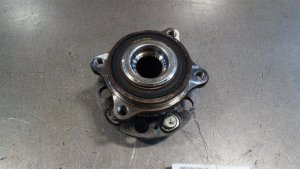
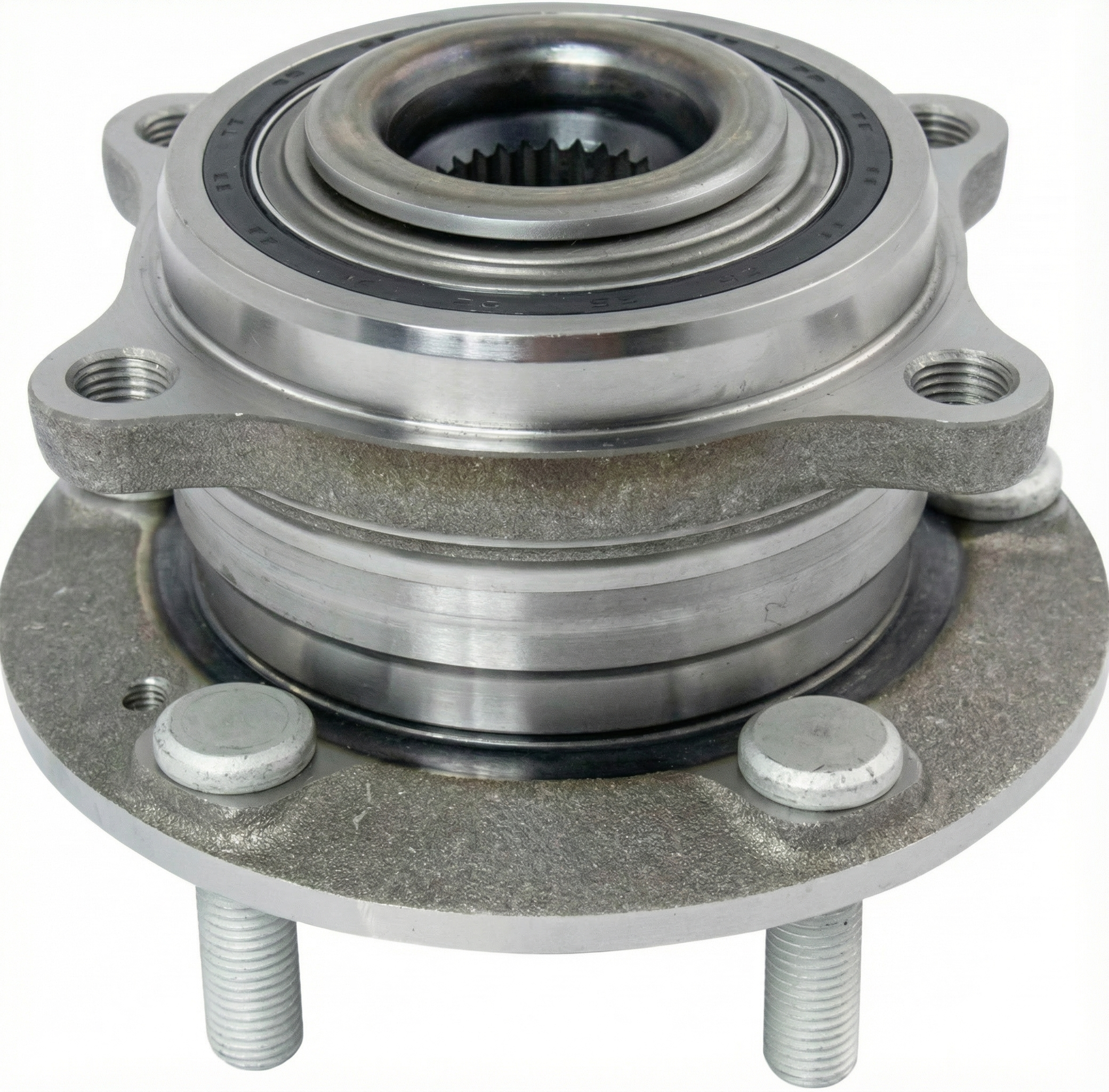
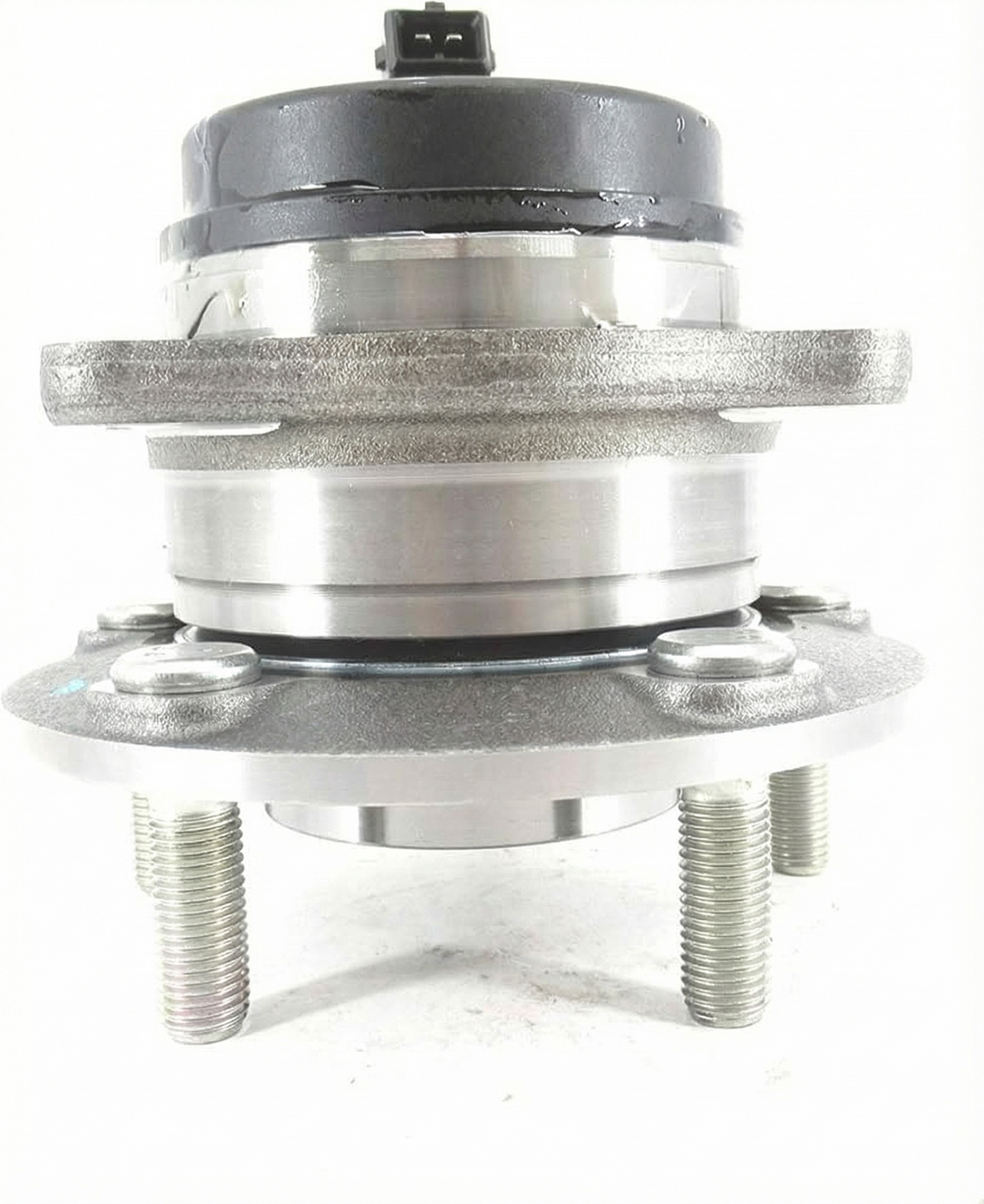
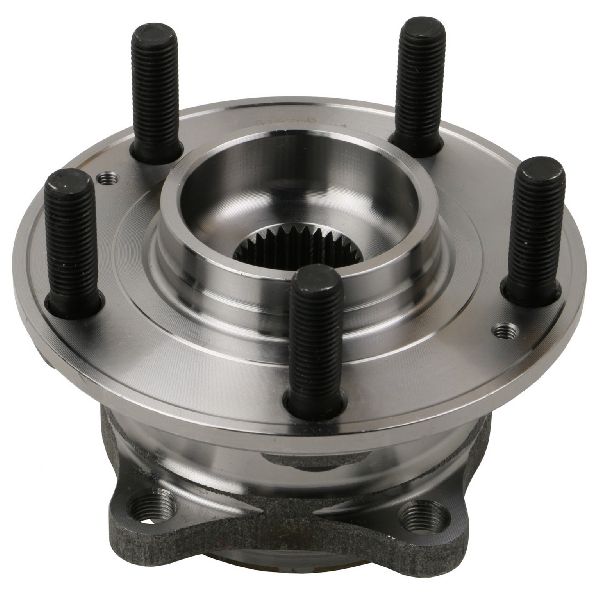
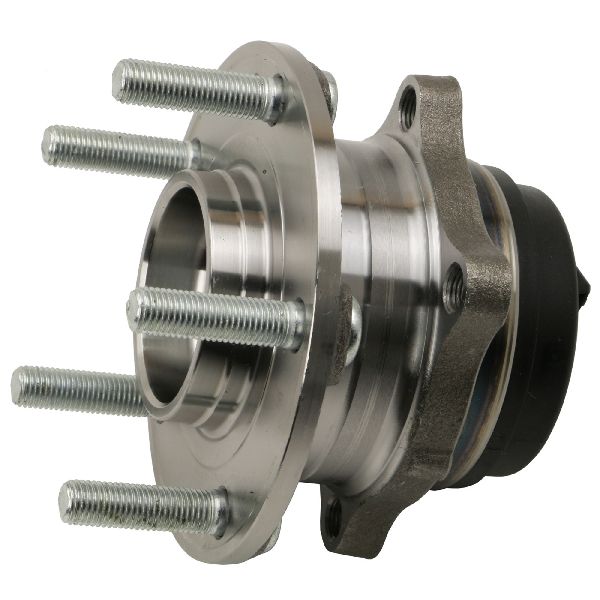
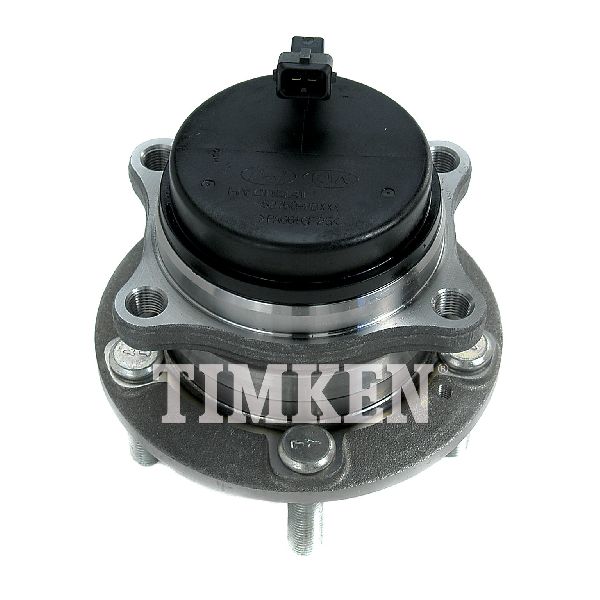
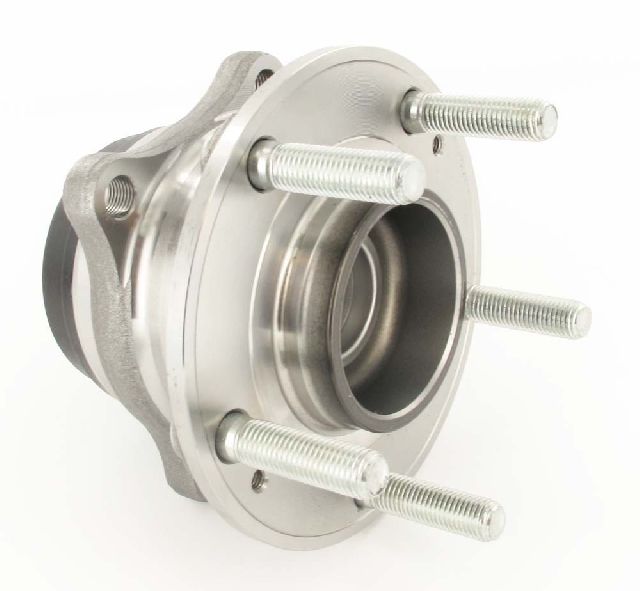
(OEM #513266 (AWD), 512326 (FWD))— Required if the diagnostic steps reveal a noisy or loose wheel bearing, or if the integrated magnetic tone ring is damaged. Part numbers differ significantly between All-Wheel Drive (AWD) and Front-Wheel Drive (FWD) models.
Trusted brands: Hyundai (OEM), Timken, SKF, MOOG, Detroit Axle
OEM price range: $200-$300
Aftermarket price range: $100-$180
Related Codes That Often Appear With This One
- C0046 — This code indicates an erratic signal from the same sensor, often pointing towards a damaged tone ring or failing wheel bearing rather than a complete circuit failure.
- C0050 — This is the identical code for the right rear wheel. If both C0045 and C0050 appear together, it strongly suggests a problem with a shared part of the circuit, like the main harness or the ABS module itself, rather than two individual sensor failures.
Technical Service Bulletins (TSBs) & Recalls
- 17-01-009-2 (Service Campaign 949)
- 21-01-052H (Recall 205)
- 17-ST-001 (Steering Coupler Replacement)
Platform-Specific Known Issues
- Service Campaign 949 (TSB 17-01-009-2): Addresses an issue where salt water can enter the rear wheel speed sensor housing, causing temporary ABS/ESC light illumination. This campaign was targeted at vehicles in specific coastal states. The fix is to apply a silicone conformal coating or, if codes are present, replace the sensor cover.
- ABS Module Fire Risk Recall (Campaign 205 / NHTSA #21V-303): A critical safety recall for 151,205 model year 2013-2015 Santa Fe Sport models where the ABS module (supplied by Mando) can leak brake fluid internally and short circuit, potentially causing a fire while parked or driving. The remedy involves a dealer inspection, installation of a new lower-amperage multi-fuse, and replacement of the module if necessary.
Mechanic-Grade Diagnostic Values
- Active Wheel Speed Sensor Signal — expected: A clean square-wave digital signal, switching between approximately 0V and 5V (or 12V), with frequency increasing proportional to wheel speed.. Failure: No signal, a constant voltage (short), a noisy or inconsistent waveform, or missing pulses indicates a faulty sensor or tone ring.
- Active Wheel Speed Sensor Reference Voltage — expected: Typically 5V or 12V at the sensor connector with the key on, engine off.. Failure: No voltage suggests a wiring problem or a fault in the ABS module's power supply.
Scan Tool Commands That Help
- Hyundai GDS (Global Diagnostic System): DTC Analysis / Live Data (Data Stream) — To read the primary C0045 code and view live wheel speed data from all four sensors simultaneously. This is the first step to confirm the fault is isolated to the left rear wheel.
- Hyundai GDS (Global Diagnostic System): Flight Record — For intermittent faults. This function allows recording vehicle data over a drive cycle to capture the exact moment the fault occurs, which can be difficult to find in the workshop.
- Hyundai GDS (Global Diagnostic System): Vehicle S/W Management — Used for resetting adaptive values or reprogramming the ABS module if a software update is available or if the module is replaced.
Wiring & Ground Locations
- ESC Module (ABS Module) — On this platform, there are two possible suppliers and locations: Mando and Bosch. The Mando system module is located at the rear of the engine compartment, behind the engine. The Bosch system module is located lower down, requiring removal of the airbox for access.. This is the control unit that receives the wheel speed sensor signal. All circuit tests (continuity, short to ground/power) will terminate at this module's main connector. Knowing its location is critical for testing the harness.
- GE01 / GE08 — GE01 is a primary ground point located on the left side of the engine compartment. GE08 is another ground point in the engine bay.. A poor ground connection for the ABS module can cause numerous erratic electrical faults, including false circuit codes like C0045. Verifying the integrity of the main module ground is a crucial step if sensor and wiring tests are inconclusive.
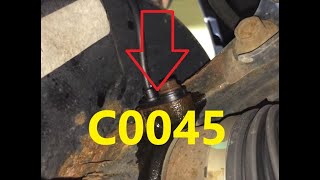
- Left Rear Wheel Sensor Connector — Located directly at the wheel hub assembly, connecting the sensor pigtail to the main body harness.. This is the most common location for corrosion, moisture intrusion, and pin damage. It is the first place to inspect and test for voltage and signal.
Real Owner Repair Stories
- Reddit user No-Knowledge8856, a self-identified Hyundai Master Tech (2017 Hyundai Santa Fe Limited) — ABS light, traction control, and BSDS (Blind Spot Detection System) lights all on.
✅ What actually fixed it The technician stated the most likely cause is a faulty rear wheel speed sensor, specifically the 'cap style' sensor on the back of the hub, not the wire. He notes that confusing the wire for the sensor is a common mistake. The code indicates the ABS module is not receiving a valid signal from one of the wheels, causing all related systems to shut down as a precaution. - NHTSA ODI #11165895 — An owner reported that their service center identified code C0045 and recommended replacing the left rear hub bearing assembly to resolve the warning lights, although they noted online references for the solution varied.
- NHTSA ODI #11219167 — A report describes a C0045 code caused by a broken left rear wheel speed sensor encoder ring, which required replacing both the speed sensor and the rear hub assembly.
OEM Part Supersession History
95680-2W000→N/A - Application Specific— Part number variation based on vehicle configuration.
Heads up: Part number 95680-2W000 is often listed for FWD or Santa Fe Sport models, while 95680-B8000 is specified for AWD and Santa Fe XL models. They are not interchangeable. Always verify the correct part number with the vehicle's VIN before ordering.
Model Year Variations Within This Range
- 2017-2018: The 2017 model year marked a significant refresh for the Santa Fe lineup, including new front/rear fascias, wheel designs, and updated infotainment and safety features like an available Multi-View Camera System and electronic parking brake. While the underlying ABS sensor technology remained the same, wiring harness routing or connector types may have minor differences from pre-facelift (2013-2016) models.
- 2013-2018: The ABS control module was supplied by two different manufacturers, Mando and Bosch, with different physical locations in the engine bay. Mando modules are behind the engine, while Bosch modules are lower down near the airbox. This is critical information for anyone needing to test wiring continuity back to the module.
Diagnostic Flowchart
Other Known Issues on This Vehicle
Issues unrelated to this code that are worth knowing about as an owner of this generation:
- Theta II GDI Engine Failure 🔴 High — Widespread across 2013-2018 models with 2.0L Turbo and 2.4L engines. Failures often manifest as engine knocking, seizing, or excessive oil consumption, sometimes at relatively low mileage. (Ref: Multiple recalls (e.g., NHTSA #17V-226) and a class-action lawsuit settlement led to lifetime warranties on the engine short block for affected vehicles that received a software update (KSDS).)
- MDPS Steering Coupler Wear 🟠 Medium — Very common. A flexible rubber coupler in the electronic power steering column disintegrates over time, causing a distinct clicking or clunking noise when turning the steering wheel. (Ref: TSB 17-ST-001 describes the replacement procedure. The part itself is inexpensive, but labor can be significant as it requires disassembling the steering column.)
- ABS Module Fire Risk 🔴 High → Shop ABS Control Module — Affects 2013-2015 Santa Fe Sport models specifically. Brake fluid can leak into the ABS module, causing an electrical short and potential fire, even when the vehicle is parked. (Ref: Recall 205 (NHTSA #21V-303) was issued to install a new multi-fuse and inspect/replace the module.)
- Peeling Exterior Paint 🟡 Low — Commonly reported, especially on white and pearl-colored vehicles. The paint can delaminate and peel off in large sheets, particularly on the roof and hood.
- Secondary Hood Latch Corrosion 🟠 Medium — Affects 2013-2017 models. The secondary hood latch cable can corrode and bind, preventing it from securing the hood properly if the primary latch fails. (Ref: Recall 163 (NHTSA #17V-226) was issued to replace the latch cable.)
Used vs. New Parts: Buying Guide for This Vehicle
When a used part is the smart pick: A used wiring harness pigtail from a junkyard is a viable option if only the connector is damaged and the rest of your harness is intact. It is not recommended to buy used electronic sensors or wheel hubs.
Donor-vehicle mileage cap: roughly under 80000 miles for the part to have meaningful remaining life.
What to inspect on the donor part:
- For a wiring pigtail, ensure the connector is free of corrosion or cracks.
- Check that the locking tabs are intact.
- Cut the wires with plenty of length to allow for a proper splice.
- Verify the donor vehicle is from a dry, non-salt-belt region if possible to minimize corrosion risk.
OEM-only on this vehicle (don't cheap out):
- ABS Control Module: Due to the complexity, need for VIN programming, and the critical safety recall, only a new OEM module or one from a highly reputable remanufacturer should be considered.
Aftermarket brands forum-validated for this vehicle:
- Mando (often the OEM supplier)
- Delphi
- Standard Motor Products (SMP)
- Beck/Arnley
Brands owners have reported issues with on this vehicle:
- Ultra-cheap, unbranded sensors from online marketplaces. Forum discussions frequently mention these parts failing prematurely or being dead-on-arrival, leading to doing the repair twice.
Real Owner Stories
Aggregated from forums and TSBs cited above. Mileages and costs reflect what owners reported in those sources.
2013-2018 Hyundai Santa Fe
Symptoms: ABS and stability control systems are disabled; ABS warning light is on.
What fixed it: Checking wiring continuity before buying a new sensor; often the wiring harness near the rear suspension fails due to high failure rates in that area.
Source hint: hyundai-forums.com threads discussing C0045 and related codes
2013-2015 Hyundai Santa Fe Sport
Symptoms: ABS warning light on; potential internal brake fluid leak in the ABS module.
What fixed it: Dealer inspection and installation of a new lower-amperage multi-fuse, and replacement of the ABS module under Recall 205.
Source hint: Recall 205 (NHTSA #21V-303)
2013-2018 Hyundai Santa Fe
Symptoms: Left rear wheel speed sensor showing 0 MPH or erratic readings while driving; ABS light illuminated.
What fixed it: Replacement of the rear wheel speed sensor and hub assembly because the magnetic tone ring is integrated into the bearing.
Source hint: youtube.com DIY videos for rear wheel speed sensor and hub assembly replacement
Related OBD-II Codes
Frequently Asked Questions
My ABS light is on and I live in a snowy coastal state; is there a specific Hyundai program for this?
I heard there is a fire risk associated with the ABS system on the 2013-2015 Santa Fe Sport. Is this related to code C0045?
Can a bad wheel bearing cause the C0045 code on my Santa Fe?
Is the replacement wiring for the rear sensor expensive?
My steering is making a clicking noise while my ABS light is on. Are these related?
What kind of sensor does the 2013-2018 Santa Fe use for the wheels?
Helpful Videos

![ABS Wheel Speed Sensor Wiring Repair Comeback [What Did I Do Wrong?]](https://img.youtube.com/vi/i5_OSaLAcH4/mqdefault.jpg)
Used OEM Parts in Stock
New Aftermarket Parts Available


The information in this article is provided for general reference and educational purposes only. Vehicle specifications, procedures, and part compatibility can vary by production date, trim level, and region. Always consult your vehicle's factory service manual and verify part numbers before purchasing or performing repairs. Safety-critical components such as airbags, seat belts, and braking systems should be installed by a qualified professional.
- Hyundai Santa Fe:
- 🧭 Diagnostic Flowchart
- 🎬 Helpful Videos
- 🛍️ Shop This Part
- What's Unique About the 2013-2018 Hyundai Santa Fe
- Symptoms You May Notice
- Most Likely Causes
- Rare But Worth Checking
- Diagnosis Steps
- Parts You'll Likely Need
- Related Codes That Often Appear With This One
- Technical Service Bulletins (TSBs) & Recalls
- Platform-Specific Known Issues
- Mechanic-Grade Diagnostic Values
- Scan Tool Commands That Help
- Wiring & Ground Locations
- Real Owner Repair Stories
- OEM Part Supersession History
- Model Year Variations Within This Range
- Other Known Issues on This Vehicle
- Used vs. New Parts: Buying Guide for This Vehicle
- Real Owner Stories
- 2013-2018 Hyundai Santa Fe
- 2013-2015 Hyundai Santa Fe Sport
- 2013-2018 Hyundai Santa Fe
- Related OBD-II Codes
- Frequently Asked Questions
- 🎟️ Get 5% Off