

C0050 on 2016-2020 Hyundai Elantra: Right Rear Wheel Speed Sensor Fault Causes and Fixes
Code C0050 on a 2016-2020 Elantra means there's a fault with the right rear wheel speed sensor circuit. This is most often a failed sensor or damaged wiring near the wheel. Expect to pay $40-$90 for a new sensor and about one hour of labor for replacement.
- C0050 means your Elantra's computer has lost the signal from the right rear wheel speed sensor, disabling your ABS and stability control.
- The most likely cause is a bad sensor, followed by damaged wiring near the wheel.
- Before buying parts, use a capable scan tool to watch the live data from all four wheels to confirm the right rear sensor is the one not reporting speed.
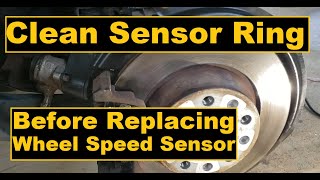
- When replacing the sensor, inspect the wheel hub's magnetic ring for metallic debris and clean it if necessary.
- Driving is possible, but your vehicle's key safety features are offline, so drive cautiously and schedule a repair soon.
What's Unique About the 2016-2020 Hyundai Elantra
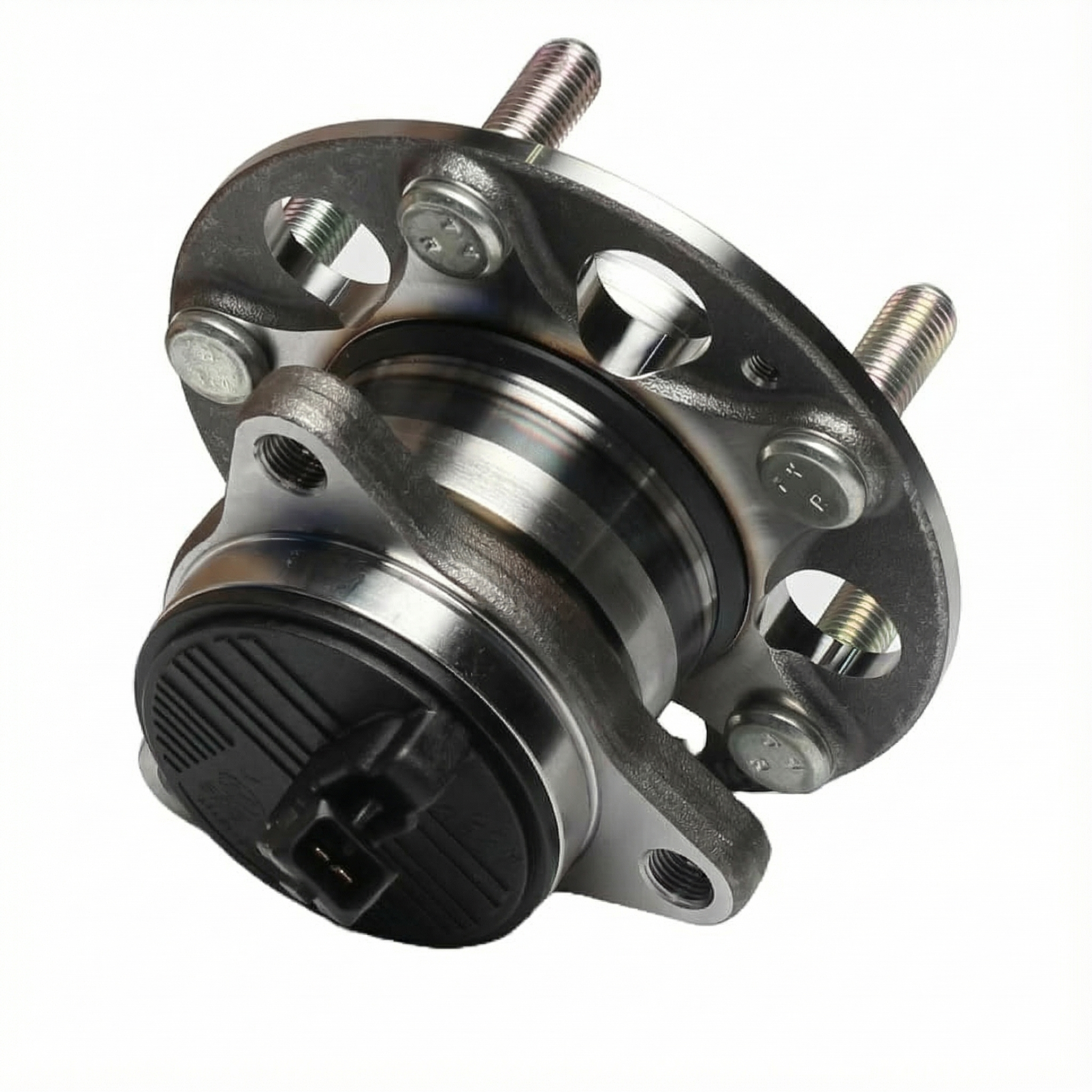
On the 2016-2020 Elantra (AD platform), the wheel speed sensor is a critical input for the ABS, Electronic Stability Control (ESC), and Traction Control systems. Unlike older vehicles with simple toothed 'tone rings,' these modern Elantras use a magnetic encoder ring integrated into the seal of the rear wheel hub/bearing assembly. This design is compact but makes the encoder ring susceptible to damage or contamination from metallic debris, which can disrupt the sensor's reading and mimic a sensor failure. The sensor itself is a common failure point due to its exposed location near the wheel, subject to water, road salt, and vibrations.
Generation note: This range covers the end of the fifth generation (MD/UD, 2016) and the sixth generation (AD, 2017-2020). The operating principle of the wheel speed sensor is the same for both. However, part numbers may differ slightly. The rear sensor for 2017-2020 models is widely cited as part number 91921-F2000. Always verify the part number with your vehicle's VIN, as some 2016 models may use a different part, such as 59930-3X350.
Symptoms You May Notice
- ABS warning light is on
- Electronic Stability Control (ESC) or Traction Control (TCS) warning light is on
- Cruise control may not work
- ABS system does not activate during hard braking (wheels may lock up)
- Traction control does not activate on slippery surfaces
- Potential for inaccurate speedometer readings (less common)
- Replacing the wheel hub/bearing when only the sensor was bad.
- Replacing the sensor when the actual problem was a simple wiring break or debris on the hub's magnetic ring.
- Replacing the sensor when the wiring harness connector has corrosion or a broken wire.
Most Likely Causes
- Failed Right Rear Wheel Speed Sensor 🔴 High Probability → Shop ABS Wheel Speed Sensor The sensor is exposed to harsh conditions like water, salt, and road debris, leading to internal electronic failure over time. Vibrations and heat cycles also contribute to wear.
How to confirm: Use an OBD-II scanner capable of reading ABS live data. Monitor the speed of all four wheels while driving. If the right rear sensor reads 0 MPH or shows an erratic signal while the others read correctly, the sensor is likely bad. You can also test the sensor's circuit at the connector. As an active sensor, you should check for a reference voltage (typically 5V or 12V) and ground with the key on. A lack of voltage points to a wiring issue, not a bad sensor.
Typical fix: Replace the right rear wheel speed sensor. This is typically held by a single 10mm or 12mm bolt. 🎬 See this step-by-step Elantra wheel speed sensor replacement
Est. part cost: $40-$90 - Damaged Wiring or Connector 🟡 Medium Probability The wiring harness near the wheel is subject to flexing, impacts from road debris, and corrosion, which can cause breaks or shorts in the wires. The harness is often secured by plastic clips that can break, allowing the wire to rub against suspension components or the wheel itself.
How to confirm: Visually inspect the wiring harness from the sensor to the main body connector inside the wheel well. Look for any signs of chafing, breaks, melting, or corrosion in the connector pins. A multimeter can be used to check for continuity between the sensor connector and the ABS module connector, and to check for shorts to ground/power along the circuit.
Typical fix: Repair the damaged section of wire with solder and heat shrink, or replace the pigtail connector if it is corroded. Ensure the harness is properly secured away from moving parts.
Est. part cost: $10-$30 - Debris or Damage on Magnetic Encoder Ring ⚪ Low Probability The magnetic encoder is part of the wheel hub's seal. Ferrous metallic debris (brake dust, road grime) can stick to it, disrupting the sensor's reading. The seal can also be damaged during other repairs (like axle or bearing work) or by using a magnetic tool near it.
How to confirm: Remove the wheel speed sensor (one bolt). Using a flashlight, look into the sensor hole at the surface of the wheel hub bearing. Slowly rotate the hub and look for a build-up of metallic shavings or dirt. A borescope can be very helpful here. Also check for visible cracks or damage to the dark, magnetic encoder ring.
Typical fix: Carefully clean the debris from the magnetic encoder ring using a soft nylon brush, compressed air, 🎬 Watch: How to clean the magnetic ring without removing wheels or a cloth. Do NOT use magnetic tools for cleaning. If the ring is cracked or damaged, the entire wheel hub bearing assembly must be replaced.
Est. part cost: $100-$200 for a new hub assembly
Rare But Worth Checking
- Faulty ABS Control Module: → Shop ABS Control Module This is rare and should only be considered after thoroughly testing the sensor, wiring, and hub. A faulty module will typically not respond to a scan tool or may have multiple other, unrelated codes present.
- Failed Wheel Hub Bearing: Excessive play or 'wobble' in a failing wheel bearing can increase the air gap between the sensor and the encoder ring, causing an intermittent or lost signal. This is usually accompanied by a grinding or humming noise from the wheel that changes with speed and when turning.
Diagnosis Steps
- Connect an OBD-II scanner capable of reading ABS codes to confirm C0050 is the active fault. Note any sub-codes like :18 (low signal) or :5A (not plausible) which can help pinpoint the issue.
- Access the live data stream for the ABS module. Graph the wheel speed readings for all four wheels while driving the vehicle slowly (above 5-10 mph).
- If the Right Rear (RR) wheel speed reads 0, is erratic, or lags behind the others, the issue is isolated to that corner.
- Raise and safely support the rear of the vehicle. Visually inspect the RR wheel speed sensor and its wiring harness for any obvious damage, corrosion, or loose connections. Pay close attention to where the harness flexes and is clipped to the body.
- Disconnect the sensor and inspect the connector terminals for green/white corrosion or bent pins.
- With the ignition ON, use a multimeter to test the vehicle-side harness connector. Check for a reference voltage (usually 5V or 12V) and a good ground. If either is missing, the problem is in the wiring or ABS module, not the sensor.
- If power and ground are good, remove the sensor (typically a single 10mm bolt). Inspect the sensor tip for debris and the magnetic encoder ring on the wheel hub for metallic shavings or damage.
- If no visual issues are found and the wiring tests good, the sensor itself is the most likely culprit.
- If a new sensor does not fix the issue, the problem likely lies with the magnetic encoder ring (requiring hub replacement) or, rarely, the ABS module.
Parts You'll Likely Need
- Rear Wheel Speed Sensor
(OEM #91921-F2000)— This is the most common failure point for a C0050 code due to its exposure to the elements and constant operation.
Trusted brands: Hyundai (OEM), Delphi, Duralast, Bosch, Beck/Arnley
OEM price range: $70-$110
Aftermarket price range: $40-$90 - Rear Wheel Hub and Bearing Assembly
(OEM #52730-F2000)— This is needed if the magnetic encoder ring, which is integrated into the hub, is damaged or if the wheel bearing itself has failed, causing excessive play that affects the sensor gap.
Trusted brands: Hyundai (OEM), Timken, SKF, MOOG, GMB
OEM price range: $180-$250
Aftermarket price range: $100-$180
Related Codes That Often Appear With This One
- C0045 (Left Rear Wheel Speed Sensor Circuit)
Mechanic-Grade Diagnostic Values
- Passive Wheel Speed Sensor Resistance — expected: 1,000 to 2,500 Ohms (Ω). Failure: A reading of infinite resistance (open circuit) or significantly outside the expected range indicates a failed sensor.
- Active Wheel Speed Sensor Power Supply — expected: 5V or 12V DC. Failure: Absence of reference voltage at the harness-side connector (with key on) points to a wiring or ABS module issue, not a sensor failure.
Hidden / Shadow Codes Worth Checking
- C0050:0F: Signal Erratic. This sub-code points to an inconsistent signal, often caused by debris on the magnetic encoder ring, a cracked ring, or an intermittent wiring connection. (see via Advanced OBD-II scanner with ABS/Chassis system capabilities (e.g., Hyundai GDS, Autel, Launch).)
- C0050:18: Signal Amplitude Less Than Minimum. This indicates a weak signal, often caused by an excessive air gap between the sensor and ring, a severely damaged encoder ring, or an internal sensor failure. (see via Advanced OBD-II scanner with ABS/Chassis system capabilities (e.g., Hyundai GDS, Autel, Launch).)
- C0050:5A: Signal Not Plausible. The signal from the sensor doesn't make sense when compared to other vehicle sensors, like the other wheel speeds. (see via Advanced OBD-II scanner with ABS/Chassis system capabilities (e.g., Hyundai GDS, Autel, Launch).)
Wiring & Ground Locations
- ABS Control Module (HECU) — Located in the engine compartment on the driver's side (left-side).. This is the central computer for the ABS system. All wheel speed sensor wiring terminates here. Testing for power, ground, and signal continuity at this module's main connector is the final step to confirm a wiring fault or condemn the module itself.
- Interior Fuse Panel — Located in the instrument panel on the driver's side, behind a cover.. Contains fuses that power the ABS module and related systems. A blown fuse here, such as the 'ABS' or 'MODULE' fuse, would cut power to the system and could trigger this code, likely along with others.
- Right Rear WSS Connector — Located in the right rear wheel well, where the sensor's pigtail connects to the main body harness.. This is the primary point for testing. You can disconnect it to check for power and ground from the ABS module and to test the sensor itself. It's a common point for corrosion and damage.
Real Owner Repair Stories
- YouTube - 'hyundai elantra abs wheel sensor replc' (2017 Hyundai Elantra 2.0L) — ABS light illuminated on the dashboard.
❌ Tried (didn't work) The owner first inspected the ABS fuses in the engine compartment, which were all good.
✅ What actually fixed it Upon inspecting the wiring harness for the speed sensor, the owner found a broken wire. Replacing the entire wheel speed sensor assembly, which includes the wire, resolved the issue.
Documented NHTSA Reports
- An owner reported that the vehicle disabled the ABS and supporting systems and set code C0050, which the technician believed was related to the extra brake fluid required to return caliper piston contact to the brake pad after service (NHTSA ODI #11649367).
- In another instance, a diagnostic showed code C0050-00 along with the need to replace rotors, rear brake pads, and the adapter plate (NHTSA ODI #11693418).
- A report describes a vehicle where the ABS and Traction Control lights remained illuminated until restarting, and a dealership diagnosed the C0050 code as a faulty power steering control module (PSCM) requiring replacement of the steering column (NHTSA ODI #10763888).
- NHTSA ODI #11228687 describes a case where the ABS light was illuminated and code C0050 appeared alongside several other communication and sensor codes including C0035, C0040, and U0126.
OEM Part Supersession History
Unknown→91921-F2000— Standard part for the 2017-2020 Elantra (AD). This is the wiring harness assembly for the right side rear sensor.
Heads up: This part is specified for the 6th generation (AD) Elantra, typically without sport trim and with rear disc brakes, built in Korea. It may not be compatible with 2016 (MD/UD) models, which may use a different part number like 59930-3X350. Always verify with VIN.Unknown→58980-F2000— This is another OEM part number listed for the rear ABS sensor on 2016-2020 Elantras.
Heads up: The existence of multiple OEM part numbers (including 91921-F2000) for the same application suggests variations based on manufacturing plant (Korea vs. US-built), trim level, or brake type (disc vs. drum). It is critical to verify the correct part number using the vehicle's VIN before ordering.
Model Year Variations Within This Range
- 2016 vs 2017-2020: The 2016 model year was the last of the 5th generation (MD/UD), while 2017-2020 is the 6th generation (AD). While they both use a magnetic encoder in the hub, the wheel speed sensor part numbers can be different. The commonly cited part for the AD generation is 91921-F2000, while some 2016 models may use a different sensor.
Diagnostic Flowchart
Other Known Issues on This Vehicle
Issues unrelated to this code that are worth knowing about as an owner of this generation:
- Excessive Oil Consumption / Piston Ring Failure (2.0L Nu MPI Engine) 🔴 High — Can begin as early as 60,000 miles. Widespread enough to trigger recalls and a Piston Ring Noise Sensing System (PNSS) software update. (Ref: NHTSA Recall 21V-301 (Campaign 209))
- Connecting Rod Bearing Failure (2.0L Nu GDI Engine) 🔴 High — Can lead to engine knocking, seizure, and potential fire risk. Primarily affects 2017 models. (Ref: NHTSA Recall 21V-796 (Campaign 209))
- Peeling White Paint 🟡 Low — Very common on vehicles with white paint (especially Quartz White Pearl), often starting on the roof and hood after 3-5 years. (Ref: Warranty Extension TXXW / Z05 (TSB 22-BD-010H) extends coverage to 10 years/unlimited miles for affected VINs.)
- Steering Column Coupler Noise 🟠 Medium — A clicking or clunking noise from the steering column when turning. While very common on the previous (MD) generation, some 2017+ models still experience steering noises, though it may stem from different components like the steering column itself rather than just the flexible coupler. (Ref: N/A for this generation, but a well-known issue on earlier models.)
- Premature Rear Brake Wear 🟡 Low — Some owners report rear brake pads wearing out faster than front pads, sometimes as early as 20,000-30,000 miles, potentially due to sticking rear caliper sliders.
- Engine Mount Failure / Idle Vibration 🟡 Low — Reports of excessive vibration at idle, often traced to a prematurely worn passenger-side engine mount.
Used vs. New Parts: Buying Guide for This Vehicle
When a used part is the smart pick: A used wheel hub assembly from a low-mileage, accident-free donor vehicle can be a cost-effective alternative to a new OEM hub if the magnetic encoder ring is damaged on your original. However, buying a used electronic sensor is generally not recommended due to its high failure rate and exposure to the elements.
Donor-vehicle mileage cap: roughly under 50000 miles for the part to have meaningful remaining life.
What to inspect on the donor part:
- For a hub assembly, check for zero play or roughness when spinning the bearing by hand.
- Inspect the magnetic encoder ring on the hub seal for any cracks, chips, or heavy rust.
- For a sensor harness, ensure the wiring insulation is flexible and not brittle, and that the connector pins are clean and straight.
OEM-only on this vehicle (don't cheap out):
- While not strictly 'OEM-only', using a genuine Hyundai sensor (or one from an OEM supplier like Mando or Delphi) is highly recommended. Cheaper aftermarket sensors are known to have a higher rate of out-of-box failure or incorrect signal output, leading to the code returning immediately.
Aftermarket brands forum-validated for this vehicle:
- Delphi
- Bosch
- Beck/Arnley
- NTK
- Standard Motor Products (SMP)
Brands owners have reported issues with on this vehicle:
- Unbranded, 'white-box' sensors from online marketplaces should be avoided as their quality and longevity are highly questionable and can lead to repeat repairs.
Real Owner Stories
Aggregated from forums and TSBs cited above. Mileages and costs reflect what owners reported in those sources.
2017 Hyundai Elantra
Symptoms: Intermittent illumination of ABS/ESC lights; owner specifically retrieved code C0050.
What fixed it: Replacing the right rear wheel speed sensor.
Source hint: Hyundai-Forums.com - Thread: '2017 Elantra traction control light'
2018 Hyundai Elantra
Symptoms: ABS and traction control lights are on.
What fixed it: The owner was advised to use a scanner to read ABS live data to identify the specific faulty wheel speed sensor before replacing parts.
Source hint: Reddit r/MechanicAdvice - Post: 'ABS and traction control light on 2018 Hyundai Elantra'
Related OBD-II Codes
Frequently Asked Questions
My 2017 Elantra has the ABS and traction control lights on; could this be related to the engine recalls I've heard about?
I see code C0050 on my 2018 Elantra. Is it possible to just clean the sensor instead of replacing it?
Does the C0050 code affect my cruise control on a 2016-2020 Elantra?
If the magnetic encoder ring is damaged on my Elantra, can I replace just the ring?
How can I tell if C0050 is a sensor failure or a wiring problem on my Hyundai?
Helpful Videos
We Have This Part in Stock

The information in this article is provided for general reference and educational purposes only. Vehicle specifications, procedures, and part compatibility can vary by production date, trim level, and region. Always consult your vehicle's factory service manual and verify part numbers before purchasing or performing repairs. Safety-critical components such as airbags, seat belts, and braking systems should be installed by a qualified professional.
- Hyundai Elantra:
- 🧭 Diagnostic Flowchart
- 🎬 Helpful Videos
- 🛍️ Shop This Part
- What's Unique About the 2016-2020 Hyundai Elantra
- Symptoms You May Notice
- Most Likely Causes
- Rare But Worth Checking
- Diagnosis Steps
- Parts You'll Likely Need
- Related Codes That Often Appear With This One
- Mechanic-Grade Diagnostic Values
- Hidden / Shadow Codes Worth Checking
- Wiring & Ground Locations
- Real Owner Repair Stories
- Documented NHTSA Reports
- OEM Part Supersession History
- Model Year Variations Within This Range
- Other Known Issues on This Vehicle
- Used vs. New Parts: Buying Guide for This Vehicle
- Real Owner Stories
- 2017 Hyundai Elantra
- 2018 Hyundai Elantra
- Related OBD-II Codes
- Frequently Asked Questions
- 🎟️ Get 5% Off