

C0050 on 2007-2017 Jeep Patriot: Right Rear Wheel Speed Sensor Fixes
Code C0050 on a Jeep Patriot means there's a fault with the right rear wheel speed sensor circuit. This usually requires replacing the sensor, but a very common issue on this vehicle is severe rust on the wheel hub that destroys the sensor's mount, forcing a full hub assembly replacement. Expect to pay $25-$60 for a sensor or $70-$150 for a hub assembly.
- C0050 on a Jeep Patriot points to a problem with the right rear wheel speed sensor circuit, which will disable your ABS and traction control.
- Before buying parts, remove the right rear wheel and inspect the hub. If the sensor is loose or the area is heavily rusted, you will likely need to replace the entire wheel hub assembly, not just the sensor.
- This is a very common problem on the Patriot, especially in areas with snow and road salt.
- A scan tool that can read ABS codes and display live data is the most effective tool for confirming which wheel sensor is at fault.
What's Unique About the 2007-2017 Jeep Patriot
The Jeep Patriot, along with its platform-mates the Jeep Compass and Dodge Caliber, has a specific weakness that frequently causes this code. While the wheel speed sensor itself can fail, a more common culprit is severe rust on the rear wheel hub assembly, particularly in regions that use road salt. This corrosion destroys the thin metal clip or the mounting point that holds the sensor in place, causing the sensor to become loose, generate a bad signal, and sometimes fall out completely. Because of this, mechanics often find that replacing the entire wheel hub assembly is necessary to permanently fix the C0050 code, rather than just the sensor itself.
Symptoms You May Notice
- ABS warning light is on.
- Traction Control / Electronic Stability Control (ESP/BAS) light is on.
- 4WD! warning light may be on (for 4WD models).
- Cruise control may not work.
- Brakes may lock up during hard braking.
- Replacing only the wheel speed sensor when the actual problem is a rusted hub assembly. If the sensor's mounting point is compromised, a new sensor will also fail to read correctly, and the code will return.
Most Likely Causes
- Failed Rear Wheel Hub / Bearing Assembly 🔴 High Probability → Shop Hub Assembly This is a signature failure on the Patriot/Compass/Caliber platform. The rear hubs are highly susceptible to rust, which destroys the mounting point for the ABS sensor, causing it to become loose and read incorrectly. This is especially common in the salt belt. The sensor retainer clip often rusts away completely.
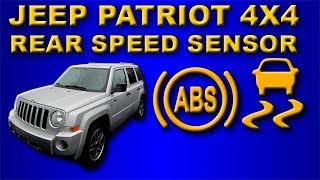
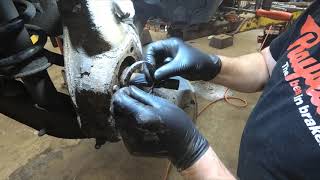
How to confirm: Visually inspect the right rear wheel hub where the sensor is mounted. If the sensor is loose, physically damaged, or its metal retaining clip has disintegrated from rust, the hub is the cause. A technician in one video confirmed the failure simply by touching the sensor with a screwdriver and finding it was completely loose. 🎬 Watch: See how a rusted hub causes the sensor to fail.
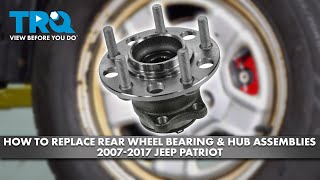
Typical fix: Replace the entire right rear wheel hub and bearing assembly. This provides a new magnetic tone ring and a solid mounting point for the new sensor. This is often done as a pair (left and right) 🎬 See this step-by-step walkthrough for replacing both rear hub assemblies. if both sides show similar corrosion.
Est. part cost: $70-$150 - Failed Right Rear Wheel Speed Sensor 🔴 High Probability → Shop ABS Wheel Speed Sensor The sensor is exposed to harsh elements like water, road salt, and debris, which leads to internal failure or corrosion over time. The plastic sensor body can also become brittle and break during removal if the hub is being replaced.
How to confirm: If the hub assembly and wiring appear intact, test the sensor. Use a scan tool to watch live data from the right rear sensor while driving; a reading of 0 MPH or erratic jumps indicates a bad sensor. You can also test the sensor's internal resistance with a multimeter, comparing it to the working sensor on the other side.
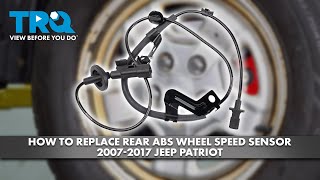
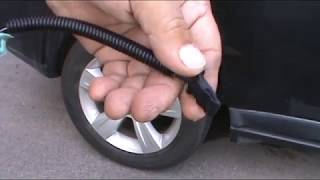
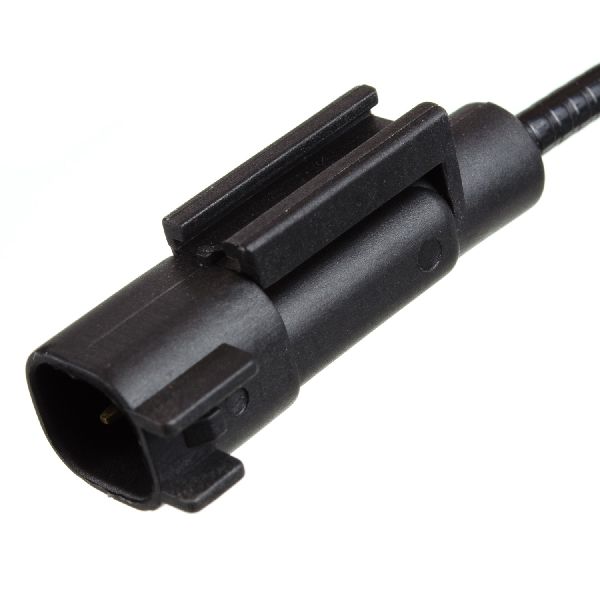
Typical fix: Replace the right rear wheel speed sensor. The sensor is typically held by a single 10mm or 13mm bolt. The electrical connector is located inside the vehicle, behind the trunk trim panel. 🎬 Watch: How to access the connector and replace the sensor.
Est. part cost: $25-$60 - Damaged Wiring or Connector 🟡 Medium Probability The wiring harness runs along the suspension and is vulnerable to damage from road debris, ice buildup, or improper jack placement. The connector plug can also corrode. The connector inside the trunk has a red locking tab that must be disengaged before the plug can be released.
How to confirm: Visually inspect the entire length of the wiring from the sensor to where it enters the vehicle body in the trunk area. Check for breaks, chafing, or corrosion on the connector pins. Use a multimeter to check for continuity and proper voltage at the connector.
Typical fix: Repair the damaged section of wire with a weatherproof butt connector or solder and heat shrink tubing. If the connector is damaged, a replacement pigtail can be spliced in.
Est. part cost: $10-$30
Rare But Worth Checking
- Faulty ABS Control Module: → Shop ABS Control Module This is an unlikely cause. A failing ABS module typically sets multiple codes for different sensors or system functions, not just a single sensor circuit code. This should only be considered after all other possibilities have been exhaustively ruled out.
Diagnosis Steps
- Connect an ABS-capable OBD-II scanner and confirm the presence of the C0050 code. Note any sub-codes (e.g., C0050-5A) which can provide more specific details about the fault.
- Safely raise and support the vehicle and remove the right rear wheel.
- Visually inspect the wheel speed sensor and its mounting point on the hub. Check for looseness, physical damage, or severe rust. Pay close attention to the metal clip holding the sensor; if it has rusted away, the hub is the problem.
- Inspect the wiring harness from the sensor along the suspension to the connector inside the trunk area. To access the connector, remove the spare tire cover panel. Look for any signs of damage, chafing, or corrosion.
- If a scan tool with live data is available, monitor the wheel speed signals from all four wheels while driving slowly (above 10 mph). Confirm that the right rear sensor is the one reading 0 MPH or providing an erratic signal.
- If the visual inspection is inconclusive, disconnect the sensor inside the trunk. The connector has a red locking tab that must be pulled out before squeezing the release tab. Test the harness-side connector with a multimeter. Check for the correct reference voltage and a good ground.
- If the harness tests good and the hub looks okay, the sensor itself is the most likely culprit. If the hub is severely rusted and the sensor was loose, the hub assembly is the confirmed cause.
Parts You'll Likely Need
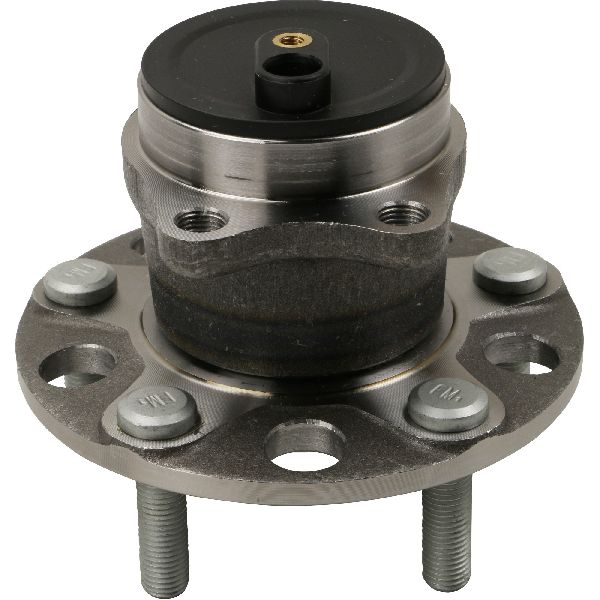
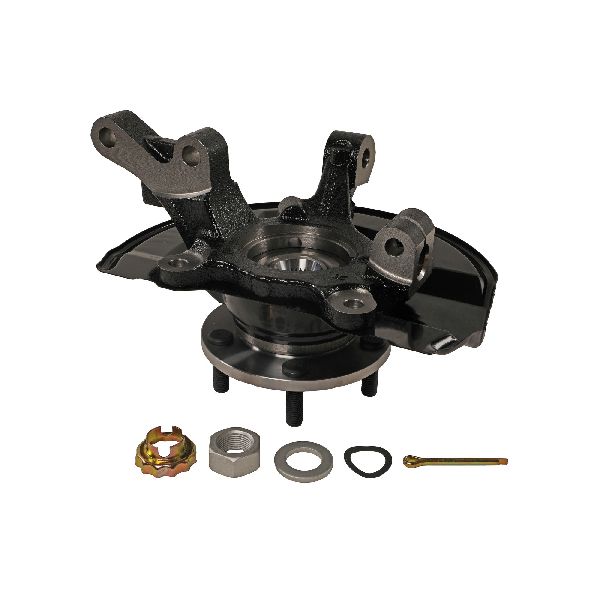
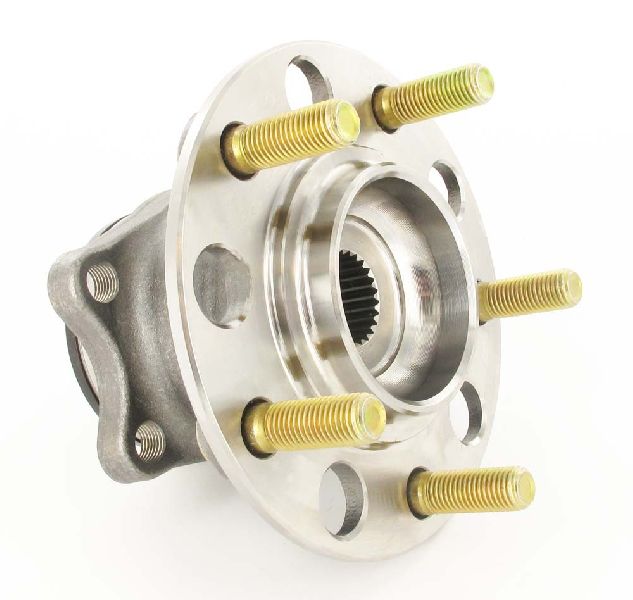
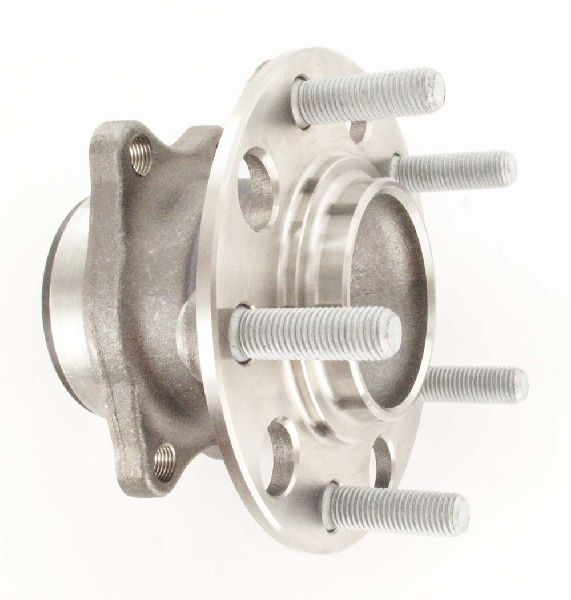
- Rear Wheel Hub and Bearing Assembly
(OEM #512333 (Common industry number), 5105770AC, 5105770AE)— This is a signature failure point. The original hub rusts, destroying the mounting point for the ABS sensor. Replacing the entire assembly is often the only permanent fix.
Trusted brands: Dorman, Timken, MOOG, TRQ, SKP
OEM price range: $150-$250
Aftermarket price range: $70-$150 - Rear ABS Wheel Speed Sensor
(OEM #5105064AA, 5105064AB, MN116248)— If the hub assembly is in good condition, the sensor itself is the next most likely part to fail due to exposure to the elements.
Trusted brands: Delphi, NGK, Standard Motor Products (SMP), Dorman, TRQ
OEM price range: $70-$110
Aftermarket price range: $25-$60
Related Codes That Often Appear With This One
- C0045 — This is the code for the Left Rear Wheel Speed Sensor Circuit. It's common for both rear sensors or hubs to fail around the same time due to similar exposure to rust and road conditions.
Platform-Specific Known Issues
- The rear wheel hubs on the 2007-2017 Patriot are known to corrode severely, which leads to the disintegration of the ABS sensor's retaining clip. This makes replacing the entire hub assembly a very common repair for this code, even if the sensor itself hasn't failed internally.
- Accessing the rear ABS sensor connector requires removing the spare tire cover and trim inside the rear cargo area.
Mechanic-Grade Diagnostic Values
- Sensor Supply Voltage (at harness connector, key on) — expected: Less than 1V between the 12V reference circuit terminal and ground.. Failure: A reading greater than 1V suggests a short to voltage in the reference circuit.
- Sensor Signal Voltage (at sensor connector, while spinning wheel) — expected: A toggling DC voltage, typically between ~0.7V and ~1.4V for a magnetoresistive sensor.. Failure: A steady voltage, 0V, or no fluctuation indicates a dead sensor or a wiring issue.
- Sensor Resistance (Passive Sensor Type) — expected: 800 to 2,000 Ohms. Note: This test does not apply to the active sensors used on the Patriot.. Failure: An open circuit (OL) or a reading outside the specified range.
Hidden / Shadow Codes Worth Checking
- C0050-5A: Signal Plausibility Failure. This means the signal from the sensor is present but doesn't make sense when compared to other wheel speed sensors, often pointing to a damaged magnetic tone ring on the hub or an intermittent wiring fault. (see via A professional scan tool like Mopar wiTECH or a high-end aftermarket scanner (Autel, Snap-on) that can read manufacturer-specific symptom bytes.)
- C0050-18: Low Signal Amplitude. The signal from the sensor is too weak. This is commonly caused by an excessive air gap (from rust jacking the sensor up), heavy metallic debris on the tone ring, or a failing sensor. (see via A professional scan tool that can read manufacturer-specific symptom bytes.)
- C0050-00: General Circuit Malfunction. This can indicate an open wire, a short to ground, or high resistance in the sensor circuit. (see via A professional scan tool that can read manufacturer-specific symptom bytes.)
Scan Tool Commands That Help
- wiTECH or equivalent: View Live Data - Wheel Speed Sensors — This is the primary diagnostic step. While driving, a technician can monitor the speed reported by all four sensors. The right rear sensor reading 0 MPH or jumping erratically while the others report smoothly confirms the fault location instantly.
- wiTECH or equivalent: Clear Faults — After the repair is completed (e.g., sensor or hub replacement), this function is used to erase the stored C0050 code. On many vehicles, the light will go out on its own after a short drive once a good signal is detected, but clearing the code is the proper final step.
Wiring & Ground Locations
- G104 — Located on the right front of the engine compartment.. This is a primary ground point for the Anti-lock Brakes Module. A corroded or loose G104 ground can cause various unpredictable ABS faults, including sensor circuit codes, due to unstable voltage supply to the module.
- ABS Module Connector — Lower right rear of the engine compartment.. This is the main connection point for all wheel speed sensors. Technicians may test for signal continuity and voltage here to determine if a wiring fault exists between the sensor and the module itself.
- Rear Sensor Connector — Inside the vehicle, behind the trunk trim panel near the spare tire.. This is the weatherproof connection point between the external sensor harness and the internal body harness. It's a common place to test the sensor's resistance and the harness voltage without having to access the ABS module directly.
Real Owner Repair Stories
- Reddit user post (2015 Jeep Patriot) — ABS, 4WD!, and traction control lights all came on simultaneously.
❌ Tried (didn't work) Resetting the battery., Washing the car to clean potential sensor dirt.
✅ What actually fixed it The entire wheel hub assembly had to be replaced. The owner confirmed the sensor itself was functional, but the small metal pieces that hold the sensor in place on the hub had broken off from rust.
OEM Part Supersession History
5105064AA→5105064AB— Part revision by the manufacturer. Often for minor improvements in materials, sealing, or electronics.
Heads up: The parts are interchangeable; 5105064AB is the correct service replacement for 5105064AA.
Diagnostic Flowchart
Other Known Issues on This Vehicle
Issues unrelated to this code that are worth knowing about as an owner of this generation:
- Premature CVT Transmission Failure 🔴 High — Common in earlier models (pre-2014), can occur at various mileages. Symptoms include whining, overheating warnings, and loss of acceleration.
- Water Leaks into Cabin 🟠 Medium — Widespread across many model years, especially those with a sunroof. Water often drips from the dome light due to clogged sunroof drain tubes.
- Front and Rear Subframe Corrosion 🔴 High — Very common in salt-belt states, can lead to structural failure. An extended warranty (X69 / TSB 23-007-17) was issued but has since expired for most vehicles. (Ref: TSB 23-007-17 Rev. B (Expired 10-year warranty extension))
- Failing Throttle Body 🟠 Medium — Can cause the electronic throttle control light to illuminate, leading to stalling or lack of power.
- Suspension Component Wear 🟠 Medium — Premature wear of control arms, ball joints, and sway bar links is frequently reported, causing noise and alignment issues.
Used vs. New Parts: Buying Guide for This Vehicle
When a used part is the smart pick: A used ABS sensor from a junkyard can be a cost-effective option if it comes from a low-mileage, dry-climate vehicle with no signs of corrosion. However, given the low cost of a new aftermarket sensor, it's often not worth the risk or labor. A used wheel hub assembly is almost never recommended.
Donor-vehicle mileage cap: roughly under 60000 miles for the part to have meaningful remaining life.
What to inspect on the donor part:
- For a sensor: Check that the plastic housing is not brittle or cracked, and the wiring pigtail is flexible with no insulation damage.
- For a hub: Avoid completely. The primary failure mode is rust and bearing wear, both of which are impossible to assess accurately on a used part. The risk of receiving a part that is already failing or will fail shortly is extremely high.
Aftermarket brands forum-validated for this vehicle:
- Hub Assemblies: Timken, SKF, and MOOG are frequently cited by mechanics as reliable choices, offering quality comparable to OEM.
- Sensors: Delphi, NGK/NTK, and Standard Motor Products (SMP) are known for producing reliable sensors that meet or exceed OEM specifications.
Brands owners have reported issues with on this vehicle:
- Unbranded or 'white-box' hub assemblies and sensors from online marketplaces have a high failure rate. Some users have reported issues with lower-tier store brands, noting premature bearing noise or sensor failure shortly after installation.
Real Owner Stories
Aggregated from forums and TSBs cited above. Mileages and costs reflect what owners reported in those sources.
Jeep Patriot
Symptoms: The ABS/ESP/4WD light combination was illuminated. Upon inspection, the sensor was found to be completely loose.
What fixed it: Replacement of the rear hub assembly because the rusted-off sensor clip made the sensor mount unstable.
Source hint: jeeppatriot.com forum discussions
Jeep Patriot
Symptoms: ABS warning light on; owner noted that rear hubs are a known issue and 'stupid easy to DIY'.
What fixed it: Replacement of the rear wheel hub assembly.
Source hint: Reddit (r/JeepPatriot)
Jeep Patriot
Symptoms: The technician touched the sensor with a screwdriver and found it was completely loose due to the metal retaining clip disintegrating from rust.
What fixed it: Replace the entire right rear wheel hub and bearing assembly to provide a new magnetic tone ring and mounting point.
Source hint: Technician diagnostic video cited in common_causes
Documented NHTSA Reports
Jeep Manufacturer Reference
Symptoms: While involving a different model, NHTSA ODI #11649367 notes that the vehicle disables ABS and supporting systems and sets code C0050 when there is an issue with the service brakes requiring extra fluid to return caliper piston contact.
Jeep Manufacturer Reference
Symptoms: Diagnostic codes showed C0050-00 in a case where the rotors, rear brake pads, and adapter plate required replacement (NHTSA ODI #11693418).
Related OBD-II Codes
Frequently Asked Questions
My 2012 Jeep Patriot has the ABS, ESP/BAS, and 4WD! lights on. Is this related to the C0050 code?
I heard there is a TSB for rust on the Patriot. Does TSB 23-007-17 cover my rusted ABS sensor mount?
Why is my cruise control not working since the ABS light came on?
Can I just replace the sensor if the mounting clip is rusted away?
Where is the electrical connector for the right rear ABS sensor located?
Is there a specific trick to disconnecting the ABS sensor plug in the trunk?
Helpful Videos
Used OEM Parts in Stock
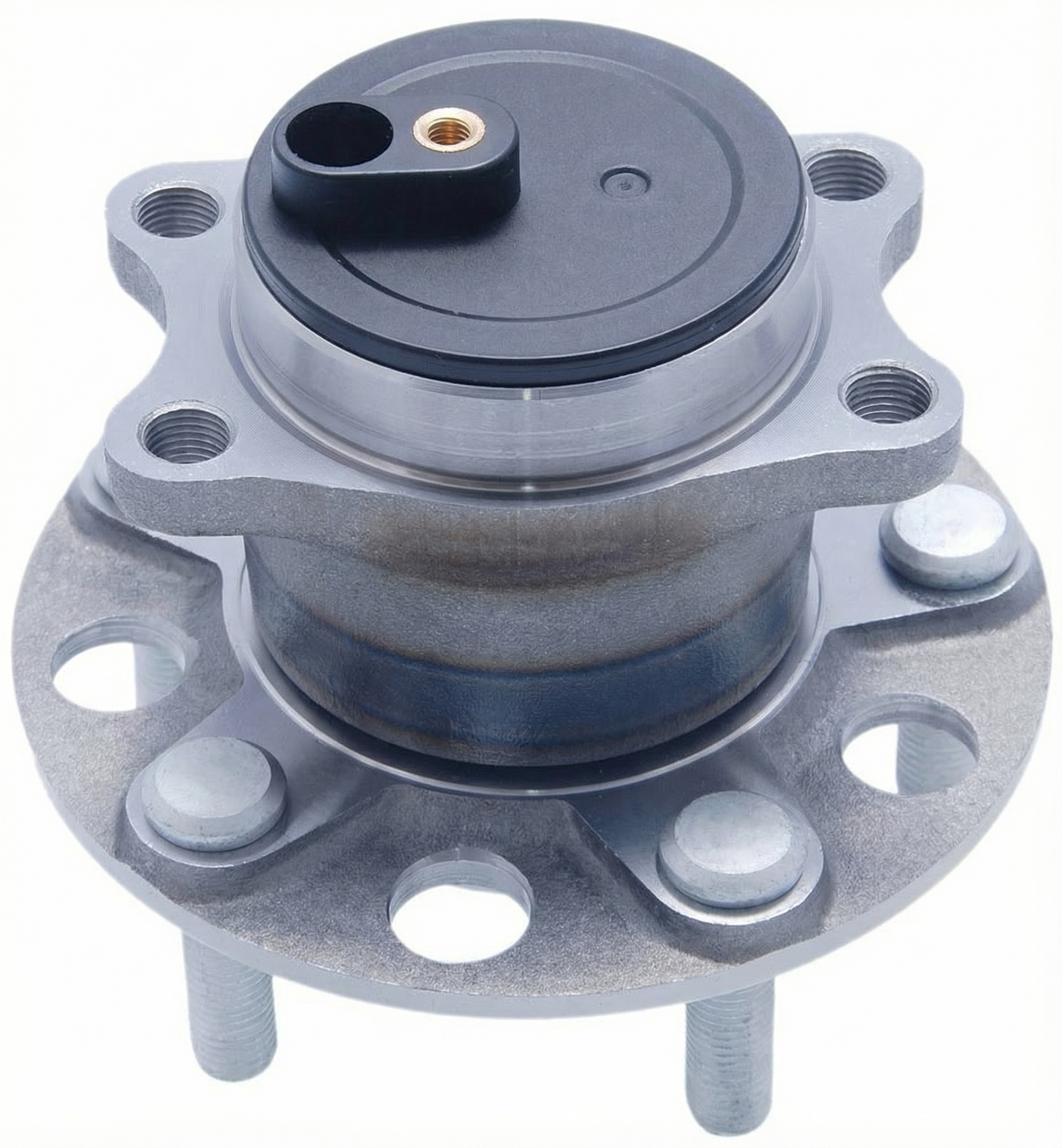
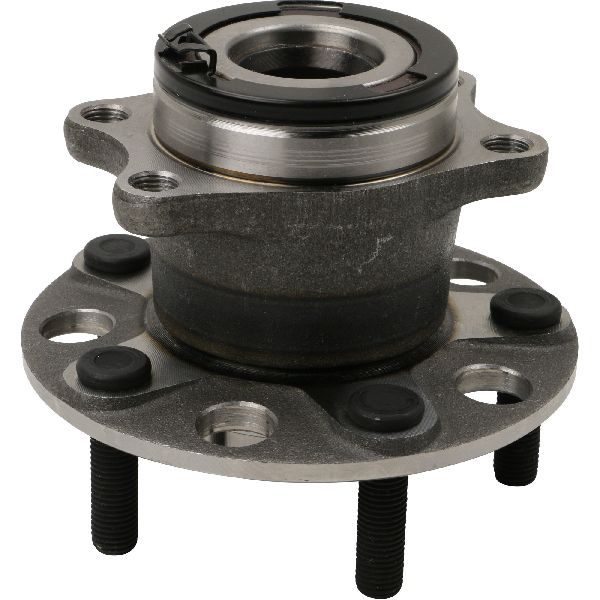
New Aftermarket Parts Available

The information in this article is provided for general reference and educational purposes only. Vehicle specifications, procedures, and part compatibility can vary by production date, trim level, and region. Always consult your vehicle's factory service manual and verify part numbers before purchasing or performing repairs. Safety-critical components such as airbags, seat belts, and braking systems should be installed by a qualified professional.
- Jeep Patriot:
- 🧭 Diagnostic Flowchart
- 🎬 Helpful Videos
- 🛍️ Shop This Part
- What's Unique About the 2007-2017 Jeep Patriot
- Symptoms You May Notice
- Most Likely Causes
- Rare But Worth Checking
- Diagnosis Steps
- Parts You'll Likely Need
- Related Codes That Often Appear With This One
- Platform-Specific Known Issues
- Mechanic-Grade Diagnostic Values
- Hidden / Shadow Codes Worth Checking
- Scan Tool Commands That Help
- Wiring & Ground Locations
- Real Owner Repair Stories
- OEM Part Supersession History
- Other Known Issues on This Vehicle
- Used vs. New Parts: Buying Guide for This Vehicle
- Real Owner Stories
- Jeep Patriot
- Jeep Patriot
- Jeep Patriot
- Documented NHTSA Reports
- Jeep Manufacturer Reference
- Jeep Manufacturer Reference
- Related OBD-II Codes
- Frequently Asked Questions
- 🎟️ Get 5% Off