

C0050 on 2014-2019 Kia Soul: Right Rear Wheel Speed Sensor Circuit Fault Explained
Code C0050 on a 2014-2019 Kia Soul means there's a problem with the right rear wheel speed sensor circuit, which disables the ABS and traction control. The most common fix is replacing the sensor itself or repairing its wiring harness. Expect a DIY cost of $50-$150 for a sensor, or a shop repair cost of $240-$320.
- C0050 means your Kia Soul's ABS and stability control are disabled due to a fault with the right rear wheel speed sensor.
- The most likely cause is a bad sensor, followed by damaged wiring near the wheel.
- Diagnosis starts with a scan tool that can read ABS live data to confirm which wheel sensor is failing.
- While replacing the sensor is a manageable DIY job, the system is safety-critical. The repair is more complex than on many other cars because the hub assembly must be removed to replace the sensor. If you are not comfortable, seek professional service.
What's Unique About the 2014-2019 Kia Soul
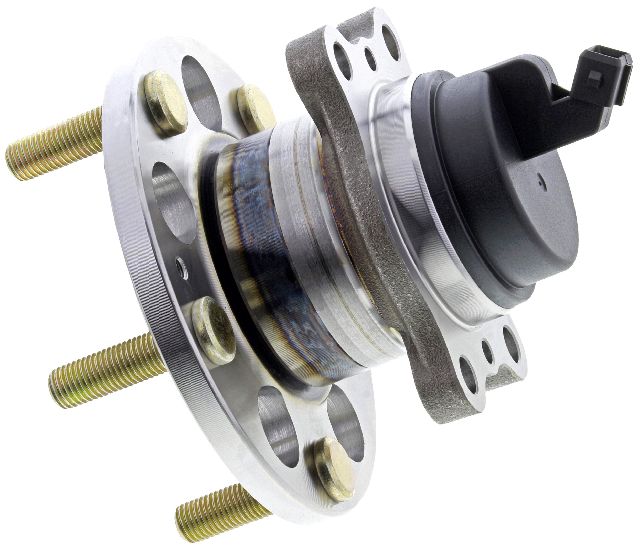
For the second-generation (2014-2019) Kia Soul, the C0050 code is a straightforward issue, but the repair has a notable complication. The rear wheel speed sensor is a separate component, but it is press-fit into the sealed wheel hub and bearing assembly and reads a magnetic encoder ring that is integrated into that same hub. This design means that while the sensor is a common failure point, removing it often requires removing the entire hub assembly from the vehicle first. Furthermore, any damage to the encoder ring from rust or debris requires replacing the entire hub assembly, which is a more involved and costly repair.
Symptoms You May Notice
- ABS warning light is on
- Traction Control (TCS) or Electronic Stability Control (ESC) warning light is on
- ABS system does not activate during hard braking (wheels may lock up)
- Traction control does not activate on slippery surfaces (wheels may spin)
- Cruise control may be disabled
- Replacing the wheel hub/bearing when only the sensor or wiring was faulty.
- Replacing the sensor when the actual problem was a broken wire further up the harness or a simple disconnected plug.
- Throwing parts at the problem without using a scan tool to confirm which of the four sensors is at fault.
Most Likely Causes
- Failed Right Rear Wheel Speed Sensor 🔴 High Probability → Shop ABS Wheel Speed Sensor The sensor is exposed to road debris, water, and salt, which can cause internal failure over time. Technicians on YouTube forums frequently point to this as the primary point of failure. The sensor's lifespan can be as low as 70,000 miles in regions with snow and salt.
How to confirm: Using a scan tool that can read ABS live data, observe the wheel speed from the right rear sensor while driving. If it reads 0 MPH, is erratic, or shows a wildly different speed (e.g., 254 km/h when stationary) while other wheels show speed, the sensor is the likely culprit. An open circuit within the sensor can cause this default high-speed reading.
Typical fix: Replace the right rear wheel speed sensor. This often requires removing the wheel hub assembly to access and press out the old sensor.
Est. part cost: $50-$150 - Damaged Wiring or Connector 🟡 Medium Probability The wiring harness runs down to the wheel hub and is susceptible to damage from road debris, improper servicing (e.g., during a brake job), or corrosion, especially at the connector pins. Sometimes the connector simply becomes unplugged after previous work.
How to confirm: Visually inspect the entire wiring harness from the sensor to where it enters the vehicle body. Look for chafed wires, breaks, or green/white corrosion inside the connector pins. A common owner experience is finding the connector was not re-secured properly after previous work.
Typical fix: Repair the damaged section of wire with solder and heat-shrink tubing or replace the pigtail connector. If the damage is extensive, a new harness section may be needed.
Est. part cost: $15-$85 - Damaged or Debris-Covered Hub Encoder Ring ⚪ Low Probability The magnetic encoder is built into the wheel hub/bearing assembly. An accumulation of metallic brake dust or rust can interfere with the sensor's reading. A GM TSB (PIC5428F) for a similar system notes that this debris can cause erratic signals (symptom byte 5A) or low signal amplitude (symptom byte 18).
How to confirm: After removing the wheel hub, inspect the magnetic encoder ring on the inboard side. Look for heavy rust, caked-on metallic debris, or physical damage like cracks or missing pieces.
Typical fix: Clean the hub surface meticulously with a brake cleaner and a soft brush. If the encoder ring itself is physically damaged or cracked, the entire wheel hub and bearing assembly must be replaced.
Est. part cost: $100-$250
Rare But Worth Checking
- Failed ABS Control Module: → Shop ABS Control Module This is very rare. All other possibilities, especially sensor and wiring, should be exhaustively ruled out before considering the ABS module. This would typically require advanced diagnostics by a professional and would likely present with multiple wheel speed sensor codes, not just one.
Diagnosis Steps
- Connect an OBD-II scanner capable of reading ABS codes to confirm C0050 is present and active.
- View the live data stream for all four wheel speed sensors. Drive the vehicle slowly (above 5 mph) in a straight line or spin the wheel by hand if the vehicle is raised.
- Compare the reading from the 'Right Rear Wheel Speed' sensor to the others. If it reads 0, is erratic, or shows a default high value like 254 km/h, the issue is confirmed to be in that circuit.
- Raise and secure the rear of the vehicle. Remove the right rear wheel.
- Visually inspect the wheel speed sensor and its wiring harness for any obvious signs of damage, such as cut wires, melted plastic, or corrosion. Check that the main connector is securely plugged in.
- Disconnect the sensor and inspect the connector pins for corrosion or damage.
- If no visual faults are found, a technician may swap the right rear sensor with the left rear sensor (if the harness length allows) to see if the code changes to C0045 (Left Rear). This definitively isolates the sensor as the fault.
- If the code does not follow the sensor, the problem lies in the wiring or the hub's encoder ring. Inspect the wiring for continuity with a multimeter. If the wiring is good, remove the hub to inspect the magnetic encoder ring for debris or damage.
Parts You'll Likely Need
- Rear Wheel Speed Sensor
(OEM #95681-B2000)— This is the most common component to fail in the circuit, causing the C0050 code.
Trusted brands: Kia (Genuine), Bosch, Delphi, Standard Motor Products (ALS3292)
OEM price range: $120-$180
Aftermarket price range: $50-$100 - Rear Wheel Hub and Bearing Assembly
(OEM #52730-B2100)— Required if the magnetic encoder ring integrated into the hub is damaged or if the bearing itself has failed, causing excessive play that affects the sensor gap.
Trusted brands: Kia (Genuine), Timken, SKF, MOOG
OEM price range: $200-$300
Aftermarket price range: $100-$180 - ABS Wheel Speed Sensor Wiring Harness
(OEM #59796-K0000 (Check VIN, example for newer models))— Needed if the wiring is corroded or damaged beyond a simple spot repair. Aftermarket pigtails like Carquest Premium ARC2378 are also available.
Trusted brands: Kia (Genuine), Carquest Premium
OEM price range: $100-$200
Aftermarket price range: $25-$85
Technical Service Bulletins (TSBs) & Recalls
- GM TSB PIC5428F: While not a Kia TSB, it details the diagnosis of identical symptom codes (C0035-C0050 with bytes 18, 5A) caused by debris on the magnetic encoder ring, a directly analogous situation.
Mechanic-Grade Diagnostic Values
- Wheel Speed Sensor Harness Voltage — expected: A reference voltage on one wire and a ground on the other when the key is on. Some systems may show a bias voltage around 1.0-5.0 Volts.. Failure: No voltage present indicates a problem with the wiring harness or the ABS control module itself.
- Wheel Speed Sensor Signal (Live Data) — expected: Speed reading should match the other three wheels when driving straight. The Kia KDS scanner may display this in km/h by default.. Failure: The sensor reads 0, is erratic, or defaults to a high, fixed value (e.g., 254 km/h) while the other wheels show a valid speed. This default reading often indicates an open or shorted circuit.
Hidden / Shadow Codes Worth Checking
- C0050 18: Low Signal Amplitude. This indicates the signal from the sensor is weak or erratic, which can be caused by an excessive air gap between the sensor and encoder ring, or metallic debris contaminating the ring. (see via Professional scan tools like the Kia GDS/KDS or high-end Autel/Launch scanners.)
- C0050 5A: Signal Plausibility Failure. The sensor's signal is not consistent with other vehicle sensors (like the other wheel speeds). This can point to a damaged magnetic encoder ring or an intermittent wiring fault. (see via Professional scan tools like the Kia GDS/KDS or high-end Autel/Launch scanners.)
- C0050 00: General Circuit Malfunction. This is a generic sub-code indicating an open circuit, short to ground, or high resistance in the sensor's electrical circuit. (see via Professional scan tools like the Kia GDS/KDS or high-end Autel/Launch scanners.)
Scan Tool Commands That Help
- Kia GDS/KDS or equivalent (e.g., Car Scanner ELM OBD2): Brake system bleed — This service function is required after replacing the ABS hydraulic unit (HECU) to purge air from the system. It is listed as available for the Kia Soul (PS) chassis.
- Kia GDS/KDS: DTC Analysis & Erase — Used to confirm if a code is 'active' or 'history'. A technician in a diagnostic video demonstrated clearing the code to see if it would return immediately, confirming an active hard fault.
- Kia GDS/KDS: Variant Coding — This is a mandatory procedure if the entire ABS control module is replaced. It configures the new module to the specific options on the vehicle (e.g., engine type, stability control features). Failure to code a new module will result in persistent faults.
Wiring & Ground Locations
- ABS Control Module / HECU — For the first-generation Soul (up to 2013), the ABS module is located on the driver's side of the engine bay, under the hood. The location is similar for the second generation.. This is the termination point for the wheel speed sensor harness. If the sensor and wiring test good, the fault could lie in the connector or input circuit at this module.
- Wheel Speed Sensor Connector — The sensor's pigtail connects to the main body harness in the rear wheel well area. The connector is typically clipped to the vehicle body or subframe behind the wheel liner.. This connector is a common point of failure due to corrosion or being left disconnected after previous repairs like brake jobs or bearing replacement.
Real Owner Repair Stories
- YouTube channel 'Car Work' (2009 Kia Soul (first generation, but demonstrates a common issue)) — ABS and traction control lights were on. Scan tool showed a code for 'wheel speed sensor rear left open or short'.
❌ Tried (didn't work) The owner immediately suspected a bad sensor or wiring.
✅ What actually fixed it Upon inspection, the wheel speed sensor connector was found to be completely unplugged. The technician speculated that it was forgotten during a previous bearing change. Plugging the connector back in and clearing the codes resolved the issue instantly. - YouTube channel 'Merry Frankster' (2014 Kia Soul) — ABS and traction control lights were on. An Autel scanner revealed code C1209 (Right Rear Wheel Speed Sensor).
❌ Tried (didn't work) The diagnosis pointed directly to the sensor circuit.
✅ What actually fixed it The right rear wheel speed sensor was replaced. The video details the difficult process of removing the entire hub assembly, pressing the old sensor out on a workbench vise, and pressing the new one in squarely. The lights went off automatically after starting the car with the new sensor installed. - Reddit user _mal_gal_ in r/KiaSoulClub (2016 Kia Soul) — Intermittent ABS and traction control lights. A basic scanner showed 0 codes, but a more advanced one at an auto parts store pulled C1209, C1210, and C1211, all pointing to the right rear wheel speed sensor.
❌ Tried (didn't work) Using a basic OBD-II scanner that could not read ABS module codes.
✅ What actually fixed it The user was advised that the issue was the right rear wheel speed sensor. The community recommended replacing the entire hub assembly due to the vehicle's age and mileage, as it's often a more reliable long-term fix than just pressing in a new sensor.
Documented NHTSA Reports
- An owner reported in NHTSA ODI #11228687 that the ABS light illuminated and a diagnostic check revealed multiple codes including C0035, C0040, and C0050.
- NHTSA ODI #11649367 describes a situation where a vehicle disabled the ABS and supporting systems, setting codes C0050 and C2227, which a technician attributed to brake fluid displacement after service.
- In NHTSA ODI #11693418, a diagnostic showed code C0050-00, which was associated with the need to replace rotors, rear brake pads, and an adapter plate.
- A different manufacturer record, NHTSA ODI #10763888, notes that code C0050 was used to identify a faulty power steering control module (PSCM) requiring a steering column replacement, illustrating how this code can have different meanings across various makes.
Model Year Variations Within This Range
- 2014-2019: While the core design of a press-in sensor in the hub assembly is consistent for the 2nd generation, there may be minor differences in wiring harness connectors or part numbers between the pre-facelift (2014-2016) and post-facelift (2017-2019) models. Always verify part numbers with the vehicle's VIN.
Diagnostic Flowchart
Other Known Issues on This Vehicle
Issues unrelated to this code that are worth knowing about as an owner of this generation:
- Catastrophic Engine Failure (1.6L & 2.0L GDI) 🔴 High — Widespread, particularly in 2014-2016 models, often appearing around 70,000-100,000 miles. Caused by issues like high exhaust gas temps damaging the catalytic converter, leading to piston and connecting rod failure. (Ref: Recall SC176, Recall SC200)
- Excessive Oil Consumption 🔴 High — Very common across all engine types in this generation. Owners report needing to add a quart of oil every 300-1000 miles. Often a precursor to engine failure. (Ref: Related to class-action lawsuits and warranty extensions for engine replacement, but no specific recall for consumption alone.)
- Steering Coupler Clunk/Click 🟠 Medium — A common issue where a small plastic/rubber coupler in the electronic power steering column wears out, causing a noticeable clicking or clunking sound when turning the wheel.
- Carbon Buildup in GDI Engines 🟠 Medium — Inherent to Gasoline Direct Injection (GDI) engines, where fuel is not sprayed over the intake valves. Leads to carbon deposits that can cause misfires, poor performance, and reduced fuel economy over time.
- Theft Vulnerability ('Kia Boyz' issue) 🔴 High — Affects models not equipped with a factory immobilizer. A security flaw allows for easy theft using a USB cable. (Ref: Kia has issued software updates (e.g., TSB SA500) to add an anti-theft ignition logic to the BCM.)
- PCV Valve Failure 🟡 Low — A failing PCV valve is a potential contributor to the excessive oil consumption issue. It's a relatively cheap and easy part to replace that can sometimes mitigate oil burning.
Used vs. New Parts: Buying Guide for This Vehicle
When a used part is the smart pick: A used wiring harness pigtail from a junkyard is a viable option if your connector is damaged and you can't find a new aftermarket pigtail. A complete hub assembly could be sourced used in a pinch, but its remaining lifespan is a gamble.
Donor-vehicle mileage cap: roughly under 60000 miles for the part to have meaningful remaining life.
What to inspect on the donor part:
- For a wiring harness, check for flexible, uncracked insulation and clean, corrosion-free connector pins.
- For a hub assembly, ensure the donor vehicle was not in a major collision. Spin the hub by hand; it should be completely smooth with no noise or gritty feeling.
- Check the magnetic encoder ring on the inboard side of the hub for any visible cracks, rust buildup, or physical damage.
OEM-only on this vehicle (don't cheap out):
- ABS Control Module: Due to the complex 'Variant Coding' required, using a new OEM module is highly recommended to ensure compatibility and proper function. A used module may be difficult or impossible to reprogram to a different vehicle.
Aftermarket brands forum-validated for this vehicle:
- Standard Motor Products (SMP)
- Bosch
- Delphi
- Timken (for hub assemblies)
- MOOG (for hub assemblies)
Brands owners have reported issues with on this vehicle:
- Unbranded, 'white-box' sensors from online marketplaces can have high failure rates and may not meet OE specifications for signal quality, leading to the code returning.
Real Owner Stories
Aggregated from forums and TSBs cited above. Mileages and costs reflect what owners reported in those sources.
2014 Kia Soul
Symptoms: ABS and Traction Control lights both came on. A technician used a scan tool to find an active code and checked live data.
What fixed it: The technician performed a side-to-side sensor swap to isolate the fault and then replaced the press-fit rear wheel speed sensor.
Source hint: YouTube - 'Soul Wheel Speed Sensor Diagnostic. Without the flowchart.'
2018 Kia Soul — ~70000 miles
Symptoms: ABS warning light is on and Traction Control (TCS) light is on. The sensor failed after exposure to road salt and water.
What fixed it: Replacement of the right rear wheel speed sensor, which had suffered internal failure due to environmental exposure.
Source hint: Common Causes - Failed Right Rear Wheel Speed Sensor
2014-2019 Kia Soul
Symptoms: The ABS/TCS lights were on. Upon inspection, the connector for the wheel speed sensor was found to be loose.
What fixed it: Re-securing the wiring harness connector that had not been properly seated after previous service work.
Source hint: Common Causes - Damaged Wiring or Connector
Related OBD-II Codes
Frequently Asked Questions
Why does my 2014 Kia Soul show 254 km/h on the scan tool when I am standing still?
Is there a specific TSB for the Kia Soul regarding the C0050 code and debris on the hub?
Can I just replace the sensor, or do I need a whole new hub assembly for my 2014-2019 Soul?
My ABS and Traction Control lights are both on; does this mean I have two separate problems?
Will a C0050 code affect my cruise control?
How can I be sure it's the sensor and not the car's wiring?
Helpful Videos

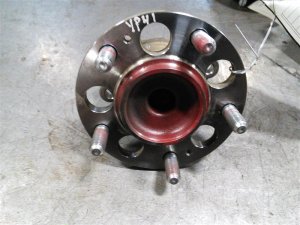
Used OEM Parts in Stock
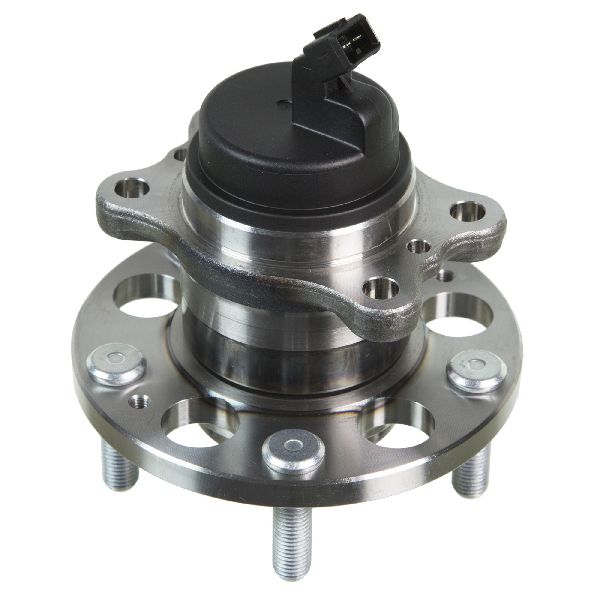
New Aftermarket Parts Available



The information in this article is provided for general reference and educational purposes only. Vehicle specifications, procedures, and part compatibility can vary by production date, trim level, and region. Always consult your vehicle's factory service manual and verify part numbers before purchasing or performing repairs. Safety-critical components such as airbags, seat belts, and braking systems should be installed by a qualified professional.
- Kia Soul:
- 🧭 Diagnostic Flowchart
- 🎬 Helpful Videos
- 🛍️ Shop This Part
- What's Unique About the 2014-2019 Kia Soul
- Symptoms You May Notice
- Most Likely Causes
- Rare But Worth Checking
- Diagnosis Steps
- Parts You'll Likely Need
- Technical Service Bulletins (TSBs) & Recalls
- Mechanic-Grade Diagnostic Values
- Hidden / Shadow Codes Worth Checking
- Scan Tool Commands That Help
- Wiring & Ground Locations
- Real Owner Repair Stories
- Documented NHTSA Reports
- Model Year Variations Within This Range
- Other Known Issues on This Vehicle
- Used vs. New Parts: Buying Guide for This Vehicle
- Real Owner Stories
- 2014 Kia Soul
- 2018 Kia Soul — ~70000 miles
- 2014-2019 Kia Soul
- Related OBD-II Codes
- Frequently Asked Questions
- 🎟️ Get 5% Off