

C0392 on 2015-2018 Chevrolet Suburban: Service 4WD Light Causes and Fixes
This code almost always indicates a poor electrical connection at the Transfer Case Control Module (TCCM), not a failed part. The most common fix is to repair the terminal tension in the TCCM's X1 connector, specifically pin 9. This issue is so common that GM has issued multiple Technical Service Bulletins (TSBs) about it, making the first diagnostic step a targeted check of this connector.
- The "Service 4WD" light with code C0392 is most likely an electrical connection problem, not a failed expensive part.
- Always check for and follow the guidance in TSB #PIP5304B before replacing any components.
- The primary suspect is poor pin tension in the X1 connector at the Transfer Case Control Module (TCCM), located under the driver's dash.
- Do not replace the TCCM or transfer case motor unless the wiring and connector issue has been definitively ruled out.
- This repair can be low-cost if it's just a terminal fix, but requires careful electrical diagnosis.
What's Unique About the 2015-2018 Chevrolet SUBURBAN
For this specific generation of Suburban and its K2XX platform mates (Tahoe, Silverado, Sierra, Yukon, Escalade), the C0392 code is exceptionally well-documented. Multiple manufacturer TSBs point directly to a single root cause: poor pin tension within the main electrical connector (X1) at the Transfer Case Control Module (TCCM). Specifically, TSB PIP5304B identifies cavity 9 🎬 Watch: A technician demonstrates how to diagnose the C0392 code. as the most frequent culprit for this code. This makes diagnosis much more direct than on other vehicles, where a similar code might lead to immediately replacing expensive parts. The problem is so well-known that the first step for any technician should be to inspect this specific connector before considering any parts replacement.
Diagnostic Flowchart
Tap your situation to follow the diagnostic path that matches what you're seeing on this vehicle.
Symptoms You May Notice
- "Service 4WD" message displayed on the Driver Information Center (DIC).
- Inability to switch between 2WD, 4WD Auto, 4-High, or 4-Low.
- Indicator lights on the 4WD selector switch may be off or flash without engaging.
- Vehicle may become stuck in the last known 4WD mode, potentially causing steering binding on dry pavement.
- The "Service 4WD" light may appear intermittently, sometimes triggered by bumps or wiggling the wiring harness near the TCCM.
- Replacing the transfer case encoder motor or the TCCM without first thoroughly inspecting the TCCM X1 connector terminals for proper tension. The TSBs clearly state this is the most common cause and should be checked first to avoid unnecessary parts replacement.
Most Likely Causes
- Poor Terminal Tension at TCCM Connector X1 🔴 High Probability This is a known manufacturing/design issue documented by GM in multiple service bulletins (including PIP5304B). The female terminals in the connector, especially for pin 9, can loosen over time, causing an intermittent or lost connection to the range position sensor.
How to confirm: A technician can wiggle the harness at the TCCM and may see the code clear or set. The definitive test is to use a special tool (GM tool J-35616-2A, a gray-handled probe) to check the tension of pins 1, 2, and especially 9 in the X1 connector. The probe should be held in place by the terminal's tension and not fall out under its own weight.
Typical fix: The affected terminal(s) must be carefully removed, re-tensioned or, more reliably, replaced with a new terminal (part number may vary, consult dealer). The entire connector pigtail can also be replaced by splicing in a new one (e.g., ACDelco PT2628 / GM Part #88988938).
Est. part cost: $5-$75 - Missing Connector Seals or Water Intrusion 🟡 Medium Probability TSB PIP5491A notes that missing or improperly installed weather seals on transfer case-related connectors can allow moisture to enter, causing corrosion and intermittent signals. This can affect the TCCM connector or the connector at the transfer case itself.
How to confirm: Visually inspect the connectors at the TCCM and the transfer case actuator for signs of corrosion (green or white powder) or missing rubber seals around the individual wires.
Typical fix: If corrosion is present, the connector and often the component it attaches to (like the transfer case actuator) must be replaced to ensure a lasting repair. The missing seal must also be addressed by replacing the connector or terminal.
Est. part cost: $50-$450 - Failed Transfer Case Encoder Motor / Position Sensor ⚪ Low Probability → Shop Transfer Case Motor
How to confirm: This is diagnosed by exclusion. If the wiring and connectors are confirmed to be good per TSB PIP5304B, the sensor itself may have failed. This is tested by monitoring the sensor's signal on a scan tool while commanding shifts. An unchanging or erratic signal points to a bad sensor. The sensor is integrated into the encoder motor assembly.
Typical fix: Replace the transfer case encoder motor assembly, which is bolted to the side of the transfer case. A relearn procedure with a capable scan tool is often required after replacement.
Est. part cost: $150-$350 - Failed Transfer Case Control Module (TCCM) ⚪ Low Probability → Shop Transfer Case Motor
How to confirm: This is typically diagnosed by exclusion. If the wiring, connectors, and encoder motor all test good, the TCCM itself is the likely culprit. This is the last part to suspect due to the high prevalence of the wiring issue.
Typical fix: Replace the TCCM. The new module will require programming with a GM-compatible scan tool (SPS/TIS2Web) to function correctly with the vehicle's VIN and options.
Est. part cost: $100-$300
Rare But Worth Checking
- Chafed Wiring Harness:
Diagnosis Steps
- Scan the Transfer Case Control Module (TCCM) for codes. Confirm C0392 is present, and note any other codes like C0396 or C0398. Note any symptom bytes (e.g., -01, -02, -08) if your scanner supports it.
- Locate the TCCM under the driver's side dashboard, typically to the left of the steering column and mounted to a metal bracket.
- Perform a 'wiggle test': With the ignition on, gently wiggle the X1 connector at the TCCM and observe the 'Service 4WD' light. If the light flickers or the code status changes, it strongly indicates a connection issue.
- Disconnect the battery. Disconnect the X1 connector from the TCCM.
- Carefully inspect the connector for any signs of corrosion, moisture, or backed-out pins.
- Following the guidance in TSB PIP5304B, test the terminal tension on cavities 1, 2, and especially 9 using an approved terminal test probe (J-35616-2A, gray handle). CRITICAL: Do not use a standard multimeter probe, paperclip, or oversized tool, as this will permanently damage the terminal.
- If terminal tension is loose (the test probe falls out), repair the terminal by carefully tightening it or, preferably, replacing it with a new terminal. Alternatively, replace the entire connector pigtail.
- If no issues are found at the TCCM, inspect the wiring harness for chafing or damage, particularly where it passes through the firewall and runs near the frame and engine. Pay close attention to the harness near the front wheel wells.
- Inspect the electrical connector at the transfer case encoder motor for corrosion or damage, paying attention to the presence of all wire seals per TSB PIP5491A.
- If all wiring and connectors are confirmed to be in perfect condition, the fault likely lies with either the transfer case encoder motor assembly or the TCCM itself. Further testing with a scan tool would be required to isolate the faulty component.
Parts You'll Likely Need
- TCCM Connector Pigtail
(OEM #88988938)— If multiple terminals are loose or corroded, or if a DIY repair is preferred over replacing individual pins, splicing in a new connector pigtail is a common and robust fix.
Trusted brands: ACDelco (PT2628), Dorman
OEM price range: $40-$75
Aftermarket price range: $25-$50 - Transfer Case Encoder Motor
(OEM #19258696)— This part is replaced ONLY if the internal position sensor has failed after confirming the wiring and connectors are good per TSBs. It is a common misdiagnosis.
Trusted brands: ACDelco, Dorman
OEM price range: $250-$350
Aftermarket price range: $150-$250 - Transfer Case Control Module (TCCM)
(OEM #84107612)— This module is the 'brain' for the 4WD system and is replaced if it has failed internally. This should be the last part considered after all other possibilities are exhausted.
Trusted brands: ACDelco
OEM price range: $100-$300
Aftermarket price range: $80-$200
Related Codes That Often Appear With This One
- C0396 — This code is for a different circuit related to the transfer case actuator but is often caused by the same issue: poor terminal tension in the same TCCM X1 connector, specifically on pins 3, 5, 10, or 11.
- C0398 — This code for 'Encoder Circuit Malfunction' is often a secondary code that sets as a direct result of C0392 or C0396. TSB PIP5304B explicitly states that resolving the primary code will typically clear C0398 as well.
- U0102 — This code indicates 'Lost Communication with Transfer Case Control Module'. While it can mean a failed TCCM, it can also be triggered by the same power or ground connection issues at the TCCM connector that cause C0392.
Technical Service Bulletins (TSBs) & Recalls
- PIP5304B: The most current TSB, which states that poor terminal tension in the TCCM X1 connector is the likely cause for C0392 and C0396. It specifies checking cavities 1, 2, and 9 for C0392.
- PIP5304A, PIP5304: Earlier versions of the same TSB, superseded by PIP5304B.
- PIP5491A: Discusses intermittent "Service 4WD" messages caused by missing connector seals leading to moisture and corrosion in transfer case related circuits.
- PIE0342A, PIE0342: Engineering bulletins that requested and then concluded a field information gathering campaign on this specific code, indicating it was a widespread and investigated issue.
Platform-Specific Known Issues
- A series of Technical Service Bulletins (TSBs), with the latest being #PIP5304B, specifically identifies poor terminal tension in the TCCM X1 connector as the primary cause for code C0392. It pinpoints cavity 9 as the most likely culprit.
- TSB #PIP5491A points to missing connector seals allowing moisture intrusion as another known cause for this and other transfer case codes, and advises that if corrosion is found, the mating component should also be replaced.
Mechanic-Grade Diagnostic Values
- Rotational Position Sensor (RPS) 5-Volt Reference — expected: 4.8 - 5.2 Volts (measured at the harness with sensor disconnected).. Failure: Voltage below 4.8V suggests an open/high resistance or short to ground; above 5.2V suggests a short to voltage.
- Rotational Position Sensor (RPS) Signal Voltage (Stuck Low) — expected: A constantly changing Pulse-Width Modulated (PWM) signal.. Failure: Signal remains stuck low, at or below 0.5V (or even 0.25V for a C0392-08). This indicates a short to ground or an open in the low reference circuit.
- Rotational Position Sensor (RPS) Signal Voltage (Stuck High) — expected: A constantly changing Pulse-Width Modulated (PWM) signal.. Failure: Signal remains stuck high, at or above 5.0V. This indicates a short to voltage.
- Resistance of Sensor Ground and Signal Circuits — expected: Less than 5.0 ohms.. Failure: Resistance greater than 5.0 ohms indicates an open or high resistance in the wiring.
Hidden / Shadow Codes Worth Checking
- C0392 01: Rotational Position Sensor Circuit Short to Battery. The TCCM sees a signal voltage that is stuck high (5V or above). (see via Professional scan tool like GM GDS2 or equivalent that can read manufacturer-specific symptom bytes.)
- C0392 02: Rotational Position Sensor Circuit Short to Ground. The TCCM sees a signal voltage that is stuck low (0.5V or less). (see via Professional scan tool like GM GDS2 or equivalent that can read manufacturer-specific symptom bytes.)
- C0392 08: Rotational Position Sensor Circuit Signal Invalid. The TCCM sees a signal voltage that does not change and remains low (less than 0.25V). (see via Professional scan tool like GM GDS2 or equivalent that can read manufacturer-specific symptom bytes.)
Scan Tool Commands That Help
- GM GDS2: Transfer Case Range Learn / Special Functions — Required after replacing the TCCM or transfer case encoder motor to allow the module to learn the new component's positions. Can also be used to verify module communication.
- GM GDS2: Actuator Test / Bidirectional Controls — Allows a technician to command the transfer case motor to shift ranges (e.g., 2HI, 4HI) to verify the mechanical and electrical operation of the motor and position sensor, helping to isolate the fault between the command side and the sensor side.
Wiring & Ground Locations
- TCCM Connector X1 — On the Transfer Case Control Module, located under the driver's side dashboard, to the left of the steering column.. This is the primary location of the fault per TSB PIP5304B. Pin 9 (Signal), Pin 1 (5-Volt Reference), and Pin 2 (Low Reference) are the specific circuits for the position sensor. Poor tension on Pin 9 is the most common cause.
- G218 — A body ground point located on the driver's side, behind the dash and instrument panel, near the A-pillar.. A poor connection at this ground can cause a wide range of electrical issues on this platform, including TCCM communication problems or incorrect sensor readings that could potentially trigger C0392.
Real Owner Repair Stories
- YouTube channel 'Phillip Bailey' (2017 GM Truck (platform mate to Suburban)) — Service 4WD message, ABS and Traction Control lights, DTC C0392-08 (Signal Invalid).
❌ Tried (didn't work) The technician first considered the common TSB fixes like TCCM pin tension and missing connector seals, but inspection showed they were not the cause.
✅ What actually fixed it A corroded 5-volt reference wire was found inside the wiring harness near the transfer case itself. The wire was broken inside the insulation. Repairing this single wire by replacing the terminal fixed the issue without replacing any major components. - YouTube channel 'quick automotive diagnostics' (GMC Yukon XL (platform mate to Suburban)) — Service Transfer Case message, battery lamp flickering, multiple codes including C0392, C0396, and C0306.
❌ Tried (didn't work) The owner considered replacing the Body Control Module (BCM), but diagnostics showed it was not the root cause.
✅ What actually fixed it A major short circuit was found in a large wiring connector located in the left front wheel well. The harness was rubbing against the tire, causing wires to break and short out. Repairing the damaged wires and securing the harness away from the tire resolved all the codes.
When the Usual Fixes Don't Work
- While the vast majority of C0392 codes on this platform are caused by poor terminal tension at the TCCM connector as per TSBs, there are documented cases where this is not the root cause. In one instance, a 2017 GM truck with C0392-08 had perfect connector tension, but the actual fault was a corroded 5-volt reference wire hidden inside the harness near the transfer case. In another case on a Yukon XL, the code was caused by a completely different issue: a wiring harness in the front wheel well had chafed through from rubbing on the tire, causing a short. These examples show that while the TCCM connector should always be the first check, a full electrical diagnosis of the circuit may be necessary if that simple fix does not resolve the code.
OEM Part Supersession History
19258696→84718571, 84109212— Part number updates and revisions for the Transfer Case Encoder Motor Assembly.
Heads up: Always verify the correct part number by VIN, as different transfer case models (RPO codes like NQH) use different actuators.
Helpful Videos
Used OEM Parts in Stock
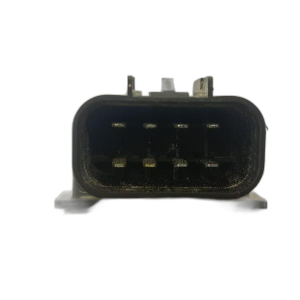
New Aftermarket Parts Available
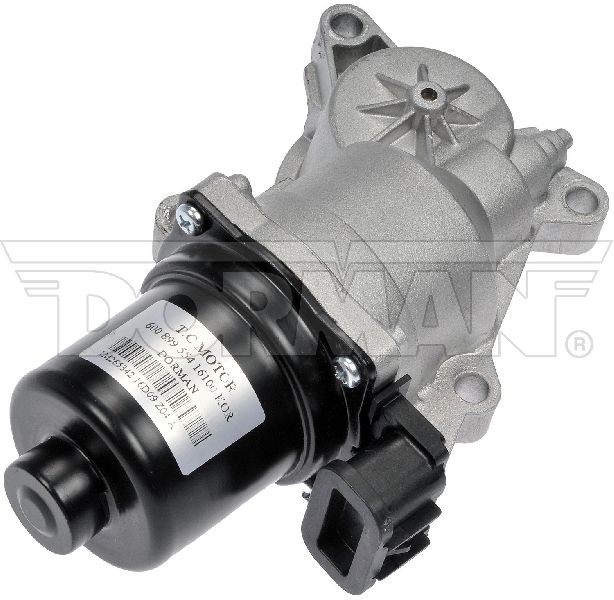


The information in this article is provided for general reference and educational purposes only. Vehicle specifications, procedures, and part compatibility can vary by production date, trim level, and region. Always consult your vehicle's factory service manual and verify part numbers before purchasing or performing repairs. Safety-critical components such as airbags, seat belts, and braking systems should be installed by a qualified professional.
- Chevrolet SUBURBAN:
- 🧭 Diagnostic Flowchart
- 🎬 Helpful Videos
- 🛍️ Shop This Part
- What's Unique About the 2015-2018 Chevrolet SUBURBAN
- Symptoms You May Notice
- Most Likely Causes
- Rare But Worth Checking
- Diagnosis Steps
- Parts You'll Likely Need
- Related Codes That Often Appear With This One
- Technical Service Bulletins (TSBs) & Recalls
- Platform-Specific Known Issues
- Mechanic-Grade Diagnostic Values
- Hidden / Shadow Codes Worth Checking
- Scan Tool Commands That Help
- Wiring & Ground Locations
- Real Owner Repair Stories
- When the Usual Fixes Don't Work
- OEM Part Supersession History
- 🎟️ Get 5% Off