

C0544 on 2015-2020 Chevrolet Tahoe: Steering Angle Sensor Circuit Faults and Fixes
This code indicates a data error from the steering angle sensor. On 2015-2020 Tahoes, this is most often caused by known electrical issues like a poor Body Control Module (BCM) ground (G218) or a pinched wiring harness behind the driver's side dash. Inspecting and repairing these wiring issues is the most common fix.
- Code C0544 means there's a data error from the steering angle sensor.
- On your 2015-2020 Tahoe, DO NOT immediately replace the sensor. The cause is very likely a known wiring or ground issue.
- First, inspect the BCM ground G218 under the driver's side dash for trapped insulation. This is a very common, no-cost fix.
- Second, inspect the main wiring harness near the driver's side dash bracket for pinching or damage.
- Only consider replacing the steering angle sensor after confirming the wiring and grounds are in perfect condition.
What's Unique About the 2015-2020 Chevrolet TAHOE
The 2015-2020 Tahoe, part of the K2XX platform, is known for specific electrical vulnerabilities that trigger code C0544. Two widely documented issues are a poor ground connection at location G218, where 🎬 Watch: How to clean the G218 ground connection properly. sound-deadening material can interfere with the connection, and a main dash wiring harness that gets pinched by a bracket behind the instrument panel. 🎬 See this walkthrough for finding pinched wires and sensor faults. These factory-level issues are so common that GM issued multiple Technical Service Bulletins to address them, making wiring and ground checks the first priority over replacing the sensor itself.
Diagnostic Flowchart
Tap your situation to follow the diagnostic path that matches what you're seeing on this vehicle.
Symptoms You May Notice
- "Service StabiliTrak" message on the driver information center (DIC)
- Loss of or reduced power steering assist, message "Steering Assist is Reduced Drive With Care"
- Steering jerks or kicks back when turning
- ABS and Traction Control lights illuminated
- Instrument panel cluster, radio, or HVAC may go blank intermittently
- A flood of communication codes across multiple modules
- Replacing the Power Steering Rack
- Replacing the Body Control Module (BCM)
- Replacing the Electronic Brake Control Module (EBCM)
Most Likely Causes
- Poor BCM Ground at G218 🔴 High Probability A known issue where the dash insulator mat gets trapped between the ground eyelet and the body stud, causing a poor connection for the Body Control Module. This is documented in TSB 18-NA-161 (superseding PIT5405C).
How to confirm: Inspect the G218 ground location, typically found under the driver's side dash near the A-pillar, often near the hood release lever. Check if the black dash insulation material is under the ground connector or if the nut is loose. A voltage drop test on the ground circuit can also confirm high resistance.
Typical fix: Remove the ground nut (typically 10mm), pull the eyelet off the stud, cut away a section of the interfering insulation mat, clean the contact surfaces of the eyelet and body with a wire brush or sandpaper, and securely retighten the nut.
Est. part cost: $0 - Pinched Wiring Harness at Left Instrument Panel 🔴 High Probability The main dash harness can be pinched between the left instrument panel mounting bracket and the vehicle body during factory assembly, as documented in TSB PIT5288H.
How to confirm: Visually inspect the harness from under the dash where it passes the metal mounting bracket for the instrument panel. The TSB notes this is near where the I/P fuse block cover is. Check for chafed, pinched, or broken wires. The harness may not look completely crushed, so check if it can move freely away from the bracket.
Typical fix: Loosen the mounting bracket bolts, carefully free the harness, and open the loom to inspect for damaged wires. Repair any broken or chafed wires using appropriate connectors or solder and heat shrink. Reroute the harness to prevent future pinching and secure it with a zip tie.
Est. part cost: $5-$25 for wire repair supplies. - Failed Steering Angle Sensor 🟡 Medium Probability → Shop Steering Angle Sensor
How to confirm: Use a scan tool to monitor the live data from the steering angle sensor. The value should change smoothly and continuously as you turn the steering wheel lock-to-lock. If the value is frozen, erratic, or does not change, the sensor has likely failed.
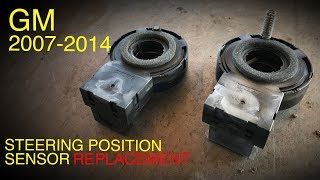
Typical fix: Replace the steering angle sensor, which is located in the steering column. This requires removing the steering wheel and airbag. After replacement, a steering angle sensor relearn/calibration procedure must be performed with a capable scan tool.
Est. part cost: $40-$150 - Incorrect Steering Angle Sensor Calibration ⚪ Low Probability → Shop Steering Angle Sensor
How to confirm: This usually occurs immediately after a wheel alignment, steering component replacement, or if the battery was disconnected while the steering was not centered. The code will set because the sensor's 'center' position does not match the vehicle's straight-ahead direction.
Typical fix: Perform a Steering Angle Sensor alignment/relearn procedure using a compatible diagnostic scan tool. This procedure typically involves centering the steering wheel and then turning it lock-to-lock to set the new limits.
Est. part cost: $0 if you have the tool, otherwise part of shop labor.
Rare But Worth Checking
- High Resistance in Battery Cables or Loose Connections: → Shop Vehicle Battery TSB 18-NA-161 (which supersedes PIT5405C) notes that high resistance or loose connections at the battery, fuse block, or starter can cause widespread electrical issues and communication codes, including C0544. Performing a loaded voltage drop test on the main power and ground cables is recommended.
- PSCM Calibration Error: TSB 20-NA-100 describes a calibration error in the Power Steering Control Module (PSCM) that can cause DTCs like C0544 to remain current even after the root cause is fixed. The solution is to clear all codes and, if they don't return immediately, reprogram the PSCM with the latest software calibration.
Diagnosis Steps
- Scan for all DTCs in all modules. Note any communication (U-codes) or other chassis (C-codes) that are present, especially C0710 and U-codes.
- Inspect the BCM ground G218 under the driver's side dash. Remove the 10mm nut, ensure no insulation is caught under the connector, clean the surfaces, and retighten.
- Inspect the large wiring harness at the left side of the instrument panel for signs of being pinched or damaged by its mounting bracket, per TSB PIT5288H.
- Using a scan tool, view the live data for the Steering Angle Sensor. Confirm that the angle changes smoothly from lock to lock as the steering wheel is turned.
- If live data is frozen or absent, test the sensor's power, ground, and signal circuits at the sensor connector. If circuits are good, the sensor is likely faulty.
- If the code appeared after an alignment or steering work, perform a steering angle sensor calibration procedure with a scan tool first.
- Perform a loaded voltage drop test on the main battery positive and negative cables to rule out high resistance per TSB 18-NA-161. A drop above 100-200mV under load indicates a problem.
- If codes do not clear or return intermittently without a clear cause, consider having a dealer reprogram the PSCM per TSB 20-NA-100.
Parts You'll Likely Need
- Steering Angle Sensor
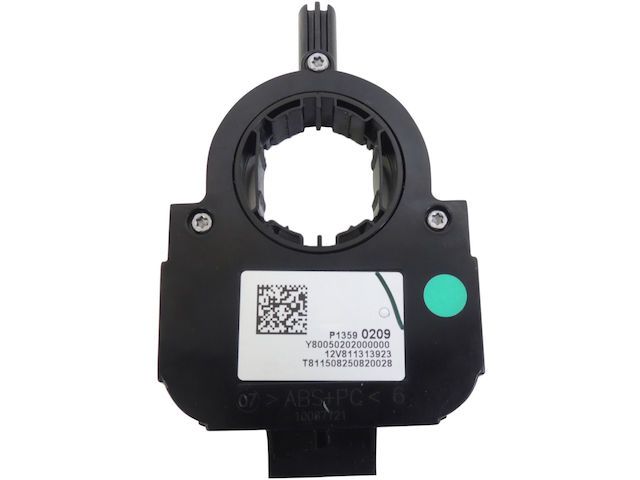
(OEM #13590209)— If wiring and grounds are good, the sensor itself can fail internally, providing no or incorrect data. This is a common failure point after the primary wiring/ground issues are ruled out.
Trusted brands: ACDelco, Dorman
OEM price range: $80-$120
Aftermarket price range: $40-$70
Related Codes That Often Appear With This One
- C0710 — This code is also related to the steering angle sensor signal and is frequently cited alongside C0544 in the same TSBs and forum discussions.
- U0415 — 'Invalid Data Received From Electronic Brake Control Module.' This code often appears with C0544 because the steering angle data is a critical input for the EBCM to manage StabiliTrak and ABS.
- U0126 — 'Lost Communication With Steering Angle Sensor Module.' This indicates a more severe communication breakdown, often pointing to the same wiring or ground issues.
- Multiple U-codes (e.g., U0073, U0028, U0029, U0140) — A flood of communication (U-prefix) codes points strongly toward a systemic electrical problem like the G218 ground or a pinched harness affecting multiple modules on the CAN bus network.
Technical Service Bulletins (TSBs) & Recalls
- PIT5288H: RKE / Passive Entry And Start / No Audio / SWC / Touch Screen / Display Blank / Rear Wiper And Rear Power Windows Inoperative / Dead Battery / Service Tire Pressure System / SES MIL DTC B3101 B144C C0710 C0544...
- 18-NA-161: Steering Jerks Or Kicks Back / Reduced Power Steering Assist / Engine Stall / No Start / Service Stabilitrak / IPC / Radio / HVAC Goes Blank Various DTCs.
- PIT5405C: Steering Jerks Or Kicks Back / Reduced Power Steering Assist / Engine Stall / No
Platform-Specific Known Issues
- TSB PIT5288H: Documents a wide range of electrical problems, including code C0544, caused by the dash wiring harness being pinched by the left instrument panel mounting bracket. The fix is to repair and reroute the harness. This TSB applies to the entire 2015-2020 GM full-size SUV lineup and related trucks.
- TSB 18-NA-161 (supersedes PIT5405C): Points to a poor Body Control Module ground at G218 as a primary cause for C0544 and numerous other electrical faults. The bulletin explicitly states the dash insulation mat gets trapped under the ground, requiring removal and cleaning of the connection.
- TSB 20-NA-100: Addresses a PSCM calibration error that prevents C0544 and other codes from moving to 'history' status, causing a persistent "Service Steering" message at every startup even if the fault is not current. The fix is a PSCM software update.
Mechanic-Grade Diagnostic Values
- Battery Voltage During Module Reprogramming — expected: Maintain between 12V and 15.5V. Failure: Voltage outside this range can cause programming to fail, potentially bricking the module.
- Steering Angle Sensor Live Data (Scan Tool) — expected: Value should change smoothly and continuously as the steering wheel is turned from lock to lock. Should read 0° when wheels are straight.. Failure: Value is frozen at 0° or another number, jumps erratically, or does not change when the wheel is turned.
Hidden / Shadow Codes Worth Checking
- C0544 with symptom byte 5A: Indicates 'Steering Position Sensor Data Error - Not Plausible'. This specific byte is often set when a steering angle sensor alignment/calibration procedure is performed incorrectly, creating a mismatch between the sensor's zero point and the vehicle's actual straight-ahead position. (see via A professional GM-specific scan tool like GDS2 is required to view symptom bytes.)
Scan Tool Commands That Help
- GDS2 (GM Global Diagnostic System 2): Steering Angle Sensor Centering and Software Endstop Learning — This function, found under Power Steering Control Module (PSCM) Calibration, must be performed after replacing the steering angle sensor or after any wheel alignment or steering component service to prevent codes C0544 and U0415.
- GDS2 (GM Global Diagnostic System 2): Reprogram Power Steering Control Module (PSCM) — Used when DTCs like C0544 will not clear and remain 'current' even after a fix, as described in TSB 20-NA-100. This indicates a software glitch, and reprogramming the PSCM with the latest calibration via the Service Programming System (SPS) is the required fix.
- GDS2 (GM Global Diagnostic System 2): Module Diagnostics > Display DTCs — This is the initial step to read all codes from all modules, including the critical symptom bytes that provide deeper diagnostic insight than a generic OBD-II scanner.
Wiring & Ground Locations
- G218 — Located under the driver's side of the instrument panel, near the A-pillar and hood release lever. It is a ground stud on the body where multiple circuits, including for the BCM, are grounded.. This is a primary failure point. Factory-installed sound deadening material often gets trapped between the ground wire's eyelet connector and the body stud, creating high resistance. This poor ground disrupts communication across multiple modules, frequently triggering C0544 and a host of other electrical codes.
- Steering Angle Sensor Connector — At the steering angle sensor, which is located within the steering column, typically behind the steering wheel and clock spring.. This is the main connection point for testing the sensor's circuits. A video shows it as a six-wire connector. If live data is absent, checking for power, ground, and signal integrity at these pins is the next step before condemning the sensor.
Real Owner Repair Stories
- YouTube user comment on a G218 fix video (2014-2018 Chevrolet Silverado/GMC Sierra (K2XX Platform)) — Intermittent electrical issues, flickering lights, dash messages, and StabiliTrak warnings.
❌ Tried (didn't work) Hours of online research trying to diagnose the ground issue.
✅ What actually fixed it Following a video guide to access the G218 ground under the driver's dash, removing the interfering sound deadening material, and properly tightening the ground nut. The fix took about 30 minutes and resolved all issues. - YouTube video by 'anthonyj350' (2014 Chevy Silverado) — Flickering headlights and dash lights, park assist disabled messages, power steering loss during turns, and the engine shutting off at low speeds.
❌ Tried (didn't work) Having the battery and alternator tested, which both checked out as fine.
✅ What actually fixed it The video identifies the root cause as the G218 ground being compromised by sound deadening material. The narrator reports that cleaning this ground connection corrected all the sporadic electrical problems.
OEM Part Supersession History
13590209→N/A - Still current— This is the current and widely used OEM part number for the steering angle sensor for the 2015-2020 Tahoe and other K2XX platform vehicles.
Heads up: This part requires programming and/or a special setup procedure (calibration) using a tool like GDS2 after installation to ensure proper operation with the vehicle's safety systems.
Model Year Variations Within This Range
- 2015-2020 (and others): A PSCM calibration error described in TSB 20-NA-100 can affect these models, causing C0544 to stay as a current code after the initial fault is fixed. The solution is a software reprogram, not a hardware replacement. This is not a year-specific hardware change but a software issue that can manifest on any vehicle within this range that hasn't received the updated calibration.
Helpful Videos



We Have This Part in Stock

The information in this article is provided for general reference and educational purposes only. Vehicle specifications, procedures, and part compatibility can vary by production date, trim level, and region. Always consult your vehicle's factory service manual and verify part numbers before purchasing or performing repairs. Safety-critical components such as airbags, seat belts, and braking systems should be installed by a qualified professional.
- Chevrolet TAHOE:
- 🧭 Diagnostic Flowchart
- 🎬 Helpful Videos
- 🛍️ Shop This Part
- What's Unique About the 2015-2020 Chevrolet TAHOE
- Symptoms You May Notice
- Most Likely Causes
- Rare But Worth Checking
- Diagnosis Steps
- Parts You'll Likely Need
- Related Codes That Often Appear With This One
- Technical Service Bulletins (TSBs) & Recalls
- Platform-Specific Known Issues
- Mechanic-Grade Diagnostic Values
- Hidden / Shadow Codes Worth Checking
- Scan Tool Commands That Help
- Wiring & Ground Locations
- Real Owner Repair Stories
- OEM Part Supersession History
- Model Year Variations Within This Range
- 🎟️ Get 5% Off