

C0544 on 2015-2019 GMC Yukon Denali: Steering Fault Causes and Fixes
On a 2015-2019 GMC Yukon, code C0544 is most often caused by a chafed wiring harness near the parking brake or a poor ground (G218) under the dash. The G218 ground stud is located behind the driver's side kick panel/speaker, and the factory insulation mat often gets trapped under the terminal. These electrical issues are well-documented in GM service bulletins and should be checked before replacing the steering angle sensor.
- Before buying any parts for code C0544, ALWAYS inspect the G218 ground and the instrument panel wiring harness for damage. These are the most common fixes and often cost nothing.
- This code disables important safety features (StabiliTrak, Power Steering Assist). The vehicle should be repaired promptly.
- A professional bi-directional scan tool is essential for accurate diagnosis, live data viewing, and performing the mandatory steering angle sensor calibration.
- If the code appeared immediately after a wheel alignment or battery change, a simple sensor recalibration is the most likely solution.
What's Unique About the 2015-2019 Gmc YUKON DENALI

On this generation of GM trucks and SUVs (known as the K2XX platform), code C0544 is frequently a 'symptom' code rather than a direct indicator of a failed sensor. General Motors has issued multiple Technical Service Bulletins (TSBs) pointing to two extremely common culprits that cause this code: a poor ground connection for the Body Control Module (G218) and a specific wiring harness that chafes against a metal bracket behind the dashboard. Owners and technicians often find that fixing one of these electrical faults resolves the code without needing to replace any expensive sensors.
Diagnostic Flowchart

Tap your situation to follow the diagnostic path that matches what you're seeing on this vehicle.
Symptoms You May Notice

- "Service StabiliTrak" message on the instrument cluster.
- "Action Required Steering Assist is Reduced Drive with Care" message.
- Loss of power steering assist, making the steering wheel feel very heavy, especially at low speeds.
- Traction control or ABS warning lights illuminated.
- Steering wheel jerks or kicks back when turning.
- In cases related to a chafed harness or bad ground, other electrical issues like inoperative rear windows, wipers, blank radio screen, or a dead battery may occur. [4, TSB #PIT5288H]
- Replacing the steering angle sensor without first thoroughly inspecting the instrument panel wiring harness for chafing (per TSB PIT5288H) and the G218 ground connection for integrity (per TSB PIT5405C).
Most Likely Causes

- Poor Body Control Module (BCM) Ground (G218) 🔴 High Probability → Shop Body Control Module TSB #PIT5405C documents that ground location G218 is a primary failure point. At the factory, the dash insulator mat often gets trapped under the ground eyelet, preventing a solid metal-to-metal connection and causing high resistance. This disrupts BCM communication and triggers a host of codes, including C0544.
How to confirm: Locate ground G218 on the driver's side, behind the A-pillar/kick panel trim, often near the dash speaker. It is a ground stud with a 10mm nut. Visually inspect if the foam insulator mat is caught under the terminal. Perform a loaded voltage drop test from the ground wire to a clean chassis point while an assistant cranks the engine; the reading should not exceed 200mV (0.2V).
Typical fix: Disconnect the battery. Remove the 10mm ground nut. Cut or trim away the interfering insulator mat to expose bare metal. Clean the terminal ring, the vehicle body surface, and the nut to bare, shiny metal. Reassemble securely and apply dielectric grease.
Est. part cost: $0-$5 - Chafed Instrument Panel Wire Harness 🔴 High Probability → Shop Dashboard Wiring Harness As documented in GM TSB #PIT5288H, the main wire harness behind the left side of the instrument panel can rub against the sharp edge of a metal dash mounting bracket near the parking brake pedal assembly, causing wires (including CAN bus communication wires) to short out.
How to confirm: Remove the driver's side lower dash trim and kick panel. Visually inspect the large wiring harness that runs along the dash support, specifically where it passes the metal I/P mounting bracket. TSB #PIT5288H shows both an upper and lower chafe point to inspect.
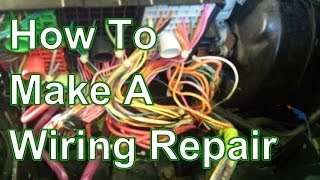
Typical fix: Repair the damaged wires using approved splicing techniques. Protect the harness from future damage by wrapping it with anti-abrasion tape (such as Tesa tape) and re-routing it to ensure it no longer contacts the sharp metal bracket.
Est. part cost: $0-$25 - Incorrect Steering Angle Sensor (SAS) Calibration 🟡 Medium Probability → Shop Steering Angle Sensor The SAS requires recalibration after a wheel alignment, battery replacement, or replacement of steering/suspension components. If this step is skipped or performed incorrectly, the system will log C0544, often with a persistent fault byte '5A' that cannot be cleared with a standard tool.
How to confirm: Ask if the fault appeared immediately after service work. A professional scan tool can be used to check the current calibration status. The presence of C0544 with fault byte 5A is a strong indicator of a failed calibration attempt.
Typical fix: Perform the Steering Angle Sensor Calibration/Relearn procedure using a compatible bi-directional scan tool. If code C0544-5A is present and won't clear, the PSCM may need to be reprogrammed by a dealer to unlock the code before a new calibration can be successful.
Est. part cost: $0 - Failed Steering Angle Sensor ⚪ Low Probability → Shop Steering Angle Sensor
How to confirm: Using a scan tool, monitor the live data for the steering angle sensor. If the reading is frozen, jumps erratically, or does not change when turning the wheel, and wiring/grounds are confirmed good, the sensor has likely failed.
Typical fix: Replace the steering angle sensor, which is located in the steering column. This must be followed by a successful calibration procedure.
Est. part cost: $80-$200 - Power Steering Control Module (PSCM) Software Issue ⚪ Low Probability → Shop Power Steering Control Module GM TSB #20-NA-113 (which supersedes PIT5593B and others) notes a calibration error in the PSCM on some models that prevents DTCs from clearing and moving to 'history' status, even after the root cause (like a weak battery) is fixed.
How to confirm: If the code is persistent, especially after a battery replacement or other voltage-related event, and all other causes are ruled out, a dealer or qualified shop must check for available software updates for the PSCM.
Typical fix: Reprogram the PSCM with the latest software calibration using dealer-level tools (SPS).
Est. part cost: $0
Rare But Worth Checking
- High Resistance in Battery Cables: → Shop Vehicle Battery Per TSB #PIT5405C (which supersedes parts of 19-NA-218's scope for this issue), poor connections or corrosion on the main positive or negative battery cables can cause low voltage and communication errors across multiple modules, triggering C0544 among other codes, especially when turning at low speeds.
Diagnosis Steps
- Connect a professional-grade, bi-directional scan tool and read DTCs from ALL vehicle modules.
- Note all codes present, paying special attention to C0710, U0415, U0126, and any with fault byte '5A', which indicates a plausibility failure often from a bad calibration.
- Navigate to the Power Steering Control Module (PSCM) live data and observe the 'Steering Wheel Angle' parameter.
- Confirm the angle reads close to 0° with the wheels straight and changes smoothly as you turn the wheel lock-to-lock. Erratic or frozen values point to a sensor or wiring issue.
- CRITICAL: Disconnect the battery. Locate and inspect the BCM ground point G218 under the driver's dash near the A-pillar speaker. Remove the 10mm nut and check for trapped dash insulation under the terminal. Clean all contact surfaces to bare metal and re-torque securely.
- CRITICAL: With the lower dash panel removed, thoroughly inspect the wiring harness behind the driver's side dash for any signs of chafing against metal brackets, as described in TSB PIT5288H.
- If wiring and grounds are confirmed good, attempt a 'Steering Angle Sensor Relearn/Calibration' procedure with the scan tool.
- If the code persists, check with a dealer for any available PSCM software updates, especially for 2017-2018 models or if the code appeared after a low voltage event.
- If all previous steps fail to resolve the issue, the steering angle sensor itself is the likely culprit and should be replaced.
Parts You'll Likely Need
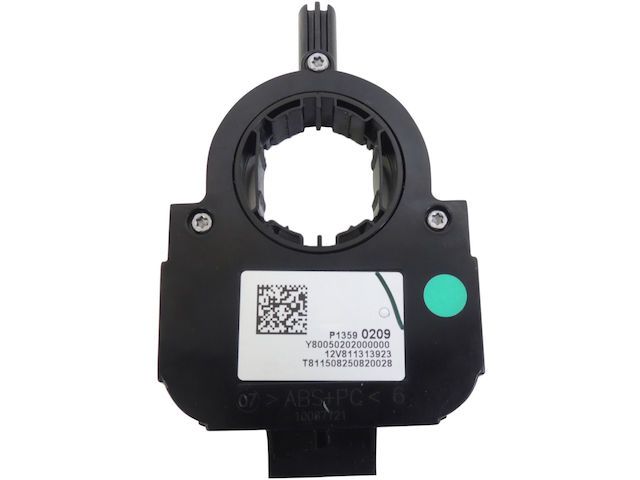
- Steering Angle Sensor
(OEM #13590209)— This is the sensor that provides the steering wheel position data. It is only replaced after confirming wiring, grounds, and calibration are not the root cause. Always verify the part number with the vehicle's VIN.
Trusted brands: ACDelco (GM Genuine), Dorman, Standard Motor Products
OEM price range: $73-$135
Related Codes That Often Appear With This One
- C0710 — This code for 'Steering Position Signal' is a direct companion to C0544 and is explicitly mentioned in TSBs PIT5288H and PIT5405C as being caused by the same electrical faults.
- U0415 — Means 'Invalid Data Received From Electronic Brake Control Module'. The EBCM relies on the steering angle sensor data; when the data is bad, it logs this code. It is often seen with fault byte '75' when C0544 has fault byte '5A' due to a bad calibration.
- U0126 — Means 'Lost Communication With Steering Angle Sensor Module'. This often points towards a wiring issue (like the chafed harness) or a complete communication breakdown due to the G218 ground fault.
- U0428 — Means 'Invalid Data Received From Steering Angle Sensor Module'. This indicates other modules on the vehicle network do not trust the data coming from the sensor, often due to the same root electrical causes.
Technical Service Bulletins (TSBs) & Recalls
- PIT5288H
- PIT5405C
- 19-NA-218
- 20-NA-113
Platform-Specific Known Issues
- The K2XX platform is known for electrical issues stemming from the G218 ground point, where the dash insulation mat gets trapped under the terminal from the factory, causing a wide range of seemingly unrelated DTCs, including C0544.
- The instrument panel harness is routed in a way that makes it susceptible to chafing on a sharp metal dash bracket, as detailed in TSB PIT5288H. This can cause shorts in the CAN bus network, leading to this code and other communication faults.
Mechanic-Grade Diagnostic Values
- Power Steering Control Module (K43) ground circuit resistance — expected: Less than 10 ohms. Failure: A reading greater than 10 ohms indicates an open or high resistance in the ground circuit (e.g., at G218).
- Steering Angle Sensor Analog Signal Voltage — expected: Between 0.4 V and 4.6 V. Failure: A voltage less than 0.4 V or greater than 4.6 V will set the DTC.
- Steering Angle Sensor 5V Reference Circuit — expected: Approximately 5.0 V. Failure: No voltage or low voltage indicates a problem with the controlling module or the wiring. A reading over 5.2V may indicate a short to voltage.
Hidden / Shadow Codes Worth Checking
- C0544-5A: Steering Wheel Angle Sensor Signal Plausibility Failure. This indicates the sensor data is illogical. It often sets after an incorrect calibration procedure and becomes 'latched,' meaning it cannot be cleared with a standard tool and may require a PSCM reflash. (see via A professional-grade scan tool or GM's GDS2 (Global Diagnostic System 2) software is required to view symptom bytes.)
- U0415-75: Invalid Data Received From Electronic Brake Control Module. This symptom byte often sets in conjunction with C0544-5A and points to the same root cause: an incorrect steering angle sensor calibration. It can also be a persistent code. (see via A professional-grade scan tool or GM's GDS2 (Global Diagnostic System 2) software.)
Scan Tool Commands That Help
- GM GDS2 / Professional Scan Tool: Steering Wheel Angle Sensor Learn / Calibration — This procedure is required after replacing the steering angle sensor, performing a wheel alignment, or replacing steering/suspension components to teach the modules the sensor's new center position.
- GM GDS2 / Professional Scan Tool: Steering Wheel Angle Sensor Centering — This function should be performed BEFORE the 'Learn' procedure to reset old calibration values stored in the module, especially if a previous calibration attempt failed.
- GM GDS2 / SPS (Service Programming System): Power Steering Control Module (PSCM) Reprogramming — This is the specific fix for a persistent C0544-5A that will not clear after a faulty calibration attempt. It is also the fix for software glitches noted in TSBs like 20-NA-113 where the code remains current even after the root cause is fixed.
Wiring & Ground Locations

- G218 — Inside the driver's side of the cab, under the dash, behind the A-pillar trim panel and often near or below the speaker. It is a ground stud with a 10mm nut.. This is the primary ground for the Body Control Module (BCM). TSBs identify it as a top cause for C0544 due to sound-deadening foam getting trapped under the connection, causing high resistance and disrupting module communication.
- Instrument Panel Harness Chafe Point — Behind the driver's side lower dash/kick panel, where the main wiring harness passes a sharp metal I/P mounting bracket near the parking brake pedal assembly.. As documented in TSB PIT5288H, this harness can rub against the bracket, causing shorts in the CAN bus wires that lead to communication-related DTCs, including C0544.
- Steering Angle Sensor Connector — On the steering column, under the driver's side dash, at the sensor itself. It is an 8-pin connector on this platform.. This is the direct connection point for testing the sensor's power, ground, and signal circuits. Pin 1 is the 5V reference, and there are dedicated pins for signal and ground.
Real Owner Repair Stories
- Tahoe Yukon Forum user 'persistent' (2015-2020 generation (specific year not stated)) — Multiple DTCs including C0544-5A and C0710-4B, StabiliTrak disabled.
❌ Tried (didn't work) Attempting a Steering Angle Sensor (SAS) reset/relearn with two different consumer-grade scan tools (CGSulit SC530, Launch CRP919x). The procedures would not complete.
✅ What actually fixed it The user discovered that the live data for the steering angle sensor was not changing, indicating a failed sensor. They physically replaced the steering angle sensor in the steering column. After replacement, an Xtool D8S scan tool was able to successfully perform the SAS relearn, which cleared the C0544 and C0710 codes and resolved all symptoms.
OEM Part Supersession History
13590209→13590209 (current)— No supersession found. This part number appears to be the consistent OEM number for the entire 2015-2019 model range.
Heads up: This part requires programming and/or special setup procedures (calibration) after installation to ensure proper operation.
Model Year Variations Within This Range
- 2015: A safety recall (GM #14743) was issued for some 2015 models for a condition where a sudden loss of power steering assist could occur. The fix was to replace the power steering assist motor kit, highlighting the sensitivity of the early models in this generation to power steering component and software issues.
- 2017-2018: TSB 20-NA-113 specifically addresses a PSCM software calibration error on these and other model years that can cause DTCs like C0544 to remain in 'current' status even after the root cause (like a weak battery) is fixed. The fix is a software update for the PSCM.
Helpful Videos

We Have This Part in Stock

The information in this article is provided for general reference and educational purposes only. Vehicle specifications, procedures, and part compatibility can vary by production date, trim level, and region. Always consult your vehicle's factory service manual and verify part numbers before purchasing or performing repairs. Safety-critical components such as airbags, seat belts, and braking systems should be installed by a qualified professional.
- Gmc YUKON DENALI:
- 🧭 Diagnostic Flowchart
- 🎬 Helpful Videos
- 🛍️ Shop This Part
- What's Unique About the 2015-2019 Gmc YUKON DENALI
- Symptoms You May Notice
- Most Likely Causes
- Rare But Worth Checking
- Diagnosis Steps
- Parts You'll Likely Need
- Related Codes That Often Appear With This One
- Technical Service Bulletins (TSBs) & Recalls
- Platform-Specific Known Issues
- Mechanic-Grade Diagnostic Values
- Hidden / Shadow Codes Worth Checking
- Scan Tool Commands That Help
- Wiring & Ground Locations
- Real Owner Repair Stories
- OEM Part Supersession History
- Model Year Variations Within This Range
- 🎟️ Get 5% Off