

C0561 on 2007-2013 GMC Yukon XL: 'Service Stability' Message Explained
This code means the StabiliTrak system was disabled due to a fault elsewhere in the vehicle. C0561 is a secondary, informational code; do not replace the ABS module. The fix is to find and repair the primary trouble code, which is often an engine misfire (P03xx), a sensor issue, or a communication problem.
- C0561 is an informational code, not a fault. It means the StabiliTrak system has been turned off due to a problem detected elsewhere.
- DO NOT replace the ABS module (EBCM) for this code. The problem is almost always something else.
- The first and most important step is to scan ALL vehicle modules for other codes (P, B, C, or U codes).
- Common root causes are engine misfires, faulty wheel speed sensors, or incorrect fuel system parameters.
- Fixing the primary trouble code will almost always make the C0561 code and the 'Service Stability' message go away.
What's Unique About the 2007-2013 Gmc YUKON XL
The GMT900 platform, which includes this generation of Yukon XL, heavily integrates the StabiliTrak system with engine and body controls. Because of this, a wide variety of non-chassis issues are common triggers for the C0561 code. Specific to these 5.3L and 6.2L engines, engine misfires related to the Active Fuel Management (AFM) system are a frequent root cause. Additionally, issues like a dirty throttle body, incorrect fuel alcohol readings on FlexFuel models, and even cracked PCV hoses creating vacuum leaks can all send the engine's performance data out of expected ranges, forcing the EBCM to disable stability control as a precaution.
Diagnostic Flowchart
Tap your situation to follow the diagnostic path that matches what you're seeing on this vehicle.
Symptoms You May Notice
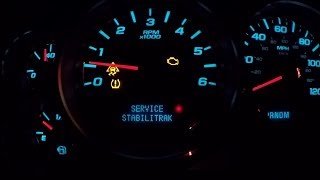
- "Service Stability" or "Service StabiliTrak" message on the Driver Information Center (DIC)
- "Service Traction Control" message on the DIC
- StabiliTrak/Traction Control disabled light is on
- ABS light may be on
- Check Engine Light may be on, sometimes flashing
- Vehicle may enter 'Reduced Engine Power' mode
- Rough or unstable engine idle
- Replacing the Electronic Brake Control Module (EBCM). This is almost never the cause of an isolated C0561 code and is an expensive and unnecessary repair. GM explicitly warns against this in TSB PIT4169F and other diagnostic literature.
Most Likely Causes
- Primary Trouble Code Stored in Another Module 🔴 High Probability The EBCM is programmed to disable stability control whenever a fault occurs that could affect vehicle dynamics or torque calculations. This is a designed-in safety feature outlined in GM's own service bulletins.
How to confirm: Perform a full vehicle scan with a professional scan tool that can communicate with the ECM, BCM, and EBCM. The presence of any other P-code, B-code, or U-code is the confirmation. The primary code may even be a 'type B' code that doesn't illuminate the Check Engine Light.
Typical fix: Diagnose and repair the other trouble codes first. Fixing the primary fault will almost always resolve the C0561 code, as instructed by TSB PIT4169F.
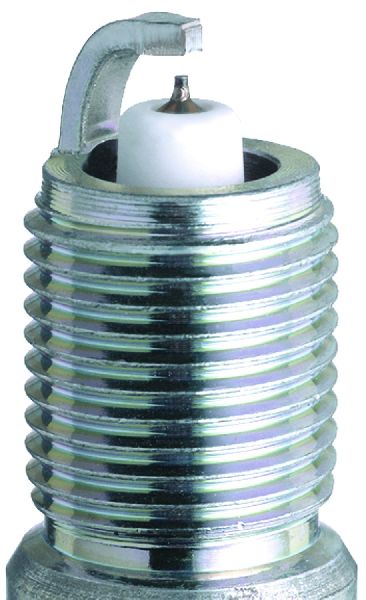
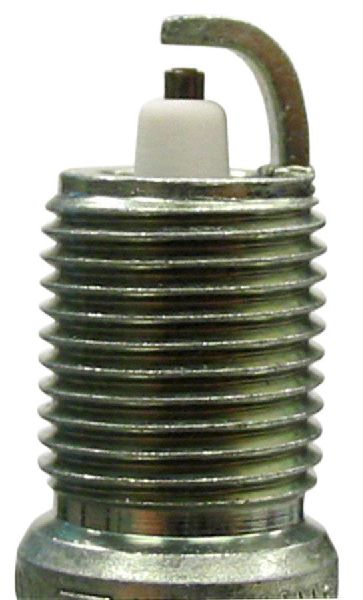
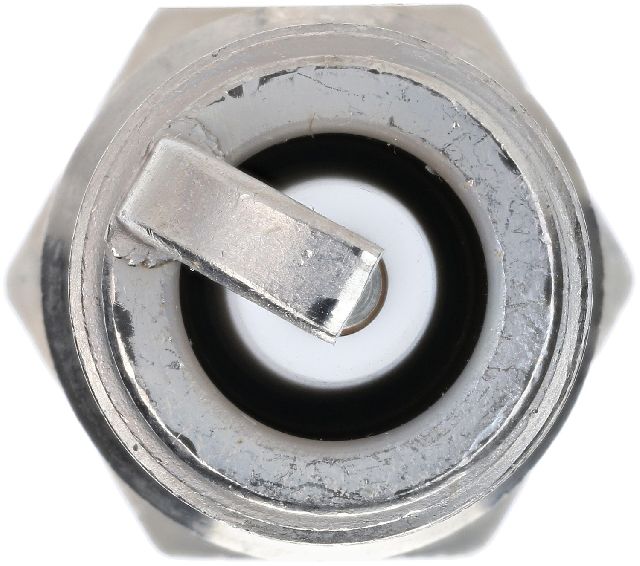
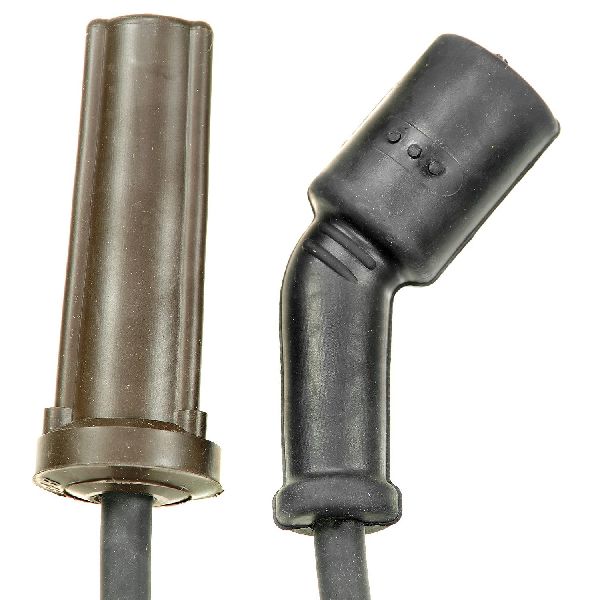
Est. part cost: $0-$500+ - Engine Misfire 🟡 Medium Probability The 5.3L and 6.2L V8 engines in these trucks can experience misfires due to worn spark plugs, failing ignition coils, or issues with the Active Fuel Management (AFM) system lifters. A misfire creates erratic engine torque, which the EBCM sees as an unsafe condition for stability control. Cylinder 7 is a common culprit due to its AFM lifter.
How to confirm: Scan for P0300-P0308 codes. A P0307 (misfire on cylinder 7) is commonly cited in forums. Check spark plugs, ignition coils, and wiring on the corresponding cylinder. A flashing check engine light is a strong indicator of a current misfire. 🎬 See how to fix a blinking engine light and StabiliTrak. If AFM is suspected, listen for a distinct ticking noise from the engine.
Typical fix: Replace the faulty spark plug(s) and/or ignition coil(s). If the issue is a collapsed AFM lifter, this requires more extensive engine work, including removing the cylinder head.
Est. part cost: $20-$450 - Incorrect Fuel Alcohol Content Reading ⚪ Low Probability On FlexFuel (FFV) models, the ECM can incorrectly 'learn' a high alcohol percentage in the fuel, especially after battery disconnects or fueling with the engine off. This causes it to run rich and set codes like P0172/P0175. This engine performance fault triggers the EBCM to set C0561.
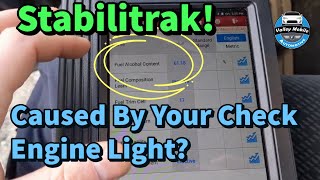
How to confirm: Use a professional scan tool to view the 'Fuel Alcohol Content' PID (Parameter ID). If the value is high (e.g., over 15-20%) and you are using standard E10 gasoline, this is the likely cause. 🎬 Watch: Diagnosing fuel trim codes and the C0561 error.
Typical fix: Perform a 'Fuel Composition Reset' using a GM-compatible scan tool. No parts are typically required, but the procedure must be followed correctly, often requiring the tank to be filled with standard gasoline first.
Est. part cost: $0 - Failing Wheel Speed or Steering Angle Sensor ⚪ Low Probability → Shop Steering Angle Sensor These sensors are direct inputs to the StabiliTrak system. While they often set their own specific C-codes, they can sometimes send intermittent, invalid data that triggers C0561 before a hard fault is registered.
How to confirm: Use a scan tool to monitor live data from all four wheel speed sensors and the steering angle sensor while driving. Look for dropouts or erratic readings that don't match the other wheels or steering input.
Typical fix: Replace the faulty sensor. The steering angle sensor may require calibration after replacement.
Est. part cost: $30-$100 - Dirty or Failing Throttle Body ⚪ Low Probability → Shop Fuel Injection Throttle Body Carbon buildup in the throttle body can cause the throttle plate to stick, leading to erratic idle and incorrect data from the Throttle Position Sensor (TPS). The EBCM relies on accurate torque data derived from the TPS, so this discrepancy triggers a C0561 and often a P2135 code and 'Reduced Engine Power' mode.
How to confirm: Inspect the throttle body for heavy carbon deposits. With a scan tool, monitor throttle position sensor data for glitches or non-linear response. The presence of code P2135 is a strong indicator.
Typical fix: Clean the throttle body thoroughly with a dedicated cleaner. If cleaning doesn't work or if the sensor has failed, replace the entire throttle body assembly and perform an idle relearn procedure. 🎬 Watch: Step-by-step guide to cleaning your throttle body.
Est. part cost: $10-$250
Rare But Worth Checking
- Low System Voltage or Bad Grounds: A weak battery, failing alternator, or corroded ground straps can cause unpredictable communication errors between modules. A commonly cited problem area is the main engine ground on the front passenger side of the engine block (G103), where corrosion can build up under the crimped terminal. Other key grounds are located on the cowl and frame rails.
- Cracked PCV Valve Hose: → Shop PCV Valve A cracked or disconnected PCV hose on the valve cover can create a significant vacuum leak. This leads to lean engine codes (P0171, P0174), which provide invalid data to the EBCM and trigger the C0561 code as a secondary fault.
- Thick Oil Additives: In one documented case, an owner reported that using a thick 'stop oil leak' additive caused a P0011 (Camshaft Position) code, which in turn triggered the C0561. An oil and filter change resolved the issue.
Diagnosis Steps
- Connect a professional scan tool capable of reading codes from ALL vehicle modules (EBCM, ECM, BCM, etc.). Do not use a basic engine-only code reader.
- Record all Diagnostic Trouble Codes (DTCs) and their symptom bytes (e.g., -71) from all modules. Do not clear them.
- Follow the guidance of TSB PIT4169F: Ignore the C0561 code and begin diagnosis on ANY other active DTCs. The primary fault may be a code that does not turn on the check engine light.
- If engine misfire codes (P03xx) are present, inspect spark plugs, coils, and wiring for the specified cylinder(s). Pay close attention to AFM cylinders (1, 4, 6, 7).
- If fuel trim codes (P0172/P0175) are present, check the 'Fuel Alcohol Content' value on the scan tool. If it's incorrectly high, perform a 'Fuel Composition Reset'.
- If throttle body codes (P2135) are present, inspect and clean the throttle body. Perform an idle relearn procedure.
- If lean codes (P0171/P0174) are present, inspect for vacuum leaks, paying close attention to the PCV hose that runs between the valve covers.
- If no other codes are present, check for intermittent issues. Inspect the main engine ground on the front passenger cylinder head (G103) and the EBCM ground on the driver's side frame rail for corrosion or looseness. Monitor live sensor data for wheel speed and steering angle sensors for dropouts.
- Once the primary fault is repaired and its code is cleared, the C0561 code will typically clear on its own after a few drive cycles.
Parts You'll Likely Need
- Spark Plug
(OEM #ACDelco 41-110)— A fo
Related Codes That Often Appear With This One
- P0300-P0308 — An engine misfire directly impacts engine torque and stability, causing the EBCM to disable StabiliTrak as a precaution.
- P0172 / P0175 — These 'System Too Rich' codes, often caused by an incorrect fuel alcohol reading, indicate a fuel control problem that the ECM reports, leading the EBCM to disable stability functions.
- P2135 — This 'Throttle/Pedal Position Sensor/Switch A/B Voltage Correlation' code points to a failing throttle body, a direct cause for the EBCM to receive invalid data and set C0561.
- P0171 / P0174 — These 'System Too Lean' codes can be caused by a vacuum leak, such as a cracked PCV hose, which alters engine performance and triggers the C0561.
Technical Service Bulletins (TSBs) & Recalls
- PIT4169F: Advises technicians that when a 'Service Stability Message' and code C0561 are present, they must diagnose and address all other DTCs in the vehicle first. It explicitly warns: 'Do NOT replace the EBCM to resolve this concern.' This TSB applies to the entire 2007-2013 GM truck and SUV lineup.
Platform-Specific Known Issues
- AFM Lifter Failure on Cylinder 7: The Active Fuel Management (AFM) system deactivates cylinders 1, 4, 6, and 7. The lifters for these cylinders are a known failure point. A collapsed lifter on cylinder 7 is a very common, and serious, cause of a P0307 misfire, which in turn triggers the C0561 code. The repair is labor-intensive, requiring cylinder head removal. Some owners report the lifter can fail without making an obvious ticking noise.
- Corroded Engine Block Ground: A critical ground point is located on the front of the passenger-side engine block. The main battery ground and other module grounds attach here. Corrosion can build up between the wire terminal and the block, or the wire can fray at the crimp, causing intermittent communication faults between the ECM and EBCM, leading to an isolated C0561.
Mechanic-Grade Diagnostic Values
- Fuel Pressure (2008+ models with FPCM, at idle) — expected: Approx. 43.5 PSI. Failure: Significantly higher or lower pressure, or pressure that doesn't respond to engine load.
- Fuel Pressure (Key On, Engine Off) — expected: 55-62 PSI. Failure: Pressure below 55 PSI may indicate a weak fuel pump.
- Throttle Position Sensor (TPS) Voltage — expected: Under 1.0V at closed throttle, rising smoothly to ~4.5V at Wide-Open Throttle (WOT).. Failure: Voltage that is out of range, jumps, or has dead spots as the throttle is opened.
- Rear Wheel Speed Sensor (VSS) Resistance — expected: 1200 - 2900 Ohms. Failure: A reading that is open (infinite resistance), shorted (zero resistance), or significantly outside the expected range.
- Rear Wheel Speed Sensor (VSS) AC Voltage Output — expected: Minimum of 0.25 Volts AC while spinning the wheel by hand at ~0.5 revolutions per second.. Failure: Voltage below 0.25V AC suggests a weak or failed sensor.
Hidden / Shadow Codes Worth Checking
- C0561-71: Invalid Serial Data Received. This is the most common and specific sub-code, indicating the EBCM has received corrupt or illogical data from another module (like the ECM) over the communication network. (see via A professional GM-compatible scan tool like a Tech 2 or GDS2.)
- C0561-4B: Fuel Injection System Too Lean. This sub-type indicates the EBCM has disabled stability control because of a lean running condition reported by the ECM, aligning with root causes like vacuum leaks. (see via A professional GM-compatible scan tool.)
Scan Tool Commands That Help
- GDS2 / Tech 2: Fuel Composition Reset — Use when P0172/P0175 (System Rich) codes are present on a FlexFuel vehicle. This function resets the ECM's learned alcohol percentage value, which can become corrupted and cause severe fuel trim issues that trigger C0561.
- GDS2 / Tech 2: Steering Angle Sensor Calibration — This must be performed after replacing the steering angle sensor or after certain alignment procedures to ensure the EBCM knows the straight-ahead position of the steering wheel.
- GDS2 / Tech 2: Output Control Functions — Allows a technician to command individual components (solenoids, motors, etc.) on and off directly from the scan tool. While not used for C0561 directly, it's a fundamental bidirectional test used to verify the integrity of related modules and components during a deeper diagnosis.
Wiring & Ground Locations
- EBCM Ground — Bolted to the outside of the driver's side frame rail, typically below the driver's door.. This is the primary ground for the Electronic Brake Control Module. This location is highly exposed to road salt and moisture, making it a common point for corrosion and high resistance, which can prevent the module from communicating properly.
- G103 — On the front of the passenger side cylinder head.. This is a critical engine and data link connector ground. A poor connection here can disrupt communication between the ECM and other modules, causing invalid data messages that trigger C0561.
- G104 — On the rear of the driver's side cylinder head.. This is another primary engine-to-body ground strap location. A loose or corroded connection here can cause a variety of electrical communication issues between modules.
- EBCM Connector X1 — The main harness connector at the EBCM module on the driver's side frame rail.. This is where all sensor inputs and communication lines connect to the module. Pin 1 is a primary ground and Pin 13 is the battery positive supply; checking for solid power and ground at these pins is a fundamental diagnostic step.
- Harness Chafe Point — The main wiring harness near the parking brake pedal assembly and where it passes through the firewall into the cabin.. As noted in GM TSBs, this area is a known spot for wires to rub against metal brackets, causing shorts or breaks in the communication lines that can lead to a C0561 code.
Real Owner Repair Stories
- Valley Mobile Automotive, YouTube (2007 Chevrolet Tahoe (mechanically similar)) — Service StabiliTrak light, Check Engine Light, codes P0172, P0175, and C0561.
❌ Tried (didn't work) Initial focus was on the C0561 code in the brake module.
✅ What actually fixed it The technician identified the root cause as an incorrect 'Fuel Alcohol Content' value of over 60% stored in the ECM. Using a scan tool, he performed a 'Fuel Composition Reset'. This corrected the fuel trims, resolved the P0172/P0175 codes, and the C0561 code in the EBCM cleared and did not return. - Diagnostics by Rick, YouTube (2007 GMC Acadia (similar GM logic)) — Traction control light on, code C0561 stored in the ABS module.
❌ Tried (didn't work) Looking for a direct communication fault or sensor issue related to the EBCM.
✅ What actually fixed it The technician found multiple camshaft position codes in the ECM and heard engine noise. Upon inspection, the engine oil level was found to be extremely low, not even registering on the dipstick. The low oil level/pressure caused the cam phaser system to malfunction, creating engine performance faults. The ECM then sent invalid data to the EBCM, triggering the C0561. The fix was to add oil to the correct level and clear the codes.
"I Checked Everything" — The Actual Cause
- A common scenario that mimics a 'smoke test clean' failure is the incorrect fuel alcohol content issue. A technician might chase rich codes (P0172/P0175) by looking for leaking injectors or a bad MAP sensor, but a smoke test for vacuum leaks would show nothing. The actual cause is purely software-based within the ECM, where it has incorrectly 'learned' a high ethanol percentage, and can only be fixed with a 'Fuel Composition Reset' via a scan tool.
OEM Part Supersession History
Various older PNs (e.g., 25812735)→Newer PNs (e.g., 84256781)— GM periodically updates electronic modules for reliability and to consolidate parts. Multiple part numbers exist for the EBCM for this vehicle range.
Heads up: While multiple part numbers exist, it is critical to verify the correct part by VIN. However, replacing the EBCM for an isolated C0561 code is almost always the wrong diagnosis and is explicitly warned against by GM.
Model Year Variations Within This Range
- 2008-2013: Models from roughly 2008 onward are equipped with a Fuel Pump Control Module (FPCM) that regulates fuel pressure electronically, targeting around 43.5 PSI at idle. Earlier 2007 models may use a more traditional system that maintains a constant 55-62 PSI. This difference is important when diagnosing fuel-related root causes for C0561.
- 2010-2013: The primary factory diagnostic tool shifted from the Tech2/Tech2Win platform to the Global Diagnostic System 2 (GDS2) software. While there is overlap, later models in this range are more reliably diagnosed using GDS2, which offers different interface options and workflows.
Helpful Videos

We Have This Part in Stock

The information in this article is provided for general reference and educational purposes only. Vehicle specifications, procedures, and part compatibility can vary by production date, trim level, and region. Always consult your vehicle's factory service manual and verify part numbers before purchasing or performing repairs. Safety-critical components such as airbags, seat belts, and braking systems should be installed by a qualified professional.
- Gmc YUKON XL:
- 🧭 Diagnostic Flowchart
- 🎬 Helpful Videos
- 🛍️ Shop This Part
- What's Unique About the 2007-2013 Gmc YUKON XL
- Symptoms You May Notice
- Most Likely Causes
- Rare But Worth Checking
- Diagnosis Steps
- Parts You'll Likely Need
- Related Codes That Often Appear With This One
- Technical Service Bulletins (TSBs) & Recalls
- Platform-Specific Known Issues
- Mechanic-Grade Diagnostic Values
- Hidden / Shadow Codes Worth Checking
- Scan Tool Commands That Help
- Wiring & Ground Locations
- Real Owner Repair Stories
- "I Checked Everything" — The Actual Cause
- OEM Part Supersession History
- Model Year Variations Within This Range
- 🎟️ Get 5% Off