

C0710 on 2015-2019 Chevrolet Silverado 3500: StabiliTrak and Steering Sensor Faults
This code means there's a problem with the Steering Angle Sensor signal, disabling your StabiliTrak system. The most likely causes are a known wiring harness issue behind the left side of the dash or vehicle modifications like lift kits, as cited in GM Technical Service Bulletins. Inspect the wiring harness near the park brake pedal and check for modifications before replacing any parts.
- Before any other diagnostics, check if the truck has a lift kit, leveling kit, or aftermarket wheels. These are a primary cause for C0710 per TSB #PIT4322P.
- The most likely cause on an unmodified truck is a damaged wiring harness behind the left side of the dashboard, as detailed in TSB #PIT5288G.
- Do not replace the Steering Angle Sensor until you have ruled out vehicle modifications and the known wiring harness issue.
- This is not a simple DIY fix. Repair involves safety systems (StabiliTrak) and requires a professional scan tool for calibration after parts are replaced.
What's Unique About the 2015-2019 Chevrolet SILVERADO 3500
On this specific generation of Silverado (K2XX platform), the C0710 code is strongly linked to two issues documented by GM. First, a wiring harness located in the left instrument panel is known to become damaged or pinched between a dash mounting bracket and the body, causing a cascade of electrical problems including this code (TSB #PIT5288G/H). The damage is often found near the parking brake pedal assembly. Second, these trucks are frequently modified with lift kits and larger wheels, which can throw off the sensor's expected readings and trigger a C0710 fault, sometimes causing unwanted stability system activation (TSB #PIT4322P).
Diagnostic Flowchart
Tap your situation to follow the diagnostic path that matches what you're seeing on this vehicle.
Symptoms You May Notice
- "Service Stability" or "Service StabiliTrak" message on the Driver Information Center (DIC)
- StabiliTrak/Traction Control indicator light is illuminated
- Unwanted stability control activation (braking or power reduction) in rare cases.
- Inoperative rear power windows, rear wiper, a dead battery, blank radio display, or inoperative steering wheel controls if the cause is the wiring issue described in TSB #PIT5288G/H.
- Replacing the Steering Angle Sensor without first inspecting for vehicle modifications or the known wiring harness issue in the dash. The TSBs strongly suggest these are the primary causes to investigate first.
- Replacing the Electronic Brake Control Module (EBCM) when the actual fault lies in the sensor or its wiring providing an implausible signal to the module.
Most Likely Causes
- Damaged Instrument Panel Wiring Harness 🔴 High Probability A specific wiring harness in the left instrument panel is known to get pinched between the I/P dash mounting bracket and the body, causing numerous DTCs. This is well-documented in GM TSB #PIT5288G and its successor, PIT5288H.
How to confirm: Visually and physically inspect the wiring harness under the dash, specifically in the area of the left I/P mounting bracket near the park brake pedal assembly. The TSB notes that the damage can be difficult to see, and a key check is to ensure the harness can be moved freely away from the bracket-to-body interface.
Typical fix: Loosen the left I/P dash mounting bracket bolts to free the harness. Open the harness loom, repair any chafed or broken wires, and properly reroute or protect the harness to prevent future damage.
Est. part cost: $5-$50 - Vehicle Modifications 🔴 High Probability These trucks are commonly modified with lift kits, leveling kits, or non-original wheels/tires. This can alter the steering geometry and cause the sensor's readings to be implausible, as noted in TSB #PIT4322P.
How to confirm: Inspect the vehicle for any aftermarket suspension or steering components, or non-standard wheel and tire sizes. The code appearing shortly after such a modification is a strong indicator.
Typical fix: The vehicle will require a professional four-wheel alignment followed by a Steering Angle Sensor recalibration using a compatible scan tool.
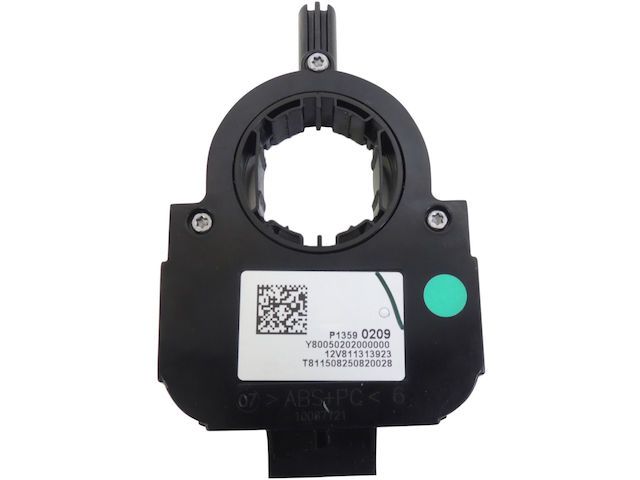
Est. part cost: $0 - Faulty Steering Angle Sensor 🟡 Medium Probability → Shop Steering Angle Sensor The sensor can fail internally over time, leading to incorrect or no signal output. Dealerships often stock this part, indicating it's a common failure item.
How to confirm: After confirming wiring is intact, use a professional scan tool to monitor the sensor's live data while turning the steering wheel. The reading should be smooth and change consistently from approximately -500° to +500°. Jumps, freezes, or no change indicate a failed sensor.
Typical fix: Replace the Steering Angle Sensor and perform a calibration. This requires removing the knee bolster, dash panels, and potentially lowering the steering column for access.
Est. part cost: $60-$180 - Poor Connection at Sensor ⚪ Low Probability On the previous generation of GM trucks (GMT900), fretting corrosion at the sensor connector was a very common issue addressed by TSBs like PI0639. While less documented for the K2XX generation, it's still a possibility due to steering column movement and vibration and should be checked before sensor replacement.
How to confirm: Disconnect the Steering Angle Sensor connector (C202) at the base of the steering column and inspect the terminals for darkness, corrosion, or looseness.
Typical fix: Clean the terminals and apply a small amount of dielectric grease. Ensure the connector is seated securely.
Est. part cost: $0-$10
Rare But Worth Checking
- Poor Ground at G218:
Diagnosis Steps
- Scan the vehicle with a tool capable of reading Chassis (C-codes), Body (B-codes), and Network (U-codes) to confirm C0710 and check for any other codes, especially those listed in TSB #PIT5288H.
- Per TSB #PIT4322P, thoroughly inspect the vehicle for any modifications such as lift kits, aftermarket wheels, or suspension changes.
- Per TSB #PIT5288H, meticulously inspect the wiring harness at the left instrument panel for any signs of chafing, pinching, or damage, especially near the mounting bracket by the park brake pedal. Confirm the harness moves freely.
- If no wiring damage or modifications are found, use a scan tool to view the live data from the Steering Angle Sensor.
- Turn the steering wheel lock-to-lock. The angle reading should change smoothly and be near 0 degrees when the wheels are straight.
- If the data is erratic, frozen, or absent, inspect the sensor's electrical connector at the base of the steering column for corrosion or damage.
- If the connector is good, test the sensor's power, ground, and signal circuits according to the service manual. Check for 4.8-5.2V on the 5V reference circuit and less than 2 Ω on the low reference circuit.
- If wiring and connections are confirmed to be good, the Steering Angle Sensor is likely faulty and requires replacement.
- After replacement or any suspension/alignment work, the new sensor must be calibrated using the 'Steering Wheel Angle Sensor Learn' function in a compatible scan tool.
Parts You'll Likely Need
- Steering Angle Sensor
(OEM #13590209)— If wiring and modifications are ruled out, the sensor itself is the next most likely failure point. This part number fits a wide range of K2XX platform vehicles.
Trusted brands: ACDelco, GM Genuine Parts
OEM price range: $70-$150
Aftermarket price range: $60-$120 - Wiring Repair Supplies — Needed to fix the common chafed harness issue described in TSB #PIT5288G/H. This includes Tesa tape, solder, and heat shrink tubing.
OEM price range: $5-$50
Aftermarket price range: $5-$50
Related Codes That Often Appear With This One
- U0126 — Indicates 'Lost Communication With Steering Angle Sensor Module' and often appears with C0710 when there is a significant wiring, connector, or sensor failure.
- U0077 — This code for 'Chassis Control Module Communication Bus B Off' is specifically listed in TSB #PIT5288G/H as a companion code when the instrument panel wiring harness is damaged.
- B3101, B144C, C0544, U1548, U1549, U154A, U0151, U0415, U0028, U0029 — This group of codes, relating to various modules and systems (RKE, radio, etc.), is listed in TSB #PIT5288G/H as potentially being set along with C0710 due to the common cause of a damaged instrument panel wiring harness.
- P0106, P0107, P0697, P2122, P2123, P2127, P2128, P2138 — These engine-related codes for 5-volt reference circuits and the Accelerator Pedal Position (APP) sensor are also listed in TSB #PIT5288H as being caused by the same pinched dash harness.
Technical Service Bulletins (TSBs) & Recalls
- PIT4322P: Warns to inspect for vehicle modifications before diagnosing C0710.
- PIT5288G / PIT5288H: Details a wiring harness issue in the left instrument panel that causes C0710 and many other codes. Provides images and specific location of the pinched harness near the park brake pedal.
- PIT5405C: Points to a poor ground at G218 as a possible, less common cause.
Platform-Specific Known Issues
- TSB #PIT5288G/H documents a critical issue where a wiring harness in the left instrument panel can become pinched by a metal bracket near the parking brake pedal, causing C0710 and a wide variety of other electrical faults.
- TSB #PIT4322P highlights that vehicle modifications (lifts, wheels) are a direct cause for C0710 and may lead to unwanted stability control activation. An alignment and sensor recalibration are required after such modifications.
Mechanic-Grade Diagnostic Values
- Steering Angle Sensor 5V Reference Circuit Voltage — expected: 4.8-5.2 V (with ignition ON, measured between the 5V reference circuit and a good ground). Failure: Voltage below 4.8V or above 5.2V points to a problem in the wiring or the EBCM.
- Steering Angle Sensor Low Reference Circuit Resistance — expected: Less than 2 Ω (with ignition OFF, measured end-to-end on the low reference circuit). Failure: Resistance of 2 Ω or greater indicates an open or high resistance in the circuit.
- Steering Angle Sensor Analog Signal Voltage (Centered) — expected: Approximately 2.5 V (with ignition ON and steering wheel centered). Failure: A reading significantly different from 2.5V when the wheel is straight suggests a sensor or calibration issue.
- Steering Angle Sensor Live Data Range (Scan Tool) — expected: Smoothly sweeps from approximately -500° to +500° when turning the wheel lock-to-lock.. Failure: Value is stuck, jumps erratically, does not change, or does not return to near 0° when wheels are straight.
Hidden / Shadow Codes Worth Checking
- C0710 5A: Steering Position Signal Plausibility Failure. This means the EBCM is receiving a signal, but it's illogical or doesn't match other vehicle sensors (like yaw rate or wheel speed). This is a very common sub-code. (see via A professional-grade scan tool like the GM GDS2/Tech 2 or equivalent that can read manufacturer-specific symptom bytes.)
- C0710 17: Steering Position Signal Shape/Waveform Failure. This indicates the analog signal voltage is out of its expected range (less than 0.4V or greater than 4.6V). (see via GM GDS2/Tech 2 or equivalent.)
- C0710 0F: Steering Position Signal Erratic. The sensor is reporting an impossibly fast steering angle movement. (see via GM GDS2/Tech 2 or equivalent.)
- C0710 42: Steering Wheel Angle Signal Calibration Not Programmed. This indicates the sensor needs to be calibrated. (see via GM GDS2/Tech 2 or equivalent.)
Scan Tool Commands That Help
- GDS2 (or equivalent professional scanner): Steering Wheel Angle Sensor Learn / Reset — This function is required after replacing the steering angle sensor, performing a wheel alignment, or if a C0710 42 code is present. It sets the sensor's zero-degree position when the wheels are straight.
- GDS2 (or equivalent professional scanner): Live Data / Data Display for Steering Angle Sensor — This is a primary diagnostic step to observe the sensor's reported angle in real-time while turning the steering wheel. It helps determine if the sensor is providing a smooth, consistent signal or if it's erratic, frozen, or dead.
Wiring & Ground Locations
- G218 — Located on the left side of the instrument panel support structure, behind the driver's side A-pillar trim panel. It is often covered by sound-deadening foam which can get trapped under the nut and cause a poor connection.. This is a major ground point for multiple instrument panel modules. A poor connection here can cause a wide range of intermittent electrical issues, including setting a C0710 code, particularly when turning the wheel at low speeds as noted in TSB #PIT5405C.
- Steering Angle Sensor Connector (C202) — At the base of the steering column, connected directly to the steering angle sensor. Access requires removing the driver's side knee bolster and lower dash panels.. This is the direct connection point for the sensor. It can be a point of failure due to fretting corrosion or a loose connection, interrupting the signal to the EBCM.
- Instrument Panel to Body Harness Chafing Point — Under the driver's side dash, where the main instrument panel harness can get pinched between a metal dash mounting bracket and the body, often near the parking brake pedal assembly.. This is a well-documented failure point (TSB PIT5288H) where wires related to the steering angle sensor and other systems can be damaged, causing C0710 and a host of other seemingly unrelated codes.
Real Owner Repair Stories
- Reddit user post (2018 Chevrolet Silverado 2500) — Service StabiliTrak light with code C0710-5A.
❌ Tried (didn't work) An alignment was performed immediately after the lift kit was installed, but the code appeared.
✅ What actually fixed it The user was advised that the issue was likely due to the recent lift kit installation, which requires a steering angle sensor recalibration to be performed with a scan tool after the alignment is completed. The code indicates the sensor's readings are no longer plausible for the new suspension geometry. - 2CarPros Forum User (2012 Chevrolet Malibu (similar system logic)) — Codes C0710 and U2143 (Lost Communication with SAS).
❌ Tried (didn't work) Replaced Steering Position Sensor., Replaced Electronic Brake Control Module (EBCM) and programmed it., Calibrated new sensor and torque sensor.
✅ What actually fixed it The diagnosis revealed a wiring issue between the Power Steering Control Module (PSCM) and the EBCM. Live data showed the PSCM was receiving a good signal from the sensor, but the EBCM was not. This points to an open or short in the serial data line between the two modules, a problem that is often missed when technicians only focus on the sensor itself.
OEM Part Supersession History
13590209→13590209 (current)— This part number appears to be the consistent and current part for the specified model year range.
Heads up: While 19418403 is a common GM steering angle sensor, 13590209 is the number specified for the K2XX platform. Always verify the part number with the vehicle's VIN.
Helpful Videos


We Have This Part in Stock

The information in this article is provided for general reference and educational purposes only. Vehicle specifications, procedures, and part compatibility can vary by production date, trim level, and region. Always consult your vehicle's factory service manual and verify part numbers before purchasing or performing repairs. Safety-critical components such as airbags, seat belts, and braking systems should be installed by a qualified professional.
- Chevrolet SILVERADO 3500:
- 🧭 Diagnostic Flowchart
- 🎬 Helpful Videos
- 🛍️ Shop This Part
- What's Unique About the 2015-2019 Chevrolet SILVERADO 3500
- Symptoms You May Notice
- Most Likely Causes
- Rare But Worth Checking
- Diagnosis Steps
- Parts You'll Likely Need
- Related Codes That Often Appear With This One
- Technical Service Bulletins (TSBs) & Recalls
- Platform-Specific Known Issues
- Mechanic-Grade Diagnostic Values
- Hidden / Shadow Codes Worth Checking
- Scan Tool Commands That Help
- Wiring & Ground Locations
- Real Owner Repair Stories
- OEM Part Supersession History
- 🎟️ Get 5% Off