

C0710 on 2017-2019 GMC Sierra Denali: StabiliTrak Fault Causes and Fixes
On a 2017-2019 Sierra Denali, code C0710 is most often caused by a chafed wiring harness behind the left side of the instrument panel, as noted in GM TSB #PIT5288H. This repair involves accessing and repairing the damaged wires near the parking brake pedal. If the harness is intact, the issue could be a faulty Steering Angle Sensor or a problem caused by suspension modifications, as noted in TSB #PIT4322P.
- For a 2017-2019 Sierra Denali, C0710 is very likely caused by a pinched wiring harness under the driver's side dash, per GM TSB PIT5288H. Inspect this before replacing any parts.
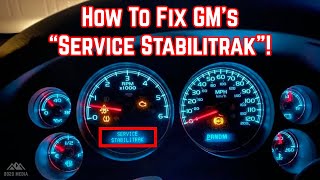
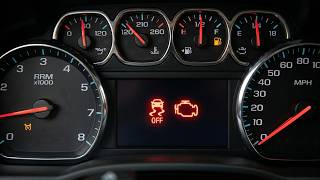
- Symptoms are a 'Service StabiliTrak' message and disabled traction control.
- If the wiring harness is not the issue, the next most likely cause is a failed Steering Angle Sensor itself.
- This is a safety-critical system. Driving is possible but should be done with caution as stability control is inactive.
- Repair often requires a professional scan tool to calibrate the new sensor, making DIY repair difficult for beginners.
What's Unique About the 2017-2019 Gmc SIERRA DENALI
For the 2017-2019 Sierra Denali (K2XX platform), a primary and well-documented cause for C0710 is not the sensor itself, but a wiring harness issue. GM Technical Service Bulletin PIT5288H specifically points to the dash harness being pinched or chafed by a metal instrument panel mounting bracket. The TSB specifies the location is on the left side of the instrument panel, visible from underneath the dash near the parking brake pedal assembly. This can cause C0710 along with a host of other seemingly unrelated electrical issues, making it a unique diagnostic starting point for this specific platform compared to older models where sensor failure was more common.
Diagnostic Flowchart
Tap your situation to follow the diagnostic path that matches what you're seeing on this vehicle.
Symptoms You May Notice
- "Service StabiliTrak" or "Service Stability" message on the Driver Information Center (DIC)
- Traction control light illuminated
- ABS light illuminated
- May be accompanied by other electrical issues like inoperative steering wheel controls, radio problems, rear window faults, or a 'No Fob Detect' message, as all are linked to the same harness in TSB PIT5288H.
- "Reduced Engine Power" message in some cases.
- Replacing the Electronic Brake Control Module (EBCM) without proper diagnosis. The EBCM is reporting the fault, but is rarely the cause of it.
- Replacing the Steering Angle Sensor without first thoroughly inspecting the dash wiring harness for the known issue described in TSB PIT5288H.
Most Likely Causes
- Pinched or Chafed Dash Wiring Harness 🔴 High Probability As identified in TSB #PIT5288H, the main dash harness is frequently pinched between the left I/P mounting bracket and the body, causing wire damage.
How to confirm: Visually inspect the wiring harness under the driver's side dash. TSB PIT5288H indicates the chafe point is near the large, metal instrument panel mounting bracket, often close to the parking brake pedal assembly. Check if the harness is taut or cannot be moved freely away from the bracket. Wiggling the harness in this area while monitoring for codes may trigger the fault.
Typical fix: Loosen the I/P mounting bracket bolts, free the harness, open the loom, and repair any damaged or broken wires using solder and heat shrink. Reroute the harness to prevent future pinching, ensuring it is clear of the bracket.
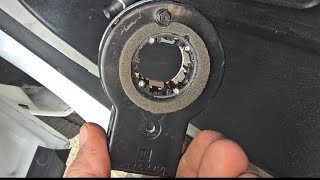
Est. part cost: $5-$25 for wire repair supplies - Faulty Steering Angle Sensor (SAS) 🟡 Medium Probability → Shop Steering Angle Sensor Internal failure of the sensor can cause it to send incorrect or no data to the EBCM. This is a common failure point after the wiring harness has been ruled out.
How to confirm: Use a scan tool capable of reading live data to monitor the Steering Angle Sensor output while turning the steering wheel. The angle should change smoothly from approximately -500 to +500 degrees. If the data is erratic, frozen, or doesn't change, the sensor is likely bad (assuming wiring is okay).
Typical fix: Replace the Steering Angle Sensor. This is located on the steering column and often requires removing the airbag and steering wheel. A calibration procedure with a scan tool is mandatory after replacement.
Est. part cost: $60-$150 - Vehicle Modifications or Improper Wheel Alignment 🟡 Medium Probability As a popular truck for modifications, the installation of lift kits, leveling kits, or non-stock tires can alter steering geometry. TSB #PIT4322P specifically warns this can cause a C0710 code.
How to confirm: Inspect the vehicle for aftermarket suspension components or oversized tires. If the code appeared after an alignment, the steering wheel may not be centered, causing a mismatch between the SAS reading and the vehicle's direction of travel.
Typical fix: Perform a proper four-wheel alignment and ensure the steering wheel is perfectly centered. After the alignment, a Steering Angle Sensor recalibration with a scan tool is required to clear the code.
Est. part cost: $100-$200 for alignment and calibration service
Rare But Worth Checking
- Poor Connection at Steering Angle Sensor: → Shop Steering Angle Sensor Older GM TSBs (like PI0639C) mention fretting corrosion on the sensor connector terminals, which can cause high resistance and signal loss. While less common on newer models than the chafed harness, it's still possible. The fix involves cleaning the terminals and applying dielectric grease (GM Part No. 12377900).
- Incorrect Mechanical Steering Alignment: If the code appeared after major steering work (like a rack and pinion replacement), the steering shaft itself may be mechanically misaligned. One owner on TahoeYukonForum reported their C0710 was caused by the steering shaft being off by a full 360-degree turn. This requires mechanical correction before sensor calibration.
Diagnosis Steps
- Connect a professional scan tool to confirm C0710 is present and check for any other codes, especially communication (U-codes).
- Per TSB #PIT4322P, visually inspect the vehicle for any suspension modifications (lift kits, leveling kits) or non-stock wheels/tires, as these are a known cause.
- Review the list of codes. If multiple codes from TSB PIT5288H are present (e.g., U0126, C0544, U0077), immediately prioritize inspecting the dash wiring harness.
- Gain access to the area under the driver's side dash, near the parking brake assembly and I/P fuse block cover.
- Carefully inspect the main dash harness for any signs of being pinched, crushed, or chafed by the metal instrument panel mounting bracket. Ensure the harness can move freely.
- If damage is found, disconnect the battery, repair the affected wires (solder and heat-shrink recommended), and properly secure the harness away from the bracket before re-testing.
- If the harness is in good condition, use the scan tool to view live data from the Steering Angle Sensor.
- Turn the steering wheel from lock to lock. The angle reading should change smoothly and consistently. If it's erratic, jumps, or is stuck, suspect the sensor or its connector.
- Inspect the Steering Angle Sensor's electrical connector for looseness or corrosion. Clean and apply dielectric grease if necessary.
- If the wiring and connector are good but the signal is still bad, the Steering Angle Sensor likely requires replacement.
- After any repair (sensor replacement, alignment, etc.), clear the codes and perform the Steering Angle Sensor calibration procedure using a compatible scan tool. This step is mandatory.
Parts You'll Likely Need
- Steering Angle Sensor
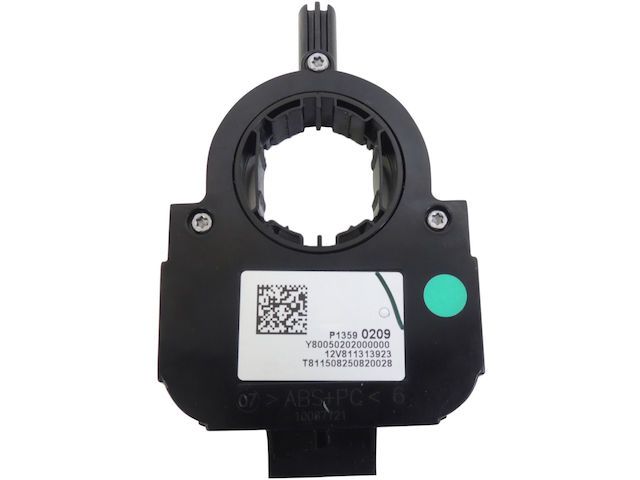
(OEM #19418403 (supersedes 20910871), or 13590209 on some platform mates)— This sensor fails internally, causing erratic or no signal to the EBCM. This is the next most likely cause after confirming the wiring harness is intact. Note: Part number may vary. 19418403 is common and supersedes 20910871, while some K2XX SUVs use 13590209. Always verify by VIN.
Trusted brands: ACDelco (GM Genuine), Dorman
OEM price range: $90-$160
Aftermarket price range: $60-$120 - Wire Repair Supplies — Needed to fix the chafed dash harness, which is the most probable cause according to TSB PIT5288H.
Trusted brands: 3M
OEM price range: $10-$25
Aftermarket price range: $5-$20
Related Codes That Often Appear With This One
- U0126 — Lost Communication With Steering Angle Sensor Module. This often appears with C0710 when the cause is a wiring failure, as noted in TSB PIT5288H.
- C0544 — Steering Wheel Angle Sensor Calibration Not Learned. This code can be set along with C0710, indicating a need for recalibration. It is also listed in TSB PIT5288H.
- U0077, U0028, U0029 — Various High Speed Communication bus codes. These are frequently seen with C0710 when the dash wiring harness is chafed, as it disrupts communication between multiple modules.
Technical Service Bulletins (TSBs) & Recalls
- PIT5288H: Describes various electrical concerns (including C0710 and a 'Service Stabilitrak' message) caused by a pinched/chafed wire harness in the left instrument panel area.
- PIT4322P: Warns that C0710 and/or unwanted stability activation can be caused by vehicle modifications, non-stock tires, or incorrect wheel alignments.
- PIT5405C: Details how a poor BCM ground at G218 can cause a wide range of electrical issues, including C0710.
Platform-Specific Known Issues
- TSB #PIT5288H documents that a pinched dash harness on the left side of the instrument panel is a known cause for C0710 and many other electrical faults on 2015-2019 GM trucks and SUVs.
- TSB #PIT4322P warns that vehicle modifications like lift kits, leveling kits, or non-stock tires can cause this code and should be checked for before beginning diagnostics.
Mechanic-Grade Diagnostic Values
- Steering Angle Sensor Live Data (Scan Tool) — expected: Reads near 0° when wheels are straight. Changes smoothly from approximately -500° to +500° lock-to-lock.. Failure: Data is frozen, jumps erratically, is absent, or shows a significant angle when wheels are straight.
- Steering Angle Sensor 5V Reference Voltage — expected: 4.8-5.2 V between the 5V reference circuit and ground.. Failure: Voltage is outside this range, indicating a problem with the EBCM supply or a short in the harness.
- Steering Angle Sensor Analog Signal Voltage — expected: Approximately 2.5V with steering wheel centered. Sweeps from ~0.25V to ~4.75V when turning lock-to-lock.. Failure: Voltage is stuck (e.g., at 2.5V or 0V), does not change when turning, or is outside the 0.4V to 4.6V operational range.
- Steering Angle Sensor Phase A & B Digital Signals — expected: Using a scan tool or oscilloscope, signals should toggle between high and low states as the steering wheel is turned.. Failure: One or both signals are stuck high or low and do not change with steering wheel rotation.
Hidden / Shadow Codes Worth Checking
- C0710 5A: Steering Position Signal - Not Plausible. Indicates the signal is present but illogical compared to other vehicle data (like yaw rate). (see via GM GDS2 or professional-grade scan tool (Autel, Snap-on, Launch) that can read manufacturer-specific symptom bytes from the EBCM.)
- C0710 42: Steering Wheel Angle Signal Calibration Not Programmed. Directly points to the need to perform the SAS calibration procedure. (see via GM GDS2 or equivalent professional scan tool.)
- C0710 17: Shape/Waveform Failure. Indicates the analog signal voltage is less than 0.4V or greater than 4.6V. (see via GM GDS2 or equivalent professional scan tool.)
- C0710 71: Invalid Serial Data Received. Points to a communication or data corruption issue between the SAS/PSCM and the EBCM, often caused by wiring or ground problems. (see via GM GDS2 or equivalent professional scan tool.)
Scan Tool Commands That Help
- GM GDS2 / Professional Scan Tool: Steering Angle Sensor Calibration / Reset — This function is mandatory after replacing the Steering Angle Sensor, performing a wheel alignment, or replacing the EBCM. It is used to set the new 'straight-ahead' zero position for the sensor.
- GM GDS2 / Professional Scan Tool: Clear DTCs (in EBCM) — After any repair is completed, the fault codes must be cleared from the Electronic Brake Control Module (EBCM) to extinguish the warning lights and re-enable the StabiliTrak system.
Wiring & Ground Locations
- G218 — Under the driver's side of the instrument panel, near the A-pillar, often behind the side dash panel or speaker.. This is a primary ground for the Body Control Module (BCM). TSB #PIT5405C notes that sound-deadening insulation can get trapped under this ground terminal, causing high resistance. A poor ground here can disrupt CAN bus communication, leading to a host of codes including C0710, as the EBCM may not receive a valid signal from the BCM or PSCM.
- Steering Angle Sensor Connector — At the base of the steering column, inside the driver's cabin.. This is the direct connection to the sensor. It contains the 5V reference, ground, and signal wires. A loose connection or fretting corrosion here will directly cause a C0710 code. Wiggling this connector while watching live data can confirm a poor connection.
- I/P Harness Chafe Point — Under the driver's side dash, where the main instrument panel harness passes a large, metal I/P mounting bracket near the parking brake assembly.. This is the specific failure location identified in TSB #PIT5288H. Wires related to the High-Speed GMLAN network, including those for the SAS, can be damaged here, causing C0710 and multiple other communication codes.
Real Owner Repair Stories
- Tahoe Yukon Forum user 'itsbo1313' (2007-2014 GM SUV (shared platform/issue)) — Service StabiliTrak and traction control lights with code C0710.
❌ Tried (didn't work) Multiple dealership visits could not diagnose the cause.
✅ What actually fixed it A different technician found that after a rack and pinion replacement and alignment, the steering shaft was mechanically off by one full 360-degree turn. The fix was to disconnect the steering shaft under the hood and physically re-center it to match the sensor's zero point.
OEM Part Supersession History
20910871→19418403— Standard part revision or change in manufacturer. The new part offers the same performance, durability, and service life.
Model Year Variations Within This Range
- 2017-2019: While TSB PIT5288H indicates the dash harness chafe point is a consistent issue across these years, be aware that minor wiring changes can occur mid-generation. On some GM platforms, the SAS signal path changed from direct analog wires to the EBCM to a serial data message sent via the Power Steering Control Module (PSCM). Always verify the specific wiring diagram for the vehicle's VIN if communication issues are suspected between modules.
Helpful Videos

We Have This Part in Stock

The information in this article is provided for general reference and educational purposes only. Vehicle specifications, procedures, and part compatibility can vary by production date, trim level, and region. Always consult your vehicle's factory service manual and verify part numbers before purchasing or performing repairs. Safety-critical components such as airbags, seat belts, and braking systems should be installed by a qualified professional.
- Gmc SIERRA DENALI:
- 🧭 Diagnostic Flowchart
- 🎬 Helpful Videos
- 🛍️ Shop This Part
- What's Unique About the 2017-2019 Gmc SIERRA DENALI
- Symptoms You May Notice
- Most Likely Causes
- Rare But Worth Checking
- Diagnosis Steps
- Parts You'll Likely Need
- Related Codes That Often Appear With This One
- Technical Service Bulletins (TSBs) & Recalls
- Platform-Specific Known Issues
- Mechanic-Grade Diagnostic Values
- Hidden / Shadow Codes Worth Checking
- Scan Tool Commands That Help
- Wiring & Ground Locations
- Real Owner Repair Stories
- OEM Part Supersession History
- Model Year Variations Within This Range
- 🎟️ Get 5% Off