

C0765 on 2016-2023 Buick Envision: Right Rear TPMS Fault Causes and Fixes
Code C0765 on a 2016-2023 Buick Envision indicates a problem with the right rear tire pressure (TPMS) sensor. The most common cause is a dead sensor battery, requiring sensor replacement and a relearn procedure. In some cases, especially if key fob issues are also present, the fault may lie with the Remote Control Door Lock Receiver (RCDLR) module, a known issue on this GM platform.
- C0765 points to a fault with the right rear TPMS sensor.
- The most frequent fix is to replace the sensor because its internal battery has died.
- If your key fobs also stopped working, the problem is more likely the Remote Control Door Lock Receiver (RCDLR) module, not the sensor itself.
- Before replacing parts, unplug all aftermarket phone chargers and accessories to rule out radio frequency interference.
- Sensor replacement requires a tire shop's tools to dismount the tire and perform the electronic relearn procedure.
What's Unique About the 2016-2023 Buick ENVISION
On many modern GM platforms, including the Envision's D2XX platform, the same module—the Remote Control Door Lock Receiver (RCDLR)—is responsible for receiving signals from both the TPMS sensors (at 315 MHz or 433 MHz) and the key fobs. Because of this shared component, a C0765 code can sometimes be a symptom of a failing RCDLR, not just a bad tire sensor. This is especially true if you are also experiencing issues with your keyless entry system, such as poor range or complete failure. Furthermore, TSB #PIC5650M explicitly links TPMS codes like C0765 to intermittent no-start or start-and-stall conditions with the security light on, suggesting that RF interference or a faulty RCDLR can disrupt the vehicle's immobilizer system.
Diagnostic Flowchart
Tap your situation to follow the diagnostic path that matches what you're seeing on this vehicle.
Generation note: The 2016-2023 range covers two generations of the Buick Envision (First Gen: 2016-2020, Second Gen: 2021-2023), both on the GM D2XX/D2UX platform. While the fundamental operation of the TPMS is the same, the specific part numbers for the sensors and the RCDLR module may differ. For example, Gen 1 (2016-2020) often uses TPMS sensor 13598772 and key fob HYQ4AA, while Gen 2 (2021+) may use different parts like key fob YGOG21TB2. The diagnostic principles remain consistent across both generations.
Symptoms You May Notice
- TPMS warning light flashing for about a minute, then staying on solid.
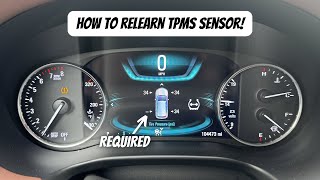
- "Service Tire Pressure Monitor" message on the Driver Information Center (DIC).
- Inability to see the pressure reading for the right rear tire on the DIC (shows as "--").
- Key fobs not working or having very poor range (if the RCDLR is the cause).
- "No Remote Detected" message on the DIC.
- Intermittent no-crank, no-start, or start-and-stall condition with security light on (rare, but noted in TSBs).
- Replacing the TPMS sensor when the RCDLR is actually at fault. If the key fobs are also dead, the RCDLR should be the primary suspect.
- Replacing the RCDLR when the issue is a disconnected antenna coax cable. A visual inspection of the connections behind the C-pillar trim is warranted if RCDLR failure is suspected.
Most Likely Causes
- Failed TPMS Sensor (Dead Battery) 🔴 High Probability → Shop Tire Pressure Monitoring System (TPMS) Sensor TPMS sensor batteries are non-rechargeable and have a finite lifespan, typically 7-10 years. Vehicles from the earlier end of this year range (2016-2018) are now reaching the age where battery failure is common.
How to confirm: Use a TPMS diagnostic tool to attempt to read the sensor. If the tool cannot get a signal from the right rear sensor but can read the other three, the sensor has failed. A professional scan tool may also show a specific symptom code like C0765:03 (Low Voltage) or C0765:39 (Internal Malfunction).
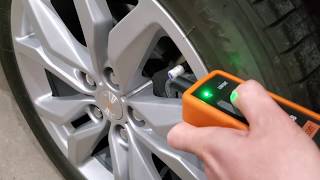
Typical fix: Replace the right rear TPMS sensor. The new sensor must be 'relearned' to the vehicle's BCM using a TPMS activation tool (like the GM EL-50448).
Est. part cost: $30-$75 - Faulty Remote Control Door Lock Receiver (RCDLR) 🟡 Medium Probability → Shop Keyless Entry Receiver As documented in GM TSB 16-NA-396, internal failures in the RCDLR module can cause it to stop receiving signals properly, affecting both TPMS and key fobs. This is a known issue across many GM vehicles from this era that share the D2XX platform.
How to confirm: The strongest indicator is the simultaneous failure of TPMS and all key fobs. A professional scan tool may show DTC C0765 with a specific symptom code '29' (Too Few Pulses), which strongly points to the RCDLR. The RCDLR is typically located behind the passenger side rear C-pillar trim panel.
Typical fix: Replace the RCDLR module. This new module must be programmed to the vehicle by a dealer or a properly equipped independent shop using GDS2 software and the SPS2 (Service Programming System 2) utility.
Est. part cost: $50-$150 - Radio Frequency Interference (RFI) ⚪ Low Probability GM TSB PIC5650M notes that aftermarket electronics (like phone chargers, LED lights, dash cams) can emit RFI that jams the 315 MHz or 433 MHz frequency used by the TPMS and key fob systems.
How to confirm: Unplug all aftermarket devices from the 12V outlets and USB ports. If the TPMS light and any other related symptoms disappear after driving, one of the devices was causing interference. An RFI meter can also be used to detect stray signals.
Typical fix: Remove or replace the offending aftermarket device.
Est. part cost: $0
Rare But Worth Checking
- Damaged Sensor: The sensor can be physically damaged during tire service or by a significant pothole impact. This is less common than battery failure but is a possibility if the issue started immediately after getting new tires.
- Disconnected RCDLR Antenna: As per TSB 16-NA-061, the coax cable connecting the RCDLR to its antenna (often in the rear glass) can become disconnected. If the disconnect is at the RCDLR, all TPMS signals may be lost. If it's at the antenna amplifier, signals from sensors farther away (like the front tires) may drop out first, while the closest sensor (right rear) may still work intermittently.
Diagnosis Steps
- Verify tire pressures manually with a quality gauge to rule out an actual low tire.
- Check the Driver Information Center (DIC) to see which tire pressure reading is missing. For C0765, it should be the right rear.
- Check for simultaneous issues. Do the key fobs work correctly? If not, suspect the RCDLR module. Try a second key fob to rule out a dead fob battery.
- If available, use a TPMS diagnostic tool to try and activate and read all four sensors. If only the right rear fails to respond, the sensor is the most likely cause.
- Inspect the vehicle for aftermarket electronics plugged into 12V or USB ports (e.g., phone chargers, dash cams, LED lights). Unplug them all and drive the vehicle to see if the fault clears, which would indicate RFI.
- If a no-start condition is present, try placing the key fob in the transmitter pocket (often inside the front cupholder on the Envision) to start the vehicle, as this can bypass RFI issues.
- If the sensor has been replaced and the problem persists, or if key fob issues are present, the RCDLR module and its antenna connections should be professionally diagnosed. A scan tool check for symptom code ':29' on the C0765 DTC is a strong indicator of RCDLR failure.
Parts You'll Likely Need
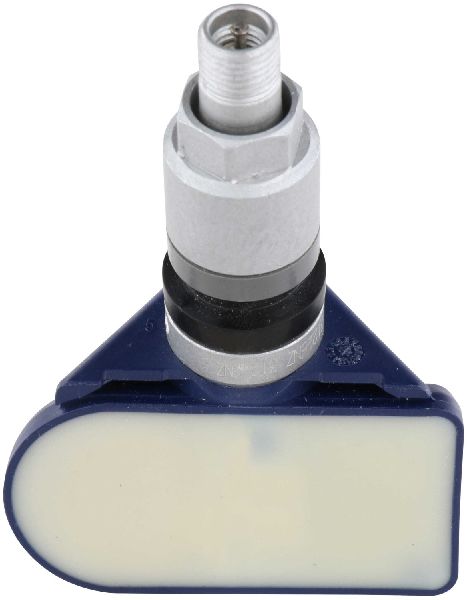
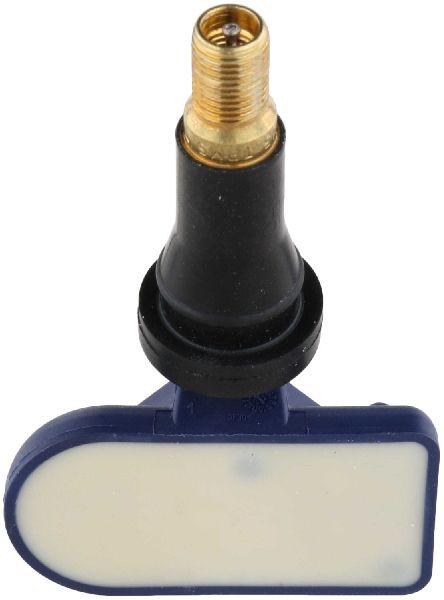
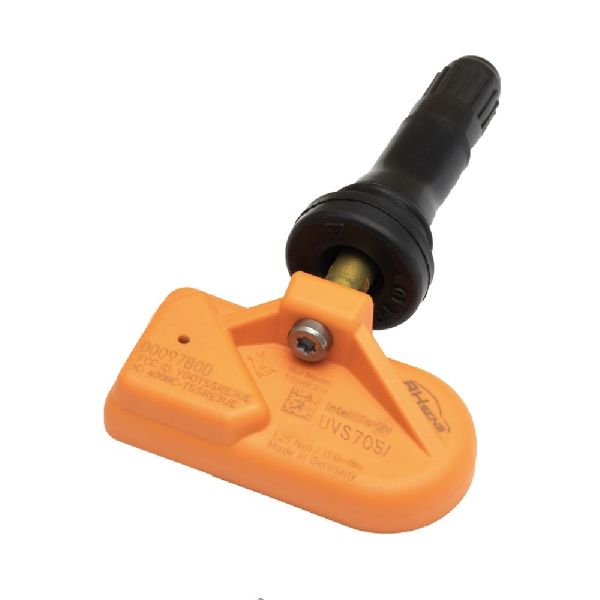
- Tire Pressure Monitoring System (TPMS) Sensor
(OEM #13598772 (Gen 1, 315MHz), 13540601)— This is the most common failure point. The internal battery dies, requiring replacement of the entire sensor unit. Part number 13598772 is a widely cited OEM number for the 2016-2017 models.
Trusted brands: ACDelco, Schrader, Huf, Bosch
OEM price range: $50-$90
Aftermarket price range: $30-$60 - Remote Control Door Lock Receiver (RCDLR)
(OEM #84543912, 13597910)— This module can fail internally, causing it to lose communication with both TPMS sensors and key fobs. It's the likely cause if keyless entry also fails. Part number 13597910 is cited in TSB 16-NA-396 for related platforms.
Trusted brands: ACDelco, GM Genuine
OEM price range: $70-$150
Aftermarket price range: $50-$100
Related Codes That Often Appear With This One
- C0750 — Fault in the Left Front TPMS Sensor. If all four TPMS codes (C0750, C0755, C0760, C0765) are present, it strongly suggests a central issue like the RCDLR.
- C0755 — Fault in the Right Front TPMS Sensor.
- C0760 — Fault in the Left Rear TPMS Sensor.
- B3055 — A key-related immobilizer code that can appear when the RCDLR or BCM has issues, as noted in TSB PIC5650M.
Technical Service Bulletins (TSBs) & Recalls
- PIC5650M: Mentions that C0765 can be present along with other codes during a no-crank, no-start, or security light concern, often related to Radio Frequency Interference (RFI) from aftermarket devices like chargers or LED lights.
- 16-NA-396: Explains how an internal RCDLR failure can cause TPMS codes (including C0750, C0755, C0760, and C0765 with symptom code :29) and simultaneous key fob inoperability.
Platform-Specific Known Issues
- Owner Experience: Sensor vs. RCDLR: Owners on forums for the Envision and its platform-mates frequently report a common diagnostic path: the C0765 code appears, they replace the right rear TPMS sensor, but the problem persists. They later discover that the true cause was the RCDLR, which they suspected only after their key fobs also began to fail. This highlights the importance of checking key fob functionality as a primary diagnostic step before purchasing parts.
Mechanic-Grade Diagnostic Values
- TPMS Sensor Battery Voltage — expected: A new 3.5V battery should read around 3.65V. A professional TPMS tool will display 'OK' or show a low battery icon if the voltage is weak.. Failure: A low voltage reading, or a 'Low Battery' status on a scan tool, indicates the sensor is near the end of its life, even if it still activates.
Hidden / Shadow Codes Worth Checking
- C0765:29: Too Few Pulses. This is a critical symptom code that strongly points to an internal failure of the Remote Control Door Lock Receiver (RCDLR) rather than the TPMS sensor itself. It means the RCDLR is not receiving the expected number of RF transmissions. (see via GM GDS2/Tech2 or a professional-grade scan tool capable of reading manufacturer-specific symptom bytes.)
- C0765:03: Low Voltage. This symptom code indicates a voltage issue in the sensor circuit, most commonly a dying internal battery in the TPMS sensor itself. (see via GM GDS2/Tech2 or a professional-grade scan tool.)
- C0765:39: Internal Malfunction. This code suggests the sensor has an internal fault beyond just a low battery, requiring replacement. (see via GM GDS2/Tech2 or a professional-grade scan tool.)
Scan Tool Commands That Help
- GDS2 (Global Diagnostic System 2): Module Diagnostics -> RCDLR -> Configuration/Reset Functions — This function is required after replacing the RCDLR. The new module must be programmed to the vehicle to learn the key fobs and TPMS sensor IDs.
- GDS2 / SPS2 (Service Programming System 2): Immobilizer Learn — Used for programming new or existing smart keys to the vehicle after RCDLR replacement. This process often involves a 12-minute security wait time.
- Professional TPMS Tool (e.g., Autel, Bartec): TPMS Sensor Activation / Relearn — Used to trigger each sensor to transmit its data and to guide the vehicle's BCM through the relearn procedure after a sensor replacement or tire rotation. This is mandatory for the system to recognize the new sensor's position and ID.
Wiring & Ground Locations
- RCDLR Location — Behind the passenger side rear C-pillar trim panel.. This is the physical location of the receiver module. Access is required for replacement, checking the coaxial antenna connection, and inspecting for water damage.
- RCDLR Antenna — The antenna is often integrated into the right rear quarter glass, connected to the RCDLR via an amplifier and a coaxial cable.. A disconnected coax cable at the RCDLR, amplifier, or glass can cause a loss of signal from one or more TPMS sensors, mimicking a failed sensor or RCDLR module.
- G303 / G304 — G303 is on the left side B-pillar behind the trim panel; G304 is on the right side B-pillar behind the trim panel.. These are primary body ground points for the rear of the vehicle. A loose or corroded ground at G304 could potentially cause intermittent issues for the nearby RCDLR module.
Real Owner Repair Stories
- Chevy Equinox Forum (2007 Chevy Equinox (platform-mate)) — TPMS light on, unable to enter the TPMS relearn mode using the DIC. Keyless entry functions were also affected.
❌ Tried (didn't work) Attempting manual TPMS relearn procedure., Using a scan tool to initiate relearn, which also failed.
✅ What actually fixed it The owner replaced the Remote Control Door Lock Receiver (RCDLR) module. After replacement, both the TPMS and keyless entry systems began working correctly, and a new key fob could be programmed.
OEM Part Supersession History
13510984→13597910— Part update/revision for RCDLR module.
Heads up: Using the older part number may result in continued issues. Always use the latest superseded part number for replacement.
Model Year Variations Within This Range
- 2021-2023 (Gen 2): For later model years, module programming, including RCDLR replacement and key learning, must be done using the newer GM Techline Connect software with the SPS2 (Service Programming System 2) utility. This requires an online subscription and a compatible J2534 passthru device. Older methods may not work.
Helpful Videos
We Have This Part in Stock

The information in this article is provided for general reference and educational purposes only. Vehicle specifications, procedures, and part compatibility can vary by production date, trim level, and region. Always consult your vehicle's factory service manual and verify part numbers before purchasing or performing repairs. Safety-critical components such as airbags, seat belts, and braking systems should be installed by a qualified professional.
- Buick ENVISION:
- 🧭 Diagnostic Flowchart
- 🎬 Helpful Videos
- 🛍️ Shop This Part
- What's Unique About the 2016-2023 Buick ENVISION
- Symptoms You May Notice
- Most Likely Causes
- Rare But Worth Checking
- Diagnosis Steps
- Parts You'll Likely Need
- Related Codes That Often Appear With This One
- Technical Service Bulletins (TSBs) & Recalls
- Platform-Specific Known Issues
- Mechanic-Grade Diagnostic Values
- Hidden / Shadow Codes Worth Checking
- Scan Tool Commands That Help
- Wiring & Ground Locations
- Real Owner Repair Stories
- OEM Part Supersession History
- Model Year Variations Within This Range
- 🎟️ Get 5% Off