

C0775 on 2016-2023 Buick Enclave: TPMS Faults and Fixes
On a 2016-2023 Buick Enclave, code C0775 indicates a fault within the Tire Pressure Monitoring System (TPMS), often set when a TPMS relearn procedure is started but not completed correctly. The most common underlying cause is a dead battery in a TPMS sensor, requiring sensor replacement and a relearn procedure. In some cases, especially if key fob issues are also present, the fault may lie with the Remote Control Door Lock Receiver (RCDLR) module.
- Code C0775 means a TPMS relearn procedure failed, which is most often caused by a dead battery in one of the wheel sensors.
- The most likely fix is to replace the faulty TPMS sensor. It's best practice to replace all four at once, especially on 2016-2018 models.
- A special TPMS activation tool is required to complete the relearn procedure after replacing a sensor or rotating tires.
- This is not a DIY-friendly repair for most people because it requires breaking the bead of the tire to access the sensor.
- Always check your tire pressures manually with a gauge until the TPMS light is resolved.
What's Unique About the 2016-2023 Buick ENCLAVE
The 2016-2023 Buick Enclave spans two generations (first-gen until 2017, second-gen from 2018). While the TPMS technology is similar, the older models in this range are now at an age where TPMS sensor battery failure is very common. Uniquely, a GM Technical Service Bulletin (TSB PIC5650M) also links this and other TPMS codes to seemingly unrelated issues like stalling and security light illumination, suggesting a potential issue with a shared control module like the BCM or RCDLR. This platform and its mates (Chevy Traverse, GMC Acadia) use the RCDLR to process signals from both TPMS sensors and key fobs, so a simultaneous failure of both systems strongly points to a faulty RCDLR module.
Diagnostic Flowchart
Tap your situation to follow the diagnostic path that matches what you're seeing on this vehicle.
Generation note: This range covers the end of the first generation (2016-2017, Lambda platform) and the beginning of the second generation (2018-2023, C1XX platform). TPMS sensors and relearn procedures are very similar, but part numbers differ. First-gen models use a 315 MHz sensor, while second-gen models use a 433 MHz sensor. The 2016-2017 models are more prone to sensor failure due to battery age.
Symptoms You May Notice
- "Service Tire Monitor System" message on the Driver Information Center (DIC)
- TPMS warning light is illuminated on the dashboard (may be flashing or solid)
- Dashes (--) shown for one or more tire pressure readings on the DIC
- Inability to complete the TPMS relearn procedure; the horn may not chirp for the failed sensor.
- In rare cases, may be present alongside stalling or security light issues, as noted in TSB PIC5650M.
- If the RCDLR is the cause, key fobs will also stop working (no lock/unlock/remote start). 🎬 Watch: How to start your Enclave if the remote fails.
- Replacing only one TPMS sensor when others are near the end of their battery life, leading to another failure shortly after.
- Replacing the Body Control Module (BCM) when the issue is with a sensor or the RCDLR.
- A shop telling a customer the new sensor will 'register on its own after a few days' of driving. This is incorrect; GM vehicles of this era require a specific relearn procedure.
Most Likely Causes
- Failed/Dead TPMS Sensor 🔴 High Probability → Shop Tire Pressure Monitoring System (TPMS) Sensor TPMS sensor batteries have a finite lifespan of 7-10 years. Vehicles from the 2016-2017 model years are reaching the end of this lifespan, making battery failure the most common cause.
How to confirm: Use a TPMS diagnostic tool to attempt to activate the sensor at the wheel. If the tool cannot get a response from the sensor, its battery is dead or the sensor has failed. This is the most definitive test.
Typical fix: Replace the faulty TPMS sensor. It is highly recommended to replace all four sensors at once, as the others are likely to fail soon. A TPMS relearn procedure must be performed after replacement.
Est. part cost: $30-$70 per sensor - Improper or Incomplete TPMS Relearn Procedure 🟡 Medium Probability This code is specifically designed to be set when the relearn process is started but not completed within the allotted time (usually two minutes). This can happen if a tire is rotated and the system isn't relearned, or if a DIY attempt is made without the proper tool and one sensor fails to respond.
How to confirm: The presence of code C0775 itself confirms a failed relearn. The diagnostic question is *why* it failed, which often leads back to a bad sensor. If you attempt the relearn and it fails at a specific wheel, that sensor is the likely culprit.
Typical fix: Perform the TPMS relearn procedure correctly using a TPMS activation tool (e.g., EL-50448). The sequence for GM vehicles is typically: 🎬 See how to perform the TPMS relearn procedure correctly. driver's front, passenger's front, passenger's rear, driver's rear.
Est. part cost: $10-$25 for a basic DIY relearn tool - Faulty Remote Control Door Lock Receiver (RCDLR) ⚪ Low Probability → Shop Keyless Entry Receiver The RCDLR is the module that receives signals from both the key fobs and the TPMS sensors. A failure in this module can cause TPMS codes. The TSB linking TPMS codes to security light issues supports this as a possible, though less common, cause. This is a well-documented failure on other GM platforms like the Chevy Cruze and Buick Verano.
How to confirm: This is diagnosed by exclusion and symptom correlation. If all key fobs stop working at the same time as the TPMS system, the RCDLR is the primary suspect. If all TPMS sensors are confirmed to be working with a tool but the vehicle cannot complete the relearn, the RCDLR and its wiring should be inspected.
Typical fix: Replace and reprogram the RCDLR module. This requires a dealer or a well-equipped independent shop with access to GM's programming software (GDS2).
Est. part cost: $80-$200
Rare But Worth Checking
- Radio Frequency Interference (RFI):
Diagnosis Steps
- Verify tire pressures are set to the specification on the driver's door jamb sticker.
- Scan for all DTCs in all modules. Note if any key-related codes (like B3055) or codes for all four TPMS sensors are present, which would point towards the RCDLR.
- Use a TPMS diagnostic tool to attempt to read the data from each of the four tire pressure sensors. This checks sensor battery, pressure, and temperature.
- If one or more sensors do not respond, the sensor has failed and needs to be replaced.
- If all sensors respond, initiate the TPMS relearn procedure. On the Enclave, this is typically done by putting the ignition in 'ON' (without starting the engine), navigating to the tire pressure screen on the DIC, and holding the checkmark/enter button until the horn chirps twice.
- Follow the vehicle's prompts, activating each sensor with a TPMS tool in the correct order (LF, RF, RR, LR). The horn will chirp for each successful sensor learn and twice at the end.
- If the relearn procedure fails even with known good sensors (and no RFI), inspect the wiring and connectors for the Remote Control Door Lock Receiver (RCDLR).
- If wiring is intact, the RCDLR may be faulty and require replacement and programming by a qualified technician.
Parts You'll Likely Need
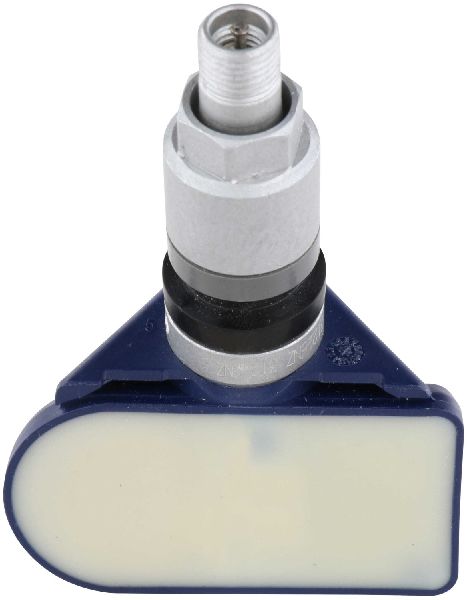
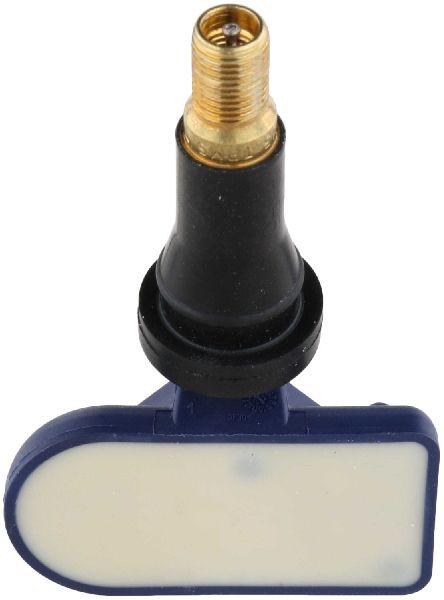
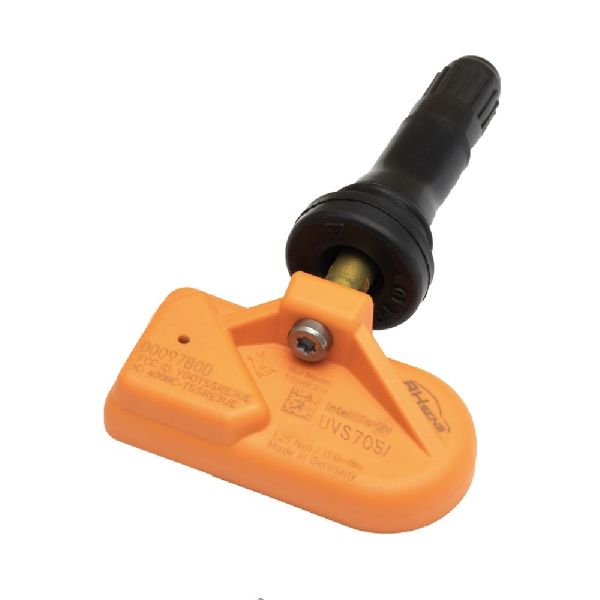
- Tire Pressure Monitoring System (TPMS) Sensor
(OEM #13598773 (for 2016-2017, 315 MHz) or 13540603 / 13516165 (for 2018-2023, 433 MHz))— This is the most common failure point due to the internal battery's limited 7-10 year lifespan. Part numbers vary by generation.
Trusted brands: ACDelco, Schrader, Dill, VDO
OEM price range: $50-$90
Aftermarket price range: $30-$70 - TPMS Relearn Tool
(OEM #EL-50448)— Required to activate the sensors and complete the mandatory relearn procedure after sensor replacement or tire rotation on most GM vehicles.
Trusted brands: VXDAS, JDIAG
OEM price range: $70-$110
Aftermarket price range: $10-$25
Related Codes That Often Appear With This One
- C0750 — Fault code for the Left Front TPMS Sensor.
- C0755 — Fault code for the Right Front TPMS Sensor.
- C0760 — Fault code for the Left Rear TPMS Sensor.
- C0765 — Fault code for the Right Rear TPMS Sensor.
- B3055 — A key-related security code that may appear with TPMS codes if there is an issue with a shared control module, as per TSB PIC5650M.
Technical Service Bulletins (TSBs) & Recalls
- PIC5650M: Mentions C0775 in a list of DTCs related to a stall concern and security light, suggesting a link to modules beyond just the TPMS system.
Platform-Specific Known Issues
- NHTSA TSB #PIC5650M notes that on some 2016 models, code C0775 can be found in conjunction with a vehicle stall concern and an illuminated security light, pointing to a complex electrical issue rather than a simple sensor failure.
- Owners on forums report frustration when a shop replaces a sensor but fails to perform the relearn, telling the owner it will reset on its own. This is false for these vehicles and leads to a return visit.
Mechanic-Grade Diagnostic Values
- TPMS Sensor Valve Nut Torque — expected: 71 in-lbs (8 Nm). Failure: An improperly torqued nut can lead to air leaks or damage to the sensor.
- TPMS Sensor Valve Core Torque — expected: 3.5 in-lbs (0.4 Nm). Failure: An improperly torqued valve core can cause slow air leaks.
- Voltage between Data Link Connector (DLC) pins 4 (Chassis Ground) and 5 (Signal Ground) — expected: < 0.2 Volts (200 mV). Failure: A reading higher than 0.2V indicates a poor ground connection, which can disrupt module communication, including with the RCDLR.
Hidden / Shadow Codes Worth Checking
- Symptom Byte: GM vehicles often append a two-digit symptom byte to the main DTC (e.g., C0775 5A). This byte provides more specific information about the failure condition. For example, '5A' often indicates 'Signal Plausibility Failure,' meaning the module received a signal, but it was outside the expected range or sequence. This can be crucial for distinguishing between a no-signal condition (bad sensor) and a logic failure (RCDLR or interference). (see via A professional scan tool with GM-specific software, such as a Tech 2 or GDS2, is required to view symptom bytes.)
Scan Tool Commands That Help
- GDS2 (Global Diagnostic System 2): Module Replacement and Setup > Remote Control Door Lock Receiver — This function is required after physically replacing the RCDLR. It configures the new module to the vehicle's specific options and prepares it for key fob and TPMS programming.
- GDS2 / Tech2: Tire Pressure Monitor Learn — This is the scan tool-initiated version of the TPMS relearn procedure. It's used after replacing sensors or the RCDLR to teach the vehicle the new sensor IDs and their positions.
- GDS2 / Tech2: Remote Keyless Entry > Program Transmitters — After replacing the RCDLR, all existing key fobs must be reprogrammed to the new module using this function.
Wiring & Ground Locations
- RCDLR (1st Gen: 2016-2017) — Located under the rear of the headliner, near the center high-mounted stop lamp (CHMSL). Access requires carefully lowering the rear portion of the headliner.. This is the central processing unit for TPMS signals. Its location makes it susceptible to water intrusion from a leaking rear window seal or roof antenna, which can cause corrosion and failure, leading to C0775 and other related codes.
- RCDLR (2nd Gen: 2018-2023) — Located behind the trim panel on the driver's side of the rear cargo area. Access requires removing the left side cargo area trim.. As the receiver for all TPMS and key fob signals, any damage to the module, its connector, or wiring in this location will prevent the TPMS relearn from completing and set code C0775.
- Key Fob Programming Pocket (2nd Gen: 2018-2023) — Inside the center console armrest storage area. You may need to remove a top tray or rubber mat to reveal an indentation shaped like the key fob.. When programming new keys after an RCDLR replacement, or if the key fob battery is dead, the vehicle requires the fob to be placed in this specific pocket to be recognized.
Real Owner Repair Stories
- South Main Auto Repair (YouTube) (Buick Enclave (year not specified, but similar GM platform)) — Service TPMS System light on, code for Right Front TPMS sensor.
❌ Tried (didn't work) The diagnosis started by assuming the sensor was bad, but the technician emphasized not to trust the location given by the code until verified.
✅ What actually fixed it Using a TPMS tool, the technician confirmed the right front sensor was indeed not transmitting a signal. Replacing the dead sensor and performing a relearn procedure cleared the code and restored system function.
OEM Part Supersession History
13598773 (315 MHz, for 2016-2017)→13540602, 86363053— Part consolidation and minor design revisions.
Heads up: This 315 MHz sensor is not compatible with 2018+ models which require a 433 MHz sensor.13516165 (433 MHz, for 2018+)→13540603— Part consolidation across multiple GM platforms.
Heads up: This 433 MHz sensor is not compatible with 2016-2017 models which require a 315 MHz sensor.
Model Year Variations Within This Range
- 2016-2017 (1st Generation): Uses a 315 MHz TPMS sensor (P/N 13598773 and its successors). The RCDLR is located under the rear headliner. These models are now at an age where simple sensor battery failure is the most probable cause.
- 2018-2023 (2nd Generation): Uses a 433 MHz TPMS sensor (P/N 13516165 / 13540603). The RCDLR is located in the rear driver's side cargo area trim. The key fob programming procedure requires using a specific pocket inside the center console.
Helpful Videos
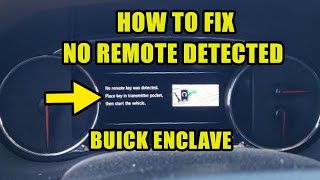
We Have This Part in Stock

The information in this article is provided for general reference and educational purposes only. Vehicle specifications, procedures, and part compatibility can vary by production date, trim level, and region. Always consult your vehicle's factory service manual and verify part numbers before purchasing or performing repairs. Safety-critical components such as airbags, seat belts, and braking systems should be installed by a qualified professional.
- Buick ENCLAVE:
- 🧭 Diagnostic Flowchart
- 🎬 Helpful Videos
- 🛍️ Shop This Part
- What's Unique About the 2016-2023 Buick ENCLAVE
- Symptoms You May Notice
- Most Likely Causes
- Rare But Worth Checking
- Diagnosis Steps
- Parts You'll Likely Need
- Related Codes That Often Appear With This One
- Technical Service Bulletins (TSBs) & Recalls
- Platform-Specific Known Issues
- Mechanic-Grade Diagnostic Values
- Hidden / Shadow Codes Worth Checking
- Scan Tool Commands That Help
- Wiring & Ground Locations
- Real Owner Repair Stories
- OEM Part Supersession History
- Model Year Variations Within This Range
- 🎟️ Get 5% Off