

C1112 on 2009-2013 GMC Yukon Denali: Service Trailer Brake System Fixes
On a 2009-2013 Yukon Denali, code C1112 triggers the 'Service Trailer Brake System' message. It's most often caused by wiring issues, especially corrosion in the harness above the spare tire, a poor ground connection (G401) at the rear frame, or a blown fuse. Before replacing the expensive Trailer Brake Control Module (TBCM), thoroughly inspect all related wiring, as confirmed by GM TSB PIT4595J.
- Code C1112 means the integrated trailer brake system is disabled due to an electrical fault.
- Do NOT tow a trailer requiring electric brakes until this is fixed.
- Before buying any parts, inspect the trailer wiring harness above the spare tire for corrosion, check the G401 ground on the rear frame, and verify all related fuses are good.
- The Trailer Brake Control Module (TBCM) should only be replaced after all wiring and connection issues have been completely ruled out, as per GM's own service bulletin.
What's Unique About the 2009-2013 Gmc YUKON DENALI
The GMT900 platform, which includes the 2009-2013 Yukon, has a well-documented history of issues with the integrated trailer brake control system. GM issued Technical Service Bulletin (TSB) #PIT4595J specifically to address codes C1112 and C1114, noting that many functional control modules were being replaced unnecessarily. The bulletin emphasizes that faults are frequently caused by wiring problems, such as corrosion in the harness section above the spare tire or poor ground connections at G401, rather than an actual failure of the TBCM itself. The location of the wiring and module on the frame rail makes them highly susceptible to road salt, water, and debris.
Diagnostic Flowchart
Tap your situation to follow the diagnostic path that matches what you're seeing on this vehicle.
Symptoms You May Notice
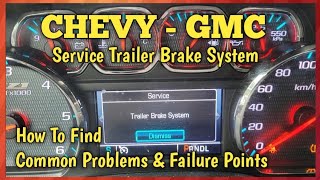
- "Service Trailer Brake System" message on the Driver Information Center (DIC).
- Integrated trailer brake controller is inoperative.
- Manual trailer brake activation lever does not work.
- Trailer gain adjustment has no effect.
- DIC does not display "Trailer Connected" when a trailer is plugged in.
- Replacing the Trailer Brake Control Module (TBCM) without first inspecting all related wiring and grounds. TSB PIT4595J specifically states that many returned modules are fully functional, and the actual problem was a simple wiring or ground fault that was overlooked. 🎬 Watch: Common failure points and how to fix the warning message.
Most Likely Causes
- Wiring Corrosion/Damage Above Spare Tire 🔴 High Probability The wiring harness for the trailer brake system is routed on top of a frame crossmember above the spare tire, an area that traps moisture, salt, and road debris, leading to corrosion and broken wires. This is the most common failure point cited in forums and TSBs.
How to confirm: Lower the spare tire to gain access. Carefully unwrap the plastic loom and inspect the wiring harness, paying extremely close attention to the dark blue wire (circuit 47) for any green/white corrosion, chafing, or breaks. Water can wick its way inside the harness, causing hidden damage.
Typical fix: Repair the damaged section of wire using solder and heat-shrink tubing for a weather-proof seal. In severe cases, a new harness pigtail (GM Service P/N 89047377) may be needed. Apply dielectric grease to connectors upon reassembly.
Est. part cost: $5-$60 - Poor Ground Connection (G401) 🟡 Medium Probability The main ground for the rear lighting and trailer circuits, G401, is located on the driver's side frame rail near the bumper and is exposed to the elements, causing it to rust and lose its connection. TSB PIT4595J specifically lists checking G401 as a key diagnostic step.
How to confirm: Locate the ground point on the left rear frame rail, where several black wires are bolted to the frame. Check for visible rust or a loose connection. A voltage drop test from the wire to the frame can confirm a bad ground; the reading should be less than 0.1V.
Typical fix: Disassemble the ground connection (bolt, wire eyelets, and frame). Clean all contact surfaces to bare, shiny metal with a wire brush or sandpaper. Reassemble securely and apply dielectric grease or a corrosion inhibitor to prevent future rust.
Est. part cost: $0-$5 - Blown Fuse 🟡 Medium Probability A short in the trailer's own wiring, or a fault in the truck's trailer circuit, can cause the fuse for the trailer brake power circuit to blow. This is often a large 30-amp J-case fuse in the under-hood fuse box.
How to confirm: Check the fuses related to the trailer brake system in the under-hood fuse box. Specifically, look for a 30A fuse at the 'STUD 1' or 'STUD 2' location which provides power to the TBCM, and other fuses labeled 'TRLR' or 'ITBC'.
Typical fix: Replace the blown fuse. If it blows again, there is an active short circuit in the vehicle or trailer wiring that must be found and repaired.
Est. part cost: $5-$15 - Faulty Trailer Brake Control Module (TBCM) ⚪ Low Probability → Shop Trailer Brake Control Module While less common than wiring issues, the TBCM (also called Trailer Brake Power Module or TBPM) can fail internally. It is located on the driver's side frame rail near the spare tire, where it is exposed to moisture and vibration.
How to confirm: This should be the last part to suspect. After confirming all wiring, grounds, and fuses are good, the module is the likely culprit. A scan tool showing a loss of communication (U-codes) or internal fault codes would point to the module.
Typical fix: Replace the Trailer Brake Control Module. The new module may need to be programmed to the vehicle's VIN using a GM-specific scan tool. The most common replacement part is ACDelco P/N 20870099.
Est. part cost: $70-$200
Rare But Worth Checking
- Low Vehicle Battery Voltage: → Shop Vehicle Battery Related TSBs for similar GM trucks (PIT5529A) note that low system voltage, especially during startup, can trigger trailer brake system faults including C1112. Before extensive diagnostics, it's wise to have the battery professionally load-tested.
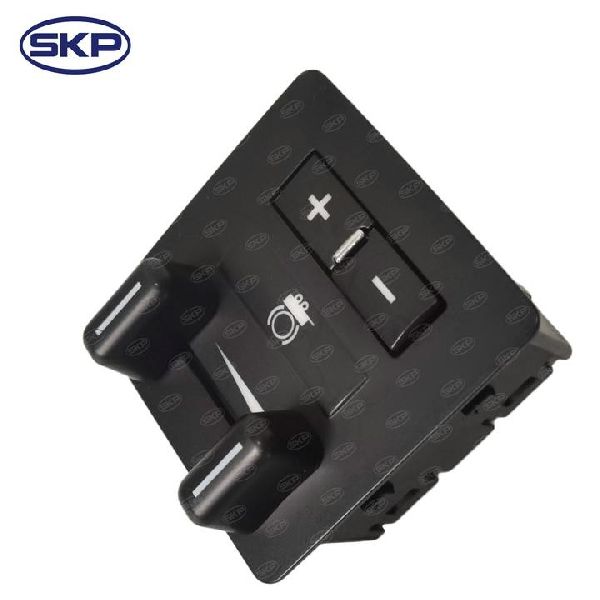
- Faulty Trailer Brake Control Switch: → Shop Trailer Brake Control Module The switch on the dashboard with the gain and manual apply lever can fail, but it usually produces different codes related to switch inputs. However, a short within the switch could potentially contribute to circuit faults. One owner reported this as their fix.
- Corroded 7-Pin Trailer Connector: → Shop Trailer Wiring Harness Corrosion, bent pins, or moisture inside the bumper-mounted 7-pin connector can cause shorts between circuits, triggering the C1112 code. This should be one of the first visual inspection points.
Diagnosis Steps
- Read all fault codes from all modules using a capable scan tool. Note if C1112 is current or history, and if C1114 is also present. 🎬 See how to diagnose codes C1112 and C1114 on GM trucks.
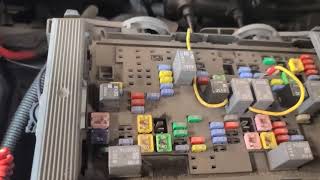
- Check all fuses related to the trailer brake system in the under-hood fuse block, especially the 30A fuse for the TBCM power stud.
- Disconnect any connected trailer to isolate the vehicle's system.
- Inspect the 7-pin trailer connector at the bumper for corrosion, moisture, or bent pins. Clean and apply dielectric grease.
- Locate and inspect ground G401 on the driver's side rear frame rail. Disassemble, clean all surfaces to bare metal, and re-secure it.
- Lower the spare tire to get access to the wiring harness and the Trailer Brake Control Module (TBCM) on the driver's side frame rail.
- Unplug the TBCM and inspect the connector and module pins for any green or white corrosion. Check that all cavity plugs are present and seated to prevent water intrusion.
- Carefully inspect the wiring harness that runs over the frame crossmember for any signs of chafing, melting, or corrosion, paying close attention to the dark blue wire (circuit 47). 🎬 Watch this walkthrough for finding and repairing damaged harness wiring.
- If using a GM Tech 2 scan tool, monitor the 'TBCM Relay Feedback Signal' parameter with the ignition on. According to TSB PIT4595J, the voltage should be between 3.2-4.1 volts. Readings outside this range point to a short or open in the circuit that must be investigated.
- If all wiring, fuses, and grounds are confirmed to be good, the Trailer Brake Control Module (TBCM) is the most likely failed component.
Parts You'll Likely Need
- Trailer Brake Control Module
(OEM #20870099)— This module is the final point of failure after all wiring, ground, and fuse issues have been ruled out. It is located in a harsh environment under the truck, making it susceptible to failure from moisture and vibration.
Trusted brands: ACDelco (GM Genuine), Dorman (601-225)
OEM price range: $120-$200
Aftermarket price range: $70-$150 - Trailer Brake Control Switch
(OEM #15823719)— Though a less common cause for this specific code, the dash-mounted switch can fail, causing various trailer brake system issues.
Trusted brands: ACDelco, Standard Motor Products
OEM price range: $40-$70
Aftermarket price range: $25-$50 - TBCM Connector Pigtail
(OEM #89047377)— If the connector at the Trailer Brake Control Module is heavily corroded, it may be necessary to cut it off and splice in a new pigtail connector to ensure a solid connection.
Trusted brands: ACDelco (GM Genuine)
OEM price range: $40-$60
Aftermarket price range: $20-$40
Related Codes That Often Appear With This One
- C1114 — This code for 'Trailer Brake Control Solenoids Control Circuit' is very commonly seen with C1112. TSB PIT4595J addresses both codes together as they relate to the same system and often share the same root causes like wiring faults on the dark blue wire (circuit 47).
Technical Service Bulletins (TSBs) & Recalls
- PIT4595J: Provides diagnostic tips for a 'Service Trailer Brake' message with DTCs C1112 and C1114. It advises technicians to thoroughly check wiring (especially circuit 47), ground G401, and use a Tech 2 to check for a TBCM Relay Feedback Signal between 3.2-4.1V before replacing modules.
- PIT5529A: While for slightly later models (2015+), this TSB is relevant as it highlights low battery voltage and missing cavity plugs in the TBCM connector as primary causes for similar trailer brake codes, reinforcing the importance of checking these simple items first.
Platform-Specific Known Issues
- TSB PIT4595J was issued by GM for the 2009-2014 Yukon (and related models) to guide technicians in diagnosing C1112 and C1114. It highlights that wiring issues are a primary cause and that many modules are replaced needlessly.
- A software update for the TBCM was released for 2007-2008 models to improve diagnostics for certain short-to-voltage conditions, which can be installed by a dealer. While not directly for the 2009+ models, it shows a history of software sensitivity.
Mechanic-Grade Diagnostic Values
- TBCM Relay Feedback Signal Voltage (on scan tool) — expected: 3.2 - 4.1 Volts. Failure: A voltage lower than 3.2V suggests a short to ground or open circuit. A voltage higher than 4.1V suggests a short to voltage.
- TBCM Operating Voltage — expected: 9.5 - 17.0 Volts. Failure: If system voltage drops below 9.5V, especially during startup, the module may set a fault.
- Ground Circuit Resistance at TBCM connector — expected: < 5.0 Ohms. Failure: Resistance greater than 5.0 Ohms between the ground circuit terminal and a clean chassis ground indicates an open or high-resistance ground path.
- Voltage Drop at Ground G401 — expected: < 0.1 Volts. Failure: A reading higher than 0.1V indicates excessive resistance in the ground connection, which should be disassembled and cleaned.
Hidden / Shadow Codes Worth Checking
- C1112 00: The '00' is a symptom byte meaning 'Trailer Brake Control Relay Low Control Circuit'. It specifies the general fault type detected by the module. (see via Professional scan tools like the GM Tech 2 or GDS2 will display the code with its symptom byte.)
Scan Tool Commands That Help
- GM Tech 2 / GDS2: Monitor 'TBCM Relay Feedback Signal' — This is the primary live data parameter to watch. With the ignition on, it should read between 3.2-4.1V. It's the first step in determining if a short to ground, short to voltage, or open circuit exists without manual probing.
- TIS2WEB: Reprogram TBCM — Per TSB PIT4595J, if the 'TBCM Relay Feedback Signal' is higher than 4.1V, an updated software calibration may correct the TBCM's sensitivity to high-resistance shorts to voltage.
- GM Tech 2 / GDS2: Command Trailer Brake Relay ON/OFF — This bidirectional command actively tests the function of the trailer brake relay and the integrity of its control circuit, helping to isolate a faulty relay from a wiring problem.
Wiring & Ground Locations
- G401 — Mounted to the left (driver's side) rear frame rail, behind the rear tire, near the trailer harness breakout.. This is the primary chassis ground for the trailer brake system. Corrosion or a loose connection here can cause high resistance, leading the TBCM to set circuit faults like C1112.
- Circuit 47 — A dark blue wire running from the TBCM/Relay assembly, along the frame (often above the spare tire), to Pin 2 of the 7-way trailer connector at the bumper.. This is the main trailer brake control output circuit that the TBCM constantly monitors. C1112 is set when an abnormal voltage (short or open) is detected on this specific wire.
- X411 — The main inline electrical connector for the rear chassis harness, located on the driver's side frame rail. It connects the front harness to the rear components, including the TBCM.. This connector is a potential point of failure for Circuit 47. Corrosion or spread pins within X411 can create an open or high-resistance fault, triggering C1112.
Real Owner Repair Stories
- YouTube channel 'Automotive Diagnostics & Programming' (2008 GM 2500HD) — 'Service Trailer Brake System' message with codes C1112, C1114, and C1119.
❌ Tried (didn't work) Replacing the Trailer Brake Control Module (three different modules were tried and set different codes)., Inspecting wiring for shorts to ground., Checking fuses.
✅ What actually fixed it Found two wires were crossed in the trailer brake relay plug. Correcting the wire positions in the plug resolved all codes.
Helpful Videos
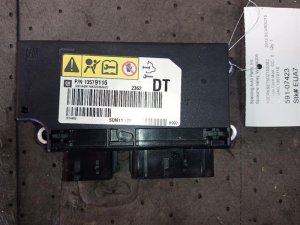
Used OEM Parts in Stock
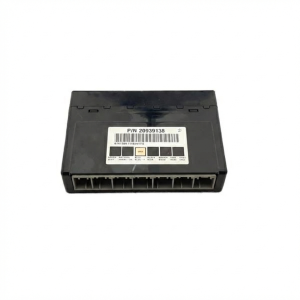
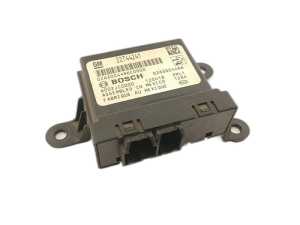
New Aftermarket Parts Available


The information in this article is provided for general reference and educational purposes only. Vehicle specifications, procedures, and part compatibility can vary by production date, trim level, and region. Always consult your vehicle's factory service manual and verify part numbers before purchasing or performing repairs. Safety-critical components such as airbags, seat belts, and braking systems should be installed by a qualified professional.
- Gmc YUKON DENALI:
- 🧭 Diagnostic Flowchart
- 🎬 Helpful Videos
- 🛍️ Shop This Part
- What's Unique About the 2009-2013 Gmc YUKON DENALI
- Symptoms You May Notice
- Most Likely Causes
- Rare But Worth Checking
- Diagnosis Steps
- Parts You'll Likely Need
- Related Codes That Often Appear With This One
- Technical Service Bulletins (TSBs) & Recalls
- Platform-Specific Known Issues
- Mechanic-Grade Diagnostic Values
- Hidden / Shadow Codes Worth Checking
- Scan Tool Commands That Help
- Wiring & Ground Locations
- Real Owner Repair Stories
- 🎟️ Get 5% Off