

C1219 on 2007-2017 Jeep Patriot: Steering Angle Sensor Erratic Performance Causes and Fixes
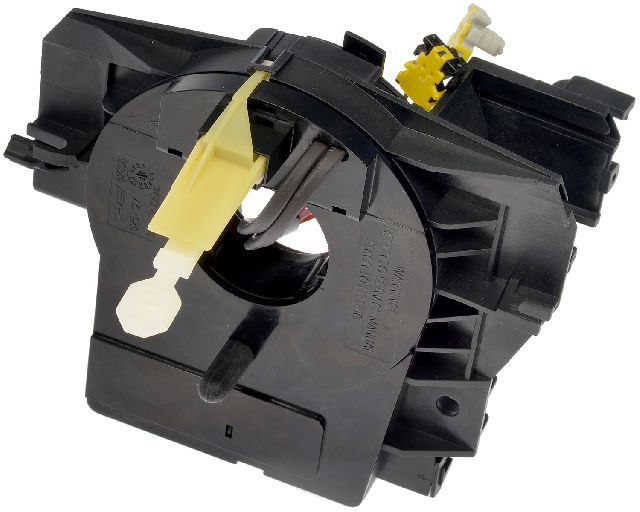
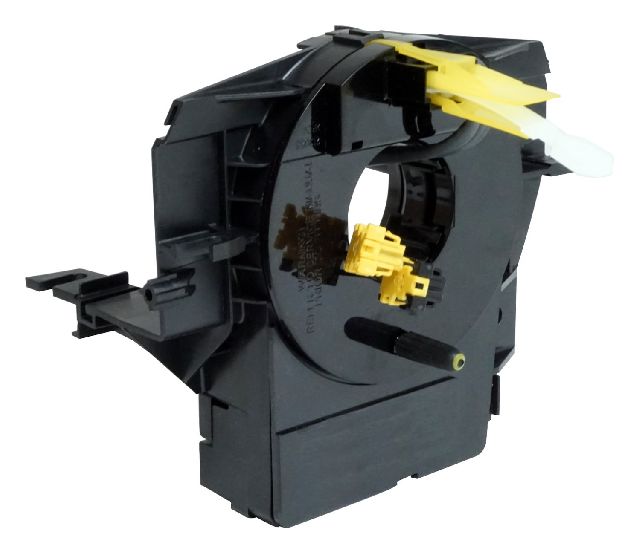
This code means the Steering Angle Sensor is failing or misaligned, disabling your stability control. The most common fix is to replace the clockspring assembly, which contains the sensor. Expect to pay $200-$550 for the part and 1-2 hours of labor. Before replacing parts, verify the steering wheel is physically and electronically centered, as a 360-degree rotational error after service is a frequent cause.
- C1219 means your Electronic Stability Control (ESC) is disabled due to a faulty signal from the Steering Angle Sensor.
- The most likely cause is a failed clockspring assembly, which houses the sensor.
- Before replacing parts, check if the steering wheel is physically centered when driving straight. An alignment or steering shaft adjustment might be the fix, especially after recent front-end work.
- This repair involves removing the airbag, which is dangerous. Professional service is strongly recommended.
- After any repair, a Steering Angle Sensor calibration with a proper scan tool is necessary to clear the code for good.
What's Unique About the 2007-2017 Jeep Patriot
The Jeep Patriot (MK platform) shares its core electronic architecture with the Dodge Caliber and Jeep Compass. While it doesn't have the unique off-road-related failure modes of a Wrangler, it suffers from the same common Chrysler component failures of the era. The clockspring assembly, which houses the steering angle sensor, is a known weak point across many Jeep and Dodge models, making it the primary suspect for a C1219 code. The part number for the clockspring assembly is often shared between the Patriot, Compass, Caliber, and even some Wranglers, confirming the commonality of the component.
Symptoms You May Notice
- Electronic Stability Control (ESC or ESP), BAS, or traction control warning light is illuminated
- Horn may not work (if clockspring is fully broken)
- Steering wheel-mounted controls (like cruise control or radio buttons) may fail
- Airbag warning light may be on (as the clockspring provides the connection)
- Replacing wheel speed sensors. While wheel speed sensors are part of the ABS/ESC system, the C1219 code specifically points to a problem with the Steering Angle Sensor's signal integrity, not a wheel speed reading.
Most Likely Causes
- Faulty Clockspring / Steering Angle Sensor Assembly 🔴 High Probability → Shop Steering Angle Sensor The clockspring contains a delicate ribbon of wires that flexes as the steering wheel turns. Over time, these wires can fatigue and break, causing an erratic or lost signal. This is a common failure item on many Chrysler/Jeep products from this period, with many owners on forums reporting failures.
How to confirm: Use a bi-directional scan tool to view live data from the Steering Angle Sensor. If the angle reading is stuck, jumps erratically, or shows '---' while turning the wheel, 🎬 See how to diagnose an erratic steering angle sensor signal. the sensor is bad. A failing clockspring may also trigger an airbag light and cause the horn or steering wheel buttons to stop working.
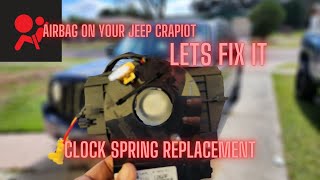
Typical fix: Replace the entire clockspring assembly located behind the steering wheel. 🎬 Watch: This step-by-step guide shows you how to replace the clockspring. A Steering Angle Sensor calibration is required after replacement. Some owners have reported issues with cheap aftermarket clocksprings from eBay causing related codes like C1240 and C123F to appear shortly after installation.
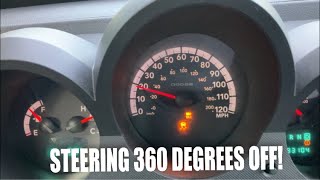
Est. part cost: $200-$550 - Steering Wheel Misalignment 🟡 Medium Probability After a wheel alignment, pothole impact, or suspension component replacement, the steering wheel may not be perfectly centered when driving straight. This can also happen if the steering shaft was disconnected and reinstalled incorrectly, often off by a full 360 degrees.
How to confirm: Visually inspect the steering wheel's position while driving straight on a level road. Use a scan tool to check the steering angle; it should read close to 0 degrees (+/- 5 degrees). If it reads a large value (e.g., 360 or -360 degrees) when the wheels are straight, it's rotationally misaligned. A STAR case document notes the calibration will fail if the wheel is off-center by more than ~7.5 degrees.
Typical fix: Perform a professional wheel alignment to center the steering wheel. If it's 360 degrees off, the steering shaft must be disconnected from the column (often a single bolt), the wheel rotated one full turn while watching live data, and then reconnected. A sensor calibration should follow.
Est. part cost: $0 - Required Steering Angle Sensor (SAS) Calibration ⚪ Low Probability → Shop Steering Angle Sensor The system can lose its 'zero point' calibration after a battery replacement, alignment, or other steering-related repairs. The sensor works but the computer doesn't know the correct straight-ahead position. This is a common reason for the code to appear immediately after service.
How to confirm: If the code appeared immediately after a battery disconnect or alignment and the steering wheel is physically straight, a calibration is the first logical step.
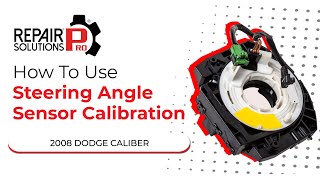
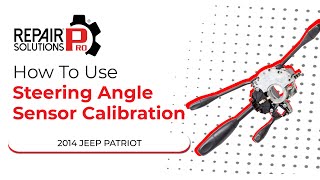
Typical fix: Use a compatible bi-directional scan tool to perform the 'Steering Angle Sensor Calibration' or 'ABS Initialization' procedure. This resets the zero position. 🎬 Watch: How to perform a steering angle sensor calibration.
Est. part cost: $0
Rare But Worth Checking
- Damaged Wiring or Connectors: The connectors at the back of the clockspring or along the steering column can become loose or damaged, causing an intermittent signal. This is worth checking before replacing the expensive clockspring assembly. Look for chafed, pierced, or pinched wires.
- Faulty ABS Module: In very rare cases, the ABS module itself may be unable to correctly process the signal from a known-good sensor. This should only be considered after all other possibilities have been exhausted and codes C1219, C123F, and C1240 persist after replacing and calibrating the sensor.
Diagnosis Steps
- Connect a bi-directional scan tool to the OBD-II port.
- Read codes from the ABS module. Note any other codes present, especially C123F, C1240, or any B-prefix airbag codes.
- Navigate to the ABS live data stream and monitor the 'Steering Angle Sensor' value.
- With the engine on and wheels pointed straight, verify the reading is close to 0 degrees. If it's near +/- 360 degrees, a rotational alignment is needed.
- Slowly turn the steering wheel lock-to-lock. The angle reading should change smoothly and consistently. If it jumps, freezes, or shows an error, the clockspring/sensor assembly is likely faulty.
- Check for other symptoms of a bad clockspring: Is the horn working? Do the steering wheel buttons function? Is the airbag light on?
- If the signal is erratic, inspect the wiring and connectors at the base of the steering column and behind the clockspring for any visible damage or looseness.
- If the steering wheel is physically off-center when driving straight, perform a wheel alignment.
- If the code appeared after a battery change or alignment, attempt a 'Steering Angle Sensor Calibration' using the scan tool.
- If the sensor signal is erratic and wiring is intact, replace the clockspring/steering angle sensor assembly.
- After replacement, perform the SAS calibration procedure and clear all codes. Test drive to confirm the fix.
Parts You'll Likely Need
- Clockspring / Steering Angle Sensor Assembly
(OEM #5156106AG)— This assembly contains the steering angle sensor. The internal wiring ribbon is the most common failure point, causing the erratic signal that triggers code C1219. This part number supersedes previous versions like 5156106AF and 5156106AE.
Trusted brands: Mopar, Dorman (525-127), Standard Motor Products (SMP) (CSP326), Crown Automotive
OEM price range: $350-$560
Aftermarket price range: $180-$300
Related Codes That Often Appear With This One
- C121C — Stands for 'Torque Request Signal Denied'. The stability system denies a request for torque intervention because it cannot trust the steering angle input.
- C123F — Stands for 'Steering Angle Sensor Comparative Performance'. This code sets when the SAS reading doesn't plausibly match data from other sensors, like the yaw rate sensor. Diagnostic procedures often state to fix C1219 before addressing C123F.
- C1240 — Stands for 'Steering Angle Sensor Overtravel'. This often indicates the sensor has been turned past its expected maximum range, which can happen if the steering is rotationally misaligned by 360 degrees.
- B1B02 / B1B06 — These are airbag codes ('Driver Airbag Squib 1/2 Circuit Open'). Since the clockspring provides the electrical connection for the airbag, a broken internal ribbon will trigger these codes alongside the C1219.
Technical Service Bulletins (TSBs) & Recalls
- TSB 23-007-17 Rev.B - This TSB provided a 10-year extended warranty for front and rear crossmember corrosion on 2008-2012 models in rust belt states. While not directly related to C1219, it is a critical platform issue. Many owners report this warranty has expired.
Mechanic-Grade Diagnostic Values
- (F202) Fused Ignition Switch Output (Run-ACC) Circuit Voltage — expected: Above 11.0 volts. Failure: Voltage below 11.0 volts indicates high resistance in the power supply circuit to the sensor.
- (Z937) Ground Circuit Resistance — expected: Below 5.0 ohms. Failure: Resistance above 5.0 ohms indicates a poor ground connection for the sensor.
- Live Data: Steering Angle Sensor Position (Wheels Straight) — expected: +/- 15 degrees. Failure: A value outside this range indicates a misalignment or calibration issue that needs to be addressed before testing the sensor itself.
Scan Tool Commands That Help
- Chrysler WiTECH or equivalent bi-directional scanner: ABS Initialization — Used after replacing the ABS module or steering angle sensor to initialize the system and learn component configurations.
- Chrysler WiTECH or equivalent bi-directional scanner: Steering Angle Sensor Calibration — Used to reset the zero point of the steering angle sensor after a wheel alignment, battery disconnect, or component replacement. This is often the final step to clear the C1219 code.
Wiring & Ground Locations
- G200 — Located on the left side of the instrument panel.. This is a primary ground point for instrument panel components, including those in the steering column. A poor connection at G200 could cause erratic voltage and data signals from the steering angle sensor, mimicking a sensor failure.
- Clockspring Connector (D2262A) — A 6-way white connector located underneath the steering column, connecting the clockspring to the main harness.. This is the main electrical interface for the steering angle sensor. Checking for secure connection and clean, undamaged pins at this connector is a critical step before replacing the clockspring assembly.
Real Owner Repair Stories
- JK-Forum.com user (2015 Jeep Wrangler JKU (shares clockspring with Patriot)) — ESC light was on. Codes C1219, C1240, C123F, C123C were present after replacing a steering gear.
❌ Tried (didn't work) Clearing codes (they would return immediately or upon driving), Checking wheel speed sensors
✅ What actually fixed it The steering wheel was rotationally misaligned by a full 360 degrees. The fix was to disconnect the steering shaft from the column, rotate the steering wheel one full revolution while observing live data, and reconnect the shaft. This centered the sensor electronically and the codes were cleared successfully. - YouTube - aricwithautoreplay (2008 Dodge Nitro (shares platform architecture and components with Patriot)) — ESP/BAS light on, ABS code C1219 'Steering wheel erratic'. Live data showed steering angle at -360 degrees with wheels straight.
❌ Tried (didn't work) Erasing the code without correcting the underlying issue.
✅ What actually fixed it The steering was off by a full 360-degree rotation after an alignment. The technician disconnected the steering column shaft, rotated the steering wheel 360 degrees to the left (while watching live data on a scan tool to confirm it was moving toward zero), and reconnected the shaft. This resolved the code.
OEM Part Supersession History
5156106AE, 5156106AF→5156106AG— Standard part evolution for improved reliability or manufacturing changes.
Heads up: 5156106AG is the current, backward-compatible replacement for earlier versions like AE and AF. When ordering, using the latest part number is recommended. An extensive list of related part numbers it replaces includes 5156106AA through AF, and 68003216AA through AH.
Model Year Variations Within This Range
- 2007-2017: There are no significant documented variations in the clockspring/SAS assembly or the diagnostic procedure for code C1219 across the entire model run of the Jeep Patriot. The same part numbers and failure modes apply to all years.
Diagnostic Flowchart
Other Known Issues on This Vehicle
Issues unrelated to this code that are worth knowing about as an owner of this generation:
- Premature CVT Failure 🔴 High — Common in earlier models (approx. 2007-2014), can occur at various mileages. Symptoms include whining, overheating warnings, and loss of acceleration.
- Subframe/Crossmember Corrosion 🔴 High — Widespread issue, especially in rust belt states, leading to structural failure. The front crossmember can rust due to A/C drain placement. An extended warranty (X69 / TSB 23-007-17 Rev.B) was issued but has since expired for most vehicles. (Ref: TSB 23-007-17 Rev.B (Expired Warranty Extension))
- Cabin Water Leaks 🟠 Medium — Very common across most model years. Water often leaks through clogged sunroof drains, dripping from the dome light and potentially causing electrical issues. Leaks can also come from roof ditch seams.
- Manual Transmission Shifting Difficulty 🟠 Medium — Reported in 2007-2010 models, symptoms include grinding, difficulty shifting into gear, or the shifter popping out of position.
- Wireless Control Module (WCM) Failure 🟠 Medium — Can cause a no-crank, no-start situation where the vehicle's security system does not recognize the key.
Used vs. New Parts: Buying Guide for This Vehicle
When a used part is the smart pick: A used OEM clockspring from a low-mileage donor vehicle can be a cost-effective option, as the failure is due to wear (rotational cycles). It is often a better choice than a new, unbranded aftermarket part of questionable quality.
Donor-vehicle mileage cap: roughly under 80000 miles for the part to have meaningful remaining life.
What to inspect on the donor part:
- Verify the donor vehicle's mileage if possible.
- Inspect the connectors for any signs of corrosion, damage, or previous repair (spliced wires).
- Ensure the part comes with a short warranty or return period from the salvage yard.
- Confirm the part number on the used unit matches the required OEM number or a known compatible supersession.
OEM-only on this vehicle (don't cheap out):
- While not strictly 'OEM-only', many forum users report that very cheap, unbranded aftermarket clocksprings (often from eBay or Amazon) fail quickly or cause other related codes (C123F, C1240) to appear. Sticking with Mopar or a reputable aftermarket brand is highly advised.
Aftermarket brands forum-validated for this vehicle:
- Dorman (525-127)
- Standard Motor Products (SMP) (CSP326)
- Crown Automotive
Brands owners have reported issues with on this vehicle:
- Unbranded, 'white-box' parts from online marketplaces are frequently reported to have poor quality control and short lifespans.
Real Owner Stories
Aggregated from forums and TSBs cited above. Mileages and costs reflect what owners reported in those sources.
2013 Jeep Patriot
Symptoms: After replacing a failed clockspring with a cheap aftermarket part from eBay, new trouble codes C1240 and C123F appeared.
What fixed it: The story highlights a problem caused by using a low-quality aftermarket part, implying the fix is to use a quality OEM or equivalent clockspring.
Source hint: Reddit r/JeepPatriot
2008 Jeep Patriot — 148000 miles
Symptoms: Owner experienced a clockspring failure, which is a common issue on these vehicles.
What fixed it: The typical fix for a failed clockspring is to replace the entire clockspring/steering angle sensor assembly located behind the steering wheel.
Source hint: Reddit r/JeepPatriot
Related OBD-II Codes
Frequently Asked Questions
Can I use a cheap clockspring from eBay to fix the C1219 code on my Patriot?
My ESC light came on with code C1219 right after I replaced the battery. What's the first thing I should check?
Besides the ESC light, what are other common symptoms of a failing clockspring on a Jeep Patriot?
My steering wheel is perfectly straight, but my scan tool shows the steering angle is 360 degrees. What does this mean?
Is this C1219 clockspring issue common on other vehicles?
My steering wheel is slightly crooked when I drive straight. Can this cause the C1219 code?
Helpful Videos
We Have This Part in Stock


The information in this article is provided for general reference and educational purposes only. Vehicle specifications, procedures, and part compatibility can vary by production date, trim level, and region. Always consult your vehicle's factory service manual and verify part numbers before purchasing or performing repairs. Safety-critical components such as airbags, seat belts, and braking systems should be installed by a qualified professional.
- Jeep Patriot:
- 🧭 Diagnostic Flowchart
- 🎬 Helpful Videos
- 🛍️ Shop This Part
- What's Unique About the 2007-2017 Jeep Patriot
- Symptoms You May Notice
- Most Likely Causes
- Rare But Worth Checking
- Diagnosis Steps
- Parts You'll Likely Need
- Related Codes That Often Appear With This One
- Technical Service Bulletins (TSBs) & Recalls
- Mechanic-Grade Diagnostic Values
- Scan Tool Commands That Help
- Wiring & Ground Locations
- Real Owner Repair Stories
- OEM Part Supersession History
- Model Year Variations Within This Range
- Other Known Issues on This Vehicle
- Used vs. New Parts: Buying Guide for This Vehicle
- Real Owner Stories
- 2013 Jeep Patriot
- 2008 Jeep Patriot — 148000 miles
- Related OBD-II Codes
- Frequently Asked Questions
- 🎟️ Get 5% Off