

C1717 on 2014-2020 Nissan Rogue: TPMS or Airbag Fault? Causes and Fixes
Code C1717 on a 2014-2020 Nissan Rogue most often indicates a problem with the front-right tire pressure (TPMS) sensor. However, it can also signify a critical passenger airbag fault. Verify which system (BCM or SRS) logged the code. The most likely fix is replacing the faulty TPMS sensor for about $50-$100 per sensor.
- C1717 on a 2014-2020 Rogue has two meanings: a likely TPMS sensor fault or a critical airbag circuit fault.
- You MUST first identify which system (BCM or SRS) triggered the code before attempting any repair.
- If the code is from the SRS (airbag) module, seek immediate professional service.
- If the code is from the BCM (TPMS), the most probable cause is a failed front-right TPMS sensor with an expired battery.
What's Unique About the 2014-2020 Nissan Rogue
The main challenge on the second-generation Nissan Rogue (T32) is the dual meaning of this code. While service manuals specifically for the Rogue point to a TPMS issue, the broader Nissan definition for C1717 relates to the airbag system. This ambiguity is the most significant platform-specific issue. Owners must first determine if the fault is in the Body Control Module (BCM), which manages TPMS, or the Supplemental Restraint System (SRS) module before attempting any repairs. Failure to do so can lead to incorrect and potentially dangerous repairs.
Symptoms You May Notice
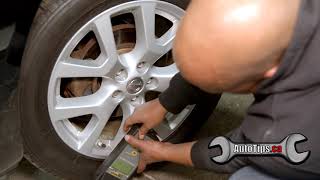
- TPMS warning light is on or flashing (a flashing light that then stays solid typically indicates a sensor or system fault, not just low pressure). 🎬 Watch: A quick guide to fixing the Nissan TPMS light.
- Airbag warning light is on or flashing.
- Inability to read the front-right tire pressure on the vehicle information display.
- "Tire Pressure Low - Add Air" message may appear.
- "Service TPMS" or similar warning on the dash.
- Passenger airbag 'OFF' light illuminated even with an adult in the seat.
- Replacing the wrong part due to definition uncertainty. For example, investigating the airbag system when the fault is actually a simple TPMS sensor, or vice-versa.
- Replacing a TPMS sensor but failing to perform the required ID registration/relearn procedure, causing the light to remain on.
Most Likely Causes
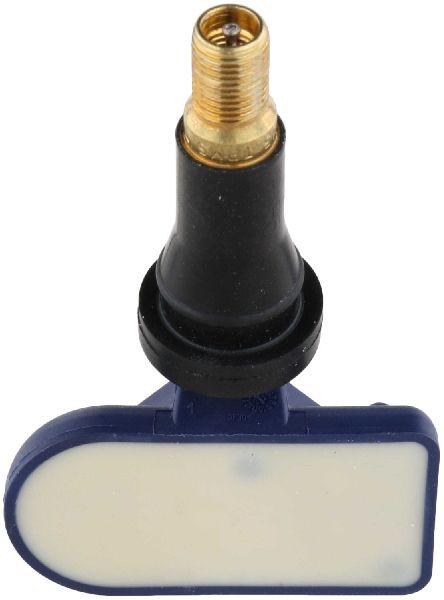
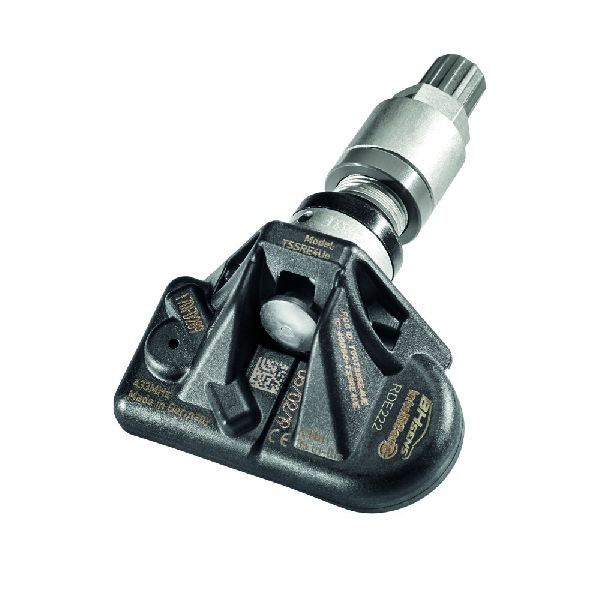
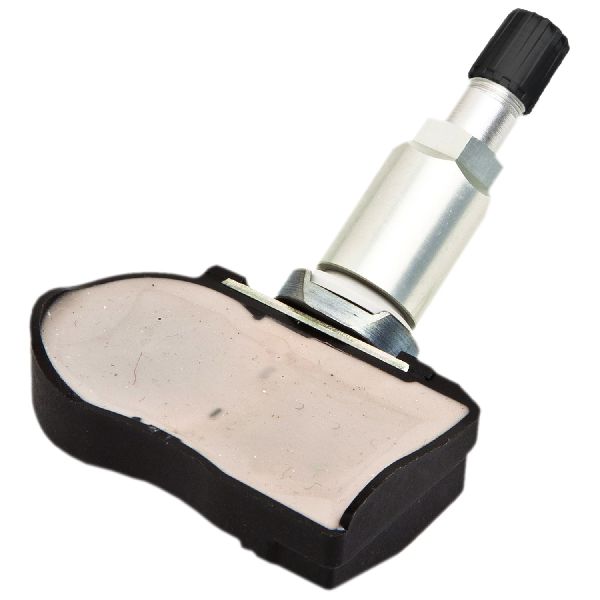
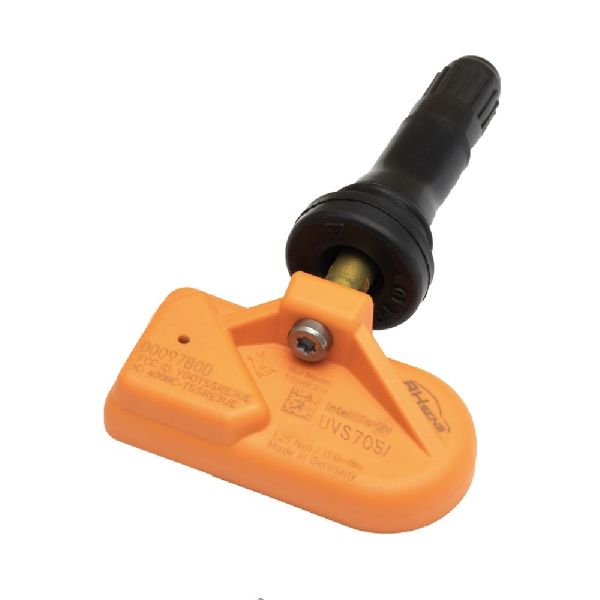
- Failed Front-Right TPMS Sensor 🔴 High Probability → Shop Tire Pressure Monitoring System (TPMS) Sensor TPMS sensors have a finite battery life, typically 5-10 years. Vehicles in this year range are reaching the end of their original sensor's lifespan.
How to confirm: Use a TPMS diagnostic tool to attempt to read the sensor's data (ID, pressure, temperature, battery status). If the tool cannot get a reading, the sensor has failed. A flashing TPMS light is a primary indicator of a sensor fault.
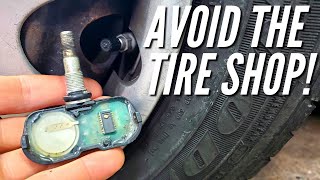
Typical fix: Replace the front-right TPMS sensor and register the new sensor ID to the vehicle's BCM. This requires a tire machine to dismount the tire and a TPMS tool 🎬 Watch: How to replace TPMS sensors without a tire machine. for registration.
Est. part cost: $40-$110 - Passenger Airbag Squib Circuit Fault ⚪ Low Probability This is the alternate, less common definition for the code. It can be caused by wiring issues under the passenger seat, a faulty clock spring, or a problem with the airbag module itself.
How to confirm: A professional-grade scan tool will show the code originating from the SRS (Supplemental Restraint System) module. Diagnosis involves checking wiring continuity and resistance in the passenger airbag circuit, often starting with the connectors under the seat.
Typical fix: Repairing the wiring harness or replacing the passenger airbag assembly. This is not a DIY repair and should be handled by a professional due to safety risks.
Est. part cost: $200-$1000+ - Incomplete or Incorrect TPMS ID Registration ⚪ Low Probability
How to confirm: This typically occurs immediately after a new sensor has been installed without the proper relearn/registration procedure. The system cannot find the sensor it expects to see.
Typical fix: Use a TPMS tool to perform the sensor ID registration procedure, writing the new sensor's ID to the BCM.
Est. part cost: $0
Rare But Worth Checking
- Faulty Body Control Module (BCM): If a new, correctly registered TPMS sensor still won't communicate, the BCM itself may be the issue, though this is uncommon.
- Faulty Airbag (SRS) Control Module: If the code is confirmed to be airbag-related and all wiring and the squib check out, the SRS module could be at fault. This is extremely rare and requires professional diagnosis.
- Wiring Harness Damage: For either the TPMS or SRS system, damage to the wiring harness (e.g., under the passenger seat for the airbag, or in the wheel well for the TPMS receiver) can cause a short or open circuit, triggering the C1717 code.
Diagnosis Steps
- Confirm the Source Module: Use an OBD-II scanner with SRS and BCM capabilities to determine if the C1717 code was set by the SRS (Airbag) module or the BCM (TPMS) module. This is the most critical step.
- If SRS Module: STOP. Do not proceed with DIY diagnosis. The airbag system is hazardous. Take the vehicle to a qualified technician for diagnosis of the passenger airbag squib circuit.
- If BCM Module (TPMS): Proceed with the following steps.
- Check Tire Pressures: Inflate all four tires to the pressure specified on the driver's door jamb sticker. An underinflated tire will cause a solid TPMS light, but a flashing light indicates a system fault.
- Test the Sensor: Use a TPMS activation tool to check the front-right sensor. Verify if it is transmitting a signal, its battery status, and the pressure it's reading. If the tool cannot activate the sensor, it has likely failed.
- Perform Relearn Procedure: If the sensor appears to be working, or after a tire rotation, the system may need to relearn sensor positions. Drive the vehicle at a speed above 15-25 MPH for several minutes to allow the system to reset automatically.
- Replace Sensor if Needed: If the sensor is confirmed dead (no signal, dead battery), it must be replaced. This requires breaking the tire bead and removing the old sensor.
- Register New Sensor: After installing a new sensor, its unique ID must be registered to the BCM using a TPMS programming/scan tool. The light will not go off until this is done successfully.
Parts You'll Likely Need
- Tire Pressure Monitoring System (TPMS) Sensor
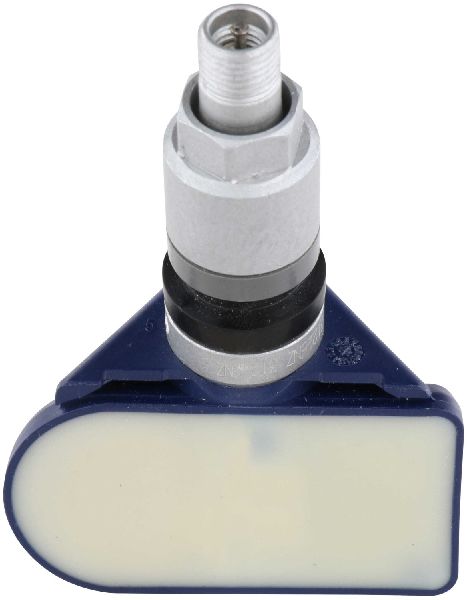
(OEM #40700-4CB0B (supersedes 40700-4CB0A), 40700-3VU0A)— This is the most common failure point for the TPMS-related C1717 code, usually due to an expired internal battery with a 5-10 year lifespan. The 2014-2020 Rogue generation uses a 433MHz sensor.
Trusted brands: Schrader, Continental, Autel, Huf
OEM price range: $80-$120
Aftermarket price range: $40-$70 - TPMS Sensor Service Kit — Recommended to be replaced any time a TPMS sensor is serviced or a tire is replaced. It includes a new valve core, cap, and grommet to ensure a proper seal and prevent leaks from a corroded valve stem.
Trusted brands: Schrader, Dill, Autel
OEM price range: $10-$20
Aftermarket price range: $5-$15
Related Codes That Often Appear With This One
- C1716, C1718, C1719 — These are the corresponding TPMS data error codes for the other three wheels (Front-Left, Rear-Right, Rear-Left). Seeing them together points towards a systemic TPMS issue or a problem during a tire rotation or sensor replacement.
Technical Service Bulletins (TSBs) & Recalls
- source_type: manufacturer_doc | id_or_name: NTB14-032b | relevance: This bulletin provides guidelines for wiring harness repair and states that any harness related to the SRS system should be replaced, not repaired, which is critical if C1717 is an airbag fault.
- source_type: manufacturer_doc | id_or_name: NTB19-071D | relevance: While for a different code (B00A0-00), this TSB details the diagnostic process for the Occupant Classification System (OCS), which is part of the passenger airbag system. 🎬 See how to diagnose common Nissan passenger airbag sensor faults. It highlights the need for dealer-level tools for calibration and the importance of checking under-seat connectors, which is relevant to a C1717 airbag fault.
Platform-Specific Known Issues
- Owner Experience with Aftermarket Sensors: Some owners report that while aftermarket sensors from brands like Autel work well, they require a capable programming tool to clone the original sensor IDs or program new ones. Failure to properly program and register the new sensor is a common reason for the TPMS light to remain on after replacement.
- Airbag Light Reset Complexity: On Reddit, a user with a 2017 Rogue experienced a solid airbag light. The community advised that even after a fix, the SRS module often requires a dealer-level scan tool to clear past DTCs and reset the light; a simple code reader may not suffice.
Scan Tool Commands That Help
- Nissan CONSULT or advanced aftermarket (e.g., Autel): WRITE CONFIGURATION — This function is required when replacing the BCM. It copies the vehicle's specific configuration to the new module. Failure to perform this can lead to various system malfunctions.
- Autel (e.g., TS508WF, ITS600): Copy by OBD / Auto Create — When replacing a TPMS sensor with a programmable Autel MX-Sensor, 'Copy by OBD' reads the old sensor ID from the ECU and writes it to the new sensor. 'Auto Create' generates a new ID compatible with the vehicle. This is essential for the BCM to recognize the new sensor.
- Nissan CONSULT or advanced SRS tool: Reset SRS / Clear Codes — After repairing an airbag system fault (like a wiring issue or replaced component), the SRS module must be reset. Hard codes stored from a collision or component failure often cannot be cleared with a basic OBD-II reader and require a professional tool.
- Nissan CONSULT or advanced SRS tool: Occupant Detection System (ODS) Zero Point Reset — If work was performed on the passenger seat or its related sensors, a zero point reset (calibration) is necessary. This function is often required to clear related airbag faults and ensure the system correctly identifies the passenger's weight.
Wiring & Ground Locations
- SRS Control Module (Air Bag Diagnosis Sensor Unit) — Located on the floor under the center console, between the driver and passenger seats.. This is the module that stores the C1717 code if it's an airbag fault. Access requires removing the center console trim pieces. Any liquid spills in the center console area can potentially damage this module.
- Body Control Module (BCM) — Typically located under the dashboard on the driver's side, to the left of the steering column. However, some related connectors may be found behind the glove box on the passenger side.. The BCM is the control unit for the TPMS system. It receives signals from the TPMS sensors and will store code C1717 if there is a data error from the front-right sensor.
- Passenger Airbag Squib Connectors — Located under the front passenger seat. These are typically bright yellow for easy identification as part of the SRS system.. A loose connection or damaged wiring at these connectors is a common cause for airbag-related faults, including the 'short to ground' condition indicated by C1717. Checking these connectors is a primary diagnostic step.
- Dashboard Wiring Harness Connector (Recall Related) — Located behind the dashboard, near the A-pillar on the driver's side.. Nissan recalled 2014-2017 Rogues for a poorly sealed main dash harness connector that could corrode from water intrusion. While the recall symptoms focused on power windows and AWD lights, such corrosion could theoretically cause a short to ground in any circuit passing through it, including SRS circuits.
OEM Part Supersession History
40700-4CB0A→40700-4CB0B— Standard part revision and update by the manufacturer.
Heads up: Both part numbers are generally interchangeable for the specified vehicle range. Aftermarket equivalents like 40770-4CB1B are also listed as compatible.40700-3VU0A→N/A— This is another valid OEM part number for this generation, possibly used on earlier models or different trims. It is also a 433MHz sensor.
Heads up: While both 40700-4CB0B and 40700-3VU0A are used on the T32 Rogue, it is best practice to replace with the same part number or a confirmed supersession to ensure compatibility with the BCM.
Model Year Variations Within This Range
- 2014-2017: Models from July 2016 to September 2017 were subject to a wiring harness recall (expanding on a previous 2014-2016 recall) for a connector that was prone to corrosion from water intrusion. Vehicles made for the 2018 model year and later used an updated component not subject to this specific recall.
Diagnostic Flowchart
Other Known Issues on This Vehicle
Issues unrelated to this code that are worth knowing about as an owner of this generation:
- CVT Transmission Failure/Hesitation 🔴 High — Very common, often appearing around 80,000-100,000 miles. Symptoms include shuddering, jerking, loss of power, and whining noises. (Ref: Multiple class-action lawsuits led to extended warranties (e.g., to 84 months/84,000 miles for 2014-2018 models), but no universal recall was issued.)
- A/C Compressor Failure 🟠 Medium — Common failure where the A/C blows warm air. The issue is often the compressor itself or the compressor clutch failing to engage.
- EVAP System Faults (Vent Control Valve) 🟡 Low — A frequent cause of the check engine light, often due to a failed EVAP vent control valve located near the charcoal canister. This can cause codes like P0442 or P0456. (Ref: Nissan has issued TSBs like NTB13-097 for diagnosing EVAP leaks across many models.)
- Poor Interior Heating 🟡 Low — Some owners report weak heating performance, which can be caused by air pockets in the cooling system that need to be bled out. (Ref: NTB17-028a provides general service information for the blower motor.)
- Automatic Emergency Braking (AEB) Malfunction 🔴 High — Some vehicles experience phantom braking, where the AEB system engages unexpectedly without an obstacle, posing a safety risk. (Ref: Subject of investigation and lawsuits.)
Used vs. New Parts: Buying Guide for This Vehicle
When a used part is the smart pick: A used Body Control Module (BCM) from a reputable salvage yard can be a cost-effective option if the original has failed. Ensure the part number matches exactly and that it comes from a vehicle with similar options. The used module will require reprogramming ('WRITE CONFIGURATION') by a dealer or a well-equipped independent shop.
Donor-vehicle mileage cap: roughly under 100000 miles for the part to have meaningful remaining life.
What to inspect on the donor part:
- For a BCM or SRS module, inspect all connector pins for any signs of green or white corrosion, or bent pins.
- Check the module's casing for any signs of water marks or physical damage.
- For a wiring harness pigtail, ensure the wires have sufficient length for splicing and that the insulation is not brittle or cracked.
OEM-only on this vehicle (don't cheap out):
- Airbag Module (SRS Control Unit): For safety and liability, it is strongly recommended to either have your original module's crash data reset by a professional service or to buy a new OEM unit. A used module may contain stored crash data or have unknown history.
- Airbag Squib/Assembly: Never use a used airbag. The component is a one-time use safety device and its history cannot be verified.
- TPMS Sensors: Buying used TPMS sensors is not recommended as their internal batteries have a limited lifespan of 5-10 years, and a used sensor may fail shortly after installation.
Aftermarket brands forum-validated for this vehicle:
- TPMS Sensors: Schrader, Continental, Huf, and Autel MX-Sensors are widely used and considered reliable alternatives to OEM.
Brands owners have reported issues with on this vehicle:
- Unbranded, generic TPMS sensors from online marketplaces may have issues with programming, battery life, or compatibility, even if advertised as direct-fit.
Real Owner Stories
Aggregated from forums and TSBs cited above. Mileages and costs reflect what owners reported in those sources.
2017 Nissan Rogue
Symptoms: The airbag light was solid. The owner used a scan tool but found the SRS system passed with no codes, yet the light remained on.
What fixed it: The community advised that a dealer-level scan tool was necessary to clear past DTCs and reset the SRS module, as simple readers were insufficient.
Source hint: Reddit r/Cartalk - "Nissan Rogue Airbag Light, SRS system pass no codes?"
Related OBD-II Codes
Frequently Asked Questions
My 2017 Rogue has a solid airbag light but my scanner shows no codes. Is this normal?
Can I repair the wiring harness for the passenger airbag squib circuit myself?
Why is my TPMS light flashing instead of staying solid on my 2015 Rogue?
Does TSB NTB19-071D apply to the C1717 code on my Nissan Rogue?
Can I use aftermarket TPMS sensors like Autel for my Rogue?
Is the C1717 code related to the common CVT transmission issues in the 2014-2018 Rogue?
Helpful Videos

We Have This Part in Stock

The information in this article is provided for general reference and educational purposes only. Vehicle specifications, procedures, and part compatibility can vary by production date, trim level, and region. Always consult your vehicle's factory service manual and verify part numbers before purchasing or performing repairs. Safety-critical components such as airbags, seat belts, and braking systems should be installed by a qualified professional.
- Nissan Rogue:
- 🧭 Diagnostic Flowchart
- 🎬 Helpful Videos
- 🛍️ Shop This Part
- What's Unique About the 2014-2020 Nissan Rogue
- Symptoms You May Notice
- Most Likely Causes
- Rare But Worth Checking
- Diagnosis Steps
- Parts You'll Likely Need
- Related Codes That Often Appear With This One
- Technical Service Bulletins (TSBs) & Recalls
- Platform-Specific Known Issues
- Scan Tool Commands That Help
- Wiring & Ground Locations
- OEM Part Supersession History
- Model Year Variations Within This Range
- Other Known Issues on This Vehicle
- Used vs. New Parts: Buying Guide for This Vehicle
- Real Owner Stories
- 2017 Nissan Rogue
- Related OBD-II Codes
- Frequently Asked Questions
- 🎟️ Get 5% Off