

P0010 on 2013-2019 Ford Escape 1.5L/1.6L/2.0L EcoBoost: Causes and Fixes
On 2013-2019 Ford Escapes, P0010 is an electrical fault with the intake VCT solenoid. The most common fix is replacing the solenoid. On 1.5L/1.6L engines, this is an easy DIY job with an external part costing $40-$80. On the 2.0L, the solenoid is under the valve cover, making it a more complex and expensive repair.
- P0010 points to an electrical problem with the intake VCT solenoid or its circuit, not a mechanical timing issue.
- Always check your oil level and condition first; low or dirty oil is a leading cause of VCT problems.
- For 1.5L/1.6L engines, the solenoid is external and easy to replace. A DIY-friendly diagnostic is to swap the intake and exhaust solenoids to see if the code changes to P0013.
- For the 2.0L engine, the solenoid is under the valve cover, making replacement a much larger job that also requires a new valve cover gasket.
- Before replacing any parts, check the VCT solenoid fuse (F33 in the engine bay fuse box).
What's Unique About the 2013-2019 Ford Escape
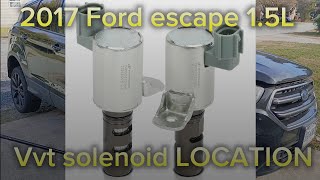
The key difference on the 2013-2019 Escape is how the repair varies by engine. For the 1.5L and 1.6L EcoBoost engines, the VCT solenoids are mounted externally on the valve cover, making them easy to access and replace. 🎬 Watch: Locate the 1.5L VVT solenoids However, on the 2.0L EcoBoost, the solenoids are located *under* the valve cover. This turns a simple solenoid swap into a much more involved job requiring removal of the cowl, wiper arms, and the valve cover itself, dramatically increasing labor time from about 30 minutes to 2-3 hours. This significantly changes the cost and difficulty of fixing the same code depending on which engine is in the vehicle.
Symptoms You May Notice
- Check Engine Light is on
- Rough idle or stalling
- Reduced engine power and poor acceleration
- Decreased fuel economy
- Rattling or knocking noise from the engine.
- Replacing the camshaft position *sensor* instead of the VCT *solenoid*. P0010 is a circuit code for the actuator (solenoid), not the sensor. Sensor-related codes are typically in the P034x range.
Most Likely Causes
- Faulty Intake VCT Solenoid (Oil Control Valve) 🔴 High Probability The VCT solenoids are a very common failure item across many Ford EcoBoost engines. The internal coil windings can fail, creating an open or short circuit that the PCM detects and flags as P0010.
How to confirm: For 1.5L/1.6L engines, swap the intake and exhaust solenoids (they are identical and externally accessible). Clear the codes and see if P0013 ('B' Camshaft Position Actuator Circuit) appears. If it does, the solenoid is bad. For all engines, you can test the solenoid's resistance with a multimeter; it should typically be between 6.9-7.9 ohms. A reading of infinity (open) or near zero (short) indicates a failed solenoid.
Typical fix: Replace the faulty intake VCT solenoid. On 2.0L engines, the valve cover gasket must also be replaced.
Est. part cost: $40-$110 - Low or Dirty Engine Oil 🟡 Medium Probability The VCT system is hydraulic and highly dependent on oil pressure and cleanliness. The small passages and screens in the solenoids can easily get clogged by sludge from infrequent oil changes or using the wrong oil type, leading to restricted oil flow and triggering the fault.
How to confirm: Check the engine oil level on the dipstick and inspect its condition. If the oil is low, black, or appears sludgy, this is a likely contributor to the problem.
Typical fix: Perform an oil and filter change using the manufacturer-specified grade of full synthetic oil (e.g., SAE 5W-30 for 1.6L/2.0L, SAE 5W-20 for 1.5L) and a quality filter. In some cases, this alone can resolve the issue.
Est. part cost: $50-$90 - Damaged Wiring or Connector ⚪ Low Probability
How to confirm: Visually inspect the wiring harness and electrical connector going to the intake VCT solenoid. Look for signs of chafing, corrosion, broken wires, or oil contamination inside the connector pins. Use a multimeter to check for battery voltage at the power wire on the connector with the key on.
Typical fix: Repair the damaged section of the wiring harness or clean/replace the electrical connector pigtail.
Est. part cost: $10-$50
Rare But Worth Checking
- Blown Fuse: A quick and easy check before replacing parts. The VCT solenoids are powered by a fuse in the engine bay fuse box. On many 2013-2019 Escapes, this is fuse F33 (15A) in the under-hood fuse box. A blown fuse could indicate a shorted solenoid.
- Faulty Powertrain Control Module (PCM): This is very rare. The PCM's internal driver for the VCT circuit can fail, but this should only be considered after all other possibilities (solenoid, wiring, oil) have been thoroughly ruled out by a professional.
Diagnosis Steps
- Check Engine Oil: Before anything else, verify your engine oil level is correct and the oil is clean. Low or dirty oil is a primary cause of VCT system issues.
- Check the Fuse: Locate the fuse for the VCT solenoids in the engine bay fuse box (check your owner's manual, but often F33) and ensure it is not blown. 🎬 See: How to find the VCT solenoid fuse
- Inspect the Wiring: Carefully inspect the electrical connector and wiring going to the intake VCT solenoid for any visible damage, corrosion, or oil saturation.
- For 1.5L/1.6L Engines (Solenoid Swap Test): The easiest diagnostic is to swap the easily accessible intake and exhaust VCT solenoids. They are typically identical. Clear the codes and run the engine. If the code changes from P0010 to P0013, you have confirmed the solenoid is faulty and needs replacement.
- Test the Solenoid: If you cannot swap solenoids (or on a 2.0L engine), unplug the connector and test the two pins on the solenoid with a multimeter set to ohms. A good solenoid will have a specific resistance (usually 6.9-7.9 ohms). An open circuit (OL) or short (0 ohms) means the solenoid is bad.
- Test the Circuit: If the solenoid tests good, check for power at the connector with the key on, engine off. One pin should have battery voltage. If not, there is a wiring issue between the fuse box and the solenoid.
- For 2.0L Engines: If the external wiring checks out, the fault is almost certainly the solenoid itself, which requires removing the valve cover for replacement.
Parts You'll Likely Need
- Intake VCT Solenoid (1.5L/1.6L EcoBoost)
(OEM #CN1Z-6M280-B)— This is the most common part to fail for this code on the 1.5L and 1.6L engines. It is located externally and is relatively easy to replace. Part number may be superseded.
Trusted brands: Motorcraft, Dorman, Standard Motor Products
OEM price range: $60-$95
Aftermarket price range: $30-$60 - Intake VCT Solenoid (2.0L EcoBoost)
(OEM #CM5Z-6M280-C)— This is the most common part to fail for this code on the 2.0L engine. It is located under the valve cover. This part number supersedes CM5Z-6M280-A.
Trusted brands: Motorcraft, Dorman
OEM price range: $70-$110
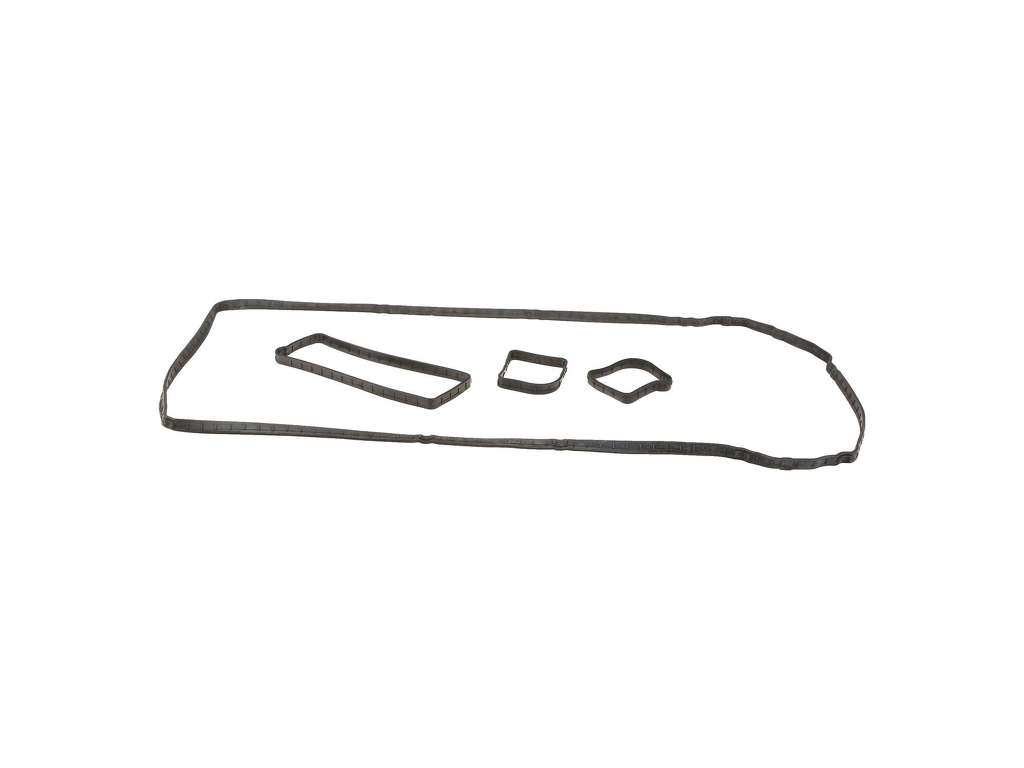
Aftermarket price range: $40-$70 - Valve Cover Gasket (2.0L EcoBoost)
(OEM #CJ5Z-6584-A)— Required for replacing the VCT solenoid on the 2.0L engine, as the valve cover must be removed. It should always be replaced to prevent oil leaks.
Trusted brands: Motorcraft, Fel-Pro, Mahle
OEM price range: $30-$50
Aftermarket price range: $20-$40
Related Codes That Often Appear With This One
- P0011 — Indicates 'Intake Camshaft Position Timing - Over-Advanced'. This performance code can appear with P0010 if the solenoid's electrical fault causes a mechanical timing issue.
- P0013 — This is the equivalent code for the exhaust ('B') camshaft solenoid. It will appear if you swap the intake and exhaust solenoids during diagnosis and the fault follows the part.
- P0020 — This is the same circuit fault code but for Bank 2. It would not appear on the inline-four Escape engine but could appear on V6/V8 Fords with a similar issue.
Platform-Specific Known Issues
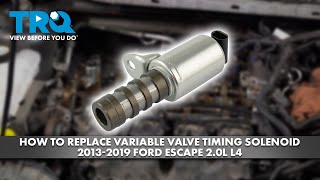
- On the 2.0L EcoBoost, accessing the solenoids is a significant job. A video by 1A Auto on YouTube details the process, which includes removing the wiper arms and the entire cowl assembly before the valve cover can even be accessed. 🎬 Watch: 2.0L VCT solenoid replacement walkthrough
- A user on a Ford Escape forum reported getting a P0010 code at 80,000 miles on their 2017 2.0L. After confirming the wiring was good, they replaced both VCT solenoids and the valve cover gasket, which resolved the issue. They noted the job took them about 4 hours as a first-timer.
Mechanic-Grade Diagnostic Values
- VCT Solenoid Internal Resistance — expected: 6.9 to 7.9 Ohms at 68°F (20°C). Failure: An open circuit (infinity/OL), a short circuit (near 0 ohms), or a reading significantly outside the expected range.
- VCT Solenoid Connector Voltage (Key On, Engine Off) — expected: ~12V (Battery Voltage) on the power supply wire (VPWR).. Failure: No voltage or significantly low voltage indicates a problem in the power supply circuit (fuse, relay, wiring) before the solenoid.
- VCT Advanced Error PID (Scan Tool) — expected: Should hover around 0° with a difference no greater than +/- 5° for an excessive time.. Failure: A significant, persistent deviation from 0° indicates the camshaft is not reaching its commanded position, which could be caused by a faulty solenoid or oil flow issue.
Hidden / Shadow Codes Worth Checking
- Mode 6, Test ID $81: This test in Mode 6 monitors the Variable Camshaft Timing (VCT) system for Bank 1. It checks the system's response to PCM commands. A failure here can point to a lazy or non-responsive VCT system, often before a hard code like P0010 is set. (see via An advanced OBD-II scan tool capable of displaying Mode $06 data. The data is presented as raw test values versus minimum/maximum limits.)
Scan Tool Commands That Help
- Ford IDS (Integrated Diagnostic System): Output Test Mode (OTM) — This command allows a technician to manually activate all PCM outputs, including the VCT solenoids. By connecting a computer-safe test light to the solenoid's ground control wire, a technician can use OTM to command the PCM to ground the circuit. If the light illuminates, it confirms the wiring from the PCM to the connector is intact, pointing to a faulty solenoid.
- Ford IDS (Integrated Diagnostic System): VCT Advanced Error PID & Histogram — This is used for diagnosing intermittent or performance-related VCT issues (like P0011/P0012) that may accompany P0010. It graphically displays the difference between the commanded and actual cam angle over time, making it easy to spot anomalies where the phaser isn't responding correctly.
Wiring & Ground Locations
- Fuse F33 (Under-hood Fuse Box) — In the under-hood fuse box, located on the right side of the engine bay when facing the engine.. This 15A fuse provides power to the VCT solenoids. If this fuse is blown, neither solenoid will have power, and a P0010 and/or P0013 will be set. This is a critical first check before replacing parts.
- VCT Solenoid Connector (VPWR Pin) — The electrical connector attached to the VCT solenoid itself.. This is the point where you test for the ~12V power supply with the key on. One of the two pins should have battery voltage. If it doesn't, the problem is upstream in the wiring or at the fuse box.
- PCM Connector C175E, Pin 5 — This is one of the main connectors at the Powertrain Control Module (PCM).. Pin 5 on this specific connector is the control circuit for the Bank 1 Intake VCT solenoid (VCT1). A continuity test between this pin and the corresponding pin at the solenoid connector can definitively rule out a break in the control wire.
OEM Part Supersession History
CM5Z-6M280-A→CM5Z-6M280-C— Revision and improvement of the part by the manufacturer.
Heads up: The newer -C revision is the correct service part and should be used. The -A part is no longer available from Ford.CN1Z-6M280-B→CN1Z-6M280-D, CN1Z-6M280-E— Multiple revisions for the 1.5L/1.6L VCT solenoid.
Heads up: These parts are generally interchangeable for the application, but it is always best to use the latest revision available.
Model Year Variations Within This Range
- 2013-2016 vs 2017-2019: The primary mid-size EcoBoost engine changed. 2013-2016 models used the 1.6L EcoBoost. For the 2017 model year refresh, this was replaced by the 1.5L EcoBoost engine. While functionally similar for this repair (both have external VCT solenoids), they use different part numbers for some components and have slightly different maintenance requirements.
Diagnostic Flowchart
Other Known Issues on This Vehicle
Issues unrelated to this code that are worth knowing about as an owner of this generation:
- Engine Coolant Intrusion (1.5L/2.0L EcoBoost) 🔴 High — Widespread issue, can occur from 40k-80k miles. A design flaw in the open-deck engine block allows cracks to form between cylinders, letting coolant leak into the combustion chamber. (Ref: TSB 19-2346, TSB 19-2139, TSB 20-2100. No full recall was issued, but TSBs outline engine short block replacement as the fix.)
- Transmission Failure / Shifter Bushing Recall 🔴 High — Multiple reports of complete transmission failure requiring replacement (~$5,000). A separate recall (22S43) was issued for a degraded shifter cable bushing that could cause the vehicle to not be in the gear selected (e.g., showing Park but able to roll away). (Ref: Recall 22S43)
- Brake System Problems 🟠 Medium — Owners report brake pedals becoming very hard to press, requiring extreme force to stop. Others report loud brakes and uneven pad wear even at low mileage.
- Engine Stumbles / Throttle Body Issues 🟡 Low — Reports of engine hesitation and stumbling are sometimes linked to failures of the electronic throttle body, a repair estimated around $500.
Used vs. New Parts: Buying Guide for This Vehicle
When a used part is the smart pick: For the 1.5L/1.6L engines with externally mounted solenoids, a used part from a low-mileage donor vehicle can be a cost-effective option since the replacement labor is minimal (under 30 minutes). If the used part fails, you are not out a significant amount of time or money.
Donor-vehicle mileage cap: roughly under 60000 miles for the part to have meaningful remaining life.
What to inspect on the donor part:
- Ask for the VIN of the donor vehicle to verify low mileage.
- Inspect the solenoid's mesh screens for any signs of metallic debris or heavy sludge; they should be perfectly clean.
- If possible, check the resistance with a multimeter before purchase to ensure it's within the 6.9-7.9 ohm range.
OEM-only on this vehicle (don't cheap out):
- VCT Solenoid for 2.0L EcoBoost Engine
Aftermarket brands forum-validated for this vehicle:
- Dorman (specifically their OE Solutions line)
- Standard Motor Products (SMP)
Brands owners have reported issues with on this vehicle:
- Unbranded, 'white box' parts from online marketplaces should be avoided, especially for the 2.0L engine. The high labor cost of the repair makes using a questionable part a major gamble.
Real Owner Stories
Aggregated from forums and TSBs cited above. Mileages and costs reflect what owners reported in those sources.
2017 Ford Escape 2.0L EcoBoost — 80000 miles
Symptoms: The owner confirmed the wiring was good but was receiving a P0010 code.
What fixed it: Replaced both VCT solenoids and the valve cover gasket.
Source hint: vehicle_specific_issues section citing a Ford Escape forum user
2017 Ford Escape 2.0L EcoBoost — ~60000 miles
Symptoms: The owner detailed their experience with the engine failing due to coolant intrusion.
What fixed it: The context notes TSBs for this issue recommend engine short block replacement.
Source hint: Reddit r/FordEscape thread '2017 Ford Escape - Just Learned About Potential Issues, looking for opinions.'
Related OBD-II Codes
Frequently Asked Questions
Is there a TSB for the engine coolant intrusion issue on my 2013-2019 Ford Escape?
How can I tell if the P0010 code on my 1.5L or 1.6L Escape is definitely a bad solenoid?
I have a 2017 Escape 2.0L; is the VCT solenoid replacement a DIY job?
What fuse should I check for VCT solenoid circuit issues on the Ford Escape?
Is there a recall for the transmission issues mentioned in the context?
What is the correct resistance for a new VCT solenoid on the EcoBoost engine?
Helpful Videos


We Have This Part in Stock


The information in this article is provided for general reference and educational purposes only. Vehicle specifications, procedures, and part compatibility can vary by production date, trim level, and region. Always consult your vehicle's factory service manual and verify part numbers before purchasing or performing repairs. Safety-critical components such as airbags, seat belts, and braking systems should be installed by a qualified professional.
- Ford Escape:
- 🧭 Diagnostic Flowchart
- 🎬 Helpful Videos
- 🛍️ Shop This Part
- What's Unique About the 2013-2019 Ford Escape
- Symptoms You May Notice
- Most Likely Causes
- Rare But Worth Checking
- Diagnosis Steps
- Parts You'll Likely Need
- Related Codes That Often Appear With This One
- Platform-Specific Known Issues
- Mechanic-Grade Diagnostic Values
- Hidden / Shadow Codes Worth Checking
- Scan Tool Commands That Help
- Wiring & Ground Locations
- OEM Part Supersession History
- Model Year Variations Within This Range
- Other Known Issues on This Vehicle
- Used vs. New Parts: Buying Guide for This Vehicle
- Real Owner Stories
- 2017 Ford Escape 2.0L EcoBoost — 80000 miles
- 2017 Ford Escape 2.0L EcoBoost — ~60000 miles
- Related OBD-II Codes
- Frequently Asked Questions
- 🎟️ Get 5% Off