

P0010 on 2013-2024 Mazda CX-5: Intake Camshaft Actuator Circuit Fixes
On a SKYACTIV-G engine, P0010 points to a failure in the electric intake camshaft timing motor, not a simple oil solenoid. The most common fix is replacing the entire 'Electric Variable Valve Timing Motor' assembly, an expensive part costing between $500 and $750. Misdiagnosis is common and costly.
- P0010 on a Mazda CX-5 SKYACTIV-G is for the **electric intake timing motor**, not a standard oil control solenoid.
- Do not replace the camshaft position sensor or the exhaust VVT solenoid; this will not fix the problem.
- The most common cause is a failed Electric Variable Valve Timing Motor assembly (Part #PE02-12-4Z0B), which is an expensive OEM part.
- Before replacing the expensive motor, check the 'EVVT 20A' fuse and the associated relay, and inspect the wiring to the motor.
What's Unique About the 2013-2024 Mazda CX-5
Unlike most engines that use oil pressure-controlled solenoids (OCVs) for both camshafts, the Mazda SKYACTIV-G uses a sophisticated and fast-acting electric motor to adjust the intake camshaft timing. This system is called e-VVT (electric Variable Valve Timing). Therefore, P0010 on this vehicle is NOT caused by a faulty oil control solenoid or dirty engine oil, which is a common misdiagnosis that leads to replacing the wrong parts. The code specifically points to an electrical issue within this unique electric motor system.
Generation note: This guide covers both the first generation (KE, 2013-2016) and second generation (KF, 2017-2024) of the Mazda CX-5. The fundamental design of the SKYACTIV-G engine's electric variable valve timing (e-VVT) system is the same across these years, so the causes and fixes are consistent. However, the diagnostic software used by dealers changed from IDS to MDARS for model years 2019 and newer.
Symptoms You May Notice
- Check Engine Light is on
- Sluggish or poor acceleration
- Rough idle
- Reduced fuel economy
- Engine may feel like it's in 'limp mode'
- Hesitation during acceleration 🎬 See how a faulty VVT system causes acceleration loss
- Replacing the exhaust camshaft VVT oil control valve (solenoid). The exhaust cam uses a hydraulic solenoid, but P0010 is for the electric intake cam system.
- Replacing the camshaft position SENSOR. The sensor reads the camshaft's position, but the P0010 code is for the actuator MOTOR circuit.
- Performing an engine oil flush. While clean oil is vital for the hydraulic exhaust VVT, it will not fix an electrical circuit fault in the intake e-VVT motor.
Most Likely Causes
- Failed Electric Variable Valve Timing (e-VVT) Motor/Driver Assembly 🔴 High Probability This is a complex electro-mechanical part where the internal motor windings or the integrated electronic driver board can fail, causing an open or short in the circuit. A manufacturer service bulletin for a related model, TSB Bulletin #SA-033-25, notes that a malfunction in the intake EVVT motor can prevent it from accurately regulating the intake camshaft timing, leading to P0010.
How to confirm: After confirming power and ground at the component's connector per the service manual, the fault is internal to the motor. A scan tool may show no response or erratic data from the driver. Replacement is the most common definitive test.
Typical fix: Replace the entire e-VVT motor assembly, which is located on the front of the engine at the end of the intake camshaft.
Est. part cost: $500-$750 - Damaged Wiring or Connector 🟡 Medium Probability The wiring harness is located at the front of the engine and can be susceptible to heat, vibration, or damage during other service procedures.
How to confirm: Visually inspect the wiring harness and connector going to the e-VVT motor for any signs of fraying, corrosion, or loose pins. Use a multimeter to check for continuity, power, and ground according to the factory service manual.
Typical fix: Repair the damaged section of the wiring harness or replace the connector pigtail.
Est. part cost: $20-$100 - Failed EVVT Relay or Fuse ⚪ Low Probability
How to confirm: Locate and test the Electric Variable Valve Timing (EVVT) 20A fuse and the associated relay in the engine bay fuse box. Swap the relay with a known good one of the same type to see if the problem resolves.
Typical fix: Replace the faulty relay or fuse.
Est. part cost: $5-$30
Rare But Worth Checking
- Faulty Powertrain Control Module (PCM): This is very rare. The PCM should only be considered after all other possibilities, including the e-VVT motor and wiring, have been exhaustively tested and ruled out.
Diagnosis Steps
- Read the code with an OBD-II scanner to confirm P0010 is present.
- Check the engine oil level and condition to rule out any unrelated issues. Note that low/dirty oil is not a direct cause for this specific code on this engine.
- Locate the Electric Variable Valve Timing (e-VVT) motor on the front of the engine, on the intake side.
- Inspect the electrical connector and wiring harness going to the e-VVT motor for any visible damage, corrosion, or loose connections.
- Check the 'EVVT 20A' fuse in the engine compartment fuse box.
- Check the EVVT relay, also in the engine fuse box. Swap with a known-good relay to test.
- (Advanced) Following the service manual, disconnect the e-VVT motor connector and, with the engine running, use a multimeter to verify battery voltage (B+) is present at the specified power supply terminal in the harness-side connector.
- (Advanced) Check for continuity to ground on the ground circuit pin of the connector. Check main engine compartment ground points like G03 for corrosion or looseness.
- If power and ground are present and the wiring is intact, the e-VVT motor/driver assembly is internally faulty and needs to be replaced.
Parts You'll Likely Need
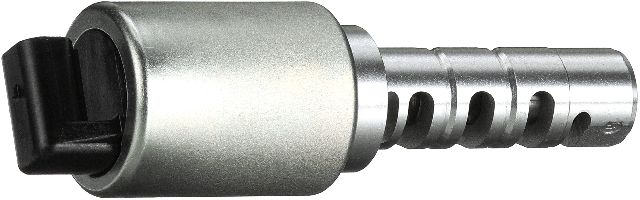
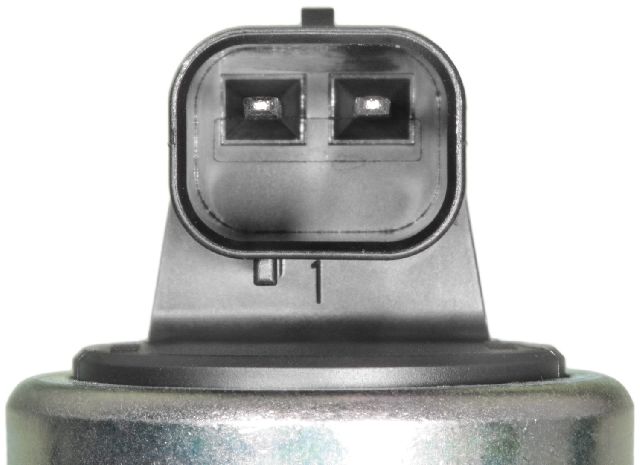
- Electric Variable Valve Timing Motor (e-VVT Motor/Driver)
(OEM #PE02-12-4Z0B)— This is the actuator that controls the intake camshaft timing. Internal failure of the motor or its integrated driver is the most common cause of P0010.
Trusted brands: Mazda (OEM)
OEM price range: $540-$780
Aftermarket price range: Not commonly available or recommended.
Related Codes That Often Appear With This One
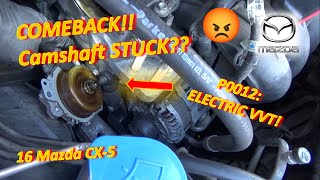
- P0012 — If the circuit fault (P0010) leads to the intake cam being unable to reach its target position, a timing over-retarded code (P0012) may also be set. 🎬 Watch this diagnostic breakdown of a Mazda CX-5 P0012 code
- P1380 — This Mazda-specific code for the VVT electric motor driver can sometimes accompany P0010, pointing more directly to a fault within the actuator assembly.
Technical Service Bulletins (TSBs) & Recalls
- TSB 01-014/19: Addresses a P0012 code (not P0010) due to a PCM software issue on some 2018 models, but confirms the complexity of the VVT system and establishes a precedent for PCM logic errors affecting timing codes. It applies to specific VIN ranges of 2018 CX-5 and Mazda6 vehicles.
- TSB 01-007/15: Issued for some 2015 Mazda6 and 2014 Mazda3 vehicles (platform mates) for a different VVT issue (actuator spring fatigue), further showing the system can have mechanical failure points beyond the P0010 electrical fault.
- TSB Bulletin #SA-033-25: While issued for the CX-70, this bulletin provides cross-manufacturer insight that a malfunction in the intake EVVT motor can prevent accurate regulation of intake camshaft timing, potentially triggering DTC P0010 alongside P0011 or P0012.
Platform-Specific Known Issues
- source — A Reddit user on r/CX5 reported taking their 2018 CX-5 with 110k miles and a P0010 code to a general repair shop. The shop charged $1,400 to replace two solenoids and two sensors, which did not fix the sluggish acceleration. The owner then took the vehicle to a Mazda dealer, who correctly diagnosed the issue and replaced the e-VVT motor assembly for an additional $1,800, which resolved the problem completely. This real-world case highlights the financial risk of misdiagnosing this specific code on this platform.
Mechanic-Grade Diagnostic Values
- Voltage at e-VVT motor connector terminal 2B (harness side) — expected: B+ (Battery Voltage). Failure: Voltage significantly lower than B+ indicates an open or short in the power supply circuit (relay, fuse, wiring).
- Voltage at EVVT relay socket terminal C (harness side) — expected: B+ (Battery Voltage). Failure: 0V indicates an open circuit or blown fuse between the battery and the relay.
- Continuity at EVVT relay socket terminal D (harness side) to body ground — expected: Continuity should exist.. Failure: No continuity indicates an open in the ground circuit for the relay coil.
- Resistance of the e-VVT motor — expected: Not specified by the manufacturer.. Failure: The official diagnostic procedure does not involve measuring the motor's internal resistance. If power, ground, and control signals are verified as good, the motor assembly is considered faulty.
Hidden / Shadow Codes Worth Checking
- P1380:00: Indicates a malfunction specifically within the electric variable valve timing DRIVER. Its presence alongside P0010 strongly suggests the fault is internal to the e-VVT motor/driver assembly. (see via Professional scan tool (Mazda IDS/MDARS or equivalent) capable of reading manufacturer-specific codes.)
Scan Tool Commands That Help
- Mazda IDS / MDARS: KOER On Demand Self Test — This Key On, Engine Running test commands various powertrain components, including the VVT system, to check for response and faults. It should be run after warming the engine to operating temperature to avoid false codes.
- Mazda IDS / MDARS: Variable Valve Timing Learning Procedure — This procedure must be performed after the PCM backup power is interrupted (e.g., battery replacement) or after PCM reprogramming. The KOER self-test for the VVT system cannot be executed until learning is complete.
Wiring & Ground Locations
- EVVT Relay & 20A Fuse — In the main fuse and relay block located in the engine compartment.. This relay and fuse provide the main operating power to the e-VVT motor. A failure here will cut all power to the motor, directly causing a P0010 circuit code.
- G03 — On the left front of the engine compartment, typically a wiring bundle bolted directly to the chassis/frame rail.. This is a primary engine compartment ground point. Poor contact here due to corrosion or looseness can cause intermittent and difficult-to-diagnose electrical issues for multiple components, including the e-VVT system.
- G02 — Under the left (driver's side) headlight assembly.. Another key ground point in the front of the vehicle that serves components in that area. Worth checking if other diagnostics lead to a dead end.
Real Owner Repair Stories
- Reddit user on r/CX5 (2018 Mazda CX-5 GT, 110,000 miles) — Check engine light on, very sluggish acceleration, dangerous when merging.
❌ Tried (didn't work) Taken to a general auto repair shop (Goodyear)., Replaced two solenoids and two sensors with OEM parts for $1,400., The check engine light returned and the sluggish performance was not fixed.
✅ What actually fixed it The vehicle was taken to a Mazda dealership. The dealer diagnosed a failed e-VVT motor and replaced the assembly for $1,800. This completely resolved the sluggishness and the check engine light.
OEM Part Supersession History
Unknown, likely PE02-12-4Z0A→PE02-12-4Z0B— Standard part revision and improvement.
Heads up: PE02-12-4Z0B is the correct e-VVT *motor* for the P0010 circuit code. Do not confuse this with the mechanical VVT *actuator sprocket* (part PE01-12-4Y0B), which is a separate component that the motor drives.
Model Year Variations Within This Range
- 2019-2024: Dealer-level diagnostics for these model years use the newer Mazda Diagnostic and Repair Software (MDARS), while earlier models use the Integrated Diagnostic System (IDS). Functionality is similar, but the software interface is different.
- 2015 (specific VINs): A Technical Service Bulletin (TSB 01-007/15) was issued for some 2015 models for VVT actuator spring fatigue. While this typically sets timing performance codes (P0011/P0012) rather than the P0010 circuit code, it highlights a known mechanical weakness in the actuator assembly for that period.
Diagnostic Flowchart
Other Known Issues on This Vehicle
Issues unrelated to this code that are worth knowing about as an owner of this generation:
- LED Daytime Running Light (DRL) Failure 🟠 Medium — Very common on 2016 models, leading to a recall. The entire headlight assembly must be replaced, making it an expensive fix out of warranty. (Ref: NHTSA Recall 20V063000 (Mazda recall 4320A) for 2016 CX-5s.)
- Infotainment 'Ghost Touch' and System Malfunctions 🟠 Medium — Widespread on 2016-2020 models. The screen registers phantom inputs, causing random station changes, navigation errors, and unwanted calls. (Ref: TSB 09-003/22 for 2017-2020 CX-5s. A Customer Service Program (CSP13) also extended warranty coverage for the Connectivity Master Unit (CMU) on many models.)
- Intake Valve Carbon Buildup 🟡 Low — A potential long-term issue inherent to all Gasoline Direct Injection (GDI) engines. While Mazda's SKYACTIV design is considered more resistant than many competitors, buildup can still occur over 100,000+ miles, potentially causing reduced performance.
- Premature Brake Wear 🟡 Low — A common owner complaint across multiple model years, with some owners replacing pads and rotors sooner than expected (e.g., under 40,000 km).
- Vehicle Not Shutting Off (Parking Sensor Switch) 🟠 Medium — Reported on earlier models (approx. 2013-2016), where a faulty microswitch in the gear selector assembly fails to detect that the vehicle is in Park, leaving accessories powered on and draining the battery.
Used vs. New Parts: Buying Guide for This Vehicle
When a used part is the smart pick: For this specific repair, a used part is a significant gamble and generally not recommended. The e-VVT motor is the most common failure point, and a used unit has an unknown amount of remaining service life. It only makes sense if the budget absolutely prohibits a new part and the donor vehicle is known to have very low mileage.
Donor-vehicle mileage cap: roughly under 40000 miles for the part to have meaningful remaining life.
What to inspect on the donor part:
- Verify the part number (PE02-12-4Z0B) matches exactly.
- Inspect the electrical connector for any bent, corroded, or damaged pins.
- Check the housing for any cracks, deep gouges, or signs of extreme heat exposure.
- Ask for the VIN of the donor car to verify its mileage and check for any reported accident history.
OEM-only on this vehicle (don't cheap out):
- Electric Variable Valve Timing Motor (e-VVT Motor/Driver)
Brands owners have reported issues with on this vehicle:
- Currently, there are no widely available or trusted aftermarket manufacturers for this specific, complex part. Unbranded options from online marketplaces should be avoided.
Real Owner Stories
Aggregated from forums and TSBs cited above. Mileages and costs reflect what owners reported in those sources.
2018 Mazda CX-5 Grand Touring — 110000 miles
Symptoms: Sluggish acceleration and a P0010 code.
What fixed it: Replacement of the e-VVT motor assembly at a Mazda dealer after a general shop failed to fix it with solenoids and sensors.
Cost: $1,800-$1,800
Source hint: r/CX5 on Reddit: A thread from 2023 titled 'Repair Ripped off? 2018 CX-GT- code P0010- Camshaft position Actuator'
2018 Mazda CX-5 — ~100000 miles
Symptoms: P0010 cam shaft position actuator circuit open.
What fixed it: Traced pins from the actuator to the computer to confirm the circuit fault.
Source hint: youtube_comment: Vertex AI Search Grounding API
Related OBD-II Codes
Frequently Asked Questions
I have a 2018 CX-5 with a P0010 code; could TSB 01-014/19 be the fix?
Can I just change my oil to fix the P0010 code on my SKYACTIV-G engine?
Where is the e-VVT motor located on the 2.5L CX-5 engine?
Is there a specific fuse I should check for the P0010 code?
My 2016 CX-5 has P0010 and the headlights are flickering; are these related?
What is the part number for the replacement VVT motor on my Mazda 3 or CX-5?
Helpful Videos
We Have This Part in Stock

The information in this article is provided for general reference and educational purposes only. Vehicle specifications, procedures, and part compatibility can vary by production date, trim level, and region. Always consult your vehicle's factory service manual and verify part numbers before purchasing or performing repairs. Safety-critical components such as airbags, seat belts, and braking systems should be installed by a qualified professional.
- Mazda CX-5:
- 🧭 Diagnostic Flowchart
- 🎬 Helpful Videos
- 🛍️ Shop This Part
- What's Unique About the 2013-2024 Mazda CX-5
- Symptoms You May Notice
- Most Likely Causes
- Rare But Worth Checking
- Diagnosis Steps
- Parts You'll Likely Need
- Related Codes That Often Appear With This One
- Technical Service Bulletins (TSBs) & Recalls
- Platform-Specific Known Issues
- Mechanic-Grade Diagnostic Values
- Hidden / Shadow Codes Worth Checking
- Scan Tool Commands That Help
- Wiring & Ground Locations
- Real Owner Repair Stories
- OEM Part Supersession History
- Model Year Variations Within This Range
- Other Known Issues on This Vehicle
- Used vs. New Parts: Buying Guide for This Vehicle
- Real Owner Stories
- 2018 Mazda CX-5 Grand Touring — 110000 miles
- 2018 Mazda CX-5 — ~100000 miles
- Related OBD-II Codes
- Frequently Asked Questions
- 🎟️ Get 5% Off