

P0010 on 2012-2016 Mercedes-Benz E-Class: M276 Camshaft Actuator Circuit Causes and Fixes
For the 2012-2016 E-Class with the M276 V6, code P0010 is almost always caused by a faulty intake camshaft adjuster magnet (solenoid) on the passenger side (Bank 1). This is a common failure item, with an updated part available from Mercedes-Benz. It's a ~$50 part that is easy to replace, often fixing the issue in under 30 minutes.
- P0010 on your E350 almost certainly means you need a new camshaft adjuster magnet on the passenger side intake camshaft.
- Before buying any parts, check your oil level and swap the intake and exhaust magnets on the passenger side to confirm the magnet is the problem.
- The correct OEM part number is A2761560790, and it's a simple DIY replacement that requires only basic tools.
- Always use a high-quality, manufacturer-approved (MB 229.5) engine oil and change it regularly to prevent this and other VVT system problems.
What's Unique About the 2010-2016 Mercedes-Benz E-Class
While P0010 is a generic code, on the Mercedes M276 V6 engine, the cause is overwhelmingly predictable. The four camshaft adjuster magnets (solenoids) that control the variable valve timing are a known failure point. They can fail electrically internally or become clogged by oil sludge. The diagnostic process is straightforward, as all four magnets are identical and interchangeable, making it easy for a DIYer to confirm the fault by swapping them before buying a new part.
Generation note: The 2010-2016 E-Class is the W212 generation. However, the M276 engine specified in this guide was introduced in the E-Class starting in the 2012 model year. This guide is specific to the 2012, 2013, 2014, 2015, and 2016 model years with the 3.5L M276 V6 engine. The 2010-2011 models used the older M272 engine, which has different components but suffers from similar camshaft magnet issues.
Symptoms You May Notice
- Check Engine Light is on
- Rough or unstable idle
- Reduced engine power and acceleration
- Decreased fuel economy
- Engine may run sluggishly or hesitate
- Engine stalling or chugging during acceleration.
- Replacing the camshaft position *sensor* instead of the camshaft adjuster *magnet* (solenoid). The P0010 code points to the actuator circuit, not the sensor's reading.
- Replacing the entire camshaft phaser/adjuster gear. This is a major, expensive repair that is almost never the cause of a P0010 circuit code, which is electrical in nature.
Most Likely Causes
- Faulty Bank 1 Intake Camshaft Adjuster Magnet (Solenoid) 🔴 High Probability → Shop Engine Camshaft These solenoids are a common failure item on the M276 engine due to internal electrical faults or clogging from oil contaminants. They are so common that Mercedes has released updated part numbers for them.
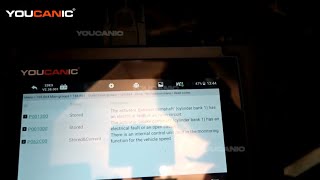
How to confirm: Swap the Bank 1 (passenger side) intake magnet with the Bank 1 exhaust magnet. Clear the codes and run the engine. If the code changes to P0015 🎬 Watch: How to diagnose and test these camshaft magnets ('B' Camshaft Position Actuator Circuit Bank 1), the magnet is definitively bad. You can also test the magnet's resistance with a multimeter; it should be between 8-12 ohms. A reading outside this range or an open circuit indicates a failed magnet.
Typical fix: Replace the faulty camshaft adjuster magnet. All four magnets on the M276 are the same part number. It is highly recommended to use the latest superseded part number from Mercedes-Benz or an OEM supplier like Bosch/Pierburg.
Est. part cost: $40-$80 - Low or Dirty Engine Oil 🟡 Medium Probability The VVT system is hydraulically operated. Infrequent oil changes can lead to sludge buildup that clogs the small passages and filter screens in the adjuster magnets, impeding their function.
How to confirm: Check the engine oil level on the dipstick and inspect its condition. If the oil is low or appears dark, thick, or sludgy, it should be changed.
Typical fix: Perform an oil and filter change using a Mercedes-Benz approved oil (MB 229.5 specification) and a new filter.
Est. part cost: $70-$120 - Wiring Harness or Connector Issue ⚪ Low Probability It is a known issue for oil from a leaking magnet to seep into the electrical connector and wick down the wiring harness via capillary action. This can cause shorts or open circuits at the magnet connector, or even travel as far as the ECU, causing wider electrical issues.
How to confirm: Unplug the electrical connector for the Bank 1 intake camshaft magnet. Inspect the connector and the magnet's socket for any signs of engine oil, corrosion, or damaged pins/wires.
Typical fix: If oil is present, replace the faulty magnet causing the leak and clean the connector thoroughly with electrical contact cleaner. If the harness is saturated, Mercedes offers a short adapter harness (often called a "pigtail" or "sacrificial harness") that can be installed between the main harness and the new magnet to prevent future contamination of the main harness.
Est. part cost: $10-$50
Rare But Worth Checking
- Faulty Camshaft Position Sensor: → Shop Engine Camshaft This is rare because a faulty sensor usually triggers a different set of codes (e.g., P0340-P0341). However, oil leaking down from a bad adjuster magnet above it can contaminate and damage the sensor, causing it to fail as well.
- Stretched Timing Chain or Failed Tensioner: → Shop Engine Timing Chain While more associated with performance codes like P0016 (crank/cam correlation), severe slack in the timing system could potentially cause an actuator circuit fault in extreme cases. This is unlikely and would typically be accompanied by a loud rattling noise on startup, which is a known issue on early M276 engines and is addressed by TSB LI05.10-P-056435.
- Faulty Engine Control Module (ECM): This is extremely rare. The ECM should only be considered after all other possibilities, including wiring, have been exhaustively tested and ruled out.
Diagnosis Steps
- Read Codes: Use an OBD-II scanner to confirm P0010 is the active code. Note any other codes present.
- Check Engine Oil: Verify the oil level is correct and the oil condition is good. If low or dirty, perform an oil change and see if the code returns.
- Inspect Connector: Unplug the Bank 1 (passenger side) intake camshaft magnet. Inspect the connector and pins for oil contamination, corrosion, or damage.
- Swap Test: Swap the Bank 1 intake magnet with the Bank 1 exhaust magnet (they are identical and located next to each other). Clear the codes with the scanner.
- Re-Scan: Drive the vehicle until the check engine light returns. If the code is now P0015, the magnet you moved is faulty and needs replacement. This is the most common outcome.
- Test Wiring: If the code remains P0010 after the swap, the issue is likely in the wiring to that specific connector. Use a multimeter to check for 12V power and continuity to ground at the connector with the key on.
- Replace Part: If the magnet is confirmed faulty, replace it with the latest OEM part number. It is often recommended to replace all four magnets at once as a preventative measure, since they tend to fail around the same time.
Parts You'll Likely Need
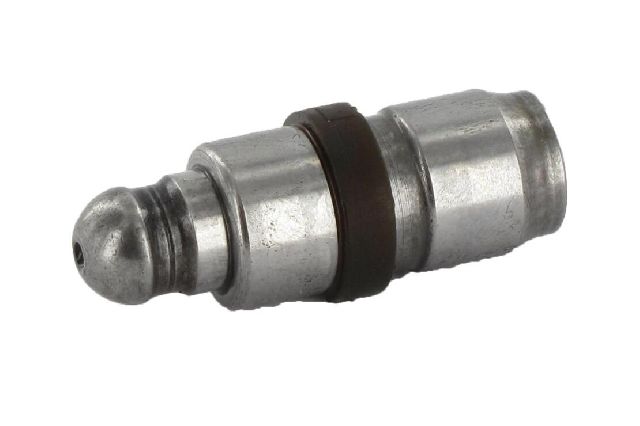
- Camshaft Adjuster Magnet (Solenoid)
(OEM #A2761560790 (latest), supersedes A2761560590, A2761560490, A2761560190, A2761560090)— This is the most common failure part for a P0010 code on the M276 engine. Using the latest part number is recommended.
Trusted brands: Genuine Mercedes-Benz, Bosch, Pierburg
OEM price range: $60-$80
Aftermarket price range: $35-$60 - Camshaft Magnet Seal (O-Ring)
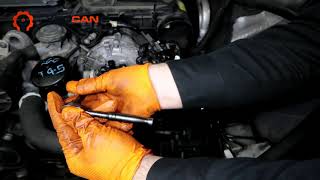
(OEM #Included with most new magnets)— It is recommended to replace the seal whenever the magnet is removed to prevent future oil leaks. 🎬 See this step-by-step camshaft magnet replacement walkthrough New magnets typically come with a new seal pre-installed.
Trusted brands: Genuine Mercedes-Benz, Elring, Victor Reinz
OEM price range: $5-$10
Aftermarket price range: $2-$5
Related Codes That Often Appear With This One
- P0013 — This is the same fault ('B' Camshaft Position Actuator Circuit) but for the exhaust magnet on Bank 1. If both appear, it could point to a common wiring or power supply issue on that bank, or two failed magnets.
- P0020 — This is the identical fault (P0010) but for Bank 2 (driver's side). Seeing both P0010 and P0020 could suggest a systemic issue like very dirty oil or a problem with the power supply common to both banks.
Technical Service Bulletins (TSBs) & Recalls
- LI05.10-P-056435 — Rattling noise after engine start for several seconds — Addresses a common startup rattle on M276 and M278 engines caused by secondary timing chain tensioners losing oil pressure. The fix involves installing updated tensioners and, on earlier engines, retrofitting check valves into the cylinder head oil passages. While not directly for P0010, it's relevant to the overall health of the timing system.
Platform-Specific Known Issues
- Owner Experience: P0010 Fixed by Magnet Swap: A user on PeachParts Mercedes-Benz Forum reported a P0010 code after replacing a camshaft adjuster. After testing, they found the new magnet was faulty. They confirmed the diagnosis by swapping with a known good magnet, which resolved the issue, highlighting the commonality of even new parts being defective and the reliability of the swap test.
- Oil Contamination of Harness: Multiple forums, including MBWorld, feature extensive discussions about oil leaking from the camshaft magnets and wicking into the engine wiring harness. This is a well-known issue across many Mercedes models using this engine style. Owners often recommend proactively replacing the magnets and considering the installation of pigtail harnesses as a preventative measure.
Mechanic-Grade Diagnostic Values
- Camshaft Adjuster Magnet (Solenoid) Connector Voltage — expected: Pin 1: 12V (battery voltage) with key on, engine off. Pin 2: Pulsed ground signal from the ECU when the engine is running.. Failure: No voltage at Pin 1 indicates a power supply issue (fuse or wiring). No signal at Pin 2 with the engine running (and P0010 present) points towards a wiring or ECU driver fault, assuming the magnet itself has been tested or swapped.
- Camshaft Adjuster Magnet (Solenoid) Resistance — expected: 8-12 Ohms across the two pins of the magnet.. Failure: A reading of infinity (Open Loop) or zero (short circuit) indicates a failed solenoid. A value significantly outside the 8-12 Ohm range also suggests the solenoid is faulty.
- Camshaft Position Adaptation Values (via Xentry/DAS) — expected: Values should be close to 0 degrees and not near the maximum limit (e.g., +/- 6 degrees).. Failure: If adaptation values are at their maximum limit, it indicates the timing chain may be stretched, even if it hasn't set a correlation code yet. This is a sign of mechanical wear, not an electrical fault.
Hidden / Shadow Codes Worth Checking
- P002177: The position of the intake camshaft (Bank 2) deviates from the specified value. While this is for Bank 2, a similar code P001177 exists for Bank 1. These are performance codes, not circuit codes, but they can be stored without triggering a CEL if the deviation is brief, such as during a cold start rattle. They point towards a failing mechanical adjuster (phaser) rather than the electrical solenoid. (see via Mercedes-Benz Xentry/DAS diagnostic tool.)
Scan Tool Commands That Help
- Mercedes-Benz Xentry/DAS: Camshaft Adjuster Actuation Test — This is a bidirectional test that allows the technician to command the solenoid on and off while monitoring the camshaft angle. It can confirm if the solenoid is responding to commands from the ECU and if the mechanical phaser is moving as expected. This helps differentiate between a bad solenoid, a wiring issue, or a stuck phaser.
- Mercedes-Benz Xentry/DAS: Check position of camshafts (adaptation values) — This function is used to check for timing chain stretch. It displays the degree of correction the ECU is applying to the camshafts to keep them in time. If the values are high, it indicates a worn timing chain, which is a separate issue from the P0010 electrical fault but important for overall engine health.
Wiring & Ground Locations
- Y49/4 — Component Y49/4 is the Mercedes-Benz designation for the Bank 1 (right/passenger side) Intake Camshaft Adjuster Solenoid. It is located on the front of the passenger-side cylinder head.. This is the specific component that code P0010 refers to. All electrical testing for this code (voltage, resistance, signal) is performed at the connector for Y49/4.
- W16/5 — This is a major electronics ground point for the left side of the engine compartment, critical for the Engine Control Unit (ECU). On the W212, its exact location is poorly documented in official Mercedes literature but is believed to be on the car frame in the vicinity of the left front wheelhouse or near the Front SAM (Signal Acquisition Module).. A poor ground at W16/5 could cause a variety of intermittent electrical issues for the ECU, including incorrect readings or faults for sensor and actuator circuits. While not a common cause for a single P0010 code, it should be investigated if multiple, seemingly unrelated electrical faults are present.
- W10 — Main battery ground point, located on the front strut top mount in the engine bay.. This is the primary ground for the entire vehicle's electrical system. Corrosion or a loose connection here can cause widespread, unpredictable electrical problems.
Real Owner Repair Stories
- YouTube video from 'ADD AUTOMOBILE SERVICES' (2019 Mercedes-Benz E300 (Note: This is a newer chassis but uses a similar engine architecture, M274, where the magnets are a known issue, making the story relevant)) — Check Engine Light with codes P0010 and P0013 (both intake and exhaust actuator circuit faults on Bank 1).
❌ Tried (didn't work) The video proceeds directly to diagnosis, confirming the presence of the codes.
✅ What actually fixed it The video diagnoses the issue as faulty camshaft adjuster magnets. The resolution shown is the replacement of the magnets, which is the standard and effective fix for these codes.
OEM Part Supersession History
A2761560090, A2761560190, A2761560490, A2761560590→A2761560790— Updated design to improve reliability and prevent internal electrical failures and oil leaks.
Heads up: The latest part number, A2761560790, is fully backward compatible with all M276 engines and is the recommended replacement.
Model Year Variations Within This Range
- 2012-2014: The early M276 engines were more prone to timing chain tensioner issues, which could cause a startup rattle. While this typically sets performance codes (like P0016 or P0011/P0021), it is a related timing system issue owners should be aware of. The TSB for this issue (LI05.10-P-056435) involves retrofitting check valves on earlier engines.
- 2013-2016: Starting in 2013, a 3.0L twin-turbo version of the M276 (M276 DE30 LA) was introduced in some models like the E400. While the displacement is different, the VVT system architecture, including the failure-prone camshaft adjuster magnets, is the same as the 3.5L M276 DE35.
Diagnostic Flowchart
Other Known Issues on This Vehicle
Issues unrelated to this code that are worth knowing about as an owner of this generation:
- Timing Chain Tensioner Rattle on Startup 🟠 Medium → Shop Engine Timing Chain — Common on early M276 engines (approx. pre-2014). Occurs on cold starts, lasting a few seconds. (Ref: TSB LI05.10-P-056435)
- High-Pressure Fuel Pump (HPFP) Failure 🔴 High — Can occur at various mileages. Symptoms include long crank times, stalling, and loss of power.
- Plastic Coolant Component Leaks (Thermostat/Water Pump) 🟠 Medium — Common at higher mileage (80,000+ miles). The thermostat housing and water pump are plastic and can become brittle, leading to coolant leaks.
- Intake Valve Carbon Buildup 🟠 Medium — A consequence of direct injection, becomes noticeable after 60,000-80,000 miles. Can cause misfires, rough idle, and reduced performance.
- PCV / Oil Separator Failure 🟡 Low — Can fail at higher mileage, leading to high oil consumption, vacuum leaks, and a whistling noise.
Used vs. New Parts: Buying Guide for This Vehicle
When a used part is the smart pick: For this specific repair, using a used part is strongly discouraged. The camshaft adjuster magnet is a known high-failure component with a relatively low cost for a new, warrantied OEM or OES part. The risk of a used part failing shortly after installation is very high.
What to inspect on the donor part:
- Not applicable as used parts are not recommended.
OEM-only on this vehicle (don't cheap out):
- While not strictly 'OEM-only', it is highly recommended to use either a Genuine Mercedes-Benz part or one from an Original Equipment Supplier (OES) like Pierburg or Bosch. This ensures you get the latest revised design.
Aftermarket brands forum-validated for this vehicle:
- Pierburg (often the original supplier to Mercedes)
- Bosch
Brands owners have reported issues with on this vehicle:
- URO Parts: While widely available and inexpensive, some owners report a higher failure rate compared to OEM/OES. Given the low cost of the superior part, it's often considered false economy.
- Unbranded/White-box parts from online marketplaces.
Real Owner Stories
Aggregated from forums and TSBs cited above. Mileages and costs reflect what owners reported in those sources.
Mercedes-Benz E-Class M276
Symptoms: The owner reported a P0010 code appearing shortly after a camshaft adjuster had been replaced.
What fixed it: The owner performed a swap test with a known good magnet, which confirmed the newly installed magnet was defective. Replacing it with a functional magnet resolved the issue.
Source hint: PeachParts Mercedes-Benz Forum report cited in 'Owner Experience: P0010 Fixed by Magnet Swap'
2014 Mercedes-Benz E300 M276
Symptoms: General maintenance discussions regarding oil leaking from magnets and wicking into the engine wiring harness.
What fixed it: Proactively replacing the magnets and installing pigtail harnesses (sacrificial harnesses) to prevent oil contamination of the main wiring harness and ECU.
Source hint: mbworld.org: Replacing thermostat on my W212/E300/M276/2014
Related OBD-II Codes
Frequently Asked Questions
Does TSB LI05.10-P-056435 apply to my M276 engine if I have a P0010 code?
Can I swap parts to confirm if the Bank 1 intake magnet is bad on my E350?
Is there a specific oil I should use in my 2010-2016 E-Class to prevent VVT issues?
I found oil in the electrical connector of my camshaft magnet; do I need a new wiring harness?
Are all four camshaft magnets the same part number for the M276 3.5L V6?
What is the typical resistance for a healthy M276 camshaft adjuster magnet?
Helpful Videos
We Have This Part in Stock

The information in this article is provided for general reference and educational purposes only. Vehicle specifications, procedures, and part compatibility can vary by production date, trim level, and region. Always consult your vehicle's factory service manual and verify part numbers before purchasing or performing repairs. Safety-critical components such as airbags, seat belts, and braking systems should be installed by a qualified professional.
- Mercedes-Benz E-Class:
- 🧭 Diagnostic Flowchart
- 🎬 Helpful Videos
- 🛍️ Shop This Part
- What's Unique About the 2010-2016 Mercedes-Benz E-Class
- Symptoms You May Notice
- Most Likely Causes
- Rare But Worth Checking
- Diagnosis Steps
- Parts You'll Likely Need
- Related Codes That Often Appear With This One
- Technical Service Bulletins (TSBs) & Recalls
- Platform-Specific Known Issues
- Mechanic-Grade Diagnostic Values
- Hidden / Shadow Codes Worth Checking
- Scan Tool Commands That Help
- Wiring & Ground Locations
- Real Owner Repair Stories
- OEM Part Supersession History
- Model Year Variations Within This Range
- Other Known Issues on This Vehicle
- Used vs. New Parts: Buying Guide for This Vehicle
- Real Owner Stories
- Mercedes-Benz E-Class M276
- 2014 Mercedes-Benz E300 M276
- Related OBD-II Codes
- Frequently Asked Questions
- 🎟️ Get 5% Off