

P0011 on 2015-2021 Ford Mustang: Causes and Fixes for Over-Advanced Cam Timing
On a 2015-2021 Ford Mustang, code P0011 is most often caused by a sticking Variable Camshaft Timing (VCT) solenoid on the intake camshaft of Bank 1 (passenger side on the V8). This is typically due to dirty oil or small debris clogging the solenoid's small passages. The most common fix is to replace the Bank 1 intake VCT solenoid, which costs around $25-$70 for the part and requires removing the valve cover. An oil and filter change is highly recommended at the same time.
- P0011 on your Mustang is almost always related to the Bank 1 (passenger side) intake VCT solenoid or the oil that operates it.
- The first and cheapest step is to check your oil. An oil and filter change with the correct grade of oil may fix the issue.
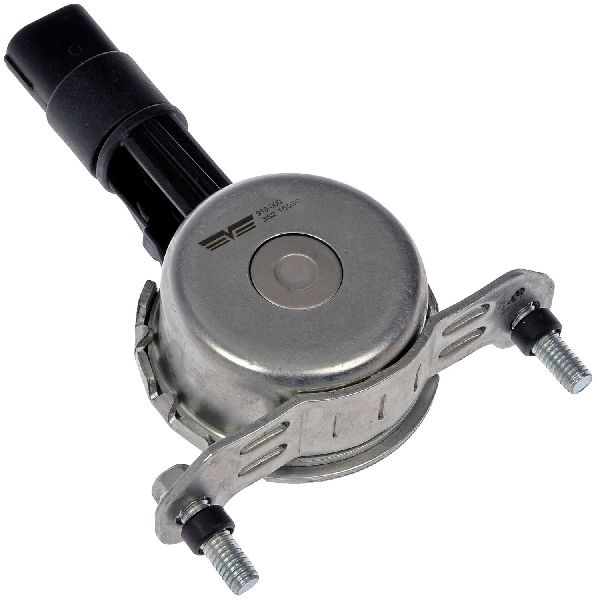
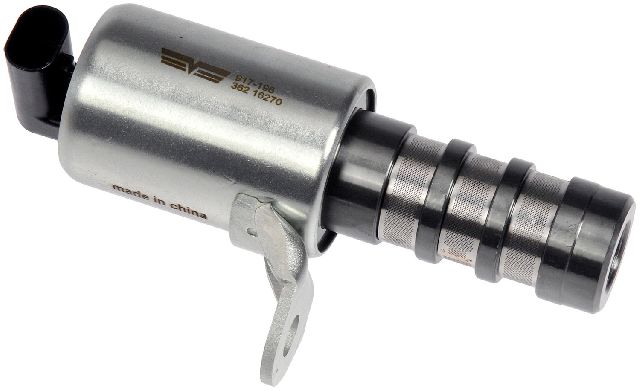
- The most likely required repair is replacing the Bank 1 intake VCT solenoid.
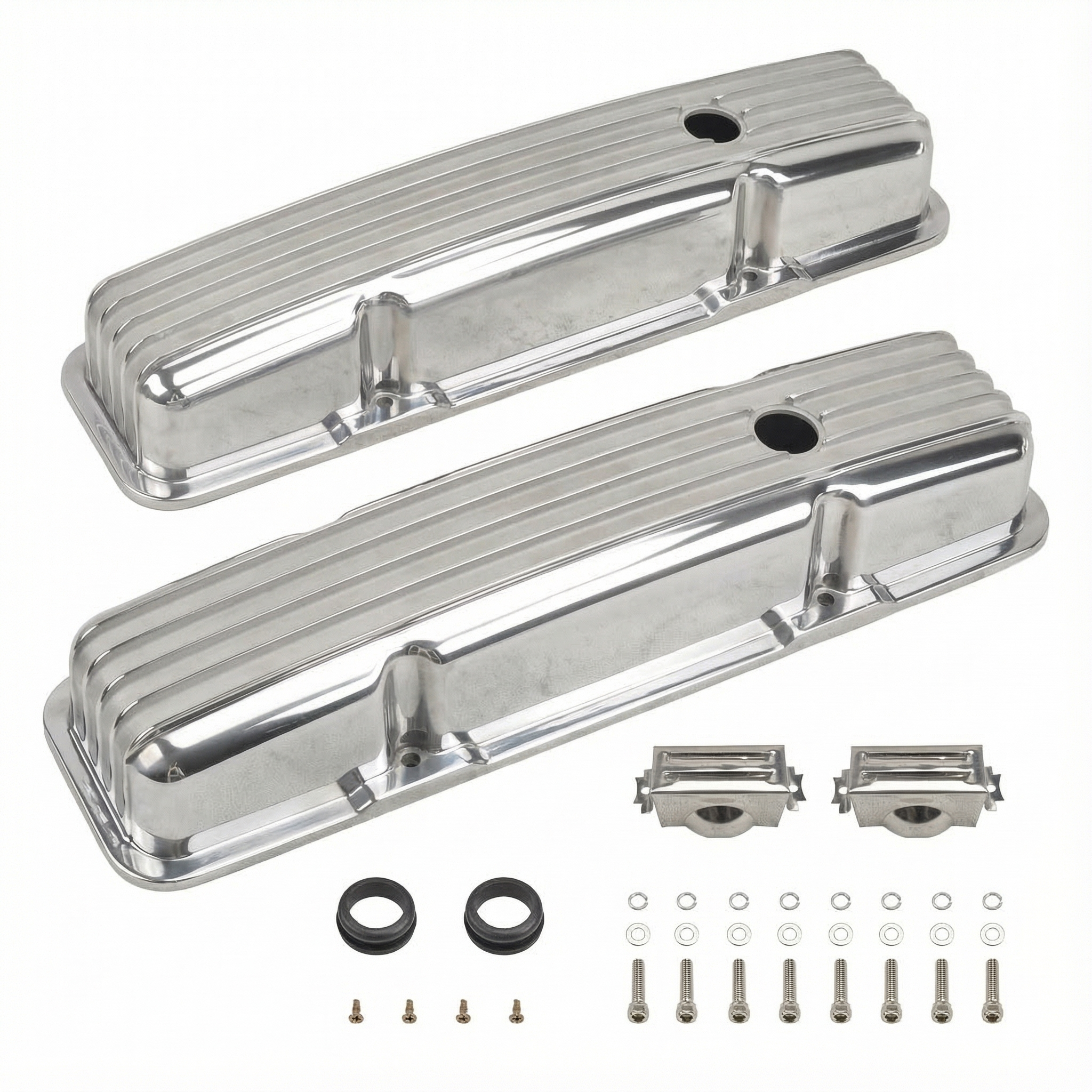
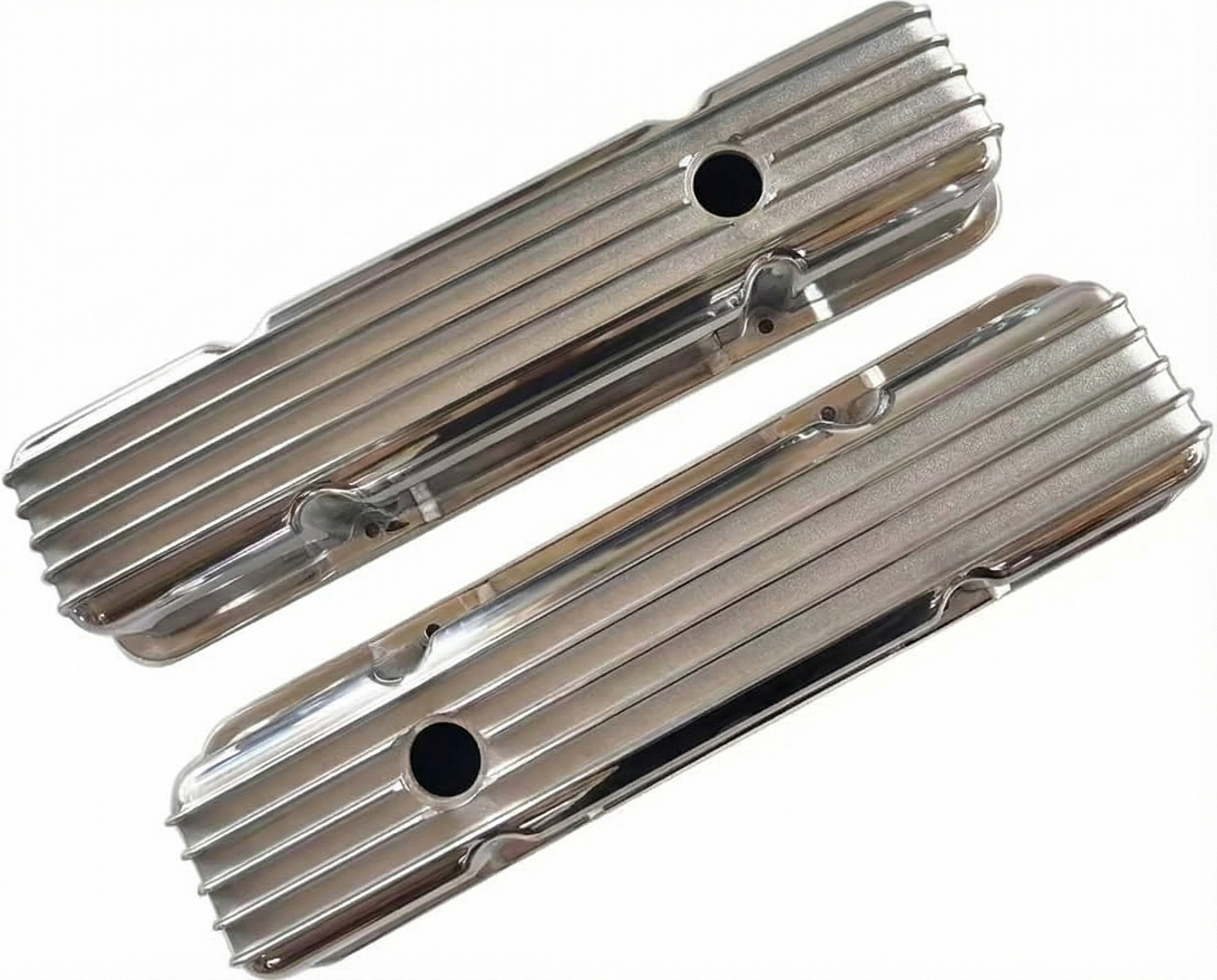
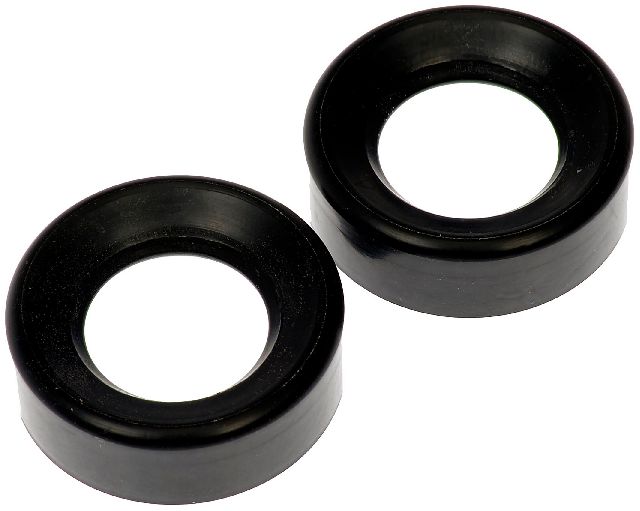
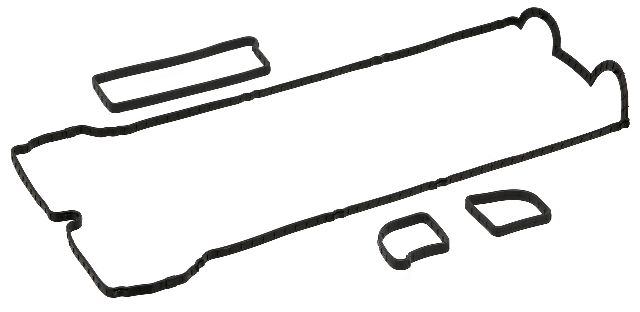
- This repair requires removing the valve cover, so it's a good idea to replace the valve cover gasket at the same time.
- This is a known issue acknowledged by Ford in multiple service bulletins.
What's Unique About the 2015-2021 Ford MUSTANG
The S550 generation Mustang's engines, particularly the 5.0L Coyote V8 and 2.3L EcoBoost, are known for VCT solenoid issues. Ford has issued multiple Technical Service Bulletins (TSBs) acknowledging that P0011 and related codes can be caused by small debris in the engine oil causing the VCT solenoids to stick. Some owners also report a distinct rattle from the front of the valve covers on startup, which can be associated with VCT phaser problems that sometimes accompany solenoid issues. This makes regular, high-quality oil changes using the OEM-specified viscosity especially critical on these platforms to prevent drivability problems like rough idle and stalling associated with this code.
Diagnostic Flowchart
Tap your situation to follow the diagnostic path that matches what you're seeing on this vehicle.
Symptoms You May Notice
- Check Engine Light is on
- Rough or unstable idle, sometimes shaking the whole car
- Engine stalling, especially when coming to a stop or during deceleration
- Reduced engine power and sluggish acceleration
- Poor fuel economy
- Engine rattling or ticking noises, particularly from the front cover area
- Hard starting condition
- Replacing the camshaft position sensor first, when the issue is almost always oil-related or the VCT solenoid itself.
- Replacing the cam phaser before properly diagnosing the VCT solenoid and oil condition. The solenoid is cheaper and easier to replace.
- Using a cheap aftermarket VCT solenoid (like Dorman, as noted in one forum post) which may fail quickly, leading the owner to believe the solenoid was not the problem.
Most Likely Causes
- Sticking or Failed VCT Solenoid 🔴 High Probability Multiple Ford TSBs (SSM 48423, SSM 47170) state this is a common issue caused by small debris in the oil clogging the solenoid. Forum users frequently report this as the primary cause.
How to confirm: Use a diagnostic scan tool to perform a VCT solenoid cycle test (Ford's pinpoint test HK11 suggests cycling it 10 times to clear debris). You can also swap the Bank 1 intake solenoid with the Bank 1 exhaust solenoid. Clear codes and drive. If the code changes to P0014, the solenoid is confirmed faulty. When removed, its internal resistance can be checked with a multimeter (typically 6-12 ohms).
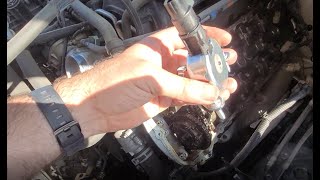
Typical fix: Replace the Bank 1 intake VCT solenoid. 🎬 See this step-by-step walkthrough for replacing the VCT solenoid. This requires removing the valve cover. 🎬 Watch how to remove the oil dipstick and valve cover. An oil and filter change is critical to prevent the new solenoid from failing.
Est. part cost: $25-$70 - Low, Dirty, or Incorrect Viscosity Engine Oil 🔴 High Probability The Ti-VCT system is hydraulic and highly sensitive to oil quality, level, and pressure. Debris from old or poor-quality oil is the primary cause of sticking solenoids. Using oil that is too thick can also restrict flow in the VCT passages.
How to confirm: Check the oil level on the dipstick and inspect its color and condition. If it's dark, gritty, below the minimum level, or past its service interval, it needs to be changed. This should be the very first check. 🎬 Watch this before buying parts to avoid common diagnostic mistakes.
Typical fix: Perform an oil and filter change using the correct OEM-specified grade (e.g., 5W-20 or 5W-30 depending on the engine and model year) and a quality filter.
Est. part cost: $50-$100 - Failed Camshaft Position Sensor ⚪ Low Probability → Shop Engine Camshaft Position Sensor
How to confirm: This is less common, but if the sensor provides incorrect data, the ECM may think there is a timing issue. Diagnose this after confirming the VCT solenoid is functional. The sensor's signal can be monitored with an advanced scan tool or oscilloscope. Often, a failing sensor will throw its own specific codes (e.g., P0340).
Typical fix: Replace the Bank 1 intake camshaft position sensor.
Est. part cost: $20-$50 - Damaged Cam Phaser ⚪ Low Probability → Shop Engine Timing Gear While less common than solenoids, phaser failure is a known issue on Coyote and EcoBoost engines, sometimes causing a startup rattle.
How to confirm: This is usually diagnosed after replacing the VCT solenoid and confirming good oil pressure and quality. If live data shows the timing angle is still erratic, stuck, or jumping wildly (e.g., 50+ degrees off command), the mechanical phaser is the likely culprit. This is a complex mechanical diagnosis.
Typical fix: Replace the Bank 1 intake cam phaser, which is a significant mechanical repair involving the engine's timing components.
Est. part cost: $100-$300
Rare But Worth Checking
- Stretched Timing Chain: → Shop Engine Timing Chain While uncommon on its own, a stretched timing chain can cause a host of timing codes, including P0011. This is a major repair and usually presents with rattling noises on startup. If the chain has jumped a tooth, it can also cause this code.
- Clogged VCT Oil Filter: → Shop Engine Oil Filter Adapter Some engines have small, serviceable mesh filters in the oil passages leading to the VCT solenoids inside the cylinder head. If these become clogged with sludge or debris, they can starve the solenoid of oil pressure.
Diagnosis Steps
- Check Engine Oil: Verify the oil level is correct and the oil is clean and of the proper viscosity. If low, dirty, or incorrect, perform an oil and filter change before proceeding. This alone can sometimes fix the issue.
- Scan for Codes: Use an OBD-II scanner to confirm P0011 and check for any other related codes. Document the freeze frame data.
- Monitor Live Data: Use a scan tool (like FORScan for Fords) to view PIDs for 'VCT_INT_CMD1' (Commanded) vs. 'VCT_INT_ACT1' (Actual) camshaft position for Bank 1 Intake. Also monitor 'VCT_INT_DIF1' for the error value. A significant, persistent discrepancy confirms an active problem.
- Activate Solenoid: Use a bidirectional scan tool to command the Bank 1 intake VCT solenoid on and off (cycle test). TSB SSM 48423 specifically recommends cycling the solenoid 10 times to attempt to clear debris. Listen for a click from the solenoid and watch the live data to see if the camshaft angle changes.
- Swap Solenoids: If accessible, swap the Bank 1 intake VCT solenoid with the Bank 1 exhaust solenoid. Clear the codes and drive the vehicle. If the code changes to P0014 ('B' Camshaft Over-Advanced), the solenoid is faulty. This is a very reliable diagnostic method.
- Test Wiring and Solenoid: If the solenoid doesn't respond, unplug it and check for 12V power at the connector with the key on. Check for continuity in the wiring back to the ECM. With the solenoid removed, test its internal resistance with a multimeter (should be around 6-12 ohms).
- Inspect Camshaft Position Sensor: Check the sensor and its wiring for any visible damage or contamination.
- Mechanical Inspection: If all else fails, a deeper mechanical inspection of the cam phaser (for being stuck) and the timing chain (for being stretched or jumped) is required. This is an advanced step.
Parts You'll Likely Need
- Engine Variable Valve Timing (VVT/VCT) Solenoid
(OEM #BR3Z-6M280-F (for 5.0L V8), CJ5Z-6M280-A (for 2.3L EcoBoost))— This is the most common failure point for code P0011 on this vehicle, as confirmed by multiple Ford TSBs and countless owner experiences. The 5.0L part BR3Z-6M280-F supersedes older versions BR3Z-6M280-D and BR3Z-6M280-E.
Trusted brands: Motorcraft (OEM, highly recommended), Dorman, Standard Motor Products (SMP)
OEM price range: $40-$70
Aftermarket price range: $25-$50 - Valve Cover Gasket
(OEM #ER3Z-6584-B (Example for 5.0L, verify for your specific year))— The valve cover must be removed to access the VCT solenoids, and the gasket should be replaced to prevent oil leaks. Some owners with leaking VCT solenoid seals opt to replace the entire valve cover assembly.
Trusted brands: Motorcraft, Fel-Pro, Mahle
OEM price range: $30-$60
Aftermarket price range: $20-$40
Related Codes That Often Appear With This One
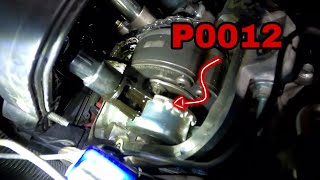
- P0012 — This code is for 'Intake Camshaft Position Timing - Over-Retarded (Bank 1)'. It relates to the same components, and a sticking solenoid or fluctuating oil pressure can cause the timing to be either too advanced or too retarded at different times.
- P0021 — This is the same 'Over-Advanced' code but for Bank 2 (driver's side on the 5.0L V8). If oil quality is poor, it's common for solenoids on both banks to be affected.
- P0300 — This is a 'Random Misfire' code. Incorrect camshaft timing disrupts the air/fuel mixture and ignition timing, which can lead to misfires across one or more cylinders.
- P0016 — Crankshaft Position - Camshaft Position Correlation (Bank 1 Sensor A). This code indicates a misalignment between the crank and cam, which can be caused by a jumped timing chain or a malfunctioning phaser, both of which are related to P0011.
Technical Service Bulletins (TSBs) & Recalls
- SSM 54366: Notes that 2015-2021 vehicles may exhibit P0011 and other VCT codes, pointing to an updated diagnostic pinpoint test (HK) in the workshop manual.
- SSM 48423: States that for 2015-2020 vehicles, P0011 may be due to small debris causing the VCT solenoid to stick and advises cycling the solenoid with a scan tool before replacement.
- SSM 47170: An earlier bulletin with the same diagnosis for vehicles up to 2018, indicating a persistent issue with debris affecting VCT solenoids.
- SSM 48894: Specifically for 2019-2020 F-150s with the 5.0L engine, this TSB points to replacing the VCT solenoid(s) for P0011/P0012/P0021/P0022 codes, corroborating the issue on a platform mate.
Platform-Specific Known Issues
- Technical Service Bulletin #SSM 48423 states: 'Some 2015-2020 Ford and Lincoln vehicles may exhibit an illuminated MIL with diagnostic trouble codes (DTCs) P0011... This may be due to small debris causing the VCT solenoid to stick... Before attempting any component diagnosis or replacement... cycle the affected VCT solenoid 10 times to attempt to clear the debris.'
- Technical Service Bulletin #SSM 47170 has similar wording for 2018 and prior models, indicating this has been a known issue for some time.
- On the 5.0L V8, accessing the passenger side (Bank 1) solenoids requires working around the high-pressure fuel pump (HPFP). Some owners report being able to replace the solenoids by just lifting the front of the valve cover, avoiding full removal of the HPFP and its fuel lines.
Mechanic-Grade Diagnostic Values
- VCT Solenoid Internal Resistance — expected: 5 to 14 Ohms. Failure: A reading outside this range, or infinite resistance (open circuit).
- VCT Solenoid Connector Voltage — expected: Greater than 10.5 Volts (battery voltage). Failure: Voltage below 10.5V indicates a wiring or power supply issue.
- FORScan Live Data PID: VCT_INT_DIF1 — expected: Close to 0 degrees at idle and during steady-state driving.. Failure: A persistent non-zero value indicates a discrepancy between the commanded and actual cam angle.
Scan Tool Commands That Help
- FORScan / Ford IDS: VCT Solenoid On/Off Control (Cycle Test) — This bidirectional command is used to manually activate the VCT solenoid to check for mechanical response (an audible click) and to see if it can clear minor debris causing it to stick, as suggested by Ford TSBs.
- FORScan / Ford IDS: Monitor PIDs: VCT_INT_CMD1, VCT_INT_ACT1, VCT_INT_DIF1 — These Parameter IDs (PIDs) are essential for diagnosing P0011. They allow you to compare the Powertrain Control Module's (PCM) commanded intake cam angle for Bank 1 (CMD) against the actual angle reported by the sensor (ACT) and see the calculated difference (DIF). A large, sustained difference confirms a timing control fault.
Wiring & Ground Locations
- Fuse #44 — In the under-hood fuse box (Battery Junction Box).. This 20A fuse provides power to the VCT solenoids. Although the owner's manual may label it generically, it is the correct fuse to check for power supply issues to the solenoids before diagnosing wiring or component faults.
- VCT Solenoid Connector — On top of the VCT solenoid, under the valve cover.. This 2-pin connector is where voltage and resistance tests are performed. One pin is for the 12V power supply (VPWR) and the other is the control signal from the PCM. A damaged connector or wiring pigtail (Part No. BU2Z-14S411-AYA or AU2Z-14S411-DB) can cause an open or short circuit, mimicking a failed solenoid.
Real Owner Repair Stories
- Reddit user in /r/MechanicAdvice (Vehicle year not specified, but behavior is consistent with 2015+ models.) — Check engine light with code P0011 appeared 5 days after an oil change. The user also noted an oil leak from the solenoid area.
❌ Tried (didn't work) Initially suspected the recent oil change was the cause.
✅ What actually fixed it The user discovered the VCT solenoid's O-ring was broken, causing an oil leak. Replacing the faulty VCT solenoid resolved the code and the engine ran smoothly again. The likely cause was a loss of localized oil pressure at the solenoid due to the leak.
OEM Part Supersession History
BR3Z-6M280-D→BR3Z-6M280-E, then BR3Z-6M280-F— Ford has released updated versions of the VCT solenoid for the 5.0L Coyote V8 to improve reliability and performance.
Heads up: The latest part, BR3Z-6M280-F, is the recommended replacement for all 2015-2021 5.0L Mustangs. Older versions should be avoided.
Model Year Variations Within This Range
- 2015-2017 (Gen 2 Coyote 5.0L): These engines use port fuel injection only and have an 11:1 compression ratio. The VCT system is robust but is the subject of the TSBs mentioned for sticking solenoids.
- 2018-2021 (Gen 3 Coyote 5.0L): The Gen 3 engine introduced a dual fuel system (port and direct injection), a higher 12:1 compression ratio, and redesigned cylinder heads. The VCT system was also revised, with some forum users noting different part numbers for the solenoids compared to Gen 2. For example, a 2018+ may use two different solenoid types per bank (BR3Z6M280F and HL3Z6M280A). The engine control logic is also significantly more complex.
Helpful Videos
Used OEM Parts in Stock
New Aftermarket Parts Available


The information in this article is provided for general reference and educational purposes only. Vehicle specifications, procedures, and part compatibility can vary by production date, trim level, and region. Always consult your vehicle's factory service manual and verify part numbers before purchasing or performing repairs. Safety-critical components such as airbags, seat belts, and braking systems should be installed by a qualified professional.
- Ford MUSTANG:
- 🧭 Diagnostic Flowchart
- 🎬 Helpful Videos
- 🛍️ Shop This Part
- What's Unique About the 2015-2021 Ford MUSTANG
- Symptoms You May Notice
- Most Likely Causes
- Rare But Worth Checking
- Diagnosis Steps
- Parts You'll Likely Need
- Related Codes That Often Appear With This One
- Technical Service Bulletins (TSBs) & Recalls
- Platform-Specific Known Issues
- Mechanic-Grade Diagnostic Values
- Scan Tool Commands That Help
- Wiring & Ground Locations
- Real Owner Repair Stories
- OEM Part Supersession History
- Model Year Variations Within This Range
- 🎟️ Get 5% Off