

P0011 on 2014-2018 Subaru Forester: Camshaft Timing Over-Advanced Causes and Fixes
On a 2014-2018 Subaru Forester, P0011 is almost always caused by low or dirty engine oil. If an oil change doesn't fix it, the next most likely cause is a faulty passenger-side Oil Control Valve (OCV), which costs about $70-$130 for an aftermarket part and is a straightforward DIY replacement. On turbo (XT) models, this code requires immediate attention as it can signal oil starvation to the turbo.
- Before buying any parts, check your engine oil level and condition. An oil change is the most common and cheapest fix.
- If an oil change doesn't solve the problem, the passenger-side Oil Control Valve (OCV) is the next most likely culprit.
- A simple and effective diagnostic is to swap the passenger and driver side OCVs to see if the code follows the part (changing to P0021).
- If you own a Forester XT (turbo), treat this code with high urgency to prevent potential turbocharger failure.
What's Unique About the 2014-2018 Subaru Forester
The FB25B engine's AVCS (variable valve timing) system is extremely sensitive to oil level and cleanliness, making regular oil changes with the correct 0W-20 synthetic oil critical. Unlike many other vehicles where this code might point to more complex issues, on the Forester, it's very frequently traced back to basic oil maintenance. For the turbocharged Forester XT models (with the FA20F engine), this code is a more urgent warning, as it can indicate oil starvation caused by a clogged banjo bolt filter in the turbo's oil feed line, which can quickly lead to catastrophic turbocharger failure.
Symptoms You May Notice
- Check Engine Light is on
- Rough or unstable idle
- Engine stalling, especially at low speeds
- Reduced engine power and acceleration
- Decreased fuel economy
- Hard starting
- Jerky acceleration
- Replacing the camshaft position sensor when the actual problem is a faulty oil control valve or dirty oil.
- Assuming a major timing chain issue before checking the oil level/condition and testing the OCVs.
- Replacing a turbocharger on an XT model without first cleaning or removing the banjo bolt filter that caused the oil starvation.
Most Likely Causes
- Low or Dirty Engine Oil 🔴 High Probability The Subaru AVCS system is hydraulic and highly sensitive to oil pressure, viscosity, and cleanliness. The FB25B engine is also known for oil consumption issues, making it more likely to run low on oil between changes. Neglecting oil changes or using the wrong type of oil is the most frequent trigger for this code.
How to confirm: Check the engine oil dipstick. If the level is below the 'low' mark or the oil appears dark, thick, or sludgy, this is the likely cause. The code often appears when an oil change is overdue.
Typical fix: Perform an oil and filter change using the manufacturer-recommended 0W-20 synthetic oil. Clear the codes and drive the vehicle to see if the code returns.
Est. part cost: $40-$90 - Faulty Bank 1 (Passenger Side) Oil Control Valve (OCV) / VVT Solenoid 🟡 Medium Probability The OCV can become clogged with sludge from infrequent oil changes or fail electronically, causing it to get stuck in one position and preventing proper camshaft timing adjustment.
How to confirm: A common and effective diagnostic technique is to swap the Bank 1 (passenger side) and Bank 2 (driver side) intake OCVs. They are identical parts. Clear the codes and drive the vehicle. If the trouble code changes to P0021 (the Bank 2 equivalent), the valve is confirmed to be faulty.
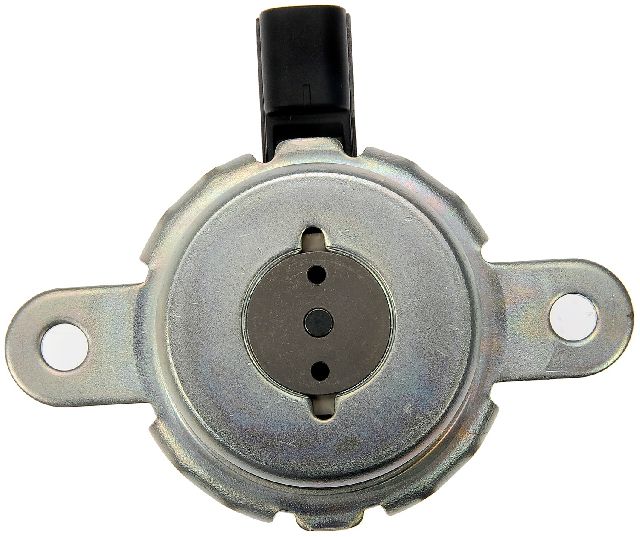
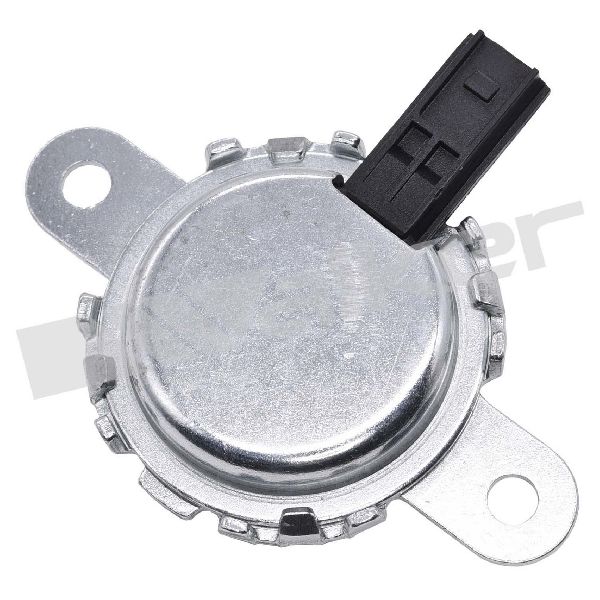
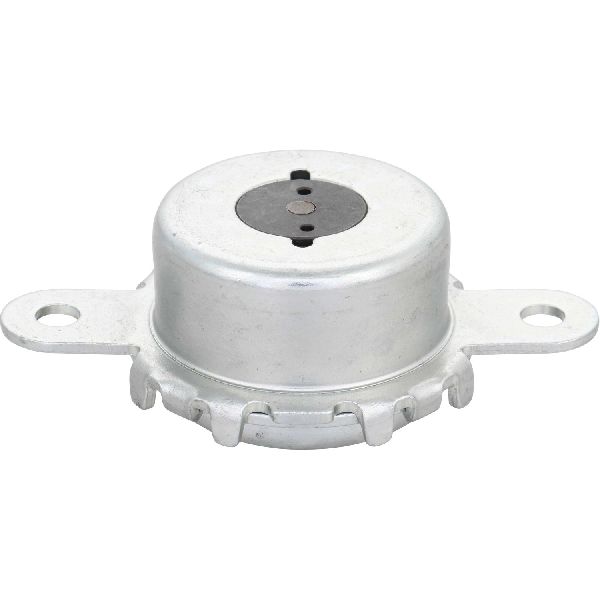
Typical fix: Replace the faulty Oil Control Valve. It is located on the front of the cylinder head on the passenger side, held in by a single 10mm bolt.
Est. part cost: $70-$180 - Clogged Banjo Bolt Filter Screen ⚪ Low Probability These small filter screens in the banjo bolts for the oil lines can get clogged with debris, restricting oil flow to the AVCS components. This is especially critical on Forester XT (turbo) models, where a clogged screen in the turbo oil feed line can cause P0011 and starve the turbo. Many owners and some older TSBs for other models have recommended removing these screens entirely to prevent future oil starvation, though this is debated as it removes a layer of protection.
How to confirm: Remove the banjo bolts for the AVCS oil lines (and turbo feed line on XT models) and inspect the screens for clogging. This is more involved and may require removing other components for access.
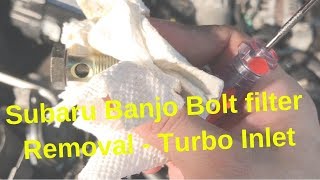
Typical fix: Clean or replace the banjo bolts and their integrated filters. Alternatively, remove the screens after careful consideration. Always use new crush washers upon reinstallation. 🎬 Watch: How to remove the banjo bolt filter screen.
Est. part cost: $15-$30 per bolt
Rare But Worth Checking
- Stretched Timing Chain or Failed Tensioner: → Shop Engine Timing Chain This is more likely on higher-mileage engines (over 150,000 miles). It is usually accompanied by a rattling noise from the front of the engine, especially on startup. Diagnosis can be confirmed by checking cam/crank correlation with a scan tool after disabling the OCVs, as outlined in TSB 02-163-16R. This is a much more involved and expensive repair.
- Faulty Camshaft Position Sensor: → Shop Engine Camshaft Position Sensor While possible, this is less common than an OCV failure for this specific code. It would typically be diagnosed after ruling out oil issues and OCV problems. A failing sensor might also throw its own specific circuit codes.
- Failed AVCS Cam Sprocket (Phaser): The internal mechanism of the camshaft phaser can get clogged with sludge or fail mechanically. This is rare and is usually the last part to be replaced after all other causes have been eliminated.
Diagnosis Steps
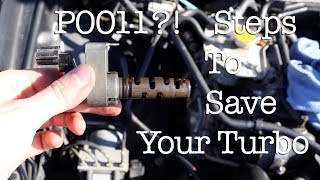
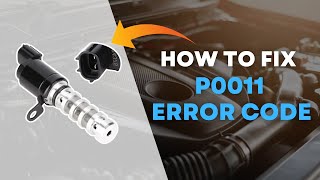
- Check Engine Oil: Pull the dipstick. Is the oil level low? Is the oil dark, thick, or past its change interval? If yes, perform an oil and filter change with 0W-20 synthetic oil, clear the code, and drive to see if it returns. This is the most common fix. 🎬 See this simple walkthrough for diagnosing and repairing the code.
- Inspect OCV Wiring: Check the electrical connector and wiring to the Bank 1 (passenger side) OCV for any signs of damage, corrosion, or oil contamination.
- Test the Oil Control Valve (OCV): The most effective DIY test is to swap the passenger-side (Bank 1) and driver-side (Bank 2) intake OCVs. They are held in by a single 10mm bolt. Mark the original passenger-side valve. Clear the codes and drive. If the code returns as P0021 (Bank 2), you have confirmed the OCV you moved is faulty.
- Inspect Banjo Bolt Filters: If the above steps do not resolve the issue, consider inspecting the banjo bolt filter screens for the AVCS oil lines. They may be clogged with debris. This is a more involved step, especially on turbo models.
- Seek Professional Help: If the code persists, the issue could be a more complex mechanical problem like a stretched timing chain or a faulty camshaft phaser, which requires professional diagnosis, potentially using Subaru's specific diagnostic values as described in TSB 02-163-16R.
Parts You'll Likely Need
- Engine Oil and Filter — The most common cause of P0011 is low or dirty engine oil.
Trusted brands: Subaru Genuine, Mobil 1, Castrol, Pennzoil Platinum
OEM price range: $50-$90
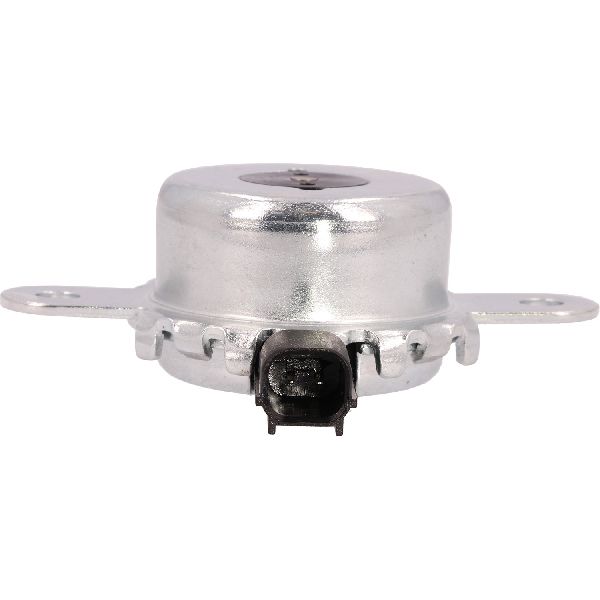
Aftermarket price range: $40-$80 - Oil Control Valve (VVT Solenoid), Intake, Bank 1
(OEM #10921AA23B)— This is the second most common failure. This part number supersedes older versions like 10921AA23A. Always verify with VIN.
Trusted brands: Subaru Genuine, Denso (OEM supplier), Dorman
OEM price range: $120-$180
Aftermarket price range: $70-$130
Related Codes That Often Appear With This One
- P0021 — This is the identical code for Bank 2 (driver's side). If P0011 and P0021 appear together, it strongly suggests a systemic oil problem like extremely low level, severe sludge, or incorrect viscosity affecting the entire engine.
- P000A — This code means '"A" Camshaft Position Slow Response Bank 1'. It points to the same root causes as P0011 (oil issues or a failing OCV) and often appears alongside it. TSB 02-163-16R covers diagnostic procedures for both codes.
Technical Service Bulletins (TSBs) & Recalls
- 02-163-16R: This is a key document providing detailed inspection and repair procedures for a range of AVCS-related DTCs, including P0011. It outlines steps for checking oil condition, testing OCVs, and verifying mechanical timing using a scan tool.
- 02-132-12R: An earlier TSB that also outlines diagnosis for AVCS DTCs, pointing to contamination in the OCV or cam sprocket as a potential cause.
- 09-104-23R: This TSB number appears to be incorrect or related to a different issue (ECM reprogramming for other codes) based on public search results. TSB 02-163-16R is the more relevant document for P0011 diagnosis.
Platform-Specific Known Issues
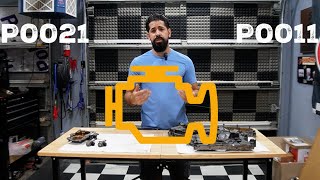
- Turbocharger Failure on XT Models: On Forester XT (turbo) models, P0011 can be a direct precursor to turbo failure. 🎬 Watch: Is your turbo dead? Check these P0011 symptoms. A clogged banjo bolt filter in the turbo's oil supply line restricts lubrication, which can trigger the timing code and simultaneously destroy the turbo bearings. This must be addressed immediately on XT models.
- Real-World Repair Story: A user on subaruforester.org with a 2011 Forester XT reported a P0011 code. After confirming the oil level was correct, they inspected the banjo bolt for the Bank 1 OCV and found the mesh filter was missing and had disintegrated, jamming the OCV. After replacing the OCV and removing the remnants of the filter, the code was resolved. This highlights the common failure pattern of the filter causing the OCV to stick.
Mechanic-Grade Diagnostic Values
- Oil Control Valve (OCV) / VVT Solenoid Coil Resistance — expected: 6.9 - 7.9 Ohms at 68°F (20°C). A general range of 6-12 Ohms is also cited as acceptable.. Failure: A reading of infinity (open circuit) or near zero (short circuit) indicates a failed coil. However, the valve can still be mechanically stuck even with correct resistance.
- Live Data: AVCS Intake Cam Angle (Bank 1) vs. Desired Angle — expected: At a stable, warm idle, both the 'Desired' and 'Actual' cam angle values on a scan tool should be at or very near 0 degrees.. Failure: If the 'Actual' angle is stuck at a value significantly different from the 'Desired' angle (e.g., stuck at 10+ degrees when 0 is commanded), it indicates a stuck phaser or faulty OCV.
- Live Data: Camshaft Position with OCV Unplugged — expected: With the Bank 1 intake OCV electrical connector unplugged (disabling AVCS adjustment), the cam angle should read a stable value close to 0 degrees.. Failure: A reading of +/- 10 degrees or more suggests the base mechanical timing is incorrect (e.g., the timing chain has skipped a tooth). Subaru cam sprockets have 36 teeth, making one tooth equal to 10 degrees of rotation.
Hidden / Shadow Codes Worth Checking
- Mode $06: AVCS Diagnostic Value: This is not a DTC but a diagnostic monitor value. TSB 02-163-16R instructs technicians to perform a specific drive cycle and then read the 'AVCS diagnostic value'. A value greater than or equal to 1000 indicates the self-diagnosis has completed. If the value is 0, the drive cycle must be continued. (see via A professional scan tool with Mode $06 capabilities, such as the Subaru Select Monitor (SSM).)
Scan Tool Commands That Help
- Subaru Select Monitor (SSM) or equivalent professional scan tool (Autel, Foxwell, etc.): AVCS Intake VVT System Test / Active Test — This bidirectional command allows a technician to manually activate the Bank 1 intake OCV solenoid to verify its operation. You can command it on and off to see if the camshaft angle changes accordingly on the live data screen, confirming if the solenoid is responding to electrical commands.
Wiring & Ground Locations
- Engine Grounding System — Key grounding points for the engine management system include the main battery-to-chassis ground, the alternator bracket, and a crucial ground point on the intake manifold which provides the ground reference for many sensors and the ECU.. While not a primary cause, a poor ground connection at the intake manifold can introduce electrical noise and voltage discrepancies, potentially affecting the signals from the camshaft position sensor or the operation of the OCV, leading to intermittent or false codes. Verifying that all engine grounds are clean and tight is a valid, though less common, diagnostic step.
- OCV Connector — The 2-pin electrical connector on the front of the Oil Control Valve solenoid, located on the front of the passenger-side cylinder head.. This is the point for testing the OCV's coil resistance with a multimeter. The two pins connect directly to the internal coil of the solenoid. It should also be inspected for oil contamination, which can degrade the connection over time.
Real Owner Repair Stories
- Reddit user on r/SubaruForester (2010 Forester XT (Turbo model, similar issue pattern)) — Check engine light with code P0011, followed by a whining noise from the engine under boost, which then turned into a crunching sound and a total loss of turbo boost.
❌ Tried (didn't work) Topping off low engine oil. The code appeared, user saw oil was low, topped it off, but the failure cascade had already begun.
✅ What actually fixed it The turbocharger had failed (blown). The root cause was oil starvation. A responding user with the same model confirmed the issue is almost always a clogged banjo bolt filter on the turbo oil feed line. The user warned that if the banjo bolt filter is not replaced or removed during the turbo replacement, the new turbo will fail again very quickly.
OEM Part Supersession History
10921AA23A→10921AA23B— Likely an internal design improvement to enhance reliability and reduce the likelihood of the solenoid's internal spool valve sticking from oil sludge or debris.
Heads up: None. Part 10921AA23B is the correct and direct service replacement for 10921AA23A and is fully compatible with all specified model years.
Model Year Variations Within This Range
- 2014-2016: Earlier models of the SJ Forester generation (2014-2016) are more frequently cited for issues with excessive oil consumption. While the issue can affect all years, it was more pronounced early on. This increases the likelihood of the engine running low on oil, which is a primary trigger for code P0011. By 2017-2018, these oil consumption issues were reportedly less common.
Diagnostic Flowchart
Other Known Issues on This Vehicle
Issues unrelated to this code that are worth knowing about as an owner of this generation:
- Excessive Oil Consumption 🔴 High — Common in 2011-2015 models with the FB25B engine, often appearing between 60,000-100,000 miles. Consumption rates can be 1 quart per 1,000-1,200 miles. (Ref: A class-action lawsuit led to a warranty extension for some owners, but this program is now closed. The issue is often traced to piston ring design.)
- CVT Transmission Shudder/Failure 🔴 High — Most prevalent in 2014-2018 models, with symptoms like shuddering, hesitation, and whining often starting between 60,000 and 80,000 miles. Failures often relate to the valve body or torque converter. (Ref: Subaru extended the CVT warranty for many affected models to 10 years/100,000 miles.)
- A/C Condenser Failure 🟠 Medium — Widespread on 2017 and early 2018 models, where the A/C system stops cooling due to refrigerant leaking from corrosion in the condenser. (Ref: Subaru issued Service Program WRB-21 and extended the warranty on the A/C condenser to 5 years/unlimited miles for affected VINs.)
Used vs. New Parts: Buying Guide for This Vehicle
When a used part is the smart pick: For this specific repair, using a used part from a salvage yard is generally not recommended. The primary replacement part, the Oil Control Valve (OCV), is an electro-mechanical part prone to failure from oil sludge and internal wear. The cost savings of a used part are minimal compared to the risk of premature failure and the labor required for replacement.
Donor-vehicle mileage cap: roughly under 80000 miles for the part to have meaningful remaining life.
What to inspect on the donor part:
- If considering a used OCV, source it from a vehicle with documented, low mileage.
- Inspect the small screen on the valve for any tears or debris before purchase.
- Test the resistance across the two pins with a multimeter; it should be within 6.9-7.9 Ohms.
OEM-only on this vehicle (don't cheap out):
- While not strictly 'OEM-only', using a Genuine Subaru or the OEM supplier (Denso) for the Oil Control Valve is highly recommended for reliability.
Aftermarket brands forum-validated for this vehicle:
- Denso (often the original equipment manufacturer for Subaru)
- Dorman (offers a widely available alternative)
Brands owners have reported issues with on this vehicle:
- Unnamed, no-brand 'white box' parts from online marketplaces should be avoided, as their internal tolerances and coil quality can be inconsistent, leading to repeat failures.
Real Owner Stories
Aggregated from forums and TSBs cited above. Mileages and costs reflect what owners reported in those sources.
2011 Subaru Forester XT
Symptoms: P0011 code and engine running rough.
What fixed it: Inspected the banjo bolt for the Bank 1 OCV and found the mesh filter had disintegrated and jammed the OCV. Replaced the OCV and removed the filter remnants.
Source hint: subaruforester.org thread cited in 'Real-World Repair Story'
2014-2018 Subaru Forester (Canada)
Symptoms: P0011 code appearing every winter.
What fixed it: User spent $2,000 at several dealerships/garages attempting to resolve the recurring code.
Source hint: reddit r/SubaruForester
Related OBD-II Codes
Frequently Asked Questions
Which TSB provides the official diagnostic procedure for P0011 on my 2014-2018 Forester?
Can I use any engine oil to fix this code on my FB25B engine?
Is there a simple way to test if my passenger-side Oil Control Valve is bad?
I have a Forester XT; why is P0011 considered more urgent for my turbo model?
Does the FB25B engine's known oil consumption issue relate to this code?
Should I remove the small filter screens in the banjo bolts?
Helpful Videos
We Have This Part in Stock


The information in this article is provided for general reference and educational purposes only. Vehicle specifications, procedures, and part compatibility can vary by production date, trim level, and region. Always consult your vehicle's factory service manual and verify part numbers before purchasing or performing repairs. Safety-critical components such as airbags, seat belts, and braking systems should be installed by a qualified professional.
- Subaru Forester:
- 🧭 Diagnostic Flowchart
- 🎬 Helpful Videos
- 🛍️ Shop This Part
- What's Unique About the 2014-2018 Subaru Forester
- Symptoms You May Notice
- Most Likely Causes
- Rare But Worth Checking
- Diagnosis Steps
- Parts You'll Likely Need
- Related Codes That Often Appear With This One
- Technical Service Bulletins (TSBs) & Recalls
- Platform-Specific Known Issues
- Mechanic-Grade Diagnostic Values
- Hidden / Shadow Codes Worth Checking
- Scan Tool Commands That Help
- Wiring & Ground Locations
- Real Owner Repair Stories
- OEM Part Supersession History
- Model Year Variations Within This Range
- Other Known Issues on This Vehicle
- Used vs. New Parts: Buying Guide for This Vehicle
- Real Owner Stories
- 2011 Subaru Forester XT
- 2014-2018 Subaru Forester (Canada)
- Related OBD-II Codes
- Frequently Asked Questions
- 🎟️ Get 5% Off