

P0012 on 2003-2024 Acura MDX: Over-Retarded Camshaft Timing Causes and Fixes
On a 2003-2024 Acura MDX, code P0012 is most often caused by low or dirty engine oil, or a faulty VTC (VVT) oil control solenoid. Start by checking your oil; if the level and quality are good, the next step is usually replacing the Bank 1 VTC solenoid, which costs around $50-$150 for the part.
- First, check your engine oil. Low, old, or incorrect oil is the #1 cause of P0012 on an Acura MDX.
- If the oil is fine, the Bank 1 (rear) VTC oil control solenoid is the next most likely culprit and is a DIY-friendly replacement for many.
- For 2003-2013 models, if the vehicle is near or over 100,000 miles and the timing belt service history is unknown, the belt and its components should be inspected immediately.
- Owners of 2016-2020 models should check if their vehicle is affected by the connecting rod bearing recall, as symptoms can overlap.
What's Unique About the 2003-2024 Acura MDX
The Acura MDX spans four generations in this period, with a key difference being the switch from a timing belt to a timing chain. Models from 2003-2013 use a timing belt that requires replacement around 100,000 miles; a slipped or worn belt is a potential cause of P0012 on these earlier models. Later models (2014-2024) use a timing chain, which can stretch over time. For all generations, the Honda/Acura J-series engine's VTC system is highly dependent on clean oil, making oil maintenance the most critical factor in preventing this code.
Generation note: The 2003-2024 model years cover four generations of the Acura MDX: - 1st Gen (2003-2006): Uses a timing belt. - 2nd Gen (2007-2013): Uses a timing belt. - 3rd Gen (2014-2020): Switches to a timing chain. - 4th Gen (2022-2024): Uses a timing chain. The primary cause (oil issues, VTC solenoid) is common across all generations, but for 2003-2013 models, a worn or incorrectly installed timing belt is a more probable cause than a stretched chain on later models.
Symptoms You May Notice
- Check Engine Light is on
- Rough engine idle or vibration
- Engine hesitation or stalling, especially at low speeds
- Noticeable loss of power and sluggish acceleration
- Decreased fuel economy
- Rattling or ticking noise from the engine area
- Difficulty starting the engine, especially when cold
- Replacing the camshaft position sensor first. While it's related to the system, the sensor itself is not the most common failure point. Oil-related issues or the VTC solenoid are far more likely culprits.
- Replacing the crankshaft position sensor. This sensor is part of the timing system but is not directly implicated by the P0012 code, which specifically points to the Bank 1 intake camshaft.
Most Likely Causes
- Low, Dirty, or Incorrect Viscosity Engine Oil 🔴 High Probability The VTC system is hydraulic and requires clean oil at the correct pressure and viscosity to function. The oil passages inside the VTC components are very small and clog easily with sludge or debris from delayed oil changes.
How to confirm: Check the engine oil dipstick for a low level. Examine the oil's color and consistency; if it is dark black, thick, or gritty, it needs to be changed. This is the first and most important check. 🎬 Watch: A quick DIY method to fix the P0012 code
Typical fix: Perform an engine oil and filter change using the manufacturer-recommended oil viscosity (e.g., 5W-20 or 0W-20 depending on the year).
Est. part cost: $40-$80 - Faulty VTC Oil Control Solenoid (Bank 1) 🔴 High Probability This solenoid controls oil flow to the cam phaser. It can become clogged with sludge, its internal filter screen can get blocked with debris, or it can fail electrically, causing it to stick.
How to confirm: After checking the oil, this is the next logical step. You can test the solenoid's resistance with a multimeter (should be between 6 to 12 ohms). A common diagnostic trick is to swap the Bank 1 and Bank 2 solenoids (if identical) and see if the code changes to P0022 (for Bank 2).
Typical fix: Remove and clean the solenoid and its screen with brake or carburetor cleaner. If cleaning doesn't work or the solenoid tests bad, replace it. It is often recommended to replace the gasket/screen assembly at the same time. 🎬 Watch: How to replace the VTEC solenoid gasket and filter
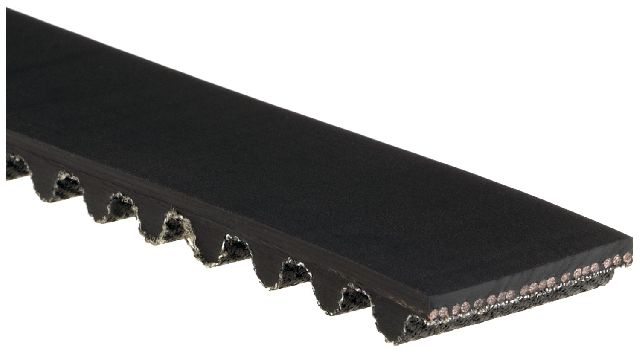
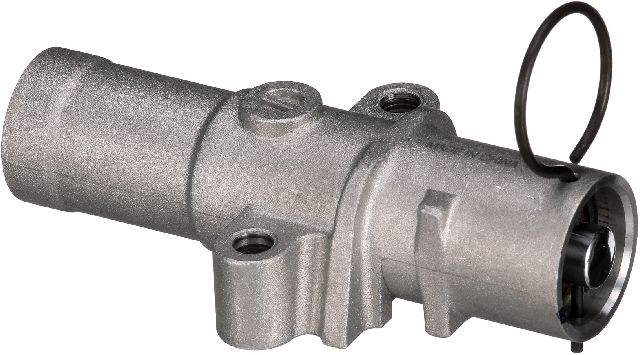
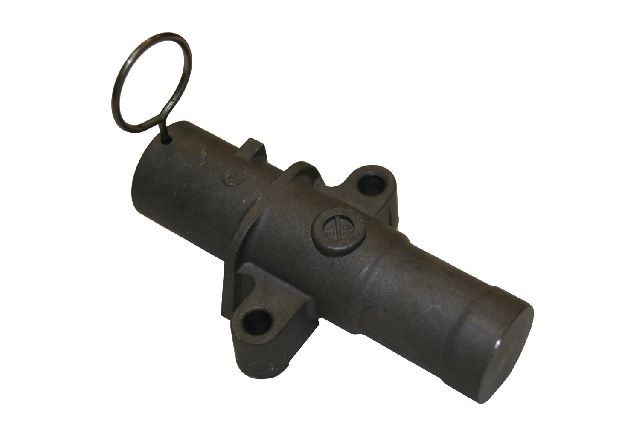
Est. part cost: $50-$150 - Worn Timing Belt / Tensioner (2003-2013 models) 🟡 Medium Probability → Shop Engine Timing Chain These models use a rubber timing belt with a finite service life (approx. 7 years or 100k miles). A belt that has stretched or jumped a tooth will cause incorrect mechanical timing. A failed hydraulic tensioner can also cause slack.
How to confirm: Inspect the timing belt for cracks, wear, or slack. Verify that the timing marks on the camshafts and crankshaft are perfectly aligned. This is a labor-intensive inspection.
Typical fix: Replace the timing belt, hydraulic tensioner, and water pump as a complete kit. This is a labor-intensive job. 🎬 See this walkthrough for replacing the MDX timing belt
Est. part cost: $150-$400 for a full kit - Stretched Timing Chain (2014-2024 models) ⚪ Low Probability → Shop Engine Timing Chain While designed to last the life of the engine, timing chains can stretch over many miles, especially with poor oil maintenance, causing a delay in camshaft response.
How to confirm: Listen for a distinct rattling noise from the engine during a cold start that lasts for 2-3 seconds and then disappears. Definitive diagnosis requires removing the timing cover to measure chain slack, which is a significant job.
Typical fix: Replace the timing chain, guides, and tensioners. This is a major and expensive repair.
Est. part cost: $300-$600 for parts
Rare But Worth Checking
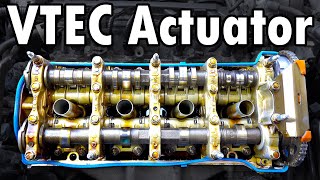
- Failing VTC Actuator (Cam Phaser): This is the mechanical gear on the camshaft itself. It can get stuck or fail internally due to sludge or wear, but this is much less common than a bad solenoid. It's usually diagnosed after all other common causes have been ruled out.
- Faulty Camshaft Position Sensor: → Shop Engine Camshaft Position Sensor The sensor provides the timing data to the ECM. While it can fail, it's more likely that the mechanical or hydraulic parts of the VTC system are the root cause. An oscilloscope can be used for advanced testing of the sensor's waveform.
Diagnosis Steps
- Check Engine Oil: Verify the oil level is full and the oil is clean and of the correct viscosity. If low, dirty, or overdue for a change, perform an oil and filter change, clear the code, and drive to see if it returns. This is the most important and cheapest first step.
- Scan for Other Codes: Check for other related codes (like P0011, P0022, or misfire codes) that can provide more diagnostic clues.
- Inspect the VTC Solenoid: Locate the Bank 1 (rear bank) VTC oil control solenoid. Inspect the wiring and connector for damage or oil contamination. Due to its location against the firewall, this may be difficult.
- Clean/Test/Swap the VTC Solenoid: Remove the solenoid and check its screen for sludge or debris. Clean it with brake cleaner as a potential fix. Test the solenoid's resistance with a multimeter (expect 6 to 12 Ohms). If possible, swap it with the Bank 2 (front bank) solenoid. Clear the codes and run the engine. If the code returns as P0022, the solenoid is confirmed bad.
- Inspect Mechanical Timing: If the issue persists, the next step is to verify the engine's base timing. For 2003-2013 models, inspect the timing belt and tensioner. For 2014+ models, listen for a cold-start rattle indicative of a stretched timing chain. This is an advanced step.
- Test Camshaft Position Sensor: If timing is correct, test the camshaft position sensor for proper operation. Advanced diagnosis involves using an oscilloscope to check for a clean square wave signal.
- Inspect VTC Actuator: If all other components are good, the VTC actuator (cam phaser) on the camshaft may be faulty. This requires significant disassembly to replace.
Parts You'll Likely Need
- VTC Oil Control Solenoid (Bank 1)
(OEM #Varies by generation. Common numbers include: 15810-R70-A04 (common for 2nd/3rd Gen), 15810-5J6-A01 (common for 3rd/4th Gen). Always verify with VIN.)— This is the most common mechanical failure for P0012 after ruling out oil issues. It gets clogged or fails electrically, preventing proper VVT operation.
Trusted brands: Acura (OEM), Denso (often the OEM supplier), Standard Motor Products (SMP), Dorman, NGK/NTK
OEM price range: $100-$220
Aftermarket price range: $40-$90 - Timing Belt Component Kit (2003-2013 models)
(OEM #Example Kit: TKH002 (AISIN). OEM parts should be sourced individually.)— If the timing belt is worn, stretched, or past its service interval, it must be replaced to restore correct mechanical timing. A full kit is recommended.
Trusted brands: Aisin (OEM supplier), Gates, Continental
OEM price range: $300-$500 for components
Aftermarket price range: $150-$400 for a full kit
Related Codes That Often Appear With This One
- P0011 — This is the opposite code for 'Timing Over-Advanced' on the same bank. Seeing both intermittently could point to a VTC solenoid that is sticking unpredictably.
- P0022 — This is the same 'Over-Retarded' code but for Bank 2. If you see P0012 and P0022 together, it strongly suggests a problem affecting the entire engine, like very low/dirty oil or low oil pressure.
- P0300-P0306 — These are random or specific cylinder misfire codes. Incorrect valve timing from the P0012 fault can lead to incomplete combustion, causing the engine to misfire.
- P2646 / P2647 — These codes are specific to Honda/Acura and relate to the 'A' Rocker Arm Oil Pressure Switch or its performance. A problem in the oil pressure system that triggers these codes can also cause P0012.
Technical Service Bulletins (TSBs) & Recalls
- No specific, widely-circulated TSB for P0012 on the Acura MDX was identified in public databases. Diagnosis typically follows standard workshop procedures for VTC faults.
Platform-Specific Known Issues
- Difficult Access to Bank 1 Components: On the Acura MDX V6 engine, Bank 1 is located at the rear of the engine bay against the firewall. Accessing the VTC solenoid and camshaft position sensor for this bank is notoriously difficult due to the tight space. DIY repairs often require removing other components for access.
Mechanic-Grade Diagnostic Values
- VTC Oil Control Solenoid Resistance — expected: 6 to 12 Ohms. Failure: A reading outside this range indicates an electrical fault in the solenoid's coil.
- VTC Solenoid Supply Voltage — expected: 12V (Battery Voltage) with key on, engine off. Failure: No voltage suggests a wiring issue, blown fuse, or problem with the PCM power supply.
- Camshaft Position Sensor Waveform — expected: A consistent square wave pattern on an oscilloscope.. Failure: Irregular, missing, or distorted patterns indicate a faulty sensor or a problem with the reluctor wheel.
Scan Tool Commands That Help
- Honda HDS (or advanced bidirectional scanner): VTC System Test or VTC Solenoid Duty Cycle Command — This command allows a technician to manually activate the VTC solenoid while monitoring the actual vs. commanded camshaft angle. If the angle doesn't change when the solenoid is commanded ON/OFF, it confirms a fault in the solenoid, oil passages, or the VTC actuator itself, helping to isolate the problem without disassembly.
Wiring & Ground Locations
- G101 — On the right side/right rear of the engine compartment, often near the cylinder head or on the engine block itself.. This is a primary engine ground. A loose or corroded G101 can cause erratic behavior in various engine sensors and actuators, including the VTC solenoids and camshaft position sensors, leading to incorrect readings and fault codes.
- VTC Solenoid Connector (Bank 1) — On the rear cylinder head (Bank 1), near the valve cover. It is a 2-pin connector.. This is the direct electrical connection for the faulty component. Technicians need to test for 12V power and a control signal from the PCM at this connector's pins to rule out wiring issues before replacing the solenoid.
Real Owner Repair Stories
- YouTube user proclaimliberty2000 (Vehicle with P0012 and a low oil pressure light (model not specified, but demonstrates a universal VVT issue applicable to the MDX)) — Check Engine Light on, Low Oil Pressure warning light illuminated.
❌ Tried (didn't work) Initial diagnosis considered more complex components like the VVT solenoid or cam phaser.
✅ What actually fixed it The problem was resolved by performing a standard engine oil and oil filter change. The old oil was noted as being very dirty. This single action cleared both the P0012 code and the oil pressure light.
OEM Part Supersession History
15810-R70-A03→15810-R70-A04— Standard part revision and improvement by the manufacturer.
Heads up: The -A04 part is a direct replacement for -A03 and is the recommended service part. Using the older -A03 if found is not advised.
Model Year Variations Within This Range
- 2014-2020: The 3rd generation MDX introduced a timing chain, replacing the previous timing belt. While oil-related issues remain the primary cause of P0012, a stretched timing chain becomes a possible, though less common, cause on these higher-mileage models, whereas a jumped timing belt is the equivalent concern on 2003-2013 models.
- 2017-2020 (Sport Hybrid): The MDX Sport Hybrid uses a smaller 3.0L V6. While the VTC system is fundamentally similar, part numbers for solenoids and sensors may differ from the standard 3.5L engine. It's critical to verify parts by VIN for these models.
Diagnostic Flowchart
Used vs. New Parts: Buying Guide for This Vehicle
When a used part is the smart pick: A used VTC solenoid from a reputable salvage yard can be a cost-effective option, especially if it comes from a low-mileage, rear-ended vehicle. Given the high failure rate is often due to sludge, a visually clean donor engine is a good sign. Other electronic sensors like the camshaft position sensor are also generally safe to buy used.
Donor-vehicle mileage cap: roughly under 80000 miles for the part to have meaningful remaining life.
What to inspect on the donor part:
- For a VTC solenoid, ask the seller to inspect the screen for metal shavings or thick sludge. Avoid any part that looks contaminated.
- Check for a vehicle history report on the donor car if possible to verify mileage and maintenance.
- Inspect electrical connectors for corrosion, brittleness, or cut wires.
OEM-only on this vehicle (don't cheap out):
- Timing Belt Kit (2003-2013 models): The risk of catastrophic engine damage from a failed belt or tensioner is too high. Always use a high-quality OEM or OEM-supplier kit (like Aisin).
- Timing Chain and Components (2014+ models): This is a labor-intensive job. Using cheaper aftermarket chains or guides that could fail prematurely is not worth the risk.
Aftermarket brands forum-validated for this vehicle:
- VTC Solenoid: Denso (OEM supplier), Standard Motor Products (SMP), NGK/NTK.
- Timing Belt Kit: Aisin, Gates, Continental.
Brands owners have reported issues with on this vehicle:
- Unbranded, no-name VTC solenoids from online marketplaces are a gamble. They often have higher failure rates or incorrect internal calibration, causing the code to return. Dorman is a popular choice but some professional forums report mixed results compared to OEM or Denso.
Real Owner Stories
Aggregated from forums and TSBs cited above. Mileages and costs reflect what owners reported in those sources.
Acura MDX (J-series V6)
Symptoms: The Check Engine Light came on with code P0012.
What fixed it: The issue was resolved by simply topping off the low engine oil and clearing the code.
Source hint: YouTube - proclaimliberty2000: 'How To Fix Check Engine Light P0012'
Acura MDX (J-series V6)
Symptoms: Check Engine Light was on for code P0012.
What fixed it: The VTC solenoid was removed and its screen was cleaned with brake cleaner. This was presented as a first-step fix before replacing the part.
Source hint: YouTube - nonda Auto DIY: 'How to Fix HONDA P0012 Engine Code in 4 Minutes'
Related OBD-II Codes
Frequently Asked Questions
Why is the Bank 1 VTC solenoid so hard to access on my Acura MDX?
I have a 2011 MDX with P0012. Should I be checking a timing belt or a timing chain?
Can simply changing the oil really fix the P0012 code?
What's the best way to test the VTC oil control solenoid before buying a new one?
What engine oil viscosity should I use in my MDX to prevent P0012?
Is there an official Acura Technical Service Bulletin (TSB) for code P0012 on the MDX?
Helpful Videos
![How to Fix HONDA P0012 Engine Code in 4 Minutes [1 DIY Method / Only $19.45]](https://img.youtube.com/vi/3pm4dNodT-g/mqdefault.jpg)
We Have This Part in Stock

The information in this article is provided for general reference and educational purposes only. Vehicle specifications, procedures, and part compatibility can vary by production date, trim level, and region. Always consult your vehicle's factory service manual and verify part numbers before purchasing or performing repairs. Safety-critical components such as airbags, seat belts, and braking systems should be installed by a qualified professional.
- Acura MDX:
- 🧭 Diagnostic Flowchart
- 🎬 Helpful Videos
- 🛍️ Shop This Part
- What's Unique About the 2003-2024 Acura MDX
- Symptoms You May Notice
- Most Likely Causes
- Rare But Worth Checking
- Diagnosis Steps
- Parts You'll Likely Need
- Related Codes That Often Appear With This One
- Technical Service Bulletins (TSBs) & Recalls
- Platform-Specific Known Issues
- Mechanic-Grade Diagnostic Values
- Scan Tool Commands That Help
- Wiring & Ground Locations
- Real Owner Repair Stories
- OEM Part Supersession History
- Model Year Variations Within This Range
- Used vs. New Parts: Buying Guide for This Vehicle
- Real Owner Stories
- Acura MDX (J-series V6)
- Acura MDX (J-series V6)
- Related OBD-II Codes
- Frequently Asked Questions
- 🎟️ Get 5% Off