

P0012 Ford Fusion (2015-2020): Causes and Fixes for Camshaft Timing Over-Retarded
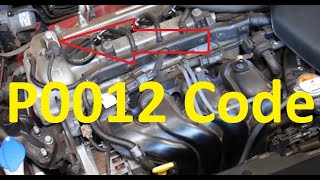
On 2015-2020 Ford Fusions, P0012 most often means the intake camshaft Variable Camshaft Timing (VCT) solenoid on Bank 1 is sticking, usually due to dirty oil or debris. Start by checking your oil; if the level and quality are good, the next step is likely replacing the VCT solenoid. For the 1.5L/2.0L EcoBoost, the OEM part is often Motorcraft part number CJ5Z-6C535-A. The cost for the part is about $80-$95.
- The most likely cause of P0012 on a 2015-2020 Fusion is a sticking intake VCT solenoid, often due to oil contamination, as confirmed by Ford TSBs.
- Always check your engine oil level and condition first. A simple oil change can sometimes fix the problem.
- Replacing the Bank 1 intake VCT solenoid is a common and relatively inexpensive DIY fix (Difficulty 2/5).
- Do not immediately replace the camshaft position sensor; it is rarely the cause of this code.
- If a new solenoid and clean oil don't solve the issue, the problem could be a more serious mechanical issue like a stretched timing chain.
What's Unique About the 2015-2020 Ford FUSION

This issue is common enough on 2015-2020 Ford Fusions and other Ford models that the manufacturer has issued multiple Technical Service Bulletins (TSBs). These bulletins (SSM 47170, SSM 48423) point to a specific weakness: small debris in the engine oil can cause the Variable Camshaft Timing (VCT) solenoids to stick. This makes a sticking solenoid a very high-probability cause for P0012 on this specific vehicle. Ford even has a specific diagnostic procedure, Pinpoint Test HK, which involves cycling the solenoid multiple times with a scan tool to try and dislodge debris before replacing the part.
Diagnostic Flowchart

Tap your situation to follow the diagnostic path that matches what you're seeing on this vehicle.
Symptoms You May Notice
- Check Engine Light is on
- Rough or unstable idle
- Poor acceleration and reduced engine power
- Engine stalling, especially at low speeds or when stopping
- Decreased fuel economy
- Rattling or ticking noise from the engine, especially on startup
- Replacing the camshaft position sensor. The sensor is usually reporting the timing problem correctly; it is not the cause of the incorrect timing. A user on Reddit reported replacing the sensor did not fix their P0012 and P0014 codes.
Most Likely Causes

- Sticking or Failing VCT Solenoid 🔴 High Probability → Shop Engine Variable Valve Timing (VVT) Solenoid Multiple Ford TSBs (SSM 47170, SSM 48423) explicitly state that small debris in the oil can cause the VCT solenoid to stick, leading to this code. The filter screens on the solenoids can become clogged with sludge from infrequent oil changes.
How to confirm: Use a scan tool to perform Ford's Pinpoint Test HK, which cycles the solenoid 10 times to see if it frees up. A more basic test is to remove the solenoid and inspect its screens for sludge or debris. You can also test its resistance with a multimeter or apply 12V to see if the internal plunger moves.
Typical fix: Replace the Bank 1 intake VCT solenoid. It is highly recommended to change the engine oil and filter at the same time to remove the contaminants that caused the failure.
Est. part cost: $80-$95 - Low, Dirty, or Incorrect Viscosity Engine Oil 🔴 High Probability The VCT system is hydraulic and highly dependent on oil pressure and cleanliness. EcoBoost engines can be sensitive to oil quality, and any issue with the oil can prevent the phasers from moving correctly.
How to confirm: Check the oil level on the dipstick and inspect the oil's condition. If it's low, black, sludgy, or past its change interval, this is a likely contributing factor.
Typical fix: Perform an engine oil and filter change using the manufacturer-specified grade of oil (e.g., SAE 5W-30 for EcoBoost, SAE 5W-20 for 2.5L). In many cases, this alone can resolve the code.
Est. part cost: $40-$80 - Worn Timing Chain or Tensioner ⚪ Low Probability → Shop Engine Timing Chain While less common than solenoid failure, timing chains can stretch over time, especially with high mileage or poor maintenance, leading to incorrect timing that the VCT system cannot compensate for.
How to confirm: Listen for a distinct rattling noise on cold starts that may last for a few seconds. Confirming a stretched chain is a major job that requires removing the valve cover and/or timing cover to physically inspect the timing marks and chain tension.
Typical fix: Replace the timing chain, guides, and tensioners. This is a labor-intensive and expensive job.
Est. part cost: $200-$500 - Failed Camshaft Phaser ⚪ Low Probability → Shop Engine Camshaft
How to confirm: This is usually diagnosed after confirming the VCT solenoid and oil system are functioning correctly. A rattling noise may also be present. The phaser may be mechanically stuck or have internal damage.
Typical fix: Replace the camshaft phaser for the Bank 1 intake camshaft. This is often done at the same time as a timing chain replacement.
Est. part cost: $100-$250
Rare But Worth Checking
- Damaged Vacuum Pump: One NHTSA complaint (ODI #11266426) linked P0012 and P0014 to a destroyed vacuum pump. While not a direct cause of cam timing, a failing vacuum pump (common on EcoBoost engines) can be related to larger oil system issues that might also trigger VCT codes.
Diagnosis Steps
- Check Engine Oil: Verify the oil level is correct and the oil is clean and of the proper viscosity. If it's low or dirty, an oil change may resolve the issue. This is the most important and cheapest first step.
- Scan for Codes: Use an OBD-II scanner to confirm P0012 and look for any other related codes (e.g., P0014, P0011).
- Locate Bank 1 Intake Solenoid: On the 4-cylinder Fusion engines, Bank 1 is the only bank. The intake solenoid is typically the more accessible of the two VCT solenoids on the top of the engine, often toward the front of the vehicle.
- Inspect VCT Solenoid: Unplug the electrical connector and inspect for damage or oil contamination. Remove the single bolt (usually 8mm) holding the solenoid in place and pull it out. Inspect the small metal filter screens for dark sludge or debris.
- Test the Solenoid: If you have a capable scan tool, run the VCT control test (Pinpoint Test HK) to cycle the solenoid and see if the code clears. Alternatively, you can swap the intake and exhaust solenoids (if they are identical parts) and see if the code changes to P0014 (exhaust retarded). If it does, the solenoid is bad.
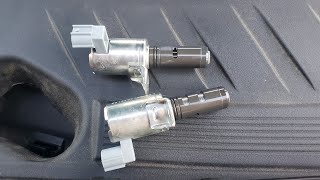
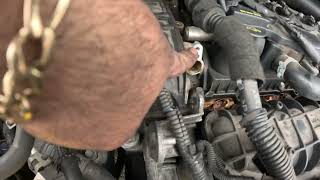
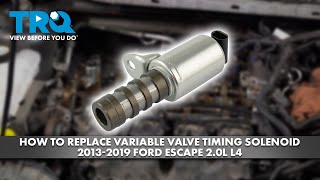
- Replace VCT Solenoid: If the solenoid fails the test, is visibly clogged, or the code follows it in a swap, replace it. Be sure to lightly oil the new O-rings before installation. 🎬 See this step-by-step VVT solenoid replacement on a Ford Fusion
- Inspect Timing Components: If a new solenoid and fresh oil do not fix the code, the issue may be mechanical. Listen for timing chain rattle on cold starts. Further diagnosis requires inspecting the timing chain, guides, and phaser for wear, which is a more advanced job.
Parts You'll Likely Need
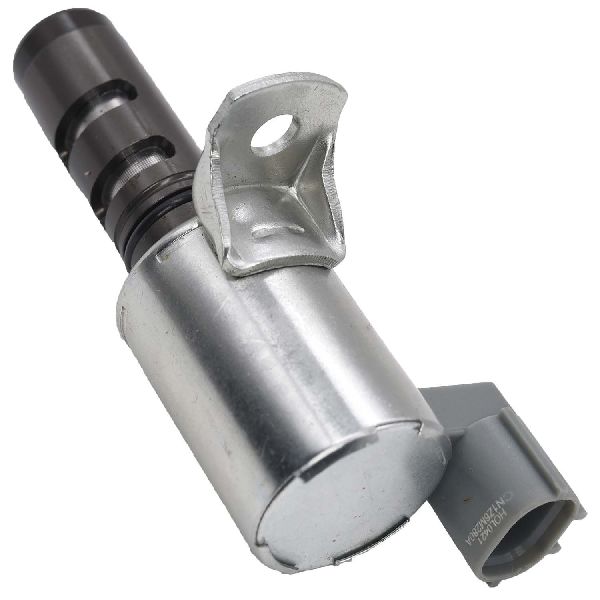
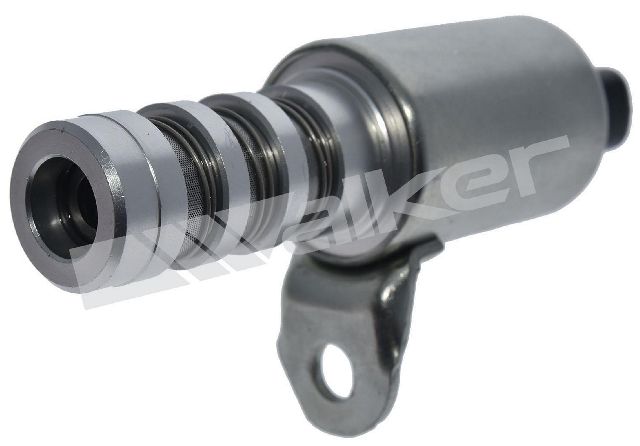
- Engine Variable Valve Timing (VVT) Solenoid
(OEM #CJ5Z-6C535-A (for 1.5L/2.0L EcoBoost), BR3Z-6M280-E (for 2.5L Duratec))— This is the most common cause of P0012 on this vehicle, as identified by Ford's own service bulletins. It controls oil flow to the cam phaser and is prone to sticking from oil debris.
Trusted brands: Motorcraft, Dorman, Standard Motor Products (SMP)
OEM price range: $85-$110
Aftermarket price range: $45-$90
Related Codes That Often Appear With This One
- P0011 — Relates to the same camshaft ('A' Bank 1) but for an 'Over-Advanced' condition. Seeing both can indicate an erratic VCT system or a solenoid that is sticking intermittently.
- P0014 — Relates to the 'B' (exhaust) camshaft on Bank 1. It often appears with P0012 due to shared causes like oil pressure/quality issues affecting both VCT solenoids.
- P0021, P0022, P0024, P0025 — These are the equivalent codes for Bank 2. All are mentioned together in Ford's TSBs (SSM 47170, SSM 48423) as having a common cause related to sticking VCT solenoids.
Technical Service Bulletins (TSBs) & Recalls
- SSM 47170: VCT solenoid sticking due to debris.
- SSM 48423: VCT solenoid sticking due to debris.
- SSM 54366: Diagnostic procedure for VCT-related DTCs.
Platform-Specific Known Issues
- Technical Service Bulletin SSM 47170 notes that some vehicles may show P0012 (and other related codes) due to small debris causing the VCT solenoid to stick.
- Technical Service Bulletin SSM 48423 reiterates the issue of sticking VCT solenoids from debris for the 2015-2020 model years.
- Technical Service Bulletin SSM 54366 provides a specific diagnostic procedure (Pinpoint test HK) for a range of VCT-related codes, including P0012, confirming this is a known issue requiring a defined diagnostic path.
Mechanic-Grade Diagnostic Values
- VCT Solenoid Internal Resistance — expected: 7 to 14 Ohms. Failure: A reading of 0 Ohms (short circuit) or infinite/OL (open circuit) indicates a failed solenoid.
- VCT Solenoid Connector Voltage — expected: Battery Voltage (approx. 12V) on the power supply pin with Key On, Engine Off.. Failure: No voltage suggests a wiring or fuse issue upstream from the solenoid.
- Ford IDS Scan Tool 'VCT Advanced Error' PID — expected: Should be close to 0°, with an acceptable variance of +/- 5° during closed-loop operation.. Failure: A consistent, large deviation from 0° while the PCM is commanding changes indicates the phaser is not responding correctly.
Hidden / Shadow Codes Worth Checking
- Mode $06, Test ID $53: This is not a trouble code, but a non-continuous monitor for cylinder misfire counts. A P0012 timing issue often causes rough running or misfires. A technician can use Mode $06 to see if specific cylinders are accumulating misfire counts before a P030x code is set, which can help confirm the severity of the performance issue. (see via A professional scan tool with Mode $06 capabilities is required. The tool will display a list of Test IDs (TID) and Component IDs (CID); TID $53 corresponds to the misfire monitor.)
Scan Tool Commands That Help
- Ford IDS (or equivalent professional scanner): Pinpoint Test HK (e.g., HK12) — This is a Ford-specific bidirectional test mentioned in TSBs. It commands the PCM to cycle the VCT solenoid on and off multiple times (e.g., 10 times). This can dislodge small debris stuck in the solenoid, potentially fixing the issue without replacing the part. It is a primary diagnostic step after checking oil.
- Ford IDS (or equivalent professional scanner): VCT PIDs (RCAM, CAMDCR, CAMERRR) — These Parameter IDs allow a technician to monitor the VCT system in real-time. You can see the Requested Cam Angle (RCAM), the Duty Cycle commanded to the solenoid (CAMDCR), and the resulting error in degrees (CAMERRR). This is crucial for determining if the fault is with the solenoid, phaser, or oil pressure.
Wiring & Ground Locations
- G105 / G106 — Right side of the engine compartment / Right front of the engine compartment.. The PCM and its sensors rely on clean, solid ground connections to function. A corroded or loose engine ground can cause erratic sensor readings and incorrect actuator operation, potentially mimicking a component failure. These are primary engine ground points to inspect for cleanliness and tightness when diagnosing any electronic engine issue.
- G104 — Right front of the engine compartment, potentially near the strut tower.. This is another key engine bay ground point. On some model years, this is a primary chassis ground for engine-related components. Ensuring it is free of corrosion is a fundamental step in electrical diagnosis.
- VCT Solenoid Connector — On top of the valve cover, connected to the VCT solenoid.. The connector itself can be a point of failure. Check for oil contamination inside the connector (which can indicate a leaking solenoid seal), pushed-out pins, or corrosion. The power supply wire is typically fed from a fuse in the Battery Junction Box, while the control wire runs directly to the PCM.
Model Year Variations Within This Range
- 2017-2020: The 2017 model year marked a significant mid-cycle refresh. While the base 2.5L engine was carried over, the 1.5L and 2.0L EcoBoost engines received new dual-scroll turbochargers. The interior was also updated with a rotary gear selector and the SYNC 3 infotainment system. While these changes don't alter the fundamental cause of P0012, technicians should be aware of the engine revisions when sourcing parts or consulting wiring diagrams.
Helpful Videos
We Have This Part in Stock


The information in this article is provided for general reference and educational purposes only. Vehicle specifications, procedures, and part compatibility can vary by production date, trim level, and region. Always consult your vehicle's factory service manual and verify part numbers before purchasing or performing repairs. Safety-critical components such as airbags, seat belts, and braking systems should be installed by a qualified professional.
- Ford FUSION:
- 🧭 Diagnostic Flowchart
- 🎬 Helpful Videos
- 🛍️ Shop This Part
- What's Unique About the 2015-2020 Ford FUSION
- Symptoms You May Notice
- Most Likely Causes
- Rare But Worth Checking
- Diagnosis Steps
- Parts You'll Likely Need
- Related Codes That Often Appear With This One
- Technical Service Bulletins (TSBs) & Recalls
- Platform-Specific Known Issues
- Mechanic-Grade Diagnostic Values
- Hidden / Shadow Codes Worth Checking
- Scan Tool Commands That Help
- Wiring & Ground Locations
- Model Year Variations Within This Range
- 🎟️ Get 5% Off