

P0014 on 2009-2013 Audi A3 2.0T: Exhaust Cam Timing Over-Advanced Causes & Fixes
On the EA888 engine, P0014 is often a warning sign for serious timing system problems. While it can be caused by a faulty N205 control valve (~$50-$150), it's frequently a symptom of a stretched timing chain or failing tensioner, a critical and expensive repair (~$1,200-$2,500) that can lead to catastrophic engine failure if ignored. On this specific platform, the original timing chain tensioner is a known weak point, and this code should be investigated immediately.
- P0014 on a 2009-2013 Audi A3 2.0T is a serious code that should be addressed immediately.
- The most likely and dangerous cause is a failing timing chain tensioner and/or stretched timing chain, a known issue with the EA888 engine.
- Diagnosis should start with the simplest things: check oil level and condition, then test the N205 control solenoid.
- Use an Audi-specific scan tool to check camshaft adaptation values to help confirm or deny timing chain stretch before starting expensive repairs.
- Ignoring this code can lead to catastrophic engine failure requiring a full engine replacement.
What's Unique About the 2009-2013 Audi A3
The 2.0T EA888 engine (Gen 1 and Gen 2) used in this generation of Audi A3 has a well-documented history of timing chain system failures. Early versions of the timing chain tensioner were prone to premature failure, a problem that led to class-action lawsuits. Because of this known weakness, a P0014 code on this specific platform should be treated with a high degree of caution, as it is a strong potential indicator of a stretched chain or failing tensioner, which can lead to catastrophic engine damage if the chain jumps time.
Symptoms You May Notice
- Check Engine Light illuminated
- Rough or lumpy idle
- Engine rattling noise, especially on cold starts for 1-3 seconds
- Loss of power and sluggish acceleration
- Decreased fuel economy
- Engine stalling at low speeds
- Difficulty starting the engine after the Check Engine Light appears
- Replacing the camshaft position sensor. A P0014 code is a 'system performance' code, not a sensor circuit code. While not impossible, the sensor is rarely the root cause.
- Replacing only the N205 valve without checking for timing chain stretch. If the chain is stretched, a new valve will not solve the underlying mechanical timing issue, and the code will likely return.
Most Likely Causes
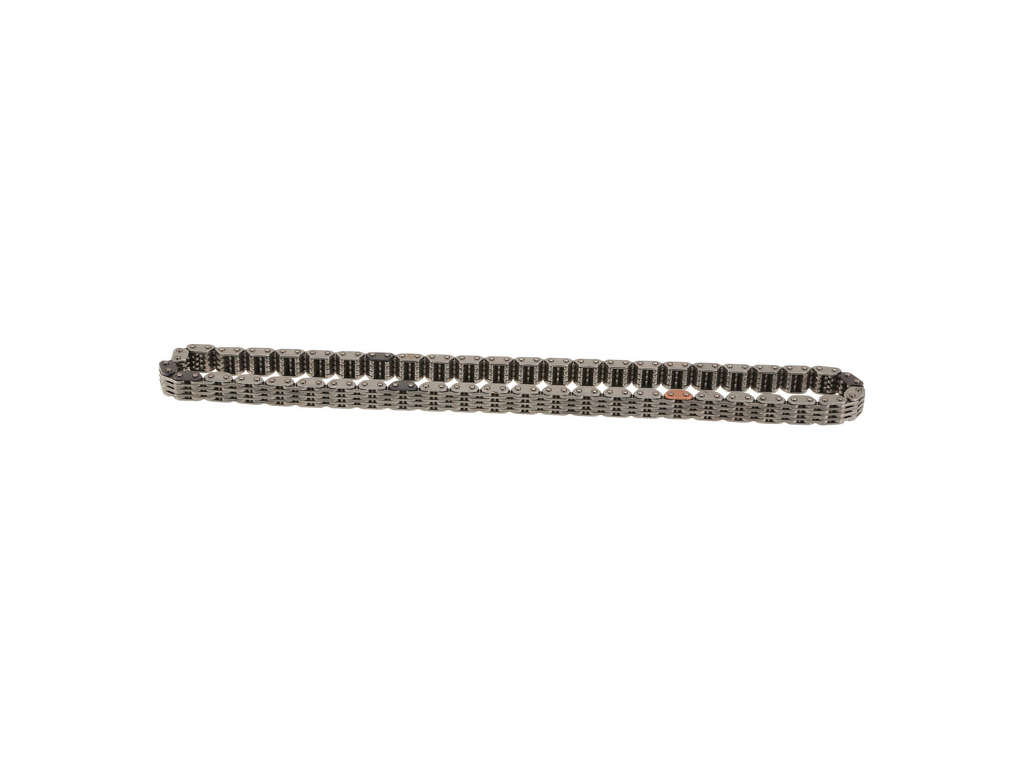
- Stretched Timing Chain / Failed Tensioner 🔴 High Probability → Shop Engine Timing Chain The original timing chain tensioner design on early EA888 engines is a known major failure point, with early revisions prone to failing and allowing the chain to jump time. Even with updated parts, the chains themselves are known to stretch over time, which also causes cam/crank correlation codes.
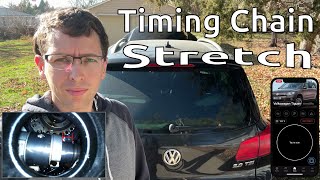
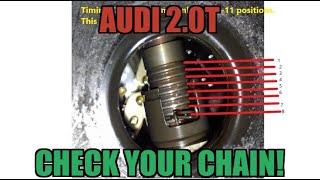
How to confirm: A mechanic can use a diagnostic tool (like VCDS) to check the camshaft adaptation value in Measuring Block 93. 🎬 Watch: How to check chain stretch with a scanner. A value greater than -5 degrees typically indicates significant chain stretch. A physical inspection of the tensioner's extension through the inspection port on the lower timing cover is also a definitive check. An over-extended tensioner confirms the chain system needs replacement.
Typical fix: Replacement of the timing chain, the updated tensioner, and all related guides and rails. This is a labor-intensive job.
Est. part cost: $300-$600 - Faulty Camshaft Adjustment Valve (N205 Solenoid) 🟡 Medium Probability → Shop Engine Camshaft This solenoid controls the oil flow that adjusts the cam phaser. It can get clogged with debris from infrequent oil changes or fail electrically, causing it to stick.
How to confirm: Swap the intake and exhaust N205 valves (they are identical on this engine) and see if the code changes to P0011 (for the intake cam). Alternatively, remove the valve and test its operation by applying 12V power; you should see the internal piston move. Resistance can also be checked with a multimeter and should be between 5-12 Ohms, depending on the specific part revision.
Typical fix: Replacement of the N205 valve. 🎬 See this walkthrough for replacing the VVT solenoid. It is secured by a special tool, but can sometimes be removed carefully without it.
Est. part cost: $40-$150 - Low or Dirty Engine Oil 🟡 Medium Probability The VVT system is hydraulically operated by engine oil. If the oil is low, dirty, or the wrong viscosity, it cannot supply the necessary pressure to correctly operate the cam phasers. These engines can also consume oil, making low oil levels a common issue.
How to confirm: Check the oil level on the dipstick and review the vehicle's service history. If the oil is dark, gritty, or below the minimum level, it's the first thing to address.
Typical fix: Perform an oil and filter change using a high-quality synthetic oil that meets the VW 502 00 specification.
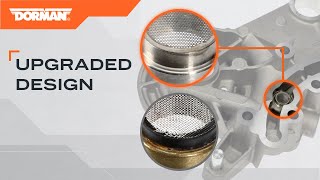
Est. part cost: $60-$120 - Clogged Camshaft Bridge Screen ⚪ Low Probability → Shop Engine Camshaft A small screen on the camshaft bridge, which supplies oil to the VVT system, can become clogged with sludge or debris, starving the system of oil. This is often a result of a previous component failure (like a turbo) contaminating the oil or the screen itself breaking apart.
How to confirm: Requires removing the upper timing cover and camshaft bridge to visually inspect the screen for blockage. Some owners have found this screen torn or missing.
Typical fix: Clean or replace the camshaft bridge and screen. The bridge part number is often cited as 06H103144F or similar variants.
Est. part cost: $150-$250
Rare But Worth Checking
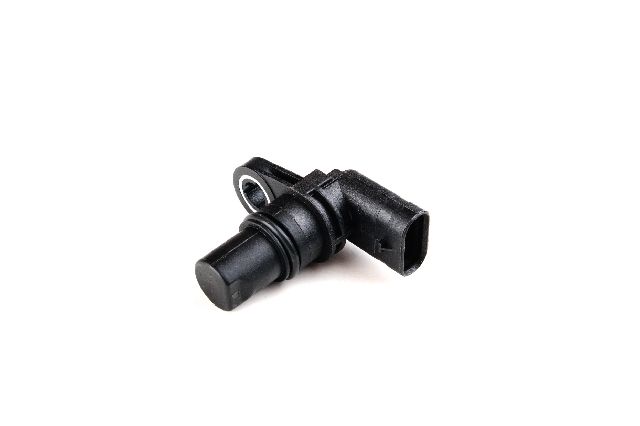
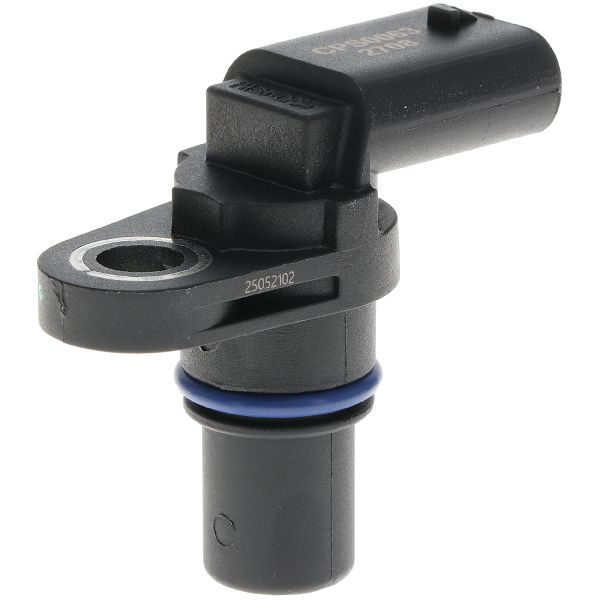
- Faulty Camshaft Position Sensor: → Shop Engine Camshaft Position Sensor While less common for this specific code (which indicates a performance issue, not a sensor circuit failure), a sensor providing erratic readings could potentially contribute to the problem. It's more likely to be accompanied by other sensor-specific codes like P0341.
- Failed Camshaft Phaser/Adjuster: → Shop Engine Camshaft The mechanical adjuster itself can fail, but this is much less common than issues with the control solenoid, chain, or oil supply. The internal spring or locking mechanism can break, causing a rattle and preventing it from holding the correct position. This is typically a last resort after all other components have been verified.
Diagnosis Steps
- Check the engine oil level and condition. If low or dirty, perform an oil and filter change with the correct specification oil (VW 502 00). Clear codes and re-test.
- Scan the vehicle with an Audi-specific tool (like VCDS or OBDeleven). Check for any other stored fault codes, paying close attention to P0016 or P0341.
- Using the scan tool, navigate to Engine -> Measuring Blocks -> Group 93. Check the value in field 3 (Camshaft Adaptation). A value more negative than -5° is a strong indicator of a stretched timing chain.
- Locate the exhaust camshaft adjustment valve (N205). Inspect the connector and wiring for damage. To test, swap it with the identical intake valve (N205) and see if the fault code changes to P0011.
- If the N205 valve is suspected, you can remove it and test its resistance (should be 5-12 ohms depending on revision) and function with a 12V source. Clean any sludge from the valve and its port before reinstalling or replacing.
- If chain stretch is not confirmed via software, perform a physical inspection of the timing chain tensioner through the inspection port on the lower timing cover. This will definitively show if the updated, ratcheting-style tensioner is installed and how far it is extended.
- If all other components check out, inspect the camshaft bridge screen for blockages or tears. This requires removing the upper timing cover. 🎬 Watch: How to inspect and replace a blown cam screen.
Parts You'll Likely Need
- Timing Chain Kit (Chain, Tensioner, Guides)
(OEM #06K109158BS (Chain), 06K109467K (Updated Tensioner))— This is the most probable and critical failure on the EA888 engine causing this code. The original tensioner design was faulty, and the chains stretch over time. A full kit is recommended.
Trusted brands: INA, FCP Euro, Bar-Tek, Genuine VW/Audi
OEM price range: $400-$700
Aftermarket price range: $250-$500 - Camshaft Adjustment Valve (N205 Solenoid)
(OEM #06H109257C (or 06H109257A))— This solenoid controls the cam phasing and is a common failure point, either by getting clogged or failing electrically. It's a relatively easy part to replace or swap for diagnosis.
Trusted brands: Bosch, Pierburg, Genuine VW/Audi
OEM price range: $120-$180
Aftermarket price range: $40-$90 - Engine Oil and Filter — The VVT system relies on clean oil of the correct viscosity (VW 502 00). This is the first and cheapest diagnostic step.
Trusted brands: Liqui Moly, Motul, Castrol EDGE, Mobil 1
OEM price range: $80-$120
Aftermarket price range: $60-$100
Related Codes That Often Appear With This One
- P0016 — Indicates a correlation issue between the crankshaft and camshaft. Seeing P0014 and P0016 together strongly suggests a mechanical timing problem like a stretched chain or jumped tooth.
- P0341 — This code points to a range/performance issue with the camshaft position sensor circuit. It can be triggered by the erratic camshaft movement caused by a failing VVT system or stretched chain.
- P0011 — This is the equivalent code for the intake camshaft ('A' Camshaft). If you swap the N205 solenoids and P0014 disappears and P0011 appears, you have confirmed the N205 solenoid is the faulty part.
Technical Service Bulletins (TSBs) & Recalls
- Audi TSB 2071515/1: Addresses coolant leaks from the water pump on 2.0L engines, a common unrelated issue for this platform.
- Audi TSB (Implied): A class-action lawsuit regarding timing chain tensioner failure implies the existence of internal technical bulletins acknowledging the defect before it became widespread public knowledge.
Platform-Specific Known Issues
- A class-action lawsuit was settled for premature timing chain tensioner failure on 2008-2013 model year 2.0T EA888 engines. The original tensioner design is a known critical weakness.
- The timing chains on these engines are known to stretch over time, typically requiring inspection and potential replacement around 80,000-120,000 miles.
Mechanic-Grade Diagnostic Values
- Camshaft Adaptation Phase Position (VCDS Block 93) — expected: Close to 0.0° for a new chain. Should not exceed -5.0°.. Failure: A value more negative than -5.0° indicates significant timing chain stretch requiring replacement.
- N205 Camshaft Adjustment Valve Resistance — expected: 5.0 to 12.0 Ohms. Different revisions exist; BPY engines are 5.0-8.0Ω, some EA888 Gen 1 are 10.5-12.0Ω, and others measure 7.9-8.3Ω.. Failure: A reading significantly outside the expected range for the specific part, or an open/short circuit, indicates a failed solenoid coil.
- Engine Oil Pressure (Hot Idle) — expected: ~1.8 bar (approx. 26 PSI).. Failure: Significantly lower pressure (e.g., below 1.0 bar) can trigger VVT issues due to insufficient hydraulic force. May indicate a clogged pickup tube, worn oil pump, or other internal issues.
- Engine Oil Pressure (Hot, above 3500 RPM) — expected: ~3.2 bar (approx. 46 PSI).. Failure: Failure to switch to the high-pressure stage or maintaining low pressure at high RPM points to a problem with the two-stage oil pump or its control valve.
Scan Tool Commands That Help
- VCDS or OBDeleven: Output Test for N205/N318 Camshaft Adjustment Valve — To functionally test the solenoid without removing it from the engine. The tool commands the solenoid to cycle, and the user can listen for an audible click, confirming the coil and pintle are not seized.
- VCDS (UDS Protocol) or OBDeleven: Basic Setting - IDE06716 "Timing Chain Elongation: reset after chain replacement" — This is critical after replacing the timing chain and tensioner. It resets the ECU's learned adaptation value for chain stretch. Failing to do this can cause the ECU to apply incorrect timing adjustments with the new, unstretched chain.
Wiring & Ground Locations
- Engine Ground Points — Key locations on the A3 8P chassis include: next to the battery terminal, on the left front frame rail (long member), and under the plastic scuttle panel near the ECU.. A poor engine ground can cause erratic voltage signals for sensors and solenoids, including the camshaft position sensor and the N205 valve, potentially leading to incorrect readings or operation.
- N205 / N318 Connector — The N205 (intake) and N318 (exhaust) valves are located on the upper timing cover. Their wiring runs in the engine harness to the main Engine Control Module (J623), passing through connectors like T14 and T60.. Knowing the location allows for checking for voltage, ground, and signal continuity between the ECU and the valve itself to rule out a wiring fault.
Real Owner Repair Stories
- Compilation of forum reports (2009-2012 VW/Audi with 2.0T EA888) — Persistent P0014 or P0011, sometimes with P0016. Rattling noise on startup.
❌ Tried (didn't work) Replacing N205 solenoid, Multiple oil changes
✅ What actually fixed it The camshaft bridge screen/filter was found to be broken or missing, allowing debris to circulate or starving the phaser of oil. Replacing the camshaft bridge (which contains the screen) resolved the issue. - AudiForums.com user (Audi (model unspecified, but with similar VVT system)) — P0014 code returned immediately after a full timing job. Engine would run great for about 25 miles, then the CEL would illuminate and cause a hard-start/no-start condition.
❌ Tried (didn't work) Complete timing service with new heads, Swapping cam sensors, Cleaning the VVT adjuster/phaser
✅ What actually fixed it The forum thread ended without a definitive posted solution, but the user's experience highlights that even after a complete, professionally-tooled timing job, the P0014 code can persist, pointing towards a complex issue with the phaser itself, oil pressure delivery, or wiring that was overlooked.
"I Checked Everything" — The Actual Cause
- While not a smoke test issue, a similar pattern exists where the VCDS 'Camshaft Adaptation' value in Measuring Block 93 is within the acceptable range (i.e., better than -5°), leading a technician to believe the chain is fine. However, a physical inspection of the tensioner reveals it is nearly maxed out. This indicates the software reading isn't always a perfect representation of the mechanical state, and a physical check via the inspection port is the most definitive test.
OEM Part Supersession History
06H109467 (and variants)→06K109467K— The original timing chain tensioner used a weak retaining clip and ratchet design that was prone to failure, allowing the piston to retract when oil pressure was absent. This could cause the chain to jump time on startup.
Heads up: The new part is a direct, highly recommended replacement for the old design. Any engine with the old design should be updated as a preventative measure.06H109257A / 06H109257C→06L109259D (for later Gen3, but reported to work)— Standard part evolution for improved reliability and performance. The newer 06L part for Gen3 engines looks physically different but is reportedly backward compatible.
Model Year Variations Within This Range
- 2009-2013: Engines can be CCTA (49-state emissions) or CBFA (California SULEV emissions). The CBFA includes a secondary air injection pump and related plumbing, which the CCTA lacks. This affects the airbox, cylinder head porting, and some wiring, but the core timing components and P0014 diagnosis remain the same.
- 2009-2012: These earlier model years are almost certain to have been built with the original, failure-prone timing chain tensioner. Models from 2013 are more likely to have the updated tensioner from the factory, but a physical inspection is still the only way to be certain.
Diagnostic Flowchart
Other Known Issues on This Vehicle
Issues unrelated to this code that are worth knowing about as an owner of this generation:
- Excessive Oil Consumption 🔴 High — Very common on EA888 Gen 1 and Gen 2 engines, often starting around 60k-80k miles. Caused by faulty piston ring design. (Ref: Subject of multiple class-action lawsuits, resulting in settlement programs for repair reimbursement and extended warranties for some VINs.)
- PCV Valve Failure 🟠 Medium — Common failure item. The diaphragm inside the PCV (oil separator) can tear, leading to high crankcase vacuum, whistling noises, rough idle, and potential rear main seal failure.
- Intake Valve Carbon Buildup 🟠 Medium — Inevitable on all direct-injection engines. Symptoms like rough idle, misfires, and power loss typically appear every 50,000-70,000 miles. Requires manual cleaning (walnut blasting).
- Water Pump / Thermostat Housing Failure 🔴 High — The plastic housing is prone to cracking and leaking coolant, which can lead to overheating. Failure is common between 60k-100k miles. (Ref: Multiple TSBs exist, such as 2071515/1, for various model years addressing coolant pump leaks.)
- Intake Manifold Runner Flap Failure 🟠 Medium → Shop Engine Intake Manifold — The plastic intake manifold can fail, either due to the runner flaps breaking or the actuator motor failing. This typically triggers a specific fault code and can cause a loss of power. (Ref: An extended warranty was offered for this component on many affected vehicles.)
Used vs. New Parts: Buying Guide for This Vehicle
When a used part is the smart pick: Used parts are generally not recommended for the core components related to this fault. A used part may be considered for non-critical, external items like a wiring harness pigtail if the original is damaged, or a cosmetic engine cover.
Donor-vehicle mileage cap: roughly under 80000 miles for the part to have meaningful remaining life.
What to inspect on the donor part:
- For any used part, check for physical damage, cracks, or brittle plastic.
- If possible, check the oil filler cap on the donor engine for signs of heavy sludge, which indicates poor maintenance.
- Ensure all connector locking tabs are intact.
OEM-only on this vehicle (don't cheap out):
- Timing Chain
- Timing Chain Tensioner
- Timing Chain Guide Rails
- Camshaft Bridge / Screen
Aftermarket brands forum-validated for this vehicle:
- N205 Solenoid: Bosch, Pierburg (often the OEM supplier)
- Timing Kits: INA, FCP Euro (kits often use OEM components)
- Oil (VW 502 00 Spec): Liqui Moly, Motul, Castrol EDGE
Brands owners have reported issues with on this vehicle:
- Unbranded, low-cost timing chain kits from online marketplaces. The risk of premature failure and catastrophic engine damage is extremely high.
Real Owner Stories
Aggregated from forums and TSBs cited above. Mileages and costs reflect what owners reported in those sources.
2009-2013 Audi A3 2.0T EA888
Symptoms: A persistent P0014 code remained even after a timing job was completed.
What fixed it: The owner detailed a struggle with diagnostic dead-ends, highlighting that the N205 valve or wiring may be involved when timing components are already new.
Source hint: AudiWorld Forums: 'P0014 Code after timing job'
2009-2013 Audi A3 2.0T EA888 — ~100000 miles
Symptoms: The timing chain stretched over time, leading to cam/crank correlation codes.
What fixed it: Replacement of the timing chain, the updated tensioner, and all related guides and rails.
Source hint: vehicle_specific_issues
Related OBD-II Codes
Frequently Asked Questions
Is there a recall or lawsuit for the timing chain tensioner on my 2009-2013 Audi A3?
How can I check if my A3's timing chain is stretched using VCDS?
Can I swap parts to test if the N205 Camshaft Adjustment Valve is causing my P0014 code?
What specific oil should I use in my Audi A3 to prevent VVT issues?
Does Audi TSB 2071515/1 relate to my P0014 code?
What is the 'camshaft bridge screen' issue I keep hearing about?
Helpful Videos

We Have This Part in Stock



The information in this article is provided for general reference and educational purposes only. Vehicle specifications, procedures, and part compatibility can vary by production date, trim level, and region. Always consult your vehicle's factory service manual and verify part numbers before purchasing or performing repairs. Safety-critical components such as airbags, seat belts, and braking systems should be installed by a qualified professional.
- Audi A3:
- 🧭 Diagnostic Flowchart
- 🎬 Helpful Videos
- 🛍️ Shop This Part
- What's Unique About the 2009-2013 Audi A3
- Symptoms You May Notice
- Most Likely Causes
- Rare But Worth Checking
- Diagnosis Steps
- Parts You'll Likely Need
- Related Codes That Often Appear With This One
- Technical Service Bulletins (TSBs) & Recalls
- Platform-Specific Known Issues
- Mechanic-Grade Diagnostic Values
- Scan Tool Commands That Help
- Wiring & Ground Locations
- Real Owner Repair Stories
- "I Checked Everything" — The Actual Cause
- OEM Part Supersession History
- Model Year Variations Within This Range
- Other Known Issues on This Vehicle
- Used vs. New Parts: Buying Guide for This Vehicle
- Real Owner Stories
- 2009-2013 Audi A3 2.0T EA888
- 2009-2013 Audi A3 2.0T EA888 — ~100000 miles
- Related OBD-II Codes
- Frequently Asked Questions
- 🎟️ Get 5% Off