

P0014 on 2012-2016 Chevrolet Sonic 1.8L: Exhaust Cam Timing Causes and Fixes
On a 2012-2016 Sonic with the 1.8L engine, code P0014 is almost always caused by a faulty exhaust camshaft actuator solenoid or low/dirty engine oil. A new solenoid costs $25-$60, and replacing it is a common DIY fix with a difficulty of 2/5. Always check oil first.
- First, check your engine oil. Low or dirty oil is a primary cause of P0014. If in doubt, change the oil and filter.
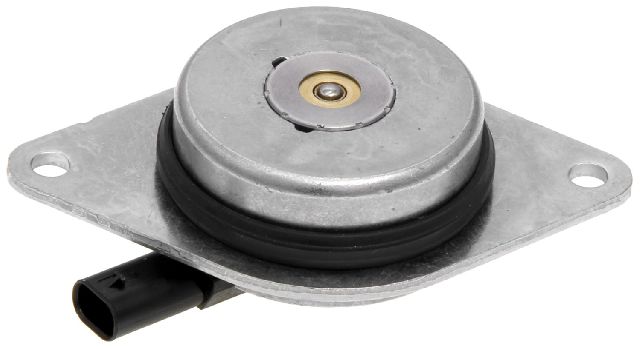
- The most likely failed part is the exhaust camshaft actuator solenoid, a common and affordable DIY replacement.
- A definitive diagnostic is to swap the intake and exhaust solenoids. If the code changes to P0011, the solenoid is faulty.
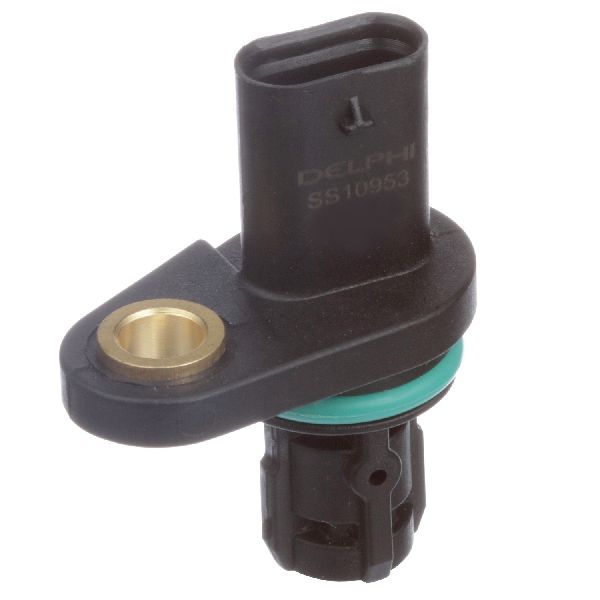
- Do not confuse the actuator solenoid with the position sensor; P0014 is almost never caused by the sensor.
- If the code appeared right after a timing belt change or other major engine work, suspect a mechanical timing error or the missing oil sleeve from TSB PIP4543D.
What's Unique About the 2012-2016 Chevrolet Sonic
The 1.8L Ecotec engine (RPO codes LUW/LWE) in the Sonic and its platform-mate, the Chevy Cruze, is known to be very sensitive to engine oil quality and level for proper VVT system operation. The camshaft actuator solenoids are a very common failure point on this platform, often due to sludge buildup from extended oil change intervals clogging their internal screens. Unlike the 1.4L turbo Sonic engine which uses a timing chain, this 1.8L engine uses a timing belt that requires replacement around 100,000 miles, which introduces different potential failure points like slipping or incorrect installation during service.
Symptoms You May Notice
- Check Engine Light is on
- Rough or unstable idle, sometimes described as a 'skipping' feeling
- Engine stalling, especially when coming to a stop or at low RPMs
- Reduced engine power and poor acceleration
- Worse-than-usual fuel economy
- Rattling, knocking, or 'metal on metal' noises from the engine, particularly at idle
- Replacing the camshaft position *sensor* instead of the camshaft position actuator *solenoid*. The sensor's job is to read the cam's position, while the solenoid's job is to control it. P0014 is a performance/control code, almost always pointing to the solenoid, oil, or mechanical timing, not the sensor.
Most Likely Causes
- Faulty Exhaust Camshaft Position Actuator Solenoid 🔴 High Probability → Shop Engine Camshaft This is a very common failure part on GM Ecotec engines. Internal passages and screens get clogged with oil sludge, or the solenoid can fail electrically. Many owner experiences on forums confirm this is the first part to check and replace.
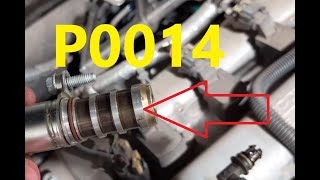
How to confirm: The easiest test is to swap the exhaust solenoid (front-most on the valve cover) with the intake solenoid (rear-most). They are identical. Clear the codes and drive. If the code changes to P0011 (Intake Cam Position), the solenoid is bad. The retaining bolt requires an E8 or E10 Torx socket.
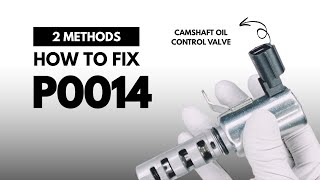
Typical fix: Replace the exhaust camshaft actuator solenoid. It is highly recommended to replace both the intake and exhaust solenoids at the same time as a pair, as they are the same age and operate under the same conditions.
Est. part cost: $25-$60 - Low or Dirty Engine Oil 🔴 High Probability The VVT system is hydraulic and extremely sensitive to oil pressure and cleanliness. Extended oil change intervals, which some owners have followed, can lead to sludge that clogs the tiny passages in the VVT solenoids and actuators, causing them to stick.
How to confirm: Check the oil level on the dipstick and inspect the oil's condition. If it is low, black, or sludgy, this is a likely contributor. This should always be the first check.
Typical fix: Perform an engine oil and filter change using a quality full synthetic 5W-30 oil that meets GM's Dexos specification. Clear the codes and see if the issue returns.
Est. part cost: $30-$70 - Incorrect Timing Belt Position ⚪ Low Probability → Shop Engine Timing Chain The 1.8L engine uses a timing belt that requires periodic replacement (typically every 100,000 miles). If the belt was recently replaced and the timing was set incorrectly, or if the belt has slipped a tooth due to a failing tensioner, this code can appear, often alongside P0017.
How to confirm: This requires a visual inspection of the timing marks on the camshaft sprockets and crankshaft, which is a labor-intensive process. This should be suspected if the code appeared immediately after a timing belt service.
Typical fix: Re-time the engine correctly by aligning all timing marks and properly tensioning the timing belt. This often involves replacing the timing belt, tensioner, and idler pulleys.
Est. part cost: $100-$250 for a full kit
Rare But Worth Checking
- Failed Exhaust Camshaft Phaser/Actuator: → Shop Engine Camshaft The mechanical gear (phaser) at the end of the camshaft can fail internally, getting stuck in an advanced position. This is a much more expensive and labor-intensive repair than the solenoid. A user on SonicOwnersForum reported that after a new solenoid failed to fix a recurring P0014, the dealer replaced the actuator (phaser) itself, which permanently solved the problem and a related knocking noise.
- Missing Camshaft Actuator Oil Sleeve: → Shop Engine Camshaft Per GM TSB PIP4543D, a small black plastic oil sleeve sits between the camshaft and the phaser/actuator. This sleeve directs oil into the phaser; if it is lost or damaged during major engine repairs (e.g., head gasket or phaser replacement), the ECM cannot control cam timing, triggering codes like P0014. If the code appears immediately after such a repair, this is a strong possibility.
Diagnosis Steps
- Check Engine Oil: Before any other step, verify the engine oil is full and clean. If it's low or past its service interval, perform an oil and filter change with 5W-30 full synthetic Dexos-approved oil, clear the codes, and re-test.
- Scan for Other Codes: Check if other codes like P0011 or P0017 are present, as they can help pinpoint the root cause.
- Inspect Solenoid Wiring: Check the electrical connector and wiring for the exhaust VVT solenoid (front of the valve cover) for any damage, corrosion, or loose connections.
- Swap the VVT Solenoids: The intake and exhaust solenoids are identical and interchangeable. They are located on the top of the valve cover and held by E8 or E10 Torx bolts. Swap their positions. Clear the codes and run the engine. If the trouble code changes to P0011, you have confirmed the solenoid you moved to the intake side is faulty.
- Test the Solenoid (Optional): If you have a multimeter, you can check the resistance of the solenoid. A healthy solenoid should typically read between 7 and 13 Ohms.
- Inspect Mechanical Timing: If oil and solenoids are good, the next step is to suspect a base timing issue. This involves removing the upper timing cover to inspect the timing belt and the alignment of the camshaft sprockets. This is a more advanced step and should be suspected if the car is near its 100,000-mile timing service interval or recently had it performed.
- Inspect Camshaft Phaser: If timing is correct and the issue persists, the camshaft phaser (actuator gear) may be faulty. This is an advanced diagnosis and repair, often identified by persistent codes and knocking noises after solenoid replacement.
Parts You'll Likely Need
- Camshaft Position Actuator Solenoid (VVT Solenoid)
(OEM #12655421 (Exhaust), 12655420 (Intake). Both have been superseded by newer part numbers like 12679100 (Exhaust) and 12679099 (Intake).)— This is the most common part to fail and cause code P0014 on this engine. It controls the oil flow that adjusts the camshaft timing. It is highly recommended to replace both intake and exhaust solenoids as a pair.
Trusted brands: ACDelco (GM Genuine), Delphi, Dorman (e.g., 917-216 for exhaust, 917-215 for intake)
OEM price range: $40-$65
Aftermarket price range: $25-$50 - Engine Oil and Filter — Dirty, incorrect, or low oil is a primary cause of VVT system faults. An oil change with Dexos-approved 5W-30 synthetic oil is a critical first step in diagnosis and repair.
Trusted brands: Mobil 1, Pennzoil, Valvoline, ACDelco (filter)
OEM price range: $50-$80 (for oil and filter)
Aftermarket price range: $30-$60 (for oil and filter)
Related Codes That Often Appear With This One
- P0011 — This is the equivalent code for the intake camshaft. It can appear if both solenoids are failing, or if a technician swaps the intake and exhaust solenoids for diagnosis.
- P0017 — This code indicates a correlation issue between the crankshaft and the exhaust camshaft. If you see P0014 and P0017 together, it points more strongly toward a base mechanical timing problem like a slipped timing belt, rather than just a faulty solenoid.
Technical Service Bulletins (TSBs) & Recalls
- PIP4543D: Addresses DTCs P0011, P0014, P0016, or P0017 appearing after cylinder head or cam actuator removal, often due to a missing oil sleeve that directs oil into the phaser.
Platform-Specific Known Issues
- GM Technical Service Bulletin (TSB) PIP4543D notes that codes P0011, P0014, P0016, or P0017 can appear after major engine work if the plastic oil control sleeve between the camshaft and the phaser is missing or damaged.
Mechanic-Grade Diagnostic Values
- Camshaft Position Actuator Solenoid Resistance — expected: 8 to 13 Ohms. Some sources cite a tighter range of 6.9 to 7.9 Ohms.. Failure: A reading of OL (Open Loop/infinite resistance) or a value significantly outside the expected range indicates a failed solenoid coil.
- Scan Tool: Desired vs. Actual Camshaft Position Angle — expected: The 'Actual' value should closely track the 'Desired' value, with a variance of less than 2-3 degrees at idle and under load.. Failure: A consistent variance greater than 5-6 degrees between the desired and actual angle will trigger the P0014 code.
- Camshaft Actuator Solenoid Connector Voltage — expected: With the ignition on and connector disconnected, one pin should show battery voltage (approx. 12V).. Failure: No voltage indicates a wiring or ECM power supply issue, not a faulty solenoid.
Scan Tool Commands That Help
- GDS2 (GM Tech Tool) or equivalent professional scan tool: Camshaft Position Actuator Solenoid Test / Actuator Test — This bidirectional command allows the technician to manually activate the exhaust VVT solenoid while the engine is running. If the engine hesitates or stalls when the command is sent, it confirms the solenoid and phaser are mechanically responding to commands. If there is no change in engine operation, it points to a stuck solenoid, a clogged oil passage, or a failed phaser.
Wiring & Ground Locations
- Engine Control Module (ECM) — On the 2012-2016 Sonic, the ECM is located in the engine compartment, on the left (driver's) side, mounted to a bracket near the battery.. The ECM sends the control signal to the VVT solenoids. A poor connection at the ECM's main harness connectors (X1/X2) could interrupt this signal.
- Exhaust Camshaft Position Actuator Solenoid Connector — On the top of the valve cover, it is the solenoid positioned towards the front of the vehicle (radiator side).. This is the primary connection point for testing. Pin 1 is the control signal from the ECM, and Pin 2 is the low reference/ground circuit. Corrosion or damage here is a common point of failure.
- G105 / G106 — G105 is located on the left front of the engine compartment, under the battery tray. G106 is on the left rear of the engine block.. These are critical engine and control module ground points. A loose or corroded ground at these locations can cause erratic behavior and incorrect readings for various engine sensors and actuators, including the VVT system. TSB PIC5574A specifically calls out checking G105 for paint or weld slag causing poor connections.
Real Owner Repair Stories
- SonicOwnersForum.com user (2012 Chevrolet Sonic 1.8L Manual, ~37,000 miles) — Check Engine Light with code P0014. Car drove fine initially.
❌ Tried (didn't work) Dealer replaced the exhaust camshaft actuator solenoid. The P0014 code returned within 30 days.
✅ What actually fixed it The dealer then replaced the camshaft actuator (the mechanical phaser/gear itself). This permanently resolved the P0014 code, though the owner noted a new knocking sound appeared after this second repair.
When the Usual Fixes Don't Work
- While the vast majority of P0014 codes on the 1.8L Sonic are fixed by an oil change or a new VVT solenoid, there are documented cases where these common fixes do not work. In one instance on SonicOwnersForum, a user had the solenoid replaced by a dealer, only for the code to return. The ultimate fix was the much more involved and expensive replacement of the mechanical camshaft actuator (phaser) itself, indicating an internal failure of the gear mechanism that the solenoid controls. This highlights that if the simple fixes fail, the problem is likely mechanical within the timing system.
OEM Part Supersession History
12655421 (Exhaust)→12679100— Standard part revision by the manufacturer for improved reliability or manufacturing process.12655420 (Intake)→12679099— Standard part revision by the manufacturer for improved reliability or manufacturing process.55567050→12992408— This is another part number used for the same solenoid, often seen in global markets or as an earlier revision. It has also been superseded.
Diagnostic Flowchart
Other Known Issues on This Vehicle
Issues unrelated to this code that are worth knowing about as an owner of this generation:
- Cracked Plastic Thermostat Housing 🔴 High — Very common, often occurs after 80,000 miles. Leads to coolant leaks and potential overheating.
- Leaking Oil Cooler / Filter Housing Gaskets 🔴 High — Common failure leading to external oil leaks or, more severely, oil mixing with coolant. Often misdiagnosed as a cracked engine block. TSB 15-06-01-001 addresses engine oil leaks. (Ref: 15-06-01-001)
- Failed PCV System (Valve Cover) 🟠 Medium — The PCV valve diaphragm, integrated into the valve cover, can rupture, causing a vacuum leak, rough idle, and codes like P0171. This requires replacing the entire valve cover.
- Failed Camshaft Position Sensors 🟡 Low → Shop Engine Camshaft Position Sensor — The sensors themselves are a known failure point, separate from the solenoids. This is common enough that GM issued TSB #PIP5329C. It typically causes codes like P0366 (exhaust) or P0341 (intake). (Ref: PIP5329C)
Used vs. New Parts: Buying Guide for This Vehicle
When a used part is the smart pick: A used VVT solenoid from a low-mileage donor vehicle is a reasonable choice for a budget repair, as they are easily accessible and simple to replace. However, given their high failure rate and the low cost of new aftermarket units, buying new is generally recommended.
Donor-vehicle mileage cap: roughly under 60000 miles for the part to have meaningful remaining life.
What to inspect on the donor part:
- Inspect the fine mesh screens on the end of the solenoid. They should be perfectly clean, intact, and not pushed in or damaged.
- Check the electrical connector for any signs of corrosion, cracking, or broken plastic locking tabs.
- Ask for the VIN of the donor car to verify it had a consistent maintenance history if possible.
- Test the resistance with a multimeter before purchase; it should fall within the 8-13 Ohm range.
OEM-only on this vehicle (don't cheap out):
- Camshaft Phaser/Actuator
- Timing Belt and Tensioner
Aftermarket brands forum-validated for this vehicle:
- ACDelco (GM Genuine/OEM)
- Delphi
- Dorman
Brands owners have reported issues with on this vehicle:
- No-name, unbranded solenoids from online marketplaces can have poor quality control, leading to premature failure or incorrect electrical specifications.
Real Owner Stories
Aggregated from forums and TSBs cited above. Mileages and costs reflect what owners reported in those sources.
2012 Chevrolet Sonic LT 1.8L — 130000 miles
Symptoms: P0014 code that keeps popping up and going away on it's own, when shifting from 2nd to 3rd gear it seems to gasp for air or just lag down.
What fixed it: A commenter suggested the issue was likely the VVT solenoid or camshaft actuator due to the long oil change intervals (8K-10K miles). The owner intended to perform the repairs themselves after a high dealer quote.
Source hint: r/ChevySonic - Engine light code P0014
2012 Chevrolet Sonic 1.8L
Symptoms: The dealer first replaced the solenoid for P0014, but the code returned.
What fixed it: Replacing the camshaft actuator (phaser) ultimately fixed the code, though it introduced a new knocking sound.
Source hint: SonicOwnersForum.com - Thread '2012 Sonic and code 0014'
Related OBD-II Codes
Frequently Asked Questions
Can I swap the solenoids on my 1.8L Sonic to see if the exhaust one is bad?
Does TSB PIP4543D apply if I just had my cylinder head or cam actuator removed?
What kind of oil should I use in my 2012-2016 Sonic to prevent VVT issues?
Is there a TSB for the camshaft position sensors on the 1.8L Ecotec?
My Sonic has a rough idle and a P0171 code along with P0014; are they related?
Should I replace both VVT solenoids even if only the exhaust one is failing?
Helpful Videos



We Have This Part in Stock


The information in this article is provided for general reference and educational purposes only. Vehicle specifications, procedures, and part compatibility can vary by production date, trim level, and region. Always consult your vehicle's factory service manual and verify part numbers before purchasing or performing repairs. Safety-critical components such as airbags, seat belts, and braking systems should be installed by a qualified professional.
- Chevrolet Sonic:
- 🧭 Diagnostic Flowchart
- 🎬 Helpful Videos
- 🛍️ Shop This Part
- What's Unique About the 2012-2016 Chevrolet Sonic
- Symptoms You May Notice
- Most Likely Causes
- Rare But Worth Checking
- Diagnosis Steps
- Parts You'll Likely Need
- Related Codes That Often Appear With This One
- Technical Service Bulletins (TSBs) & Recalls
- Platform-Specific Known Issues
- Mechanic-Grade Diagnostic Values
- Scan Tool Commands That Help
- Wiring & Ground Locations
- Real Owner Repair Stories
- When the Usual Fixes Don't Work
- OEM Part Supersession History
- Other Known Issues on This Vehicle
- Used vs. New Parts: Buying Guide for This Vehicle
- Real Owner Stories
- 2012 Chevrolet Sonic LT 1.8L — 130000 miles
- 2012 Chevrolet Sonic 1.8L
- Related OBD-II Codes
- Frequently Asked Questions
- 🎟️ Get 5% Off