

P0016 on 2006-2013 Holden Commodore 3.6L V6: Stretched Timing Chain Causes and Fixes
On the 2006-2013 Holden Commodore 3.6L V6, especially early VE models with the LY7 engine, code P0016 almost always indicates stretched timing chains. This is a serious and expensive repair, often costing $1,800-$3,500+, as it requires a full timing chain kit replacement. It is a well-documented, systemic flaw, and sensor replacement will not fix it.
- P0016 on a 2006-2013 Commodore V6 is a strong indicator of stretched timing chains, a known and widespread issue.
- The problem is most common on early VE models (2006-2010) with the LY7 engine.
- Do not waste money replacing sensors first. The problem is almost certainly mechanical.
- The only correct fix is a complete timing chain kit replacement, which is a major and expensive repair.
- Ignoring this code can lead to catastrophic engine failure.
What's Unique About the 2006-2013 Holden Commodore
This code is a notorious issue for the Holden Commodore V6, particularly the 2006-2010 VE models with the LY7 engine. These early models were fitted with timing chains that were prone to premature stretching or "elongation". According to some sources, the issue was most prevalent in engines built prior to engine number H071380576, which used 7.7 mm inverted tooth chains that were not always manufactured to specification. While Holden later released updated timing chain kits and even software updates to relax the error tolerances, the fundamental problem is the physical wear of the chains. As a result, P0016 on this platform is rarely a simple sensor fault and almost always points to this well-documented, systemic timing chain problem.
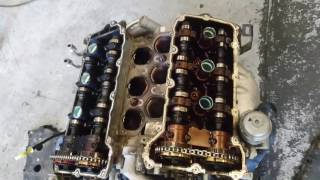
Generation note: This range covers the VE (2006-2013) and the start of the VF (2013) Commodore. The timing chain issue is most famous and prevalent on the early VE models (approx. 2006-2010) equipped with the Alloytec LY7 V6. Later SIDI engines (LLT and LFX) used in the Series II VE and VF models received updated chain designs, but are not immune and can still suffer from the issue, often accelerated by poor oil service history 🎬 Watch: The real reason these Alloytec V6 engines fail or low oil levels.
Symptoms You May Notice
- Check Engine Light illuminated
- Rattling or buzzing noise from the front of the engine, especially on a cold start
- Rough or unstable idle
- Reduced engine power and sluggish acceleration
- Decreased fuel economy
- Engine may be hard to start or require longer cranking
- Replacing the camshaft position sensor without checking the timing chains.
- Replacing the crankshaft position sensor without checking the timing chains.
- Replacing only one of the three timing chains instead of the complete kit.
- Attributing the code to a faulty ECM. While possible, it is extremely rare compared to the mechanical chain failure.
Most Likely Causes
- Stretched Timing Chains 🔴 High Probability → Shop Engine Timing Chain Early LY7 engines were manufactured with timing chains made from softer-than-specified metal, leading to premature wear and stretching. The issue was exacerbated by long oil change intervals recommended by the manufacturer (15,000 km), which led to oil degradation.
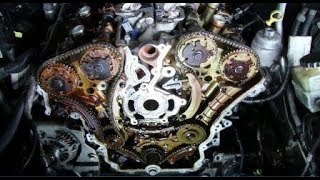
How to confirm: The definitive confirmation is physically inspecting the chains for slack after removing the engine's front timing cover. A key sign is seeing the hydraulic tensioners extended much further than they should be. A rattling noise on startup is a strong audible clue. Using a professional scan tool to monitor camshaft deviation is also a strong indicator; a consistent deviation of over 4-5 degrees at idle points to a mechanical timing issue.
Typical fix: Replacement of all three timing chains, all guides, and all tensioners with a new, high-quality timing chain kit. It is critical to use a genuine GM/ACDelco kit with the updated chain design.
Est. part cost: $400-$800 - Worn or Failed Timing Chain Tensioners 🔴 High Probability → Shop Engine Timing Chain The tensioners, which are hydraulically operated by engine oil pressure, can fail, get stuck, or weaken, allowing the chains to go slack. This is often a consequence of poor oil quality or infrequent oil changes. In some cases, the plastic guide material on the tensioner can disintegrate completely.
How to confirm: Usually diagnosed during a physical inspection when replacing the timing chains. A failed tensioner will allow significant slack in the chain. A user on the Just Commodores forum found their tensioner had completely disintegrated.
Typical fix: Tensioners are always replaced as part of a complete timing chain kit replacement.
Est. part cost: $0 (Included in kit) - Low or Dirty Engine Oil 🟡 Medium Probability The hydraulic tensioners and VVT system rely on clean oil at the correct pressure. Sludge from infrequent oil changes can block oil passages, starving the timing components and accelerating wear. The original 15,000 km service interval is now widely considered too long, with many specialists recommending 5,000-7,500 km changes to prevent issues.
How to confirm: Check the oil dipstick for level and condition. Inspect the oil filler cap for signs of sludge. An oil change is a good first step, but if the chain is already stretched, this will not fix the P0016 code.
Typical fix: Perform an oil and filter change with the correct grade of oil (e.g., 5W-30 or 10W-40 full synthetic meeting GM's Dexos specification). However, if the chain is already stretched, this is a preventative measure for the future, not a fix for the present code.
Est. part cost: $50-$100
Rare But Worth Checking
- Faulty Camshaft or Crankshaft Position Sensor: → Shop Engine Crankshaft Position Sensor While a sensor can fail, it is far less common than the mechanical timing chain issue on these engines. It's a common misdiagnosis to replace sensors when the chains are the real problem. A diagnostic technique is to swap the Bank 1 and Bank 2 camshaft sensors to see if the fault code follows to the other bank (e.g., P0018).
- Faulty Camshaft Actuator Solenoid (VVT Solenoid): → Shop Engine Camshaft A solenoid can get stuck or clogged with debris from dirty oil, causing a timing correlation issue. This is possible but less likely to be the root cause than chain stretch. They can be removed, cleaned, and tested.
- Slipped Crankshaft Reluctor Wheel: → Shop Engine Crankshaft The reluctor wheel, which the crankshaft position sensor reads, is pressed onto the crankshaft. In rare cases, it can slip from its original position, causing a persistent correlation code even with new chains. 🎬 Watch: Troubleshooting a misfire after your timing chain repair This requires crankshaft replacement and is a major repair.
Diagnosis Steps
- Confirm the code is present using an OBD-II scanner. Check for any other related timing codes (P0008, P0017, P0018, P0019).
- Listen for a rattling sound from the front of the engine during a cold start. This is a classic sign of a loose timing chain.
- Check the engine oil level and condition. Low or dirty oil can contribute to timing component failure.
- Using an advanced scan tool, monitor the desired vs. actual camshaft position angles. A significant, persistent deviation that does not correct itself indicates a mechanical timing problem. A deviation of more than 4-5 degrees is a strong indicator.
- As a low-cost diagnostic, swap the camshaft position sensors between Bank 1 and Bank 2. Clear the codes and see if the fault moves to Bank 2 (P0018). If it does, the sensor is faulty. If P0016 returns, the sensor is likely not the issue.
- The definitive step is to remove the engine's front timing cover and physically inspect the timing chains, guides, and tensioners for slack, wear, or damage. Check the extension of the tensioner plungers.
Parts You'll Likely Need
- Timing Chain Kit
(OEM #92507902 (Example Genuine GM Kit))— This is the definitive fix for the common stretched chain issue. A complete kit ensures all worn components (chains, guides, tensioners, gaskets, seals) are replaced simultaneously. Using genuine GM/ACDelco parts is highly recommended over cheaper aftermarket kits which are known to fail prematurely.
Trusted brands: ACDelco (GM), Revhigh (Uses Genuine GM chains), Mace Engineering
OEM price range: $600-$900
Aftermarket price range: $400-$800
Related Codes That Often Appear With This One
- P0008 — Indicates an Engine Position System Performance error, which is a general code for a timing discrepancy between the crank and both cams on Bank 1. It is explicitly mentioned in GM service bulletins related to this issue.
- P0017 — Indicates a correlation fault between the crankshaft and the Bank 1 EXHAUST camshaft. Seeing P0016 and P0017 together strongly points to a Bank 1 timing issue, likely a stretched secondary chain on that bank.
- P0018 — Indicates a correlation fault for the Bank 2 INTAKE camshaft. If seen with P0016, it suggests a problem with the primary timing chain that affects both banks, which is a very common failure mode.
- P0019 — Indicates a correlation fault for the Bank 2 EXHAUST camshaft. Seeing all four codes (P0016, P0017, P0018, P0019) is a very strong indicator of a major timing chain problem affecting the entire engine.
Technical Service Bulletins (TSBs) & Recalls
- GM Bulletin H08-0601-01: Described the issue of chain elongation occurring in early engine life (10,000-20,000 kms) on chains made from January 2006 onwards.
- GM TSB 12-06-01-009D: Provided information on timing chain kits for DTCs P0008, P0009, P0016, P0017, P0018, and/or P0019, advising against the unnecessary replacement of sprockets unless visibly damaged.
Platform-Specific Known Issues
- A well-documented issue of premature timing chain stretching on early (2006-2010) VE models with the LY7 3.6L V6 engine.
- Holden issued a software update for the ECM that widened the acceptable tolerance for cam/crank correlation, effectively hiding the problem until the stretching became more severe. This was seen by the community as a 'band-aid' fix that pushed the problem outside the warranty period.
- The original manufacturer service interval of 15,000 km between oil changes is widely considered a major contributing factor to premature chain wear. Owners and specialists now recommend intervals of 5,000-7,500 km.
Mechanic-Grade Diagnostic Values
- ECM Fault Trigger Threshold (LY7/LFX) — expected: The ECM will set P0016 if the Bank 1 intake camshaft is detected as being more than 9° advanced or 12° retarded in relation to the crankshaft.. Failure: A persistent deviation reading on a scan tool that exceeds these thresholds confirms a mechanical timing issue.
- Camshaft Position Sensor (Inductive Type) Resistance — expected: Approximately 1100 Ohms at 30°C.. Failure: A reading of open circuit (infinite resistance) or short circuit (zero resistance) indicates a failed sensor winding.
- Camshaft Position Sensor (Hall Effect Type) Voltage Check — expected: With ignition on and sensor connected, the power wire should show 5V, the signal wire should show 5V, and the ground wire should show battery voltage (approx. 12.6V) when tested against the positive battery terminal.. Failure: Any reading outside of these ranges indicates a fault in the wiring or the ECM, not necessarily the sensor itself.
Scan Tool Commands That Help
- Tech 2 (Clone or Genuine): Fuel Trim Reset — After mechanical repairs like a timing chain replacement, resetting fuel trims can help the ECM relearn and adjust to the corrected engine timing.
- Tech 2 (Clone or Genuine): Reset Engine Oil Life — Should be performed after every oil change to ensure the Oil Life Monitor (OLM) is accurate, which is critical for preventing the oil degradation that contributes to timing chain wear.
- Advanced Scan Tool (e.g., GDS2, Tech 2): Camshaft Position Variance Data — Observing the live data for camshaft angle deviation is a primary diagnostic step. A consistent variance of more than 4-5 degrees between desired and actual position strongly suggests a mechanical timing fault (stretched chain) rather than a sensor issue.
Wiring & Ground Locations
- Camshaft Position Sensor Connector — On the front of the engine, connecting to the camshaft position sensors located near the cylinder heads.. This is a 3-pin female connector, often a 'pull to seat' type. Damage or corrosion at these pins can disrupt the signal from the sensor to the ECM, potentially causing a P0016 code, though it's less common than mechanical failure. The connector is a Bosch-type design.
- ECM (Engine Control Module) Ground — A forum member noted that the ECM is located in the engine bay and to ensure it is not loose on its mounts, which can cause grounding issues. Another member mentioned a key ground point is under the fuse box.. A poor ground connection for the ECM can cause a wide range of erratic electrical issues and fault codes, including incorrect sensor readings that could potentially trigger a P0016.
Real Owner Repair Stories
- Just Commodores forum user 'petemnz' (2007 VE HSV Clubsport (LS2, but the diagnostic path is relevant)) — P0016 code present, but the car appeared to be running fine.
❌ Tried (didn't work) Replacing the crankshaft position sensor., Attempting to replace the camshaft position sensor., Checking the wiring loom.
✅ What actually fixed it Upon removing the timing cover, the tensioner was found to have disintegrated, causing the chain to jump 2 teeth. Replacing the cam gears, timing chain, and using a damper block instead of a new tensioner resolved the code. - Just Commodores forum user 'dylan720' (2011 VE Omega Series 2 (LFW engine) with 138,000 km) — P0016 and P0018 codes appeared after a recent timing chain replacement (5,000-6,000 km prior) and a subsequent tensioner replacement. No rattling noises or performance loss was noted.
❌ Tried (didn't work) Clearing the codes with a scan tool (they would return on the next engine start).
✅ What actually fixed it The issue was unresolved in the thread, but the strong consensus from veteran forum members was that the code appearing so soon after a repair indicated either poor workmanship (e.g., chains timed incorrectly by one tooth) or the use of a poor-quality aftermarket timing kit that failed prematurely. - Just Commodores forum user 'Abzzy87' (2006 VE Omega with only 37,893 km) — P0016 and P0018 codes appeared despite extremely low mileage.
❌ Tried (didn't work) The owner refused to believe it was the timing chain due to the low mileage.
✅ What actually fixed it The owner took the car to a Holden dealer, who performed a software update and 'VIM deletion'. This made the car run smoothly and cleared the codes. The dealer acknowledged that this might only delay the issue and offered a discount on a future chain replacement if needed. This highlights the existence of the 'band-aid' software fix that widens error tolerances.
OEM Part Supersession History
12651450 (and others)→12700436 (and others)— GM progressively updated the timing chain kits to incorporate more durable chains with an improved design to combat the premature stretching issue.
Heads up: While older kits may physically fit, only the latest revision available for the specific engine (LY7, LLT, LFX) should be used to ensure the most durable components are installed. Always verify the correct kit part number using the vehicle's VIN.
Model Year Variations Within This Range
- 2006-2010 (approx.): These models primarily used the LY7 port-injected V6. This engine is the most notorious for the original, poor-quality timing chains that stretch prematurely. Blocks, heads, and fuel systems are different from later SIDI engines.
- 2010-2011 (approx.): Introduction of the LLT SIDI (Spark Ignition Direct Injection) engine. While it received some updates, it is still known to suffer from timing chain issues, though perhaps slightly less frequently than the LY7. It also introduced a high-pressure fuel pump driven by an extra lobe on the camshaft.
- 2012-2013: Introduction of the LFX SIDI engine. This engine featured further revisions, including integrated exhaust manifolds in the cylinder heads and other changes. It is considered the most reliable of the three regarding timing chains, but is still sensitive to oil quality and service intervals.
Diagnostic Flowchart
Other Known Issues on This Vehicle
Issues unrelated to this code that are worth knowing about as an owner of this generation:
- Failing/Leaking Radiator 🟠 Medium — Common as the vehicle ages. The plastic end tanks become brittle from heat cycles and crack or the hose outlets can break off.
- Leaking Heater Hoses 🟠 Medium — The quick-connect fittings at the firewall are a common point for coolant leaks. An updated hose design is available.
- Starter Motor Failure / Slow Crank When Hot 🟠 Medium — The starter motor can become heat-soaked due to its location near the exhaust, leading to slow cranking or no-start conditions when the engine is hot. The main power cable to the starter can also degrade.
- Failing Alternator / Battery Drain 🟠 Medium — Early VE models in particular were known for alternator failures and various software issues that could cause excessive battery drain when the vehicle was off.
- Split Engine Mounts 🟡 Low — The hydraulic engine mounts are prone to splitting, particularly the passenger side one, causing a noticeable clunk or vibration on acceleration.
- Fuel Pump Failure (Early Models) 🔴 High — Early VE models can experience sudden fuel pump failure. Replacement is labor-intensive as it requires lowering the front of the rear subframe to remove the saddle-style fuel tank.
Used vs. New Parts: Buying Guide for This Vehicle
When a used part is the smart pick: For this specific P0016 repair, using used parts is strongly discouraged. The primary cause is the wear and stretching of the timing chains, which are wear items. Installing used chains, guides, or tensioners from a junkyard engine is asking for the same failure to occur again in a short time. The only scenario where a used part might be considered is for a related external component like a sensor or connector if it has been tested and verified.
Donor-vehicle mileage cap: roughly under 10000 miles for the part to have meaningful remaining life.
What to inspect on the donor part:
- For the timing chain kit itself, never use a donor part.
- If sourcing a complete used engine as a replacement, demand a detailed service history showing frequent oil changes (every 5,000-7,500 km).
- Listen to the used engine run if possible, specifically listening for any chain rattle on a cold start.
- Ask if the timing chains have already been replaced with an updated kit. If so, request receipts/proof of the work and parts used.
OEM-only on this vehicle (don't cheap out):
- Timing Chain Kit: Given the history of the original parts, it is critical to use either a genuine GM/ACDelco kit of the latest revision or a high-quality aftermarket kit that explicitly uses genuine GM chains.
Aftermarket brands forum-validated for this vehicle:
- ACDelco (GM Original Equipment)
- Revhigh (Sells kits using genuine GM chains)
- Mace Engineering
- Cloyes (A known OEM supplier, but ensure it's the updated design)
Brands owners have reported issues with on this vehicle:
- Unnamed, low-cost eBay or Amazon kits: Forum users report that cheap, unbranded kits can fail very quickly, sometimes within a month, leading to a repeat of the entire expensive repair.
Real Owner Stories
Aggregated from forums and TSBs cited above. Mileages and costs reflect what owners reported in those sources.
2007-2010 VE Commodore LY7 3.6L V6 — ~24854 miles
Symptoms: The owner experienced P0016 and P0018 codes at very low kilometers (under 40,000 km).
What fixed it: A software update from Holden resolved the issue, though the context notes this is often a temporary measure.
Source hint: justcommodores.com.au - Thread 'VE Commodore Timing Chain P0016 P0018'
2007 Holden Commodore VE 3.6L V6 — ~62137 miles
Symptoms: The P0016 and P0018 codes returned very soon after a timing chain replacement had already been performed.
What fixed it: The failure was attributed to the potential use of poor quality aftermarket parts or incorrect installation during the initial repair.
Source hint: justcommodores.com.au - Thread 'P0016 and p0018 codes'
2007 Holden Commodore (LS2 variant) — 124274 miles
Symptoms: DTC P0016 was present; upon inspection, the owner found a disintegrated tensioner and a chain that had jumped two teeth.
What fixed it: Physical repair of the timing components was required due to the mechanical fault.
Source hint: justcommodores.com.au - Thread 'Trouble code P0016 2007 HSV LS2 with 200k'
Related OBD-II Codes
Frequently Asked Questions
Is there a TSB for the timing chain issue on my 2006-2013 Holden Commodore?
I heard Holden released a software update for P0016; will this fix my LY7 engine?
How often should I change the oil on my 3.6L V6 to avoid P0016?
Can I just replace the camshaft sensor to fix the P0016 code?
What is the estimated cost for a timing chain replacement in Australia?
Are there specific parts I should use for the timing chain repair?
Helpful Videos


The information in this article is provided for general reference and educational purposes only. Vehicle specifications, procedures, and part compatibility can vary by production date, trim level, and region. Always consult your vehicle's factory service manual and verify part numbers before purchasing or performing repairs. Safety-critical components such as airbags, seat belts, and braking systems should be installed by a qualified professional.
- Holden Commodore:
- 🧭 Diagnostic Flowchart
- 🎬 Helpful Videos
- What's Unique About the 2006-2013 Holden Commodore
- Symptoms You May Notice
- Most Likely Causes
- Rare But Worth Checking
- Diagnosis Steps
- Parts You'll Likely Need
- Related Codes That Often Appear With This One
- Technical Service Bulletins (TSBs) & Recalls
- Platform-Specific Known Issues
- Mechanic-Grade Diagnostic Values
- Scan Tool Commands That Help
- Wiring & Ground Locations
- Real Owner Repair Stories
- OEM Part Supersession History
- Model Year Variations Within This Range
- Other Known Issues on This Vehicle
- Used vs. New Parts: Buying Guide for This Vehicle
- Real Owner Stories
- 2007-2010 VE Commodore LY7 3.6L V6 — ~24854 miles
- 2007 Holden Commodore VE 3.6L V6 — ~62137 miles
- 2007 Holden Commodore (LS2 variant) — 124274 miles
- Related OBD-II Codes
- Frequently Asked Questions
- 🎟️ Get 5% Off