

P0016 on 2005-2009 Saab 9-7X 4.2L: Crank/Cam Correlation Causes and Fixes
On the Saab 9-7X with the 4.2L I6 engine, P0016 is most often caused by a faulty Camshaft Position Actuator Solenoid (VVT Solenoid) due to dirty oil or age. Replacing this solenoid is a common DIY fix with the part costing around $30-$70. If that doesn't solve it, a stretched timing chain is the next likely, and much more expensive, cause. Always check oil level and condition first.
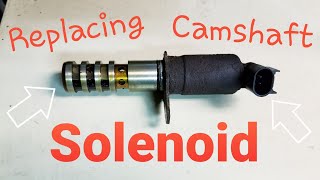
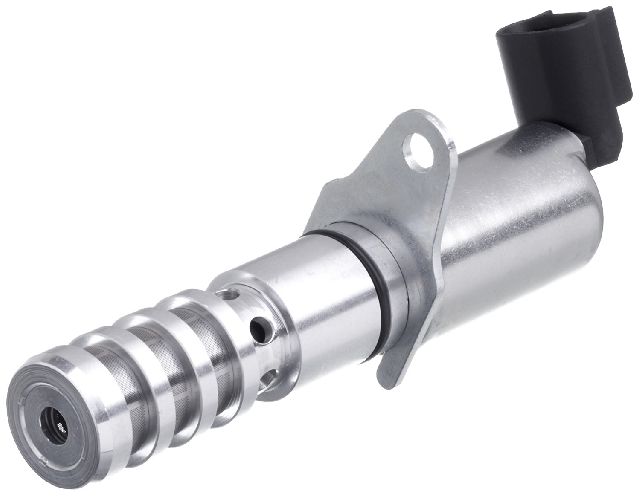
- For P0016 on a Saab 9-7X 4.2L, start your diagnosis with the easiest and most likely fix: the Camshaft Position Actuator Solenoid (VVT solenoid), part #12615873.
- Always check your engine oil level and condition first. Low or dirty oil is a primary cause of VVT system faults that trigger this code.
- Do not immediately assume the camshaft or crankshaft sensors are bad. They are usually just reporting the mechanical timing error.
- A rattling noise from the engine, especially when cold, is a strong sign that the problem is a more serious stretched timing chain, which requires a major repair.
- When replacing the VVT solenoid, use a high-quality OEM part like ACDelco to ensure a lasting fix, as aftermarket solenoids are known to be unreliable for this specific issue.
What's Unique About the 2005-2009 Saab 9-7X
The Saab 9-7X uses the GM-built LL8 4.2L I6 engine, shared with the Chevy Trailblazer, GMC Envoy, Buick Rainier, and Isuzu Ascender. On this specific GMT360 platform, P0016 is very frequently traced back to a failing Camshaft Position Actuator Solenoid (CPAS), also known as the VVT solenoid. This part is susceptible to clogging from oil sludge, a common issue if oil changes are neglected. While a stretched timing chain is also a significant possibility, the solenoid is a well-known, high-failure item and the most logical first part to inspect and replace. Forum discussions on GMTNation and Trailvoy confirm this is the most common starting point for diagnosis.
Symptoms You May Notice
- Check Engine Light is on
- Rough or unstable idle, sometimes feeling like a muscle car at stops.
- Engine stalling, especially when coming to a stop.
- Reduced engine power and sluggish acceleration
- Decreased fuel economy
- Engine is hard to start or cranks but won't start.
- Rattling noise from the front of the engine, especially on cold starts, that may sound like a can of marbles.
- Flickering dash lights and fluctuating voltage gauge at idle.
- Replacing the camshaft position sensor or crankshaft position sensor before checking the VVT solenoid and timing chain. The sensors are usually reporting the problem correctly, they are not the cause of it. 🎬 See why sensors aren't always the fix for P0016.
- Assuming a stretched timing chain without first replacing or testing the much cheaper and easier to access Camshaft Position Actuator Solenoid (CPAS).
Most Likely Causes
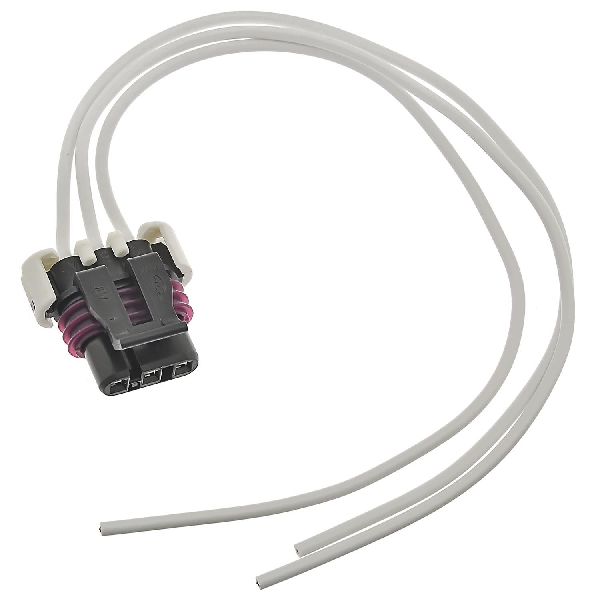
- Faulty Camshaft Position Actuator Solenoid (VVT Solenoid) 🔴 High Probability → Shop Engine Camshaft This solenoid is a known weak point on the LL8 engine. Its internal screens can become clogged with oil sludge, or the solenoid can fail electronically, impeding the oil flow required to adjust cam timing. Oil leaking into the electrical connector is a definitive sign of internal seal failure.
How to confirm: Remove the solenoid (held by one 10mm bolt, may require loosening the power steering pump for clearance) and inspect the screens for sludge or debris. Check the electrical connector for oil contamination, which is a sign of internal failure. A definitive, no-cost test is to swap the intake and exhaust solenoids (they are identical on the 4.2L) and see if the code changes to P0017 (exhaust cam correlation). If it does, the solenoid is bad. The solenoid's internal resistance should be between 6 and 12 Ohms.
Typical fix: Replace the solenoid. It is highly recommended by owners on forums to use an OEM ACDelco part, as aftermarket versions (e.g., Dorman) have a reputation for not resolving the code or failing quickly.
Est. part cost: $30-$70 - Low, Dirty, or Incorrect Viscosity Engine Oil 🟡 Medium Probability The entire VVT system is dependent on clean oil at the correct pressure to function. The LL8 engine can be prone to sludge if oil changes are extended, clogging the small passages in the VVT solenoid and camshaft phaser.
How to confirm: Check the engine oil level on the dipstick and inspect its condition. If the oil is dark, thick, or below the 'add' line, this could be the cause. A mechanical oil pressure test is recommended if oil quality is suspect; nominal pressure is at least 12 PSI at 1200 RPM.
Typical fix: Perform an engine oil and filter change using a quality 5W-30 synthetic oil. Some owners recommend an engine flush procedure to clean out sludge. Clear the codes and drive the vehicle to see if the code returns.
Est. part cost: $40-$80 - Stretched Timing Chain or Failed Tensioner/Guides 🟡 Medium Probability → Shop Engine Timing Chain The timing chain on the LL8 engine can stretch over its service life (typically over 100,000 miles), and the hydraulic tensioner can weaken or the plastic guides can wear out or break. This introduces slack into the system, causing the cam and crank correlation to fall out of specification.
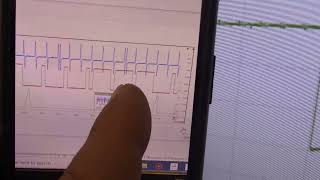
How to confirm: A metallic rattling or chattering noise from the front of the engine on a cold start is a strong indicator. A definitive diagnosis requires a technician to measure the timing deviation with an oscilloscope 🎬 Watch: Professional diagnosis of cam and crank correlation issues. or to physically inspect the timing components by removing the engine's front cover. This is a labor-intensive job.
Typical fix: This is a major repair that involves replacing the timing chain, sprockets, guides, and tensioner with a complete kit. It is labor-intensive, with shop costs often exceeding $1,500-$2,000.
Est. part cost: $200-$350
Rare But Worth Checking
- Failed Camshaft Phaser (Actuator): → Shop Engine Camshaft The mechanical gear on the end of the camshaft that actually adjusts the timing can fail internally, get stuck, or the internal locking pin can break. This is less common than the solenoid but more common than a sensor failure. Replacement requires removing the valve cover and the phaser can be bench-tested with compressed air to check its range of motion, which should be 14-15mm.
- Loose Crankshaft Harmonic Balancer Bolt: → Shop Engine Harmonic Balancer A GM TSB (PIP4581B) points to a loose or improperly torqued crankshaft balancer bolt as a potential cause for P0016 or P0017 on the GMT360 platform. The balancer can slip or wobble, causing the crankshaft position sensor to get an incorrect reading. This is often accompanied by a rattling noise. Manufacturer TSB Bulletin #PIP4581B notes that if a rattle noise is duplicated with the Service Engine Soon lamp and DTC P0016, the crankshaft balancer bolt should be re-torqued per specifications.
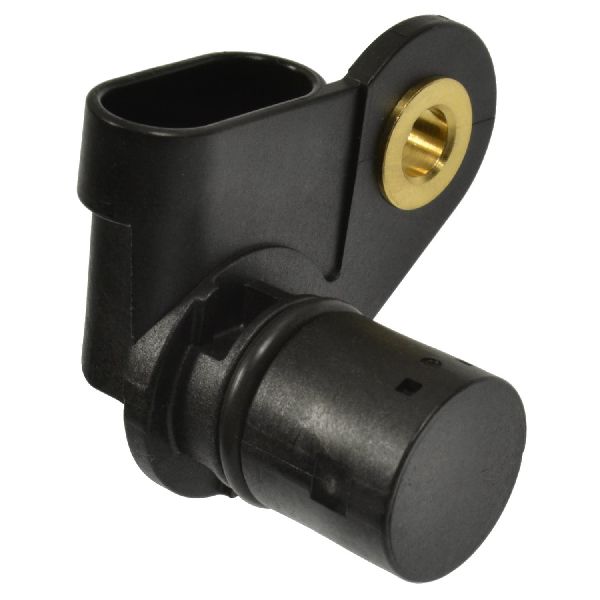
- Faulty Camshaft or Crankshaft Position Sensor: → Shop Engine Crankshaft Position Sensor While often replaced as a first step, the sensors themselves are rarely the root cause of a correlation code. They are usually accurately reporting a real mechanical or hydraulic timing problem. Only replace them after ruling out all other issues. The Crankshaft Position Sensor (CKP) should have a resistance between 500 and 900 Ohms. Note that replacing the crankshaft sensor requires a CASE relearn procedure with a capable scan tool.
- Swapped Electrical Connectors: According to GM TSB 19-NA-150, after engine service, it's possible to swap the connectors for the intake camshaft actuator solenoid and the intake actuator park lock solenoid. They are identical connectors and can only be identified by wire color. This will immediately set a P0016 code.
- Excessive Crankshaft End Play: → Shop Engine Crankshaft GM TSB PIP3694F warns that excessive crankshaft end play (back-and-forth movement) due to a worn thrust bearing can cause false P0016 or P0017 codes. Expected end play is 0.0044 - 0.0153 inches; anything more indicates a significant internal engine problem requiring major repair.
Diagnosis Steps
- Check Engine Oil: Verify the oil level is full and the oil is clean and of the correct 5W-30 viscosity. If low or dirty, perform an oil and filter change, clear the code, and re-test. This is the cheapest and easiest first step.
- Inspect the Camshaft Position Actuator Solenoid (VVT Solenoid): Unplug the solenoid on the upper right side of the engine. Check the electrical connector for any signs of oil leakage. If oil is present, the solenoid has failed and must be replaced.
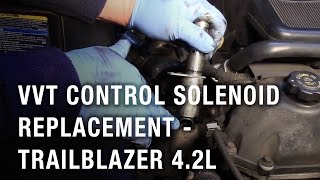
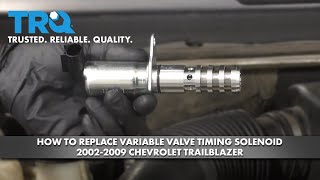
- Test the Solenoid: Remove the single 10mm bolt holding the solenoid and pull it out. On some models, the power steering pump may need to be unbolted and moved aside for clearance. Inspect its screens for metal shavings or sludge. For a no-cost diagnostic, swap the intake solenoid with the identical exhaust solenoid, clear the codes, and drive the vehicle. If the code changes to P0017, you have confirmed the solenoid is faulty. Test the solenoid's resistance with a multimeter; it should be between 6-12 Ohms.
- Listen for Noise: On a cold start, listen for any rattling or chain-slap noises from the front of the engine. A brief rattle that disappears as oil pressure builds is a classic sign of a stretched timing chain or bad tensioner.
- Check Crankshaft Balancer: If rattling is present, inspect the crankshaft harmonic balancer bolt to ensure it is tight and the balancer is not wobbling, as noted in TSB PIP4581B.
- Check for Swapped Connectors: If recent engine work was performed, verify the connectors for the VVT solenoid and the park lock solenoid are not swapped, per TSB 19-NA-150.
- Professional Diagnosis: If the above steps do not resolve the issue, the problem is likely a stretched timing chain or a failed camshaft phaser. This requires professional diagnosis with an oscilloscope to graph the cam/crank signals or physical disassembly to inspect the timing components.
Parts You'll Likely Need
- Camshaft Position Actuator Solenoid (VVT Solenoid)
(OEM #12615873)— This is the most common failure point for P0016 on the LL8 engine. It gets clogged with oil sludge or fails electronically, preventing proper cam phasing. Oil in the connector is a sure sign of failure.
Trusted brands: ACDelco (OEM), Dorman, Delphi
Related Codes That Often Appear With This One
- P0017 — This is the same correlation error but for the exhaust camshaft. If P0016 and P0017 appear together, it strongly suggests a base timing issue affecting both cams, such as a stretched timing chain, a problem with the crankshaft reluctor wheel, or a loose harmonic balancer.
- P0014 — This code means 'Camshaft Position B - Timing Over-Advanced' (referring to the exhaust cam). It often appears with P0016 and points directly to a problem with the VVT system, such as a stuck solenoid or low oil pressure.
- P1345 — This is an older, GM-specific code for crankshaft/camshaft correlation that may appear on earlier models of the platform. It points to the same fundamental timing issue and is often discussed in forum threads as a precursor or companion to P0016.
Technical Service Bulletins (TSBs) & Recalls
- PIP4581B: Notes that a rattle noise with P0016/P0017 can be caused by an improperly torqued crankshaft balancer bolt. Re-torquing is the specified fix before further diagnosis.
- 19-NA-150: Warns that after engine service, the identical electrical connectors for the VVT solenoid and the intake actuator park lock solenoid can be accidentally swapped, causing a P0016 code.
Platform-Specific Known Issues
- Cold Weather P0016: Some owners on GMTNation report that the P0016 code only appears during very cold starts (e.g., below -16°C / 3°F). This could point to an oil pressure issue where the oil is too thick at startup to operate the VVT system correctly, or a failing component (like the phaser) that is sensitive to temperature.
- The 'Parts Cannon' Dilemma: A common story in forums involves owners who replace the cam sensor, then the crank sensor, then the PCM, only to find the P0016 code keeps returning. In one case on GMTNation, an owner replaced the timing chain, phaser, VVT solenoid, sensors, and PCM, but the code still returned when coming to a stop, highlighting the difficulty in diagnosing the root cause without proper tools like a Tech 2 scanner or oscilloscope.
- Post-Repair Code Set: It's not uncommon for P0016 to appear immediately after a related repair, such as a valve cover gasket replacement or even just replacing the crankshaft position sensor. This can be due to a required CASE relearn procedure not being performed, or accidentally swapping the VVT solenoid connectors as described in TSB 19-NA-150.
Mechanic-Grade Diagnostic Values
- Engine Oil Pressure (Mechanical Gauge) — expected: Minimum 12 PSI @ 600-1200 RPM (idle); ~65 PSI @ 3,000 RPM.. Failure: Pressure significantly below 12 PSI at idle indicates a worn oil pump, clogged pickup tube, or excessive bearing clearance, starving the VVT system.
- Camshaft Position Actuator Solenoid (VVT Solenoid) Resistance — expected: 6 to 12 Ohms between the two pins.. Failure: A reading of 0 Ohms (short circuit) or infinite/OL (open circuit) indicates a failed solenoid coil.
- Crankshaft Position Sensor (CKP) Resistance — expected: 500 to 900 Ohms.. Failure: A reading outside this range indicates a faulty sensor.
- Crankshaft End Play — expected: 0.0044 to 0.0153 inches (0.112 - 0.389 mm).. Failure: Movement greater than 0.0153 inches indicates worn thrust bearings, which can trigger correlation codes per GM TSBs.
- Camshaft Phaser (Actuator) Bench Test — expected: 14-15mm (0.55-0.59 in) of travel between the full advance and full retard positions when actuated with compressed air.. Failure: Less travel or inability to move indicates a stuck or failed phaser.
Scan Tool Commands That Help
- GM Tech 2 / GDS2 or equivalent: Crankshaft Position (CKP) Variation Learn Procedure (CASE Relearn) — This procedure is mandatory after replacing the crankshaft position sensor, ECM, or performing major engine work. It calibrates the PCM to minor variations in the crankshaft reluctor wheel to ensure accurate timing and misfire detection. Failure to perform it can sometimes cause a persistent P0016 code.
- Advanced Bidirectional Scan Tool: VVT Solenoid Control / Camshaft Position Actuator Test — This command allows a technician to manually activate the VVT solenoid while the engine is running to verify its mechanical function. Activating the solenoid should cause a noticeable change in engine idle or even cause it to stall. If there is no change, it confirms a problem with the solenoid, oil flow, or the phaser itself.
Wiring & Ground Locations
- G101 — Located at the left front of the engine, lower block.. This is a primary ground for the Engine Control Module (ECM) and Transmission Control Module (TCM). A poor connection here can cause erratic behavior and false codes from multiple engine sensors, including the crank and cam sensors.
- G102 — Located at the left rear of the engine.. This ground is for the ignition coils. While not directly related to P0016, a poor ground here can cause misfires and other drivability issues that might confuse the diagnostic process.
- G103 — Located at the left rear of the engine compartment on the cowl, above the brake booster.. This grounds the Body Control Module (BCM), Instrument Panel Cluster (IPC), and the Data Link Connector (DLC). A fault here can affect communication with scan tools and cause various seemingly unrelated electronic issues.
Real Owner Repair Stories
- Reddit user in r/MechanicAdvice (2013 Ford F150 3.5L EcoBoost (Note: Different vehicle, but illustrates a common P0016 post-repair issue)) — P0016 code returned 5-10 minutes after a full timing chain and phaser replacement.
❌ Tried (didn't work) Complete timing chain and phaser replacement using the latest Ford-specified parts.
✅ What actually fixed it The user's problem was unresolved in the thread, but highlights a critical scenario for technicians: P0016 can return even after a correct, major timing job. This points towards less common causes like a faulty new part, an issue with the crankshaft reluctor wheel, or the need for a PCM relearn procedure, which are crucial next steps after the primary mechanical fix fails.
OEM Part Supersession History
12568078, 12576768, 12597025, 12602516→12615873— Standard part evolution for improved reliability and material changes.
Heads up: The ACDelco OEM part (12615873) is highly recommended. Aftermarket alternatives like Dorman 917-010, Delphi SL10064, and Standard Motor Products VVT102 exist, but forum users frequently report that non-OEM solenoids may fail to resolve the code or have a short service life.
Model Year Variations Within This Range
- 2006-2009: For the 2006 model year, the LL8 engine received a complete internal redesign, including the addition of a Mass Airflow (MAF) sensor. This resulted in a power increase from ~275 hp to 291 hp. While the fundamental causes of P0016 remain the same, diagnostic procedures involving air/fuel metrics on 2006+ models will include MAF sensor data, which is absent on 2005 models.
Diagnostic Flowchart
Real Owner Stories
Aggregated from forums and TSBs cited above. Mileages and costs reflect what owners reported in those sources.
2004 GMC Envoy SLT 4.2L
Symptoms: Owner received a P0016 code immediately after performing a valve cover gasket job and noticed oil inside the VVT solenoid connector.
What fixed it: Replaced the VVT solenoid with an AC Delco or Delphi part, as oil in the connector indicates internal seal failure.
Source hint: GMTNation.com - '2004 Envoy SLT Code P0016'
GMT360 Platform 4.2L LL8
Symptoms: Experienced a rough idle and flickering dash lights along with the P0016 code.
What fixed it: Checked the Camshaft Position Actuator Solenoid (CPAS) for oil in the connector and cleaned the throttle body before assuming timing chain failure.
Source hint: GMTNation.com - 'NEED HELP - P0016 Crankshaft position Correlation'
GMT360 Platform 4.2L LL8
Symptoms: P0016 code kept returning during cold weather or short trips despite replacing the cam and crank sensors and cleaning the CPAS.
What fixed it: Diagnosis pointed to a stuck cam phaser or an improperly torqued harmonic balancer as the root cause, requiring an AC Delco CPAS.
Source hint: GMTNation.com - 'p0016 keeps returning'
GMT360 Platform 4.2L LL8
Symptoms: P0016 code kept returning when coming to a stop, even after replacing multiple major components.
What fixed it: Owner replaced the timing chain, phaser, VVT solenoid, sensors, and PCM, but the issue persisted, showing that proper diagnosis with a Tech 2 scanner or oscilloscope is required instead of firing the 'parts cannon'.
Source hint: GMTNation.com (cited in 'The Parts Cannon Dilemma')
Related OBD-II Codes
Frequently Asked Questions
Does TSB PIP4581B apply to my 4.2L LL8 engine for the P0016 code?
I just replaced my valve cover gasket and now I have a P0016 code. What happened?
Why does my Saab 9-7X only throw the P0016 code in extremely cold weather?
Can I use an aftermarket VVT solenoid to fix P0016 on my 4.2L I6?
How can I test if the VVT solenoid is causing my P0016 without buying parts?
My Saab 9-7X idles rough like a muscle car and the dash lights flicker. Is this related to P0016?
Helpful Videos
We Have This Part in Stock


The information in this article is provided for general reference and educational purposes only. Vehicle specifications, procedures, and part compatibility can vary by production date, trim level, and region. Always consult your vehicle's factory service manual and verify part numbers before purchasing or performing repairs. Safety-critical components such as airbags, seat belts, and braking systems should be installed by a qualified professional.
- Saab 9-7X:
- 🧭 Diagnostic Flowchart
- 🎬 Helpful Videos
- 🛍️ Shop This Part
- What's Unique About the 2005-2009 Saab 9-7X
- Symptoms You May Notice
- Most Likely Causes
- Rare But Worth Checking
- Diagnosis Steps
- Parts You'll Likely Need
- Related Codes That Often Appear With This One
- Technical Service Bulletins (TSBs) & Recalls
- Platform-Specific Known Issues
- Mechanic-Grade Diagnostic Values
- Scan Tool Commands That Help
- Wiring & Ground Locations
- Real Owner Repair Stories
- OEM Part Supersession History
- Model Year Variations Within This Range
- Real Owner Stories
- 2004 GMC Envoy SLT 4.2L
- GMT360 Platform 4.2L LL8
- GMT360 Platform 4.2L LL8
- GMT360 Platform 4.2L LL8
- Related OBD-II Codes
- Frequently Asked Questions
- 🎟️ Get 5% Off