

P0017 on 2011-2016 Chevrolet Cruze: Crank/Cam Correlation Causes and Fixes
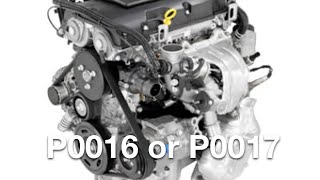
On a 2011-2016 Chevy Cruze, code P0017 is most often caused by a faulty camshaft position actuator solenoid (VVT solenoid) or low/dirty engine oil. Replacing a solenoid is a relatively easy DIY fix for under $50. However, this code can also point to a more serious stretched timing chain, which is a costly repair. Always check oil first.
- Always check your engine oil level and condition first; low or dirty oil is a primary cause of P0017.
- The most likely failed part is the exhaust camshaft actuator solenoid (VVT solenoid), which is affordable and relatively easy to replace.
- A simple way to test the solenoid is to swap it with the intake solenoid and see if the code changes to P0016.
- If you hear a rattling noise from the engine, especially if codes P0016 and P0017 are present together, suspect a stretched timing chain and seek professional diagnosis immediately.
- Do not ignore this code, as it can lead to severe and expensive engine damage if left unaddressed.
What's Unique About the 2011-2016 Chevrolet CRUZE

The 1.4L turbo and 1.8L engines in the first-generation Cruze are known for being sensitive to oil quality and level, which directly impacts the VVT system. A common point of failure is the camshaft actuator solenoids, which can get clogged by dirty oil or fail electrically. Furthermore, a known issue, documented in GM Technical Service Bulletin #PIP4543D, involves a small black plastic oil sleeve between the camshaft and the actuator that can be lost or damaged during repairs, leading directly to this code. Stretched timing chains are also a known, albeit more serious, possibility on higher-mileage 1.4L turbo engines, often accompanied by a rattling noise on startup. The 1.4L engine also has a problematic PCV system; failures in the valve cover or intake manifold can cause excessive crankcase pressure, leading to oil degradation and leaks that can contribute to VVT-related codes.
Diagnostic Flowchart

Tap your situation to follow the diagnostic path that matches what you're seeing on this vehicle.
Generation note: The 2011-2015 models are all first-generation. The 2016 model year is split: the 'Cruze Limited' is a carryover of the first generation, while the all-new second-generation sedan was also introduced. This guide primarily applies to the first-generation models with the 1.4L and 1.8L engines.
Symptoms You May Notice
- Check Engine Light is on
- Rough idle or stalling
- Reduced engine power and poor acceleration
- Difficulty starting the engine, or extended cranking
- Increased fuel consumption
- Rattling or slapping noise from the engine, especially on startup, that may go away after a few seconds.
- Replacing the camshaft or crankshaft position sensors when the actual problem is a faulty VVT solenoid, low oil, or a stretched timing chain.
- Assuming the timing chain is bad when the issue is simply a clogged VVT solenoid that can be cleaned or replaced easily. 🎬 See how to clean your actuators before buying new parts.
Most Likely Causes

- Low or Dirty Engine Oil 🔴 High Probability The VVT system uses oil pressure to adjust cam timing. The small passages in the actuator solenoids are easily clogged by old, dirty, or incorrect viscosity oil. Many owners on forums report the code appearing when an oil change is due and disappearing after.
How to confirm: Check the oil dipstick for level and inspect the oil's color and consistency. If it's low or appears dark and sludgy, this is a likely contributor.
Typical fix: Perform an oil and filter change using the correct specification oil (full synthetic 5W-30 meeting dexos1 Gen 2 or Gen 3 standards).
Est. part cost: $30-$70 - Failed Exhaust Camshaft Position Actuator Solenoid (VVT Solenoid) 🔴 High Probability → Shop Engine Camshaft These solenoids are a very common failure item on GM Ecotec engines. They can fail electrically, become clogged internally with sludge, or the filter screens on them can break apart and cause blockages.
How to confirm: A simple diagnostic test is to swap the exhaust solenoid (rear) with the identical intake solenoid (front). They are located on top of the valve cover. Clear the codes and drive the car. If the code changes to P0016 (Intake Camshaft Position Correlation), the solenoid is bad. This is a widely confirmed diagnostic step in owner forums. The solenoid can also be tested for resistance; it should be between 5-9 Ω.
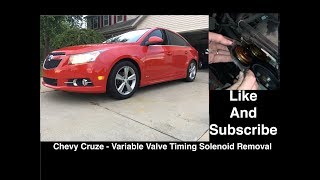
Typical fix: Replace the exhaust camshaft position actuator solenoid. 🎬 Watch: A step-by-step guide to replacing the VVT solenoids. The original part number is often 12655421, which has been superseded by GM part number 12679100.
Est. part cost: $25-$60 - Stretched Timing Chain or Failed Tensioner (1.4L Turbo) 🟡 Medium Probability → Shop Engine Timing Chain The timing chains on the 1.4L turbo engine can stretch over time, especially with extended oil change intervals. Failed tensioners or broken plastic guides can also cause slack, leading to timing correlation codes.
How to confirm: This requires a physical inspection. Listen for a rattling or chain slapping noise from the passenger side of the engine, especially on a cold start. A mechanic will need to remove the valve cover and/or timing cover to measure chain deflection and check timing marks. The presence of both P0016 and P0017 codes simultaneously strongly points to a base timing issue like a stretched chain.
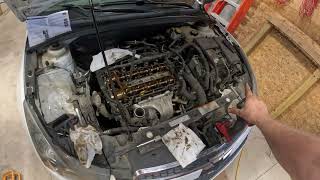
Typical fix: Replace the timing chain, sprockets, guides, and tensioner as a complete kit. This is a labor-intensive job often costing over $1000 at a shop. 🎬 Watch: A full walkthrough of the 1.4L timing chain replacement.
Est. part cost: $200-$500 - Failed Exhaust Camshaft Position Sensor (CMP) ⚪ Low Probability → Shop Engine Camshaft Position Sensor
How to confirm: The sensor can be tested with a multimeter for proper resistance or by observing its signal on an advanced scan tool. It's often replaced as a process of elimination after checking solenoids, but is less likely to be the cause than the solenoid itself. GM issued TSB #PIP5329C for high failure rates of these sensors.
Typical fix: Replace the exhaust camshaft position sensor.
Est. part cost: $20-$50
Rare But Worth Checking
- Missing Camshaft Actuator Oil Sleeve: → Shop Engine Camshaft As per TSB #PIP4543D, a small black plastic oil sleeve fits between the camshaft and the actuator to direct oil. This sleeve can be lost or damaged during repairs involving the camshaft actuators. If missing, the VVT system will not work correctly and will set this code. The sleeve is not sold separately and is only available as part of a new camshaft actuator assembly.
- Worn or Jumped Timing Belt (1.8L Engine): → Shop Engine Timing Chain If the 1.8L engine's timing belt has skipped a tooth or is excessively worn, it can cause a correlation error. This is especially likely if the belt is past its recommended 100,000-mile service interval. Several owners have reported getting P0017 immediately after a timing belt change, indicating the timing was set incorrectly by one tooth.
- Failed Crankshaft Position Sensor (CKP): → Shop Engine Crankshaft Position Sensor While less common than a CMP sensor failure for this specific code, a faulty crankshaft sensor can provide an incorrect reference signal to the ECM, leading to a correlation code.
- Spun Camshaft Reluctor Ring: → Shop Engine Camshaft GM TSB #PIP4548E notes that on some Ecotec engines, the reluctor ring (which the camshaft sensor reads) is press-fit onto the camshaft and can move, especially after an overheat event. This causes the sensor to read an incorrect cam position, triggering P0016 or P0017 even if all timing components are perfectly aligned.
- Failed Camshaft Phaser/Actuator (Gear): → Shop Engine Camshaft The gear itself on the end of the camshaft, which is hydraulically adjusted by the solenoid, can fail internally. A user on the Chevy Sonic forum with the 1.8L engine chased a P0017 code after replacing all other components, and found the exhaust cam phaser was the ultimate cause.
- Failed PCV System (1.4L Turbo): A failed check valve in the intake manifold or a torn diaphragm in the valve cover can cause abnormal crankcase pressure, leading to oil consumption, leaks, and accelerated oil degradation. This poor quality oil can then cause the VVT solenoids to clog or fail, indirectly triggering P0017.
Diagnosis Steps
- Check the engine oil level and condition. Top up or change the oil if it is low or dirty, using full synthetic 5W-30 dexos1 rated oil. Clear the code and see if it returns.
- Scan for any other DTCs. If P0016 is also present, suspect a base timing issue (timing chain/belt).
- Inspect the wiring and connectors for the exhaust camshaft position sensor and actuator solenoid. On the 1.4L, owners have reported the solenoid wiring can melt from contact with the cylinder head. Also check the crankshaft position sensor connector for oil contamination, which can cause a poor signal.
- Swap the exhaust and intake camshaft position actuator solenoids. They are identical and easily accessible on top of the engine. The exhaust is toward the firewall, intake is toward the front. Clear the codes and see if the fault moves to the intake side (P0016). If it does, the solenoid is faulty and needs replacement.
- If the code remains, test or replace the exhaust camshaft position sensor.
- Using an advanced scan tool, monitor the 'Exhaust Camshaft Position Variance'. The value should be less than 2 degrees. If it is higher, it indicates a mechanical or hydraulic issue.
- If all the above steps do not resolve the issue, the problem is likely mechanical. The engine's timing cover will need to be removed to inspect the timing chain/belt, guides, and tensioner for wear, damage, or misalignment.
Parts You'll Likely Need
- Camshaft Position Actuator Solenoid (Exhaust)
(OEM #12655421, superseded by 12679100)— This is the most common failure point for P0017 on this vehicle. It gets clogged or fails electrically, preventing proper VVT operation.
Trusted brands: ACDelco, Delphi
OEM price range: $40-$60
Aftermarket price range: $20-$40 - Camshaft Position Actuator Solenoid (Intake)
(OEM #12655420, superseded by 12679099)— Useful for diagnostic swapping with the exhaust solenoid. If the code changes to P0016, this confirms the other solenoid was faulty. It is often recommended to replace them in pairs.
Trusted brands: ACDelco, Delphi
OEM price range: $40-$60
Aftermarket price range: $20-$40 - Timing Chain Kit (1.4L) — Required if the timing chain is stretched or the guides/tensioner have failed, which is the second most common major cause of P0017, especially when seen with P0016.
Trusted brands: ACDelco, Cloyes
OEM price range: $250-$400
Aftermarket price range: $150-$250 - Timing Belt Kit (1.8L) — Required if the timing belt has jumped a tooth, is past its service interval, or was installed incorrectly.
Trusted brands: ACDelco, Continental, Gates
OEM price range: $150-$250
Aftermarket price range: $80-$150
Related Codes That Often Appear With This One
- P0016 — This is the equivalent code for the intake camshaft. If both P0016 and P0017 appear together, it strongly suggests a base timing issue like a stretched chain or jumped belt, as it's unlikely both VVT solenoids or sensors failed simultaneously.
- P0014 — This code indicates the exhaust camshaft timing is over-advanced. It often accompanies P0017 as it points to the same VVT system components (solenoid, phaser) being unable to control the cam position correctly.
- P0171 — On the 1.4L Turbo, a lean code (P0171) is often caused by a failed PCV system creating a vacuum leak. Since PCV failure can also lead to oil issues that trigger P0017, seeing these codes together may point to a root cause in the crankcase ventilation system.
Technical Service Bulletins (TSBs) & Recalls
- PIP4543D: 'This Preliminary Information communication provides information to the technician about a concern with diagnostic trouble codes P0011 P0014 P0016 or P0017 in the engine control module after a repair involving the camshaft actuators. There is a unique black plastic oil sleeve that is between the end of the cam actuator and the camshaft... If the sleeve is damaged or missing, the engine control module cannot control the cam actuator movement and will set the diagnostic trouble codes.'
- PIP4543C: An earlier version of the TSB for the same missing oil sleeve issue.
- 21-NA-268: While for later model years with different engines (LE2, LFV), this TSB shows a continuing pattern of GM engines setting P0017 due to camshaft reluctor issues, indicating a potential design sensitivity across generations.
- PIP4548E: Discusses the camshaft reluctor moving on the camshaft, particularly after an overheat condition, as a cause for P0016/P0017.
Platform-Specific Known Issues
- TSB #PIP4543D and #PIP4543C mention that DTCs P0016 or P0017 can set after engine repairs if a specific 'black plastic oil sleeve' between the camshaft and actuator is missing or damaged. This sleeve is NOT available separately and comes with a new actuator.
- On the 1.4L engine, a rattling noise on startup that quickly disappears is a classic sign of a failing timing chain tensioner or stretched chain, which will eventually lead to P0016/P0017 codes.
- On the 1.8L engine, P0017 is commonly reported by owners immediately after a DIY or shop timing belt replacement, indicating the exhaust cam timing is off by one tooth.
Mechanic-Grade Diagnostic Values
- Camshaft Position Actuator Solenoid Resistance — expected: 5–9 Ω. Failure: A reading outside this range, especially a high (kilo-ohm) or open reading, indicates a failed solenoid. A resistance greater than 8 Ω on the control circuit may set the code.
- VVT Solenoid Low Reference Circuit to Ground — expected: Less than 5 Ω. Failure: A reading greater than 5 Ω indicates an open or high resistance in the ground circuit, which could point to a wiring or ECM issue.
- Scan Tool: Exhaust Camshaft Position Variance — expected: Less than 2°. Failure: A value greater than 2° while the engine is running indicates the cam phaser is not responding correctly to commands, pointing to a mechanical or hydraulic fault.
Scan Tool Commands That Help
- GDS2 / High-End Scan Tool: Camshaft Position Actuator Solenoid Control — This bidirectional control allows a technician to command the solenoid on and off while monitoring cam phaser response. It helps determine if the solenoid is responding electrically and if the phaser is reacting hydraulically.
- GDS2 / High-End Scan Tool: Crankshaft Position Variation Learn — This procedure is generally NOT required for replacing a camshaft sensor or VVT solenoid. It is performed after major engine work like replacing the crankshaft, crankshaft sensor, or timing components to allow the ECM to learn the new reference signal.
Wiring & Ground Locations
- G103 / G105 — On the driver's side shock tower in the engine compartment.. These are major chassis grounds for the ECM and other modules. A loose or corroded connection here can cause erratic sensor readings and false trouble codes by creating an unstable ground reference for the sensors.
- G102 — A primary engine block ground located on the lower right rear of the engine.. Provides the ground path for sensors mounted on the engine block. A poor connection can directly affect the signal quality of the crankshaft and camshaft position sensors.
- K20 ECM Connector X1, Pin 55 (1.8L Engine) — At the Engine Control Module (ECM).. This is the specific pin for the exhaust camshaft position sensor signal (Violet/Black wire). Testing for continuity and voltage here can isolate a wiring problem between the sensor and the ECM.
Real Owner Repair Stories
- Reddit user partyfart75 (2012 Cruze 2LS 1.8L with 120k miles) — P0017 code appeared immediately after a timing belt replacement. Car drove fine.
❌ Tried (didn't work) Disconnecting the battery for 30 minutes., Double-checking timing marks, which appeared correct.
✅ What actually fixed it The consensus from other users was that the mechanical timing was off by one tooth on the exhaust cam, a common mistake even when using locking tools. The fix is to re-do the timing belt procedure and ensure perfect alignment. - YouTube user THE MOOSE'S WRENCH (2014 Chevrolet Trax 1.4L (same engine as Cruze)) — P0016 and P0017 codes, loud rattling from engine, poor running.
❌ Tried (didn't work) Initial diagnosis pointed towards sensors, but the presence of both codes and rattling suggested a larger issue.
✅ What actually fixed it Upon removing the timing cover, the technician found a seized timing chain tensioner and broken plastic timing chain guides. Replacing the complete timing chain kit (chain, guides, tensioner) resolved the codes and symptoms. - Cobalt SS Network user (2006 Cobalt SS (Ecotec engine family)) — Persistent P0017 code.
❌ Tried (didn't work) Testing crank and cam sensors (passed)., Testing wiring (passed).
✅ What actually fixed it The final fix was replacing the exhaust camshaft itself along with the timing chain. This suggests the reluctor wheel on the cam may have spun or the cam phaser had failed internally.
"I Checked Everything" — The Actual Cause
- In a similar GM platform, a technician reported a persistent P0017 where all timing components, sensors, and solenoids checked out. The final root cause was found to be engine oil that had leaked into the electrical connector for the CRANKSHAFT position sensor. This contaminated the connection, corrupted the reference signal sent to the ECM, and created a correlation fault. The fix was simply cleaning the oil out of the connector with electrical cleaner.
OEM Part Supersession History
12655421 (Exhaust Solenoid)→12679100— Standard part revision and improvement by the manufacturer.
Heads up: The new part is a direct replacement. The full supersession chain is 12578518 -> 12628348 -> 12646784 -> 12655421 -> 12679100.12655420 (Intake Solenoid)→12679099— Standard part revision and improvement by the manufacturer.
Heads up: The new part is a direct replacement. The full supersession chain is 12578517 -> 12628347 -> 12646783 -> 12655420 -> 12679099.
Model Year Variations Within This Range
- 2011-2016 (1.4L Turbo): The PCV system has multiple known failure points that can indirectly cause P0017. A common failure is a non-return check valve inside the intake manifold which can get dislodged. Another is a rubber diaphragm in the valve cover that can tear. GM issued special coverage N192273000 for the valve cover on 2015-2016 models, indicating a high failure rate. These failures lead to improper crankcase ventilation, causing oil consumption and degradation that clogs VVT solenoids.
Helpful Videos
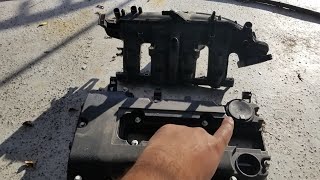
We Have This Part in Stock

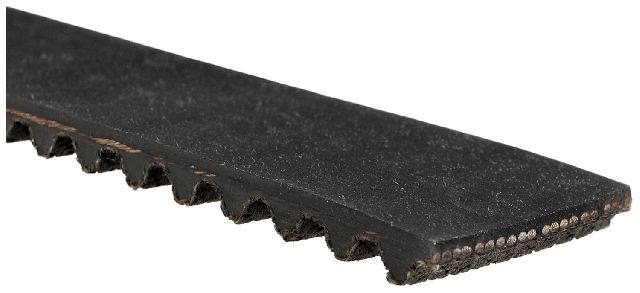

The information in this article is provided for general reference and educational purposes only. Vehicle specifications, procedures, and part compatibility can vary by production date, trim level, and region. Always consult your vehicle's factory service manual and verify part numbers before purchasing or performing repairs. Safety-critical components such as airbags, seat belts, and braking systems should be installed by a qualified professional.
- Chevrolet CRUZE:
- 🧭 Diagnostic Flowchart
- 🎬 Helpful Videos
- 🛍️ Shop This Part
- What's Unique About the 2011-2016 Chevrolet CRUZE
- Symptoms You May Notice
- Most Likely Causes
- Rare But Worth Checking
- Diagnosis Steps
- Parts You'll Likely Need
- Related Codes That Often Appear With This One
- Technical Service Bulletins (TSBs) & Recalls
- Platform-Specific Known Issues
- Mechanic-Grade Diagnostic Values
- Scan Tool Commands That Help
- Wiring & Ground Locations
- Real Owner Repair Stories
- "I Checked Everything" — The Actual Cause
- OEM Part Supersession History
- Model Year Variations Within This Range
- 🎟️ Get 5% Off