

P0017 on 2005-2009 Chevrolet Trailblazer 4.2L: Causes and Fixes for Crank/Cam Correlation
On the 4.2L Trailblazer, P0017 is most often caused by a faulty exhaust camshaft position actuator solenoid (VVT solenoid) due to dirty oil. Replacing the solenoid is a common fix costing $30-$90. Always check your oil level and condition first, as low or dirty oil is a primary trigger.
- Always check your engine oil level and condition first. A simple oil change is a frequent and inexpensive fix for P0017 on this engine.
- The most likely failed part is the exhaust camshaft actuator solenoid (VVT solenoid), not the camshaft position sensor.
- Replacing the VVT solenoid requires moving the power steering pump but is a manageable DIY job that can save significant money.
- If the vehicle has high mileage (100k+) and a new solenoid with clean oil doesn't solve the code, the timing chain has likely stretched and requires replacement.
- Before major repairs, consider the possibility of a loose crankshaft balancer bolt, as mentioned in TSB PIP4581B.
What's Unique About the 2005-2009 Chevrolet TRAILBLAZER

The 4.2L Atlas LL8 inline-6 engine in the Trailblazer uses a single Camshaft Position Actuator (GM's term for VVT) on the exhaust cam, making it a frequent source of this code. The system is highly dependent on clean 5W-30 engine oil and sufficient pressure to function. Due to the engine's design, the actuator solenoid is a known weak point, often getting clogged with sludge or having its small mesh screens tear, which leads directly to codes P0017 and P0014. Several Technical Service Bulletins (TSBs) also point to less common but documented issues like a loose crankshaft balancer bolt and excessive crankshaft end play, highlighting specific mechanical quirks of this platform.
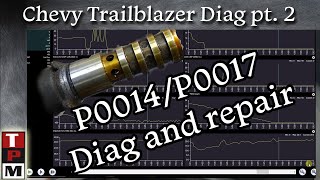
🎬 Watch: A breakdown of common causes and simple solutions for these codes.Diagnostic Flowchart

Tap your situation to follow the diagnostic path that matches what you're seeing on this vehicle.
Symptoms You May Notice
- Check Engine Light is on
- Rough idle or engine vibration
- Engine stalling, especially at low speeds or when slowing down
- Difficulty starting the engine, or extended cranking
- Loss of power and poor acceleration
- Rattling or knocking noises from the engine, especially on startup
- Reduced fuel economy
- Replacing the camshaft position sensor when the actual problem is the camshaft actuator solenoid.
- Replacing the crankshaft position sensor when the issue is oil-related or a stretched timing chain.
- Assuming a timing chain replacement is needed before thoroughly diagnosing the VVT solenoid and checking for simpler issues like the crankshaft balancer bolt.
Most Likely Causes

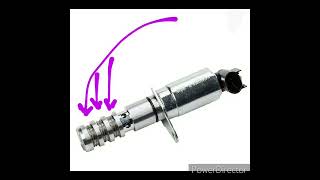
- Faulty Exhaust Camshaft Position Actuator Solenoid (VVT Solenoid) 🔴 High Probability → Shop Engine Camshaft The solenoid's fine mesh screens are highly susceptible to clogging from oil sludge or tearing over time, which is a very common failure on the 4.2L engine. Oil can also leak past the solenoid's seals into the electrical connector, causing a poor connection.
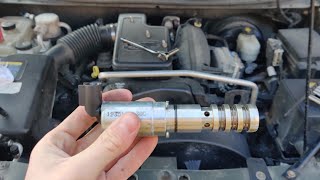
How to confirm: Remove the solenoid from the front of the cylinder head (requires unbolting and moving the power steering pump). 🎬 See this easy walkthrough for replacing the VVT solenoid. Inspect the three small screens for sludge, tears, or missing pieces. The solenoid can also be tested for resistance (typically 8-13 ohms).
Typical fix: Replace the solenoid and change the engine oil and filter. Cleaning the original solenoid is a temporary fix at best and often fails again shortly after.
Est. part cost: $30-$90 - Low or Dirty Engine Oil 🔴 High Probability The VVT system is entirely dependent on hydraulic pressure from clean engine oil to function. The 4.2L engine holds nearly 7 quarts of oil, and owners sometimes neglect to check it, allowing it to run low. Infrequent oil changes lead to sludge buildup that directly impacts the VVT solenoid and phaser.
How to confirm: Check the engine oil dipstick for low level and poor condition (dark, thick, or sludgy). Many forum users report fixing the code simply by performing an oil change with a quality 5W-30 synthetic oil and filter.
Typical fix: Perform an engine oil and filter change using the recommended 5W-30 viscosity. Some owners use an engine flush product before changing the oil to help clean internal passages, though this should be done with caution.
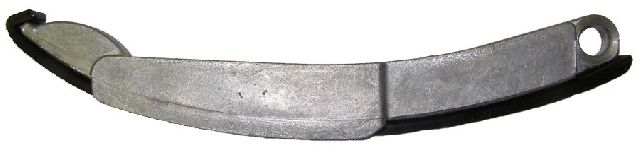
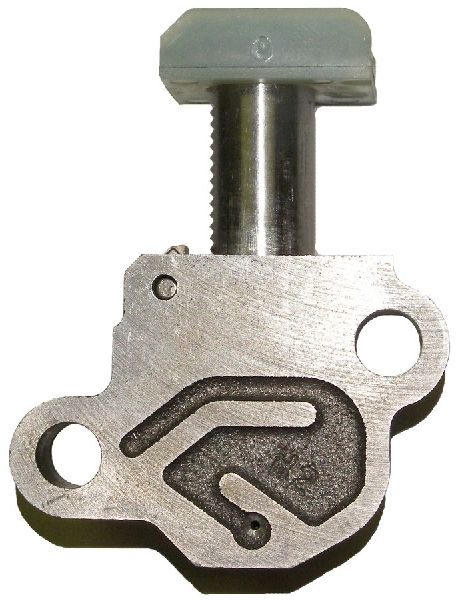
Est. part cost: $40-$80 - Stretched Timing Chain or Failed Guides/Tensioner 🟡 Medium Probability → Shop Engine Timing Chain On higher mileage engines (typically over 100,000-150,000 miles), the timing chain can stretch beyond the hydraulic tensioner's ability to compensate, causing a constant correlation error that a new solenoid cannot fix.
How to confirm: This is a complex diagnosis. A persistent rattling noise on startup is a strong indicator. A definitive check requires removing the valve cover to inspect for chain slack or comparing cam/crank sensor signals on an oscilloscope. Verifying physical timing marks is a labor-intensive job.
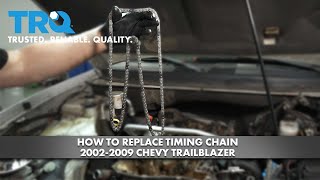
Typical fix: Replace the timing chain, sprockets, guides, and tensioner as a complete kit. This is a major repair often costing over $1,500 at a shop. 🎬 Watch: Step-by-step guide for replacing the timing chain on the 4.2L.
Est. part cost: $150-$400
Rare But Worth Checking
- Loose Crankshaft Balancer Bolt: → Shop Engine Crankshaft Manufacturer TSB #PIP4581B specifically calls this out. If a rattle noise is present and other diagnostics fail, the crankshaft balancer bolt should be checked and re-torqued to specification. This can allow the balancer (and the reluctor wheel behind it) to wobble, creating an incorrect signal.
- Faulty Camshaft or Crankshaft Position Sensor: → Shop Engine Crankshaft Position Sensor While these sensors can fail, they are less common culprits for P0017 than the VVT solenoid or oil issues. Often, a failing sensor will trigger its own specific code (e.g., P0341 for the cam sensor, P0335 for the crank sensor). Owners often replace these first without success.
- Clogged or Failed Camshaft Phaser (Actuator Sprocket): → Shop Engine Camshaft The phaser itself, which is the gear on the end of the camshaft, can get stuck due to internal sludge or mechanical failure, preventing it from changing timing correctly. This is usually a consequence of poor oil maintenance and may require phaser replacement, which is a significant job.
- Excessive Crankshaft End Play: → Shop Engine Crankshaft TSB #PIP3694F and #PIP4945B mention that excessive forward/backward movement of the crankshaft due to worn thrust bearings can trigger P0017. This is a serious internal engine problem that requires significant repair.
Diagnosis Steps

- Check Engine Oil: Verify the oil level is correct and the oil is clean. If low or dirty, perform an oil and filter change with 5W-30 oil, clear the code, and see if it returns. This is the easiest and a very common fix.
- Inspect the Camshaft Actuator Solenoid: Locate the solenoid on the front-passenger side of the cylinder head. You will need to remove the serpentine belt and then unbolt the three bolts holding the power steering pump to move it aside for access.
- Remove and Inspect Solenoid: Unplug the electrical connector (this may have a locking tab). Remove the single 10mm bolt holding the solenoid in place. Twist and pull the solenoid out. Inspect the mesh screens for sludge, tears, or metal shavings.
- Test or Replace Solenoid: While cleaning with brake cleaner is possible, replacement is highly recommended if it's clogged, damaged, or oil has leaked into the connector. A new ACDelco or reputable aftermarket part is the most reliable fix.
- Check for Loose Crankshaft Balancer Bolt: As per TSB #PIP4581B, if a rattle is heard and the solenoid/oil are good, inspect the crankshaft balancer bolt to ensure it is torqued to specification.
- Advanced Mechanical Check: If all else fails, the issue is likely mechanical timing (stretched chain, failed phaser, or excessive crankshaft end play). This involves checking for chain slack, comparing sensor signals on an oscilloscope, or verifying physical timing marks, which is a job best left to a professional.
Parts You'll Likely Need
- Exhaust Camshaft Position Actuator Solenoid
(OEM #12615873)— This is the most common failure point for P0017 on the 4.2L Trailblazer, typically due to oil contamination clogging its internal screens.
Trusted brands: ACDelco (GM Original Equipment), Dorman (p/n 917-010), Standard Motor Products (SMP)
OEM price range: $50-$90
Aftermarket price range: $30-$60 - Timing Chain Kit — Required for higher-mileage engines where the chain has stretched, causing a persistent timing correlation fault that a new solenoid won't fix.
Trusted brands: Cloyes, Melling
OEM price range: $250-$400
Aftermarket price range: $150-$250 - Exhaust Camshaft Position Sensor
(OEM #213-1557)— Replaced less frequently, only when diagnostic testing confirms it has failed. It is often misdiagnosed as the primary cause.
Trusted brands: ACDelco, Delphi
OEM price range: $40-$70
Aftermarket price range: $20-$50
Related Codes That Often Appear With This One
- P0014 — This code means 'Camshaft Position B - Timing Over-Advanced'. It often appears with P0017 because a stuck or faulty VVT solenoid can cause the exhaust cam to be in the wrong position, triggering both a correlation error (P0017) and an over-advanced error (P0014).
- P0106 — TSB #PIP3694F notes that a rough idle caused by the P0017 fault can sometimes also trigger a P0106 (Manifold Absolute Pressure/Barometric Pressure Circuit Range/Performance) code due to erratic engine vacuum.
- P0016 — This is the correlation code for the intake camshaft. Seeing P0016 and P0017 together strongly suggests a base timing issue, like a stretched timing chain or a problem with the crankshaft reluctor wheel, as it's affecting both cams.
Technical Service Bulletins (TSBs) & Recalls
- PIP4945B: General diagnostic advice for P0017.
- PIP4913A: Recommends checking oil pressure if P0017 cause is not found.
- PIP4581B: Links P0017 and engine rattle to a possible loose crankshaft balancer bolt.
- PIP3694F: Connects P0017 with codes P0014 and P0106, and rough idle.
Platform-Specific Known Issues
- TSB #PIP4913A: Advises technicians to monitor oil pressure if standard diagnostics do not resolve a P0017 code, pointing to the system's reliance on proper oiling.
- TSB #PIP4581B: Notes that a rattle noise accompanied by P0017 could be caused by a loose crankshaft balancer bolt, requiring it to be re-torqued.
- TSB #PIP3694F: Connects P0017 with P0014 and a potential P0106 if a rough idle is present, and points to checking the VVT solenoid and crankshaft end play.
- TSB #PIP4945B: A cumulative bulletin that consolidates information for diagnosing a persistent P0017, reminding technicians that the code sets when the cam is out of sequence by more than 16.31 degrees.
Mechanic-Grade Diagnostic Values
- Camshaft Position Sensor Power Supply Voltage — expected: 10-12 Volts DC. Failure: No voltage indicates a wiring or PCM issue, not a bad sensor.
- Camshaft Position Sensor Ground Circuit — expected: 10-12 Volts DC. Failure: No voltage indicates a bad ground provided by the PCM.
- VVT Actuator Solenoid Resistance — expected: Generally between 6-12 Ohms. Failure: A reading of zero or infinite ohms indicates a failed solenoid coil.
- Engine Oil Pressure (for VVT function) — expected: At least 12 PSI at 1200 RPM. Failure: Pressure below this threshold can starve the VVT system and cause correlation codes.
- Crankshaft End Play — expected: 0.0044 - 0.0153 inches (0.112 - 0.389 mm). Failure: Play exceeding this specification indicates worn thrust bearings, a major mechanical failure that can set P0017.
Scan Tool Commands That Help
- Tech2 / GDS2 (or equivalent professional scanner): Camshaft Position Actuator Solenoid Control — Used to command the solenoid's duty cycle to verify it is responding mechanically. However, the PCM will inhibit this control function when DTC P0017 is actively set, so the code may need to be cleared first for the test to run.
- Tech2 / GDS2 (or equivalent professional scanner): Crankshaft Position (CKP) Variation Learn (CASE Relearn) — This procedure is required only if the crankshaft position sensor has been replaced. Failure to perform the relearn can cause other running issues or codes, though it's not a direct cause of P0017.
Wiring & Ground Locations
- G109 / G110 — On the lower left side of the 4.2L engine block.. These are the primary grounds for the engine block. The crankshaft position sensor and ignition system rely on a clean engine ground. Corrosion or a loose connection here can create electrical noise or faulty signals.
- G105 — In the engine compartment, on the firewall near the instrument panel harness pass-through.. This is a major ground for the engine harness and PCM. A poor connection can cause a wide range of erratic sensor behaviors and codes, including P0017.
- G103 — On the left front of the engine compartment, on the radiator support.. This is a primary chassis ground. While less direct, poor chassis grounds can create electrical potential differences that affect sensitive sensor circuits.
- Camshaft Position Sensor Connector — On the exhaust camshaft position sensor, located on the passenger side of the cylinder head.. Pin A is the 10-12V power supply from the PCM. Pin B is the signal wire. Pin C is the ground provided by the PCM. Verifying power and ground here is a key diagnostic step.
Real Owner Repair Stories
- GMTNation Forum User 'LOWCLASS21' and subsequent discussion (2005 Trailblazer LS, 4.2L I6, 80,000 miles) — P0017 code appeared immediately after replacing the original crank and cam sensors.
❌ Tried (didn't work) Replacing crankshaft position sensor (aftermarket), Replacing camshaft position sensor (aftermarket), Dealer replaced camshaft actuator solenoid (OEM part), Performing an oil change
✅ What actually fixed it The original poster did not provide a final update, but another user in the thread with an identical, persistent P0017 issue reported that the final fix was replacing the exhaust camshaft phaser (the actuator gear itself), which was mechanically stuck.
When the Usual Fixes Don't Work
- While the camshaft actuator solenoid is the most common cause, a significant number of owner reports indicate that replacing the solenoid (even with an OEM part) does not resolve the P0017 code. In these cases, the root cause is often a more serious mechanical issue. The next most likely culprits are a stretched timing chain (on engines over 100k miles) or a mechanically failed/stuck camshaft phaser (actuator gear). Before committing to a costly timing chain replacement, TSBs strongly advise checking for less common mechanical faults like a loose crankshaft balancer bolt or excessive crankshaft end play.
OEM Part Supersession History
12568078, 12576768, 12597025, 12602516→12615873— Design improvement. Later versions of the solenoid reportedly have reinforced screens to prevent them from tearing and being ingested into the engine's oil passages.
Model Year Variations Within This Range
- 2008-2009: Engines from 2008-2009 models have more significant internal and electronic differences compared to earlier 4.2L engines, making them more difficult to swap into 2005-2007 models.
- 2006-2009: The ignition coils and corresponding valve cover design were changed starting with the 2006 model year. While not directly related to P0017, it's a key difference to be aware of when sourcing engine parts.
Helpful Videos
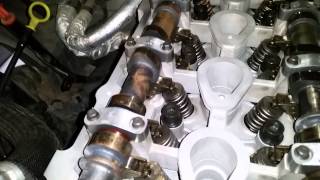
We Have This Part in Stock
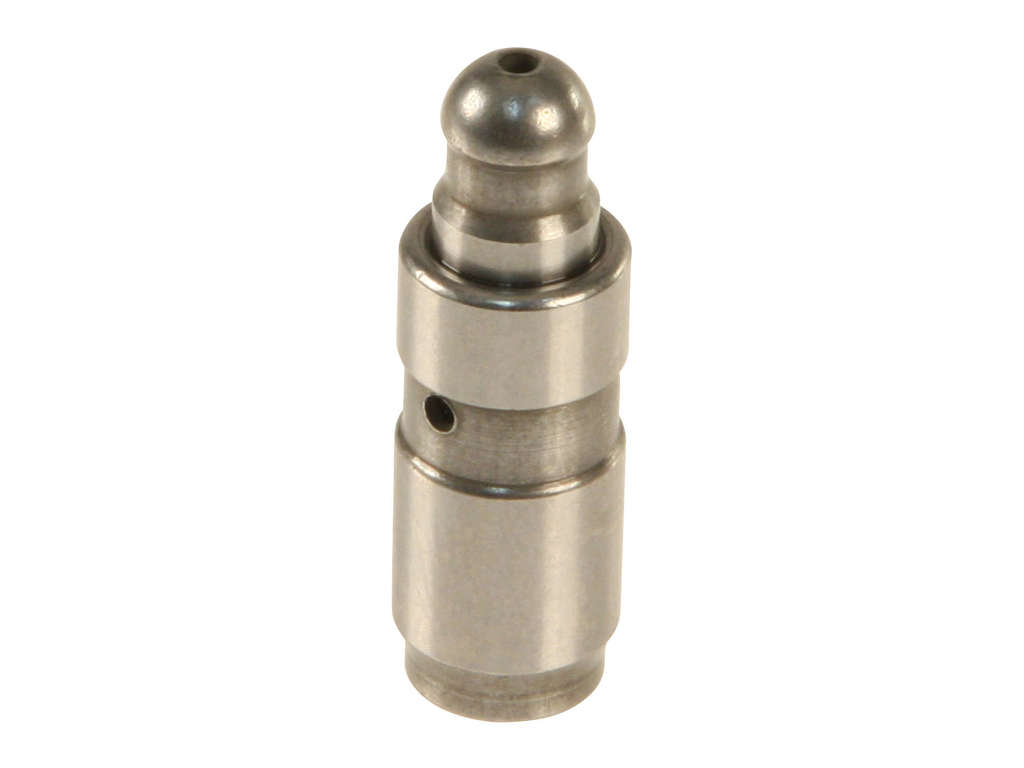
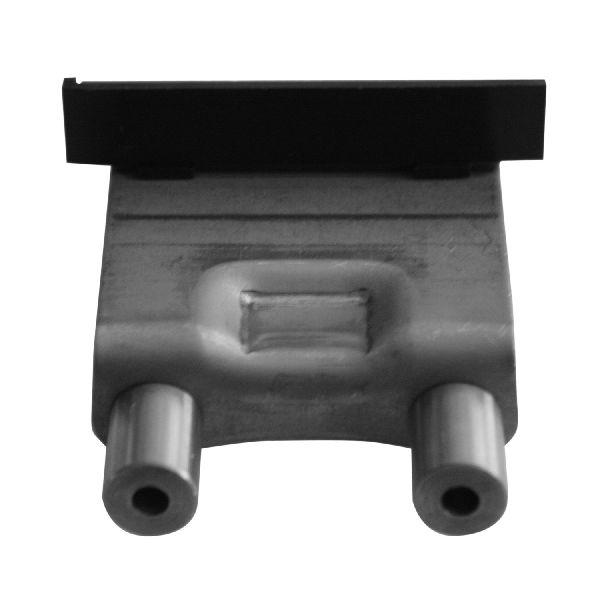
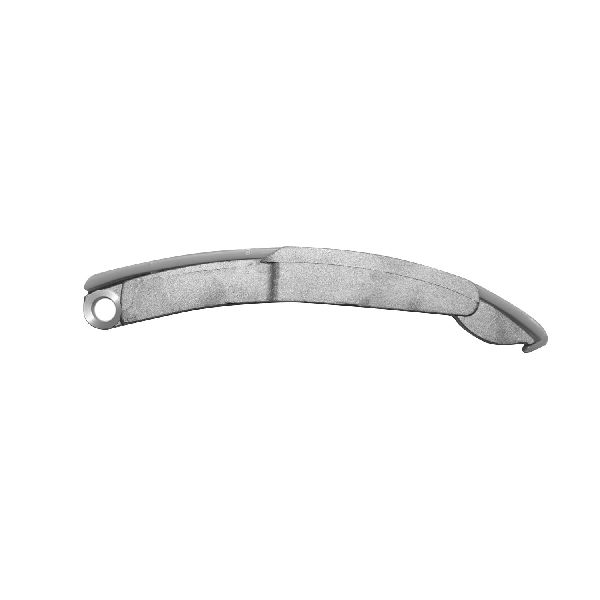


The information in this article is provided for general reference and educational purposes only. Vehicle specifications, procedures, and part compatibility can vary by production date, trim level, and region. Always consult your vehicle's factory service manual and verify part numbers before purchasing or performing repairs. Safety-critical components such as airbags, seat belts, and braking systems should be installed by a qualified professional.
- Chevrolet TRAILBLAZER:
- 🧭 Diagnostic Flowchart
- 🎬 Helpful Videos
- 🛍️ Shop This Part
- What's Unique About the 2005-2009 Chevrolet TRAILBLAZER
- Symptoms You May Notice
- Most Likely Causes
- Rare But Worth Checking
- Diagnosis Steps
- Parts You'll Likely Need
- Related Codes That Often Appear With This One
- Technical Service Bulletins (TSBs) & Recalls
- Platform-Specific Known Issues
- Mechanic-Grade Diagnostic Values
- Scan Tool Commands That Help
- Wiring & Ground Locations
- Real Owner Repair Stories
- When the Usual Fixes Don't Work
- OEM Part Supersession History
- Model Year Variations Within This Range
- 🎟️ Get 5% Off