

P0017 on 2015-2019 Ford Fiesta: Crankshaft/Camshaft Correlation Causes and Fixes
P0017 on a Ford Fiesta usually points to a problem with the Variable Camshaft Timing (VCT) system. The most common fix is replacing a sticking exhaust VCT solenoid, often caused by dirty or low engine oil. This is a relatively inexpensive DIY repair, with the part costing between $75 and $85. In some cases, the issue can be a stretched timing belt, which is a more involved repair.
- P0017 on a 2015-2019 Fiesta is most often caused by a sticking exhaust VCT solenoid, which is highly sensitive to oil quality.
- Always check your engine oil level and condition first. A simple oil change can sometimes resolve the issue.
- Replacing the exhaust VCT solenoid is a common, effective, and relatively easy DIY repair that can save significant labor costs.
- If the code appears immediately after a timing belt service, the mechanical timing is almost certainly incorrect and needs to be re-checked by a professional.
- Do not immediately assume the camshaft or crankshaft sensors are bad; they are less likely to be the cause than the VCT solenoid or an oil-related issue.
What's Unique About the 2015-2019 Ford FIESTA

The 1.6L Ti-VCT (Twin Independent Variable Camshaft Timing) engine in the Fiesta is known for this issue. Ford has issued multiple Technical Service Bulletins (TSBs) acknowledging that P0017 and related codes can be caused by small debris contaminating the oil and causing the VCT solenoids to stick. This suggests the system is particularly sensitive to oil quality and maintenance schedules. Forum discussions confirm that owners frequently encounter this code, often pointing to either the VCT solenoids or premature timing belt stretch.
Diagnostic Flowchart

Tap your situation to follow the diagnostic path that matches what you're seeing on this vehicle.
Symptoms You May Notice
- Check Engine Light is on
- Rough idle or engine vibration
- Reduced engine power and poor acceleration
- Engine may be hard to start or cranks but won't start
- Decreased fuel economy
- Rattling or ticking noise from the engine
- Replacing the camshaft position sensor when the root cause is a sticking VCT solenoid or a mechanical timing issue.
- Replacing the crankshaft position sensor when the fault lies with the camshaft timing components.
- Assuming the timing belt is fine because it's not at its replacement interval, when it may have stretched or jumped a tooth prematurely.
Most Likely Causes

- Sticking or Failed VCT Solenoid (Oil Control Valve) 🔴 High Probability → Shop Engine Variable Valve Timing (VVT) Solenoid Ford TSBs #SSM 48423 and #SSM 47170 directly state this code can be caused by small debris making the VCT solenoid stick. The system is sensitive to oil contamination and sludge, which can clog the fine mesh screens on the solenoids.
How to confirm: Check for other VCT-related codes. Use a scan tool to command the solenoid on and off while monitoring engine performance. You can also remove the solenoid, inspect it for debris or damaged screens, and test its resistance with a multimeter (a common reading is between 7 to 14 ohms). Applying a 9V or 12V source should produce an audible click as the internal plunger moves.
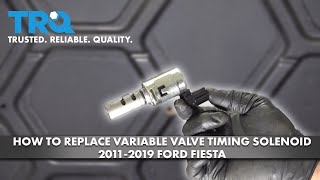
Typical fix: Replace the Bank 1 exhaust VCT solenoid. 🎬 Watch: Step-by-step guide to replacing the VCT solenoid. It's also wise to perform an oil and filter change at the same time to remove contaminants.
Est. part cost: $74-$83 - Low or Dirty Engine Oil 🔴 High Probability The Ti-VCT system is hydraulically operated, using oil pressure to adjust cam timing. Low, old, or incorrect viscosity oil (Ford specifies 5W-20 Synthetic Blend) cannot operate the VCT phasers correctly and can lead to debris clogging the solenoid solenoid screens.
How to confirm: Check the oil level on the dipstick and inspect its color and consistency. Review vehicle maintenance records for the last oil change. The issue appearing shortly after an oil change can also be a clue.
Typical fix: Perform an engine oil and filter change using the manufacturer-specified grade (5W-20 Synthetic Blend). Clear codes and test drive.
Est. part cost: $40-$70 - Stretched or Jumped Timing Belt 🟡 Medium Probability → Shop Engine Timing Chain The 1.6L is an interference engine with a timing belt that has a scheduled replacement interval of 100,000 miles. However, owners have reported the belt stretching or jumping a tooth sooner, causing a correlation error. This is a very common cause if the code appears shortly after a timing belt replacement was performed incorrectly.
How to confirm: This requires a physical inspection of the timing belt and its alignment marks, which involves significant engine disassembly (removing the valve cover and side timing covers). This is typically done after ruling out simpler causes like sensors and solenoids.
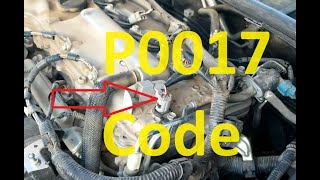
Typical fix: Replace the timing belt, tensioner, and idler pulley. It is highly recommended to replace the water pump at the same time. 🎬 See this walkthrough for replacing the timing belt and water pump. Using proper timing tools to lock the cams and crank is essential.
Est. part cost: $150-$250 - Failed Camshaft Position Sensor ⚪ Low Probability → Shop Engine Camshaft Position Sensor
How to confirm: Swap the exhaust camshaft sensor (rear of the engine) with the intake sensor (front of the engine), as they are identical. Clear the codes and see if the code changes to P0016 (Intake Camshaft Correlation). If it does, the sensor is bad. You can also test the sensor's signal with an oscilloscope or check its resistance.
Typical fix: Replace the Bank 1 exhaust camshaft position sensor. The sensor is located on the right side of the engine, toward the back.
Est. part cost: $30-$60
Rare But Worth Checking
- Damaged Camshaft Phaser (Actuator): → Shop Engine Camshaft The VCT phaser itself can fail mechanically, get clogged with sludge, or the locking pin can fail, preventing it from adjusting the cam timing correctly. This is a more involved and expensive repair that requires timing belt removal.
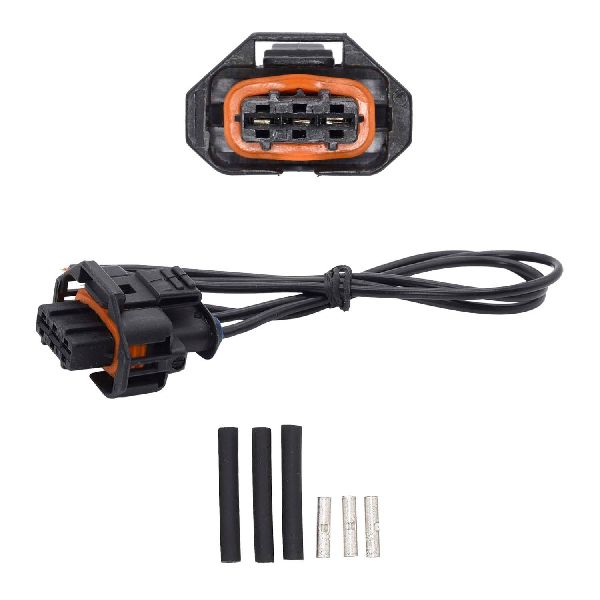
- Damaged Wiring or Connectors: Wiring to the crankshaft sensor, camshaft sensor, or VCT solenoid can become frayed, corroded, or damaged, leading to an intermittent signal and triggering the code. The crankshaft sensor wiring is particularly vulnerable due to its location near the bottom of the engine.
- Failed Crankshaft Position Sensor: → Shop Engine Crankshaft Position Sensor While less common than a camshaft sensor failure for this specific code, a faulty crankshaft position sensor can provide an incorrect baseline reading, causing a correlation fault. It is located at the front bottom of the engine, near the oil filter.
Diagnosis Steps

- Check engine oil level and condition. If low or dirty, perform an oil and filter change with 5W-20 synthetic blend oil, clear the code, and test drive.
- Use an OBD-II scanner to check for any other pending or active trouble codes, especially P0016.
- Inspect the wiring and connectors for the camshaft position sensors (top right of engine), crankshaft position sensor (bottom front), and VCT solenoids for any visible damage.
- Use a scan tool with live data to monitor the desired vs. actual camshaft position. Command the exhaust VCT solenoid on and off to see if it responds and affects the engine idle.
- Swap the intake and exhaust camshaft position sensors (they are identical). Clear the codes and see if the fault code changes to P0016. If it does, the sensor you moved is faulty.
- Remove and inspect the exhaust VCT solenoid for debris on its screens. Test its internal resistance with a multimeter (should be 7-14 ohms). Test for mechanical operation by applying 12V power and listening for a click.
- If all else fails, the issue is likely mechanical. The valve cover and timing covers will need to be removed to inspect the timing belt, tensioner, and VCT phaser for proper alignment and wear. This is a complex job requiring specialized tools.
Parts You'll Likely Need
- Variable Camshaft Timing (VCT) Solenoid
(OEM #8V2Z-6M280-A (Exhaust))— This is the most frequent cause of P0017 on this vehicle, as confirmed by multiple Ford TSBs. It gets stuck due to oil debris.
Trusted brands: Motorcraft, Dorman (p/n 916-722), Standard Motor Products (p/n VVT266)
OEM price range: $75-$90
Aftermarket price range: $45-$70 - Camshaft Position Sensor
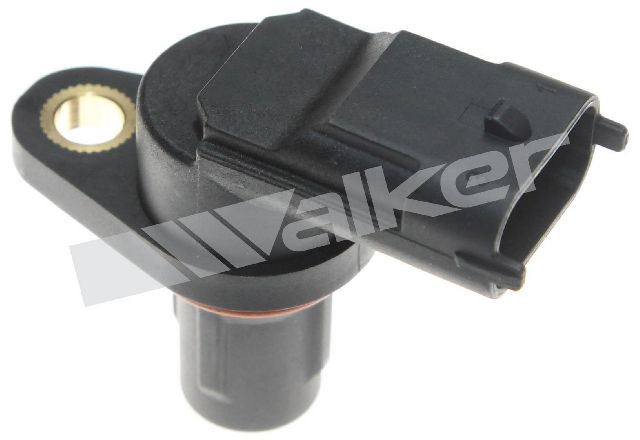
(OEM #4M5Z-6B288-A (or 4M5G12K073AD))— A faulty sensor can send incorrect data to the PCM, causing a false correlation code. It's a common point of failure, though less so than the VCT solenoid for this specific code. Both intake and exhaust sensors are the same part number.
Trusted brands: Motorcraft, Bosch, NGK/NTK
OEM price range: $40-$60
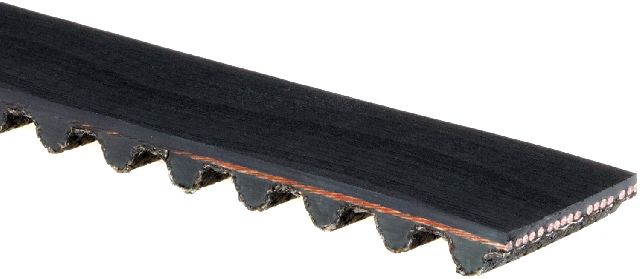
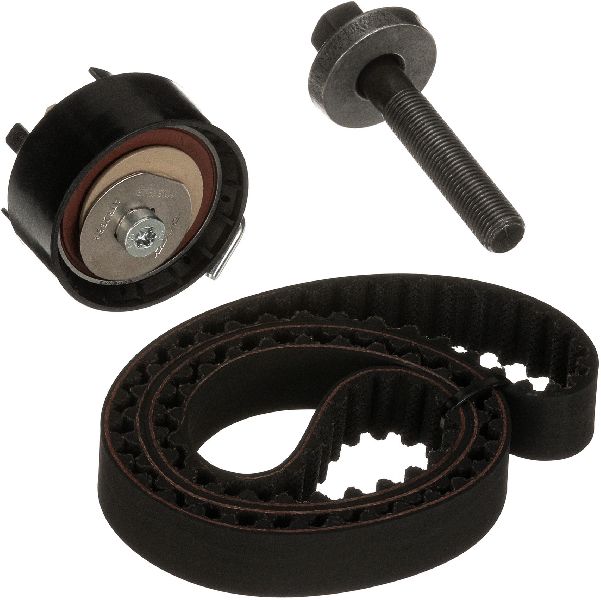
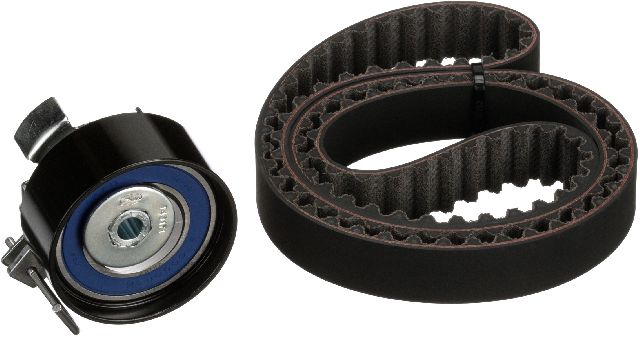
Aftermarket price range: $25-$45 - Timing Belt Kit (Belt, Tensioner, Idler) — If the code is caused by a stretched or jumped timing belt, a full kit replacement is required to restore proper mechanical timing. Ford's recommended interval is 100,000 miles.
Trusted brands: Gates (p/n TCKWP343A, includes water pump), Continental, Motorcraft
OEM price range: $150-$200
Aftermarket price range: $80-$130
Related Codes That Often Appear With This One
- P0016 — This code is for the intake camshaft (Sensor 'A') on the same bank. Seeing both P0016 and P0017 together strongly suggests a base timing issue, like a slipped timing belt or incorrect timing job, rather than a single faulty component like a sensor or solenoid.
- P0011, P0012, P0014, P0015 — These are other VCT-related codes mentioned in Ford's TSBs. They point to over-advanced or over-retarded timing, which can be caused by the same sticking VCT solenoids or oil flow problems that trigger P0017.
Technical Service Bulletins (TSBs) & Recalls

- SSM 48423: Notes that DTCs like P0017 may be due to small debris causing the VCT solenoid to stick.
- SSM 54366: Points technicians to specific diagnostic procedures (Pinpoint test HK) for a range of VCT codes including P0017.
- SSM 47170: An earlier TSB that also identifies sticking VCT solenoids from debris as a potential cause for P0017.
Platform-Specific Known Issues
- Ford Technical Service Bulletin (TSB) #SSM 48423 and #SSM 47170 note that P0017 (among other codes) may be caused by small debris causing the VCT solenoid to stick.
- TSB #SSM 54366 directs technicians to a specific pinpoint test (HK) in the service
Mechanic-Grade Diagnostic Values
- VCT Solenoid (Oil Control Valve) Resistance — expected: 7 to 14 Ohms. Failure: A reading outside this range, or an open/short circuit, indicates a faulty solenoid coil.
- Camshaft Position Sensor (CMP) Resistance — expected: Approximately 300-500 Ohms. Failure: A reading significantly outside this range, or an open/short circuit, suggests a faulty sensor. One source measured a good sensor at 453 ohms, against a spec of 482 ohms.
- VCT Solenoid Power Supply Voltage — expected: Battery Voltage (approx. 12V) with Key On, Engine Off. Failure: Low or no voltage suggests a wiring or fuse issue upstream of the solenoid.
Scan Tool Commands That Help
- Ford IDS (Integrated Diagnostic System) or equivalent professional scan tool: VCT Solenoid Bidirectional Control / Output State Control — This command allows the technician to manually activate and deactivate the VCT solenoid while the engine is running at idle. A change in engine idle quality (stumbling or stalling) when the solenoid is commanded ON confirms the solenoid is mechanically responding and oil passages are likely clear. No change in idle suggests a stuck solenoid, clogged oil passage, or wiring issue.
Wiring & Ground Locations
- Main Engine Ground Strap — A thick ground cable connecting the engine block or transmission housing to the vehicle's chassis, often near a motor mount or the starter.. A poor engine ground can cause erratic behavior and incorrect readings from all engine-mounted sensors, including the crankshaft and camshaft position sensors, leading to false correlation codes. Ensure this connection is clean, tight, and free of corrosion.
- PCM Connector — The Powertrain Control Module (PCM) is typically located in the engine bay, often near the battery or firewall.. Technicians may need to test for signal continuity and voltage directly at the PCM connector pins for the CMP and CKP sensors to rule out wiring harness breaks or shorts between the sensor and the computer.
Real Owner Repair Stories
- iFixit Question (Ford Fiesta (year not specified, but within range)) — P0017 code appeared immediately after replacing the water pump.
✅ What actually fixed it The user suspected the timing was off by one tooth on the timing belt as a result of the water pump replacement, which is a common cause when the code appears after such a service. The implied fix is to re-do the timing belt procedure correctly. - Ford Fiesta Club forum (Ford Fiesta (year not specified)) — P0016 and P0017 codes appeared about 10 miles after a professional timing belt change. Car drove normally.
✅ What actually fixed it The consensus on the forum was that the recent timing belt job was the direct cause. The problem is almost certainly incorrect timing alignment during the installation. The fix is to have the mechanic re-verify the timing marks and belt position using the correct locking tools. - Fiesta ST Forum (Ford Fiesta (post implies ST, but issue is identical for 1.6L Ti-VCT)) — P0017 code appeared 50-100 miles after a timing belt change. Car drove fine.
❌ Tried (didn't work) Mechanic cleaned the VCT solenoid, but the code returned.
✅ What actually fixed it The forum members strongly indicated that the root cause was incorrect timing during the belt installation, not a sensor or solenoid issue. The delay in the CEL appearing is common. The required fix is to re-perform the timing belt installation correctly.
When the Usual Fixes Don't Work
- A recurring theme in owner forums is the appearance of P0017 immediately following a timing belt replacement. While Pass 2 correctly identifies a stretched or jumped belt as a common cause, these real-world stories highlight that incorrect installation by a mechanic is a very frequent trigger for this specific code. In these cases, replacing sensors or solenoids is a misdiagnosis; the only fix is to re-do the timing belt job correctly, verifying alignment with proper tools.
Model Year Variations Within This Range
- 2016+: For 2016, the Ford Fiesta received the new optional Sync 3 infotainment system, replacing the older MyFord Touch. This change does not affect the P0017 diagnosis but is a key difference in the vehicle's interior technology.
- 2018-2019: In 2018, a rearview camera became standard, and the base display screen size increased to 4.2 inches. The 1.0L EcoBoost engine option was discontinued. In 2019, a new ST-Line trim was introduced, offering the appearance of the ST model without the turbocharged engine. These are cosmetic and feature changes that do not alter the diagnosis for P0017.
Helpful Videos


We Have This Part in Stock


The information in this article is provided for general reference and educational purposes only. Vehicle specifications, procedures, and part compatibility can vary by production date, trim level, and region. Always consult your vehicle's factory service manual and verify part numbers before purchasing or performing repairs. Safety-critical components such as airbags, seat belts, and braking systems should be installed by a qualified professional.
- Ford FIESTA:
- 🧭 Diagnostic Flowchart
- 🎬 Helpful Videos
- 🛍️ Shop This Part
- What's Unique About the 2015-2019 Ford FIESTA
- Symptoms You May Notice
- Most Likely Causes
- Rare But Worth Checking
- Diagnosis Steps
- Parts You'll Likely Need
- Related Codes That Often Appear With This One
- Technical Service Bulletins (TSBs) & Recalls
- Platform-Specific Known Issues
- Mechanic-Grade Diagnostic Values
- Scan Tool Commands That Help
- Wiring & Ground Locations
- Real Owner Repair Stories
- When the Usual Fixes Don't Work
- Model Year Variations Within This Range
- 🎟️ Get 5% Off