

P0017 on 2005-2011 Ford Focus 1.6L Ti-VCT: Exhaust Cam Timing Causes and Fixes
On a 2005-2011 Ford Focus with the 1.6L Ti-VCT engine, P0017 is most often caused by low/dirty engine oil or a faulty exhaust Variable Camshaft Timing (VCT) solenoid. Start by checking your oil; if the level and quality are good, the VCT solenoid is the next most likely part to replace, costing around $30-$70 for the part. If the code is accompanied by P0016, a stretched timing belt is a strong possibility.
- P0017 on this car points to an exhaust cam timing issue.
- Always check your engine oil level and condition first; this is the most common and cheapest fix.
- The exhaust VCT solenoid is the next most likely culprit and is a relatively easy and affordable part to replace.
- Do not replace the cam/crank sensors unless you have specifically tested them and confirmed they are faulty.
- If both P0016 and P0017 are present, suspect a more serious mechanical timing belt issue.
What's Unique About the 2005-2011 Ford Focus
This issue is common on Ford's Ti-VCT (Twin Independent Variable Camshaft Timing) engines, which are very sensitive to oil quality and pressure. The system uses oil-pressurized solenoids and phasers to adjust timing. Forum discussions and TSBs for similar Ford engines confirm that low oil levels, oil contamination, or a sticking VCT solenoid are the most frequent triggers for this code, often more so than actual sensor failure. A Reddit user with a Focus ST (a different engine, but similar VCT system) reported a P0017 code caused by a previous owner using silicone sealant on the cam cover, which then contaminated the oil and damaged the VCT solenoids.
Generation note: The 2005-2011 year range primarily covers the Ford Focus Mk2 in the European market, where the 1.6L Ti-VCT engine was common. This guide is specific to that platform, as this engine was not offered in the North American Ford Focus during this period. The 1.6L Ti-VCT is part of the Ford Sigma engine family, also known as Zetec-SE or Duratec.
Symptoms You May Notice
- Check Engine Light is on
- Rough or unstable idle
- Reduced engine power and acceleration
- Engine stalling, especially at low speeds
- Increased fuel consumption
- Difficulty starting the engine
- Rattling noise from the engine bay
- Replacing the camshaft or crankshaft position sensors before checking the oil and VCT solenoids. The sensors are often just reporting the timing error, not causing it.
- Replacing the timing belt without addressing a faulty VCT solenoid or phaser, leading to the code returning.
Most Likely Causes
- Low, Dirty, or Incorrect Viscosity Engine Oil 🔴 High Probability The Ti-VCT system is hydraulic and extremely sensitive to oil pressure and cleanliness. Sludge or debris from delayed oil changes can clog the fine mesh screens on the VCT solenoids, causing them to stick and fail to adjust cam timing correctly.
How to confirm: Check the oil dipstick for level and inspect the oil's color and consistency on the dipstick and under the oil cap. This should always be the first step.
Typical fix: Perform an engine oil and filter change using the manufacturer-specified grade (typically Ford WSS-M2C948-B 5W-20, though 5W-30 is also listed for this engine). Clear the codes and drive to see if the issue is resolved.
Est. part cost: $30-$60 - Faulty Exhaust VCT Solenoid (Oil Control Valve) 🔴 High Probability → Shop Engine Variable Valve Timing (VVT) Solenoid These solenoids control oil flow to the cam phasers and are a known failure point. They often get stuck due to debris in the oil, which prevents proper timing adjustments. Ford has issued TSBs (like SSM 48423) for other models noting that debris can cause these solenoids to stick.
How to confirm: Listen for a clicking sound from the solenoid area. You can test the solenoid's resistance with a multimeter (should be around 6.9-7.9 Ohms at room temperature, with a general acceptable range of 5-15 Ohms). A common diagnostic trick is to swap the intake and exhaust solenoids; if the code changes to P0016 (intake correlation), the solenoid is bad. A scan tool can also be used to command the solenoid to cycle, which should cause a change in idle quality.
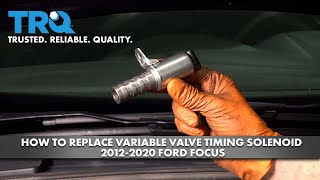
Typical fix: Replace the exhaust VCT solenoid. It is often recommended to replace both intake and exhaust solenoids at the same time. Before replacing, some TSBs suggest attempting to cycle the solenoid with a scan tool to dislodge debris.
Est. part cost: $30-$70 - Stretched or Slipped Timing Belt 🟡 Medium Probability → Shop Engine Timing Chain The 1.6L Ti-VCT uses a timing belt with a specific service life. Ford revised the replacement interval from 10 years/100,000 miles down to 8 years/100,000 miles (or 160,000 km) due to failures. Some sources recommend replacement as early as 80,000 km (50,000 miles) to be safe. A stretched or jumped belt will cause a persistent correlation error.
How to confirm: This requires a physical inspection of the timing belt, tensioner, and pulleys, which involves partial engine disassembly. Check for slack in the belt, visible wear, or misaligned timing marks. This is often suspected if P0016 and P0017 appear together.
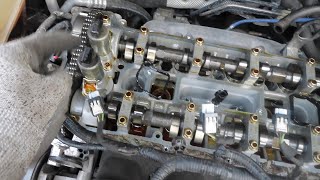
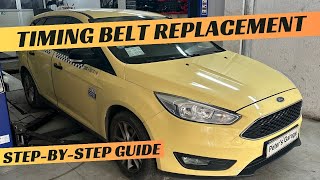
Typical fix: Replace the timing belt, tensioner, and idler pulleys as a complete kit. It is also highly recommended to replace the water pump at the same time. This is a labor-intensive job that requires special timing tools. 🎬 See this step-by-step Ford Focus Mk2 timing belt replacement.
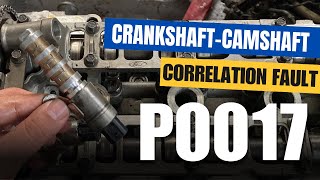
Est. part cost: $100-$250 - Faulty Exhaust Camshaft Position (CMP) Sensor ⚪ Low Probability → Shop Engine Camshaft Position Sensor While possible, the sensor itself failing is less common than oil-related or solenoid issues. Correlation codes usually point to a mechanical or hydraulic problem rather than a sensor sending no signal. 🎬 Watch: How to test and fix P0017 correlation codes. However, a sensor providing an erratic signal can trigger the code.
How to confirm: Use a scan tool to monitor the live data from the sensor. Check for a consistent signal. Inspect the sensor and its wiring for damage. The sensor's resistance can be tested with a multimeter.
Typical fix: Replace the exhaust camshaft position sensor.
Est. part cost: $25-$50
Rare But Worth Checking
- Failing VCT Phaser (Cam Variator): The mechanical gear on the camshaft itself can fail, get stuck, or leak oil. A user on fordownersclub.com reported P0017 on a 2006 1.6 Ti-VCT and, after confirming the solenoids were good, suspected the VCT pulley (phaser) was the culprit, especially as it was also leaking oil. This is a more complex and expensive repair than a solenoid.
- Faulty Crankshaft Position (CKP) Sensor: → Shop Engine Crankshaft Position Sensor If the CKP sensor provides an erratic signal, it can disrupt the PCM's ability to correlate cam and crank positions, but this would likely trigger other codes as well. This is an uncommon cause for an isolated P0017.
- Damaged Tone Ring: The reluctor wheel (tone ring) that the camshaft or crankshaft sensor reads can become damaged, bent, or slip on its shaft, causing incorrect readings even with a good sensor.
Diagnosis Steps
- Check Engine Oil: Verify the oil level is correct and the oil is clean and of the proper viscosity (5W-20 or 5W-30). If low or dirty, perform an oil and filter change, clear the code, and drive to see if it returns.
- Inspect Wiring: Check the wiring harnesses and connectors for the exhaust VCT solenoid and the camshaft and crankshaft position sensors for any signs of damage, corrosion, or looseness.
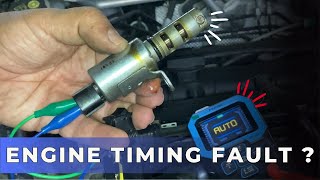
- Test VCT Solenoid: Swap the exhaust and intake VCT solenoids (they are typically identical). Clear the codes and drive. If the code changes to P0016, the solenoid you moved is faulty and needs replacement. Alternatively, use a scan tool to command the solenoid on/off and listen for a click or change in idle. 🎬 Watch: A mechanic explains VCT solenoid diagnostics and testing.
- Test Sensors: If the solenoid swap does not identify the issue, use a multimeter to test the resistance of the camshaft position sensor. Use an oscilloscope to compare the CMP and CKP sensor waveforms against a known-good pattern to verify timing.
- Inspect Mechanical Timing: If all electronic components and oil are good, the next step is to perform a physical inspection of the timing belt and its components for wear, slack, or damage. This is an advanced step and requires specialized tools to lock the cams and crank.
Parts You'll Likely Need
- Variable Camshaft Timing (VCT) Solenoid / Oil Control Valve
(OEM #4M5G-6L713-BE (or superseding numbers like 1793455, 1871405))— This is the most common part to fail due to its sensitivity to oil debris, causing it to stick and disrupt cam timing.
Trusted brands: Motorcraft, Pierburg, Dorman
OEM price range: $50-$90
Aftermarket price range: $30-$70 - Engine Oil and Filter
(OEM #Motorcraft FL-910S (Filter))— Clean oil of the correct viscosity (5W-20) is critical for the Ti-VCT system to function. An oil change is the first and most important diagnostic step.
Trusted brands: Motorcraft, Castrol, Mobil 1
OEM price range: $40-$70
Aftermarket price range: $30-$60 - Timing Belt Kit — If the timing belt has stretched or jumped a tooth, it will cause a correlation error that cannot be fixed by replacing electronic parts. The service interval was shortened by Ford to 8 years/100,000 miles, indicating its importance.
Trusted brands: Gates, Continental, Dayco
OEM price range: $150-$300
Aftermarket price range: $100-$250
Related Codes That Often Appear With This One
- P0016 — This is the correlation code for the intake camshaft. If P0016 and P0017 appear together, it strongly suggests a base timing issue, like a slipped or stretched timing belt, or a major oil pressure problem affecting both VCT phasers, rather than a single faulty component.
- P0015 — This code indicates 'Camshaft Position B - Timing Over-Retarded'. If it appears with P0017, it strongly points to a problem with the exhaust camshaft's timing mechanism, such as a stuck VCT solenoid or failing phaser.
Technical Service Bulletins (TSBs) & Recalls
- SSM 48423: Notes that VCT codes (including P0017) on various Ford vehicles can be caused by small debris causing the VCT solenoid to stick. Recommends cycling the solenoid with a scan tool before replacement.
- SSM 47170: An earlier version of SSM 48423 with the same guidance.
- TSB 16-0038 / 16-0093: While for a different engine (3.5L), these TSBs show a pattern of Ford addressing paired VCT codes (like P0015/P0017) by replacing the corresponding VCT solenoid, reinforcing the diagnostic pattern.
Mechanic-Grade Diagnostic Values
- VCT Solenoid Coil Resistance — expected: 6.9 - 7.9 Ohms at room temperature. A general acceptable range is often cited as 5-15 Ohms.. Failure: A reading of infinity (OL) indicates an open coil. A reading near zero indicates a shorted coil. Both require replacement.
- Camshaft Position (CMP) Sensor Power Supply Voltage — expected: Approximately 5V DC with key on, engine off.. Failure: No voltage or significantly lower voltage points to a wiring or PCM issue.
- Camshaft Position (CMP) Sensor Signal Wire Voltage — expected: Should show approximately 5V DC with key on, engine off. When the engine is running or cranked, it should fluctuate rapidly between 0V and 5V.. Failure: A static voltage that does not change when the engine is cranked, or no voltage at all, indicates a failed sensor or wiring issue.
- VCT Advance Error PID (Live Scan Data) — expected: Should be close to 0 degrees (+/- 5 degrees) for an extended period during closed-loop operation.. Failure: A consistent, large degree error indicates the phaser is not reaching its commanded position, pointing to a solenoid, phaser, or oil pressure problem.
Scan Tool Commands That Help
- Ford IDS (or FORScan): VCT Solenoid On/Off Bidirectional Control — This command rapidly cycles the VCT solenoid (e.g., 10 times) to dislodge small debris that may be causing it to stick. It should be used after an oil change but before replacing a suspected faulty solenoid, as it can sometimes resolve the issue without part replacement.
- FORScan: Camshaft Sensor Relearn Procedure — After replacing a camshaft position sensor, the ECU may need to relearn its position. A user on Reddit reported that a P0017 code persisted after sensor replacement until this relearn procedure was performed using FORScan software.
Wiring & Ground Locations
- Main Engine Bay Ground — Under the airbox, on the chassis frame rail. On some Fords, there is also a ground point right next to the PCM.. A poor main engine ground can cause erratic behavior from sensors and the PCM, potentially leading to false correlation codes. These grounds can look fine but be internally corroded.
- Gearbox Earth Cable — A braided strap connecting the gearbox/transmission case to the chassis.. This is a primary ground path for the engine block. A broken or corroded gearbox ground can cause a host of electrical issues, including sensor signal problems.
- Glovebox Area Ground — Behind the glovebox, there is an earth bolt on the chassis structure.. This ground point is often used by the Generic Electronic Module (GEM) or Body Control Module (BCM), which is located above the passenger kick panel. While less likely to cause a P0017, a fault here can contribute to general electrical gremlins.
Real Owner Repair Stories
- Ford Owners Club forum user 'ChaserHUN' (Ford Focus Mk2 1.6 Ti-VCT) — Check engine light on, lack of power, P0017 and P0341 codes present.
❌ Tried (didn't work) Timing belt was replaced by the previous owner., Both camshaft sensors were replaced., A second mechanic confirmed timing was correct and suspected bad VCT sprockets (phasers).
✅ What actually fixed it A third mechanic found that the timing was, in fact, set incorrectly by the previous mechanic ('the exhaust crankshaft was off'). After a new timing belt was installed and timed correctly, the issue was resolved, though the user was then misled to believe the ECU was faulty before the final diagnosis. - Pico Technology forum user 'valdy' (2006 Ford Focus 1.6 Ti-VCT (HXDA engine)) — Check Engine Light with codes P0341, P0016, and P0017.
❌ Tried (didn't work) Previous garage replaced both camshaft sensors and the crank sensor.
✅ What actually fixed it The user identified that the base timing was out and the intake camshaft gear (phaser) had excessive slack. The final fix was replacing the timing belt and the faulty intake VCT phaser. An oscilloscope waveform analysis confirmed the timing was off by approximately 17 crankshaft degrees before the repair.
OEM Part Supersession History
4M5G-6L713-BE→1793455, 1871405, 2003599, BE8Z6M280A, CN1G6L713AD— Standard part revisions and updates by the manufacturer over time.
Heads up: While many aftermarket parts are available, user reviews are mixed. Sticking with OEM/Motorcraft or a reputable OE supplier like Pierburg is often recommended by forum members to avoid premature failure or performance issues.
Model Year Variations Within This Range
- 2004-2007: The early Mk2 Focus with the 1.6 Ti-VCT engine was rated at 115 PS and met Euro 4 emissions standards.
- 2008-2011: The facelifted Mk2.5 Focus continued to use the 1.6 Ti-VCT. Later versions in the Mk3 (post-2011) were updated to meet Euro 5 standards and had slightly different power outputs (e.g., 125 PS). While the core VCT system is similar, part numbers for sensors or the PCM may differ.
Diagnostic Flowchart
Other Known Issues on This Vehicle
Issues unrelated to this code that are worth knowing about as an owner of this generation:
- Leaking Manual Transmission Seal 🟠 Medium — Common on 1.4L and 1.6L petrol models. Caused by an incorrectly fitted right-hand driveshaft damaging the gearbox seal.
- Water Leaking into Spark Plug Wells 🟠 Medium — A very common issue on 1.4L and 1.6L petrol engines, often caused by degraded washer jet seals on the bonnet allowing water to drip directly onto the engine cover and into the plug wells, causing misfires.
- Creaking Noise from Front Axle 🟡 Low — A creaking or knocking noise when pulling away can be caused by a lack of sealant on the driveshaft splines.
- Instrument Cluster Failure 🔴 High — A well-known issue where dry solder joints on the instrument cluster's main connector cause intermittent or total failure of gauges and warning lights, sometimes leading to a no-start condition. More common on earlier Mk2 models.
- Faulty Alternator 🟠 Medium — Alternator failure is a frequently reported problem, often leading to battery charging issues and eventual breakdown.
Used vs. New Parts: Buying Guide for This Vehicle
When a used part is the smart pick: Used parts are generally not recommended for fixing this code, as the primary failure points are wear-and-tear items. A used VCT solenoid or camshaft sensor carries the same risk of failure as the part being replaced. The only exception might be a major engine component like a cylinder head if it has been inspected by a machine shop.
Donor-vehicle mileage cap: roughly under 50000 miles for the part to have meaningful remaining life.
What to inspect on the donor part:
- For a VCT solenoid, ensure the mesh screens are perfectly clean and intact.
- Check for any signs of sludge or varnish on the part.
- Ask for the donor vehicle's service history if possible; a well-maintained engine is a better source.
OEM-only on this vehicle (don't cheap out):
- Timing Belt Kit: Never use a used timing belt, tensioner, or idler. This is a critical maintenance item that should always be new.
- VCT Solenoid: While aftermarket is available, many forum users strongly recommend using only genuine Ford/Motorcraft solenoids to avoid repeat failures. The cost difference is often minimal compared to the labor of replacing it again.
Aftermarket brands forum-validated for this vehicle:
- Timing Belt Kits: Gates, Continental, Dayco are reputable brands for timing components.
- Sensors: NTK, Denso, Bosch are generally reliable for engine management sensors.
Brands owners have reported issues with on this vehicle:
- Unbranded 'no-name' VCT solenoids and sensors from online marketplaces. While cheap, they have a very high failure rate and can cause persistent diagnostic headaches. A French user review on AliExpress for a similar part noted it worked but had no branding or part numbers and felt low quality.
Real Owner Stories
Aggregated from forums and TSBs cited above. Mileages and costs reflect what owners reported in those sources.
2006 Ford Focus 1.6 Ti-VCT
Symptoms: P0017 code present; owner investigated the VCT solenoid and cam variator (phaser) as potential causes.
What fixed it: Testing the solenoids and addressing the cam variator (phaser) issues.
Source hint: Ford Focus Club (fordownersclub.com) thread titled '2006 1.6 Ti Vct cam variator problems'
2009 Ford Focus 1.6L Petrol
Symptoms: P0017 error code triggered.
What fixed it: Checking the wiring and inspecting for a worn timing belt.
Source hint: Ford Owners Club (fordownersclub.com) thread titled 'Error code p0017'
2024 Ford Focus ST Mk2
Symptoms: P0017 code triggered after a previous repair.
What fixed it: Cleaning out silicone sealant that had contaminated the oil and damaged the VCT solenoids.
Source hint: Reddit (r/FocusST) post 'P0017 help'
2011 Ford Fiesta 1.6 Ti-VCT
Symptoms: Paired P0016 and P0017 codes.
What fixed it: Addressing timing belt wear and oil quality issues common to the Ford Sigma/Duratec engine family.
Source hint: Ford Owners Club (fordownersclub.com) thread discussing P0016/P0017 on a 2011 Fiesta
Related OBD-II Codes
Frequently Asked Questions
Does SSM 48423 apply to my 1.6L Ti-VCT engine if I have a P0017 code?
What is the correct engine oil specification for a 2005-2011 Ford Focus 1.6L Ti-VCT to prevent timing codes?
How often should I change the timing belt on my Focus to avoid P0017 correlation issues?
Can I test if the exhaust VCT solenoid is the problem without buying a new part?
What should the resistance be for a healthy VCT solenoid on this Ford engine?
Helpful Videos

The information in this article is provided for general reference and educational purposes only. Vehicle specifications, procedures, and part compatibility can vary by production date, trim level, and region. Always consult your vehicle's factory service manual and verify part numbers before purchasing or performing repairs. Safety-critical components such as airbags, seat belts, and braking systems should be installed by a qualified professional.
- Ford Focus:
- 🧭 Diagnostic Flowchart
- 🎬 Helpful Videos
- What's Unique About the 2005-2011 Ford Focus
- Symptoms You May Notice
- Most Likely Causes
- Rare But Worth Checking
- Diagnosis Steps
- Parts You'll Likely Need
- Related Codes That Often Appear With This One
- Technical Service Bulletins (TSBs) & Recalls
- Mechanic-Grade Diagnostic Values
- Scan Tool Commands That Help
- Wiring & Ground Locations
- Real Owner Repair Stories
- OEM Part Supersession History
- Model Year Variations Within This Range
- Other Known Issues on This Vehicle
- Used vs. New Parts: Buying Guide for This Vehicle
- Real Owner Stories
- 2006 Ford Focus 1.6 Ti-VCT
- 2009 Ford Focus 1.6L Petrol
- 2024 Ford Focus ST Mk2
- 2011 Ford Fiesta 1.6 Ti-VCT
- Related OBD-II Codes
- Frequently Asked Questions
- 🎟️ Get 5% Off