

P0018 on 2011-2017 Chrysler 200 3.6L: Crank/Cam Correlation Causes and Fixes
P0018 on your Chrysler 200 3.6L most likely means the Bank 2 (front) intake camshaft is out of sync with the crankshaft. The most common and cheapest fix is an oil change, as low or dirty oil causes VVT issues. If that doesn't work, suspect a bad camshaft position sensor or VVT solenoid, costing around $30-$100 for parts. In some cases, it can be a more serious mechanical issue like a failed rocker arm or stretched timing chain.
- Always check your engine oil level and condition first. Low, old, or incorrect viscosity oil is the #1 cause of P0018 on this engine.
- The next most likely culprits are a faulty camshaft position sensor or VVT solenoid on Bank 2 (the cylinder head near the radiator).
- A simple diagnostic step is to swap the Bank 2 intake cam sensor with the Bank 1 sensor. If the code changes to P0016, you've confirmed the sensor is bad.
- Do not immediately assume you need a new timing chain. This is an expensive repair that should only be done after ruling out the simpler, more common causes.
- Be aware of the known, but rare, issue of a slipped camshaft tone wheel, which can cause a P0018 that is difficult to diagnose.
What's Unique About the 2011-2017 Chrysler 200
The 3.6L Pentastar engine is known for being particularly sensitive to oil quality and level. Its VVT system relies on clean oil of the correct viscosity (5W-20) to function, making oil-related issues the number one cause of P0018. Using non-OEM cartridge oil filters has also been reported to cause oil pressure problems leading to this code. Additionally, this engine has two well-documented, though less common, mechanical issues that can cause a persistent P0018: the camshaft's tone wheel (reluctor ring) can physically slip out of position, and the rocker arms can fail, leading to valvetrain slack and timing errors. These issues often lead to misdiagnosis where sensors are replaced repeatedly without fixing the root mechanical problem.
Generation note: The 2011-2017 year range covers two generations of the Chrysler 200: the first (2011-2014) and the second (2015-2017). Both used the 3.6L Pentastar V6. While the core engine is the same, earlier models (2011-2013) are generally considered more prone to a specific left cylinder head defect (TSB 09-002-14) and valvetrain issues like rocker arm failure. The diagnostic process for P0018 is identical for both generations.
Symptoms You May Notice
- Check Engine Light is on
- Engine runs rough or idles poorly
- Reduced engine power and acceleration
- Engine may stall or hesitate
- Decreased fuel economy
- Engine rattling or ticking noise, especially on startup
- Immediately replacing the timing chain. This is an expensive and labor-intensive job that should only be performed after verifying it's the root cause, not just a guess. Always check oil, sensors, and solenoids first.
- Replacing the crankshaft position sensor. While possible, it is much less likely to be the cause of a single-bank correlation code like P0018 compared to the camshaft sensor on that specific bank.
- Repeatedly replacing the camshaft position sensor without checking for a slipped tone wheel or underlying mechanical issue. If a new OEM sensor doesn't fix the code, the problem is likely mechanical.
Most Likely Causes
- Low, Dirty, or Incorrect Viscosity Engine Oil 🔴 High Probability The Pentastar's VVT system is hydraulically actuated and extremely sensitive to oil pressure and cleanliness. Using oil other than the specified 5W-20 or a restrictive aftermarket oil filter can cause issues.
How to confirm: Check the oil level on the dipstick and inspect its condition. If it's low, black, sludgy, or past its service interval, this is the likely cause. Ensure a Mopar or equivalent quality oil filter is being used.
Typical fix: Perform a complete oil and filter change using a quality OEM-spec filter and the correct full synthetic 5W-20 oil. Clear codes and test drive.
Est. part cost: $40-$80 - Failed Camshaft Position Sensor (Bank 2, Intake) 🟡 Medium Probability → Shop Engine Camshaft Position Sensor These sensors are exposed to high heat cycles and can fail electronically over time. Oil leaks from the infamous plastic oil filter housing can also contaminate the sensor and its connector, causing failure.
How to confirm: Swap the Bank 2 (front) intake camshaft sensor with the Bank 1 (rear) intake sensor. Clear the codes. If the code changes to P0016 (Bank 1 correlation), the sensor is faulty. Access requires removing the upper intake manifold.
Typical fix: Replace the faulty camshaft position sensor. Using an OEM Mopar sensor is highly recommended for reliability.
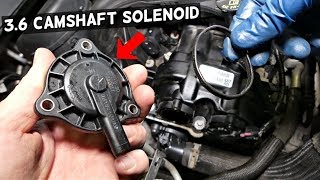
Est. part cost: $25-$70 - Failed VVT Solenoid / Oil Control Valve (OCV) 🟡 Medium Probability → Shop Engine Variable Valve Timing (VVT) Solenoid Fine mesh screens on these solenoids can become clogged by oil sludge or debris from other engine wear (like failing rocker arms), causing the valve to stick or respond slowly.
How to confirm: You can test the solenoid's resistance with a multimeter or use a scan tool to command it on and off. A simpler method is to swap the suspect Bank 2 intake solenoid with the Bank 2 exhaust solenoid. Clear codes and see if a new code (like P0019) appears, indicating the solenoid is bad.
Typical fix: Replace the Bank 2 intake VVT solenoid. 🎬 Watch: This walkthrough shows how to replace the VVT solenoid.
Est. part cost: $30-$90 - Stretched Timing Chain or Failed Tensioner ⚪ Low Probability → Shop Engine Timing Chain While timing chains are designed to last, high mileage (>100k miles) combined with poor oil change history can lead to chain stretch or hydraulic tensioner failure, causing timing to jump.
How to confirm: This is an advanced diagnosis. After ruling out sensors and oil issues, a technician would need to remove the timing cover to physically inspect the chain for slack and verify the timing marks on the phasers and crank sprocket.
Typical fix: Replace the timing chains, guides, and tensioners. This is a labor-intensive job.
Est. part cost: $250-$500
Rare But Worth Checking
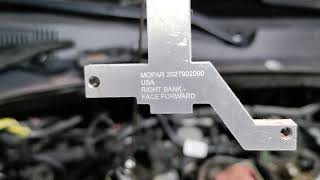
- Slipped Camshaft Tone Wheel (Reluctor Ring): → Shop Engine Camshaft A well-documented issue on the Pentastar V6. The pressed-on reluctor ring at the end of the camshaft can slip, causing a permanent mismatch between what the sensor sees and the actual cam position. This will trigger P0018 even with perfect mechanical timing and good sensors. Diagnosis requires a lab scope or a special Chrysler tool (p/n 2023500020) to verify the ring's alignment. 🎬 Watch: How to use the special tool for tone wheel checks.
- Loose Oil Galley Plugs: Under the valve covers, small 13mm plugs in the oil galleys behind the phasers can back out over time, causing a loss of oil pressure to the VVT phasers on that cylinder head. This can trigger VVT codes like P0018. Technicians recommend checking these for tightness any time the valve covers are removed.
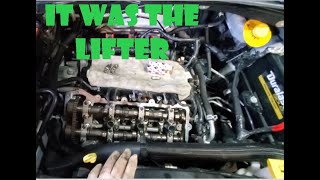
- Failed Rocker Arms ('Pentastar Tick'): A widespread and notorious Pentastar issue where the needle bearings in the rocker arms fail, causing a distinct ticking noise. This creates slack in the valvetrain, which can eventually lead to camshaft lobe damage and trigger cam/crank correlation codes like P0018. This issue has been the subject of class-action lawsuits. 🎬 See how to identify and fix the notorious Pentastar tick.
- Failed Camshaft Phaser: → Shop Engine Camshaft The phaser itself, which is responsible for physically adjusting the cam timing, can fail mechanically or get stuck due to debris. This is less common than sensor or oil issues but is a possibility, especially on high-mileage engines.
Diagnosis Steps
- Verify Oil Level and Condition: Check the dipstick. Is the oil level correct? Is the oil clean and of the proper 5W-20 viscosity? If not, perform an oil and filter change using a Mopar-spec filter, clear the code, and drive to see if it returns.
- Scan for Other Codes: Use a scanner to see if any other codes are present. Codes like P0016, P0345, or P06DD can provide valuable diagnostic clues.
- Inspect Wiring: Visually inspect the wiring harness and connector for the Bank 2 (front, radiator side) intake camshaft sensor. Look for any signs of damage, melting, or oil contamination from the oil filter housing.
- Test the Camshaft Sensor: Swap the Bank 2 intake cam sensor with the Bank 1 intake cam sensor (rear, firewall side). This requires removing the upper intake manifold. Clear the codes and drive the vehicle. If the code changes to P0016, the sensor you moved is bad and must be replaced.
- Test the VVT Solenoid (OCV): If the sensor swap doesn't change the code, swap the Bank 2 intake and exhaust VVT solenoids. If the code changes to a different VVT code (e.g., P0019), the solenoid is the issue.
- Listen for Engine Noise: Listen carefully to the top of the engine for a distinct 'ticking' sound. A tick from the front (Bank 2) side strongly suggests a failing rocker arm, which is a common root cause that requires valve cover removal to inspect.
- Advanced Mechanical Checks: If all the above steps fail to resolve the issue, the problem is likely mechanical. This could be a stretched timing chain, failed phaser, loose oil galley plug, or slipped tone wheel. These checks require significant disassembly and should be performed by a professional.
Parts You'll Likely Need
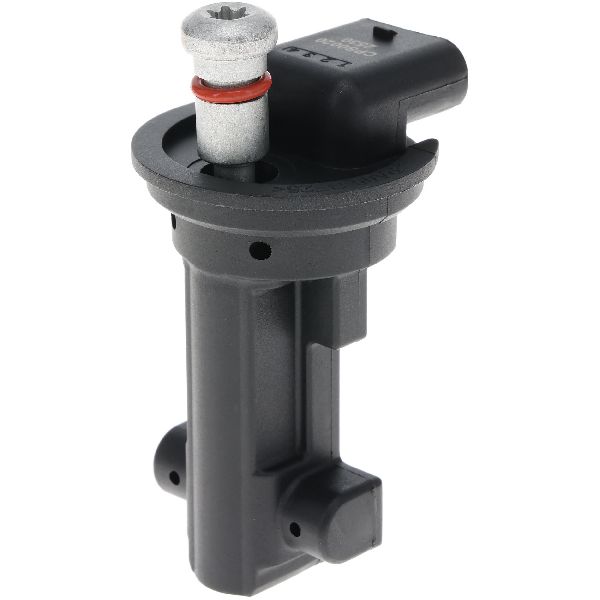
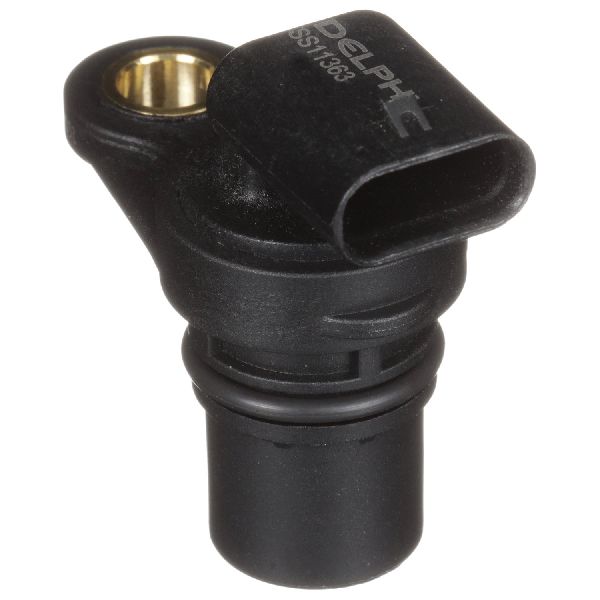
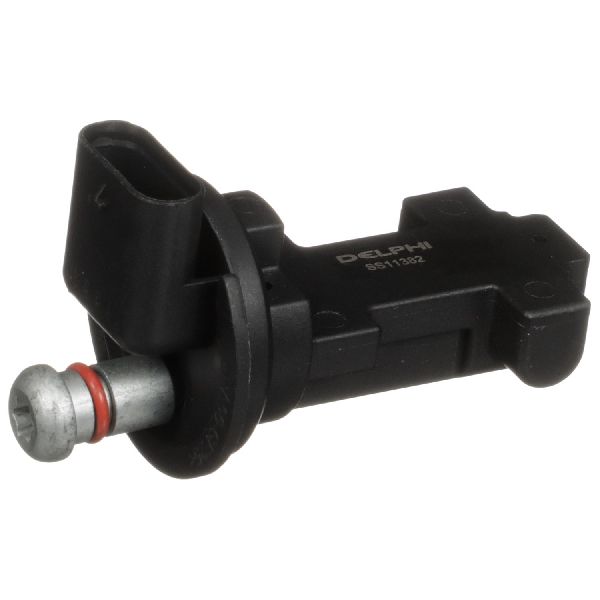
- Camshaft Position Sensor
(OEM #5149141AF (or 05149141AF))— This sensor is a common failure point and a likely cause if oil level and quality are good. It's a relatively inexpensive part to replace as a primary diagnostic step.
Trusted brands: Mopar, NTK/NGK, Standard Motor Products - VVT Solenoid (Oil Control Valve)
(OEM #5047897AC (Front/Bank 2) or 05047901AC (Rear/Bank 1) - Note: The solenoids are often physically identical and can be swapped for testing.)— Can get clogged with sludge or debris, causing it to stick. It's another common, relatively easy part to replace before suspecting major mechanical issues.
Trusted brands: Mopar, Dorman, A-Premium - Engine Oil and Filter
(OEM #Mopar MO-349 (or equivalent))— Incorrect oil viscosity or a clogged/failed aftermarket filter is the most common cause of P0018. An oil change is the first and most important step.
Trusted brands: Pennzoil Platinum Full Synthetic 5W-20, Mopar OEM Oil Filter
Related Codes That Often Appear With This One
- P0016 — This is the same correlation code but for Bank 1. Seeing P0018 and P0016 together strongly suggests a base timing issue affecting both banks, like a stretched primary timing chain or low oil pressure from a failing oil pump.
- P0345 — This is a circuit code for the same sensor (Bank 2 Camshaft Position Sensor). It can appear with P0018 if the sensor has failed completely or has a wiring issue.
- P0300, P0302, P0304, P0306 — These are misfire codes. Incorrect valve timing on Bank 2 (cylinders 2, 4, 6) can lead to incomplete combustion and trigger misfires on that bank or a general random misfire (P0300).
- P06DD — This code for 'Engine Oil Pressure Control Circuit Stuck Off' points to a problem with the dual-stage oil pump. Low oil pressure is a primary cause of VVT-related codes like P0018.
Technical Service Bulletins (TSBs) & Recalls
- TSB 09-002-14 (Extended Warranty X56): While not directly for P0018, this well-known TSB addresses a defect in the left cylinder head of 2011-2013 Pentastar engines that causes misfires (e.g., P0302, P0304, P0306) on Bank 2. A severe failure related to this defect could potentially affect timing.
- TSB 09-011-25: Mentioned in forum discussions as relating to camshaft and rocker arm manufacturing issues, which are a root cause of the 'Pentastar tick' and can lead to timing correlation codes if a failure becomes severe.
Platform-Specific Known Issues
- A class-action lawsuit was filed regarding an alleged valve train defect in 3.6L Pentastar engines affecting rocker arms and lifters, which could lead to metal debris contaminating the oil and causing related issues.
- The tone (reluctor) wheel on the end of the camshaft is known to slip from its factory position, causing a persistent correlation code that cannot be fixed by replacing sensors or timing chains.
Mechanic-Grade Diagnostic Values
- VVT Solenoid (Oil Control Valve) Resistance — expected: 6.9 to 7.9 Ohms at 68°F (20°C). Failure: A reading outside this range, or an open circuit (infinite resistance), indicates a failed solenoid coil.
- Camshaft Position Sensor Voltage Test (Key On, Engine Off) — expected: The sensor operates on a 5V reference signal from the PCM. The signal wire should read 5V.. Failure: When a magnet is brought near the sensor tip, the voltage should drop to 0V. If the voltage does not switch, the sensor is faulty.
- Scan Tool Cam/Crank Correlation Angle — expected: At idle, the desired and actual camshaft position angles should be within a few degrees of each other (e.g., -5° to +5°).. Failure: A persistent deviation of more than 9-10 degrees between the actual and desired angle on one cam will set the code. For example, seeing Bank 2 Intake at -10° while Bank 1 is at -5° is a clear sign of a fault.
Hidden / Shadow Codes Worth Checking
- P0018pd: This is a 'Pending' code. It means the PCM has detected the correlation fault on one or more drive cycles, but the conditions have not yet been met to illuminate the Check Engine Light. It's an early warning that a persistent fault is developing. (see via Most standard OBD-II scanners can read pending codes in addition to active/confirmed codes.)
Scan Tool Commands That Help
- wiTECH or equivalent professional scan tool: VVT Solenoid Actuator Test / OCV Control — This bidirectional command allows the technician to manually energize and de-energize the VVT solenoid while the engine is running. You should observe a change in the camshaft's actual position on the live data screen and hear a change in engine tone. If commanding the solenoid has no effect, it points to a stuck solenoid, clogged oil passage, or a failed phaser.
Wiring & Ground Locations
- Bank 2 Camshaft Position Sensor Connector — On the rear of the Bank 2 (front/radiator side) valve cover. Access requires removing the upper intake manifold.. This is the primary sensor for the code. The connector is a common point of failure due to oil contamination from a leaking oil filter housing or physical damage during other repairs.
- Bank 2 Camshaft Sensor Ground Wire — The shared ground wire for the Bank 2 sensor runs to pin #66 of the PCM connector.. An open or high resistance in this ground circuit can cause erratic sensor readings and trigger correlation or circuit codes (like P0345) for Bank 2. Technicians have found this wire to be the culprit after confirming the sensor and 5V supply are good.
Real Owner Repair Stories
- Reddit user in r/MechanicAdvice (2013 Jeep Grand Cherokee 3.6L Pentastar) — Persistent P0018 code after a major engine service to fix lifter tick.
❌ Tried (didn't work) Initial replacement of all cams, lifters, rockers, VVT phasers, actuators, solenoids, and timing components with aftermarket parts.
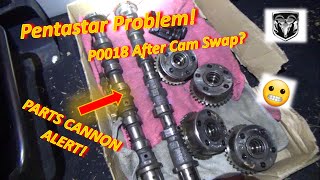
✅ What actually fixed it The P0018 was resolved by replacing the new aftermarket Bank 2 exhaust camshaft with another new one (due to the reluctor wheel being at the wrong angle) AND tightening loose oil galley plugs under the valve cover that were causing an oil pressure leak to the phasers. - Reddit user in r/mechanics (2009 Kia Borrego (Note: Different vehicle, but same code behavior)) — P0018 code with no other symptoms. An oil change made the code disappear for a few days before returning.
❌ Tried (didn't work) Oil change (temporary fix)
✅ What actually fixed it The ultimate cause was a stretched timing chain. The owner drove on it too long, leading to other issues and a final repair bill of nearly $4,000. - NHTSA ODI #10702471 — An owner reported receiving error code P0018 for the crankshaft/camshaft position correlation bank 2 sensor. Despite being told the vehicle was repaired, the engine shut off again two weeks later while driving into parking lots.
"I Checked Everything" — The Actual Cause
- A smoke test is not applicable for this code. The equivalent scenario is when all electrical tests, oil pressure checks, and even physical timing chain alignment inspections pass, but the P0018 code persists. The most common 'actual cause' in this situation is a slipped camshaft reluctor wheel (tone ring). The timing chain and phasers are perfectly aligned, but the magnetic ring the sensor reads has physically rotated on the camshaft itself, creating a permanent correlation error that cannot be fixed without replacing the camshaft.
When the Usual Fixes Don't Work
- While swapping sensors and VVT solenoids is a primary diagnostic step, multiple owner and technician reports confirm that if an oil change and a new OEM sensor/solenoid do not fix the code, the problem is almost certainly mechanical. A forum story highlighted a case where a P0018 appeared after a full timing job with aftermarket parts; the root cause was a combination of a poorly manufactured aftermarket camshaft with a misaligned tone wheel and loose oil galley plugs under the valve cover. This demonstrates that simply replacing common electrical components is often not enough, and that aftermarket internal engine parts for the Pentastar can introduce new, hard-to-diagnose problems.
OEM Part Supersession History
05184101AG→05184101AH— Part revision for the VVT Solenoid (Oil Control Valve).Unknown→5184332AA— This is the current part number for the updated rocker arm (valve lash adjuster) designed to mitigate the 'Pentastar tick' bearing failure. Earlier part numbers were prone to failure.
Model Year Variations Within This Range
- 2016-2017: For the 2016 model year, the 3.6L Pentastar was significantly updated. It added a two-step Variable Valve Lift (VVL) system, which works with VVT. This system uses more complex three-lobe intake camshafts and rocker arms. While a P0018 still points to a cam/crank correlation issue, diagnosis on these later models must also account for potential failures in the VVL solenoids and rocker arm mechanisms, which are different from the 2011-2015 engines.
Diagnostic Flowchart
Other Known Issues on This Vehicle
Issues unrelated to this code that are worth knowing about as an owner of this generation:
- Rocker Arm / Lifter Failure ('Pentastar Tick') 🔴 High — Very common across all model years, often appearing after 50,000 miles. Failure of needle bearings in the rocker arms causes a ticking noise, which can lead to camshaft damage if ignored. (Ref: Subject of class-action lawsuits; TSB 09-011-25 may be related to manufacturing defects.)
- Cracked Oil Filter Housing/Cooler Assembly 🔴 High — Extremely common. The plastic housing becomes brittle from heat cycles and cracks, causing significant oil and/or coolant leaks into the engine valley and down the back of the engine. (Ref: No recall has been issued, but it is a widely documented design flaw.)
- Left Cylinder Head Defect 🔴 High — Primarily affects 2011-2013 models. A manufacturing defect leads to premature valve guide wear on cylinders 2, 4, and 6, causing misfires and requiring cylinder head replacement. (Ref: Chrysler Extended Warranty X56 (10 years / 150,000 miles))
- Engine Stalling While Driving 🟠 Medium — Reported in both generations, but a formal investigation was opened for 2011-2013 models. A faulty Powertrain Control Module (PCM) was found to be the cause of stalling at low speeds. (Ref: NHTSA Investigation PE12023)
- Transmission Failure (2nd Gen, 9-Speed) 🔴 High — Common on 2015 and newer models equipped with the ZF 9-speed automatic. Owners report harsh shifting, sudden shifts to neutral, and complete failure. (Ref: Multiple TSBs and software updates were released, but problems persist for many owners.)
Used vs. New Parts: Buying Guide for This Vehicle
When a used part is the smart pick: For this repair, used parts are generally not recommended due to the high-wear nature of the components involved. The only exception might be for static, external parts like a valve cover or intake manifold if they were damaged during repair, provided they are inspected for cracks.
Donor-vehicle mileage cap: roughly under 75000 miles for the part to have meaningful remaining life.
What to inspect on the donor part:
- For any valvetrain part, seek proof of the donor vehicle's mileage.
- Visually inspect camshaft lobes for scoring or excessive wear.
- Manually try to twist the reluctor ring on a used camshaft; there should be zero movement.
- Check VVT solenoid screens for any metal debris or sludge.
OEM-only on this vehicle (don't cheap out):
- Camshaft Position Sensor
- VVT Solenoid (Oil Control Valve)
- Camshaft Phasers
- Camshafts
- Timing Chain Kit (Chains, Guides, Tensioners)
Aftermarket brands forum-validated for this vehicle:
- NTK (for Camshaft Position Sensors)
- Delphi (for Camshaft Position Sensors)
Brands owners have reported issues with on this vehicle:
- Unbranded or 'white-box' camshafts and timing components. A documented case showed an aftermarket camshaft with an incorrectly indexed reluctor ring caused a persistent P0018 immediately after installation.
Real Owner Stories
Aggregated from forums and TSBs cited above. Mileages and costs reflect what owners reported in those sources.
2013 Jeep Grand Cherokee 3.6L — ~110000 miles
Symptoms: Persistent P0018 code after a major timing job.
What fixed it: Replacing a faulty aftermarket camshaft that had an incorrectly angled reluctor wheel and tightening a loose oil galley plug behind the phaser that was causing an oil pressure leak.
Source hint: Reddit r/MechanicAdvice (2013 Jeep Grand Cherokee 3.6L)
2014 Chrysler Town & Country 3.6L
Symptoms: Vehicle had P0016 and P0018 codes; after correcting timing that was off by one tooth, a P0019 code appeared.
What fixed it: The issue pointed towards a faulty phaser or VVT solenoid despite timing and tone wheels being aligned.
Source hint: Waveform.com Forums (2014 Chrysler Town & Country)
Related OBD-II Codes
Frequently Asked Questions
Does TSB 09-002-14 apply to my 2012 Chrysler 200 with a P0018 code?
Can I use any 5W-20 oil in my Pentastar 3.6L to clear this code?
I hear a ticking noise from the front of my engine along with the P0018 code; what is it?
Is there a specific TSB for the 'Pentastar tick' and rocker arm issues?
Why did my P0018 code return after I replaced the camshaft sensor?
How can I tell if the VVT solenoid is the problem without buying a new one?
Helpful Videos
We Have This Part in Stock


The information in this article is provided for general reference and educational purposes only. Vehicle specifications, procedures, and part compatibility can vary by production date, trim level, and region. Always consult your vehicle's factory service manual and verify part numbers before purchasing or performing repairs. Safety-critical components such as airbags, seat belts, and braking systems should be installed by a qualified professional.
- Chrysler 200:
- 🧭 Diagnostic Flowchart
- 🎬 Helpful Videos
- 🛍️ Shop This Part
- What's Unique About the 2011-2017 Chrysler 200
- Symptoms You May Notice
- Most Likely Causes
- Rare But Worth Checking
- Diagnosis Steps
- Parts You'll Likely Need
- Related Codes That Often Appear With This One
- Technical Service Bulletins (TSBs) & Recalls
- Platform-Specific Known Issues
- Mechanic-Grade Diagnostic Values
- Hidden / Shadow Codes Worth Checking
- Scan Tool Commands That Help
- Wiring & Ground Locations
- Real Owner Repair Stories
- "I Checked Everything" — The Actual Cause
- When the Usual Fixes Don't Work
- OEM Part Supersession History
- Model Year Variations Within This Range
- Other Known Issues on This Vehicle
- Used vs. New Parts: Buying Guide for This Vehicle
- Real Owner Stories
- 2013 Jeep Grand Cherokee 3.6L — ~110000 miles
- 2014 Chrysler Town & Country 3.6L
- Related OBD-II Codes
- Frequently Asked Questions
- 🎟️ Get 5% Off