

P0018 on 2017-2024 Chrysler Pacifica 3.6L: Crank/Cam Correlation Causes and Fixes
On a 3.6L Pacifica, P0018 most often points to low/dirty engine oil or a failing Bank 2 intake camshaft position sensor. Always check your oil level and condition before buying parts. A new sensor costs around $25-$60 and is a 1/5 difficulty DIY fix. Jumping to conclusions about needing a new camshaft or timing chain is a common, expensive misdiagnosis.
- First, check your engine oil. Low, old, or incorrect oil is the #1 cause of P0018 on the 3.6L Pentastar engine.
- The code refers to Bank 2, which is the cylinder head near the radiator at the front of the engine bay, making access easier.
- Before considering expensive repairs, test the intake camshaft position sensor by swapping it with the sensor on the rear bank (Bank 1). If the code changes to P0016, you've found the problem.
- If oil and the sensor are good, the next most likely part to fail is the VVT solenoid (oil control valve), which is also located on the front of the engine.
- Only after ruling out oil, the sensor, and the solenoid should you suspect a more serious mechanical issue like a stretched timing chain.
What's Unique About the 2017-2024 Chrysler Pacifica
The 3.6L Pentastar engine's Variable Valve Timing (VVT) system is highly dependent on clean engine oil of the correct viscosity (5W-20). The cam phasers are actuated by oil pressure, so any deficiency in pressure, flow, or cleanliness can cause timing correlation codes. Unlike many other vehicles where Bank 2 is hard to reach, on the transverse-mounted engine in the Pacifica, Bank 2 is at the front of the engine bay, making the related sensors and solenoids relatively easy to access. This makes diagnosing and fixing the most common causes, like a bad sensor, much simpler than on rear-wheel-drive Chryslers with the same engine.
Symptoms You May Notice
- Check Engine Light is on
- Rough idle or stalling
- Difficulty starting the engine
- Reduced engine power and poor acceleration
- Decreased fuel economy
- Rattling or ticking noise from the engine, especially on cold starts
- Replacing the crankshaft position sensor when only a camshaft correlation code for one bank is present.
- Immediately replacing camshafts or performing major timing work without first checking oil and replacing the inexpensive cam sensor and VVT solenoid. A Reddit user with a 2017 Pacifica was quoted $2,000-$6,000 for camshaft replacement before exploring simpler fixes.
Most Likely Causes
- Low, Dirty, or Incorrect Viscosity Engine Oil 🔴 High Probability The Pentastar's cam phasers are hydraulically actuated. Insufficient pressure or flow from old, thick, or low oil prevents them from adjusting timing correctly. This is the most common cause and should always be the first check.
How to confirm: Check the engine oil dipstick. Note the level and the color/consistency of the oil. If the oil level was critically low, the engine may have been burning oil, which is another issue to monitor. Check service records for the last oil change and the type of oil used.
Typical fix: Perform an oil and filter change using a quality filter and the manufacturer-specified 5W-20 full synthetic oil. Clear the codes and drive to see if the issue is resolved.
Est. part cost: $40-$80 - Faulty Camshaft Position Sensor (Bank 2, Intake) 🟡 Medium Probability → Shop Engine Camshaft Position Sensor Sensors can fail over time due to heat cycles and vibration. This is a common failure point on many modern engines and a frequent cause for P0018 on the Pentastar.
How to confirm: Swap the Bank 2 intake camshaft sensor (front, radiator side) with the Bank 1 intake camshaft sensor (rear, firewall side). Clear the codes and drive. If the code changes to P0016 (Bank 1 correlation), the sensor you moved is faulty.
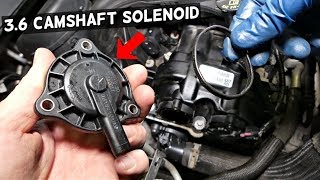
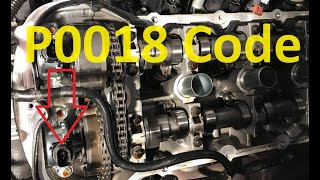
Typical fix: Replace the faulty camshaft position sensor. It is held in by a single 10mm bolt. 🎬 Watch: How to locate and replace Bank 1 and 2 sensors.
Est. part cost: $25-$60 - Faulty VVT Solenoid / Oil Control Valve (OCV) 🟡 Medium Probability → Shop Engine Variable Valve Timing (VVT) Solenoid Sludge from infrequent oil changes can clog the fine mesh screens on the solenoid, causing it to stick or respond slowly. Electrical failure within the solenoid is also possible.
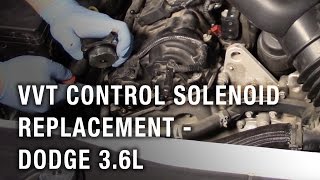
How to confirm: Remove the Bank 2 intake VVT solenoid. Inspect its screens for debris or tearing. You can test it by applying 12V to its terminals to see if the internal plunger actuates. 🎬 See this walkthrough on replacing the VVT control solenoid. A user on Reddit reported fixing their intermittent P0018 by replacing this part, which they called a 'Camshaft Phaser Actuator'.
Typical fix: Clean or replace the VVT solenoid for Bank 2.
Est. part cost: $30-$70 - Stretched Timing Chain / Worn Guides / Failed Tensioner ⚪ Low Probability → Shop Engine Timing Chain While the upgraded Pentastar is robust, timing chains can stretch over high mileage (typically 100k+ miles), creating slack that the tensioners cannot compensate for, leading to a correlation error. A startup rattle is a key symptom.
How to confirm: This is a complex diagnosis. It often involves listening for a startup rattle or using an oscilloscope to analyze cam/crank signals. Physical inspection requires removing the timing cover and is a significant labor undertaking.
Typical fix: Replace the timing chains, guides, and tensioners. This is a labor-intensive job best left to professionals.
Est. part cost: $300-$600
Rare But Worth Checking
- Failed Cam Phaser: → Shop Engine Timing Gear The phaser itself can fail mechanically, getting stuck in one position. This is less common than sensor or solenoid failure but is a known issue.
- Slipped Camshaft Tone Wheel: → Shop Engine Camshaft The reluctor wheel that the camshaft sensor reads can slip from its position on the camshaft, causing a constant correlation error even with a new sensor. This is very rare but well-documented on Pentastar engines, often requiring an oscilloscope to diagnose. 🎬 Watch: A deep dive into P0018 causes and mechanical fixes.
- Failed Rocker Arms / Lifters: The infamous 'Pentastar Tick' is caused by failing rocker arm bearings. If a rocker arm fails, it can seize and damage the camshaft lobe, which can in turn affect cam timing and potentially trigger correlation codes like P0018, though it more commonly causes misfire codes.
Diagnosis Steps
- Check Engine Oil: Verify the oil level is full and the oil is clean. If it's low, dirty, or past its service interval, perform an oil and filter change with 5W-20 full synthetic oil. Clear the code and see if it returns. This simple step fixes the issue a surprising amount of the time.
- Scan for Other Codes: Use an OBD-II scanner to check for any other codes that could provide more clues, such as misfire codes (P030x) or oil pressure codes (P06DD).
- Inspect Sensor Wiring: Visually inspect the wiring harness and connector for the Bank 2 intake camshaft position sensor (front of the engine, radiator side) for any signs of damage, corrosion, or loose connections.
- Test the Camshaft Sensor: The easiest test is to swap the Bank 2 intake cam sensor with the Bank 1 intake sensor (rear of the engine, firewall side). Clear the codes. If P0018 disappears and P0016 appears, the sensor is bad and needs replacement.
- Test the VVT Solenoid (OCV): If the sensor is good, remove and inspect the Bank 2 intake VVT solenoid. Check for clogged or torn screens. If it appears clean, it may have an internal electrical failure. Replacing it is often the next logical step.
- Mechanical Inspection: If all of the above steps fail to resolve the issue, the problem is likely mechanical. This involves more advanced diagnostics, such as checking for a stretched timing chain, failed tensioner, or bad cam phaser. This level of work is best left to a professional with access to tools like an oscilloscope.
Parts You'll Likely Need
- Camshaft Position Sensor (Bank 2 Intake)
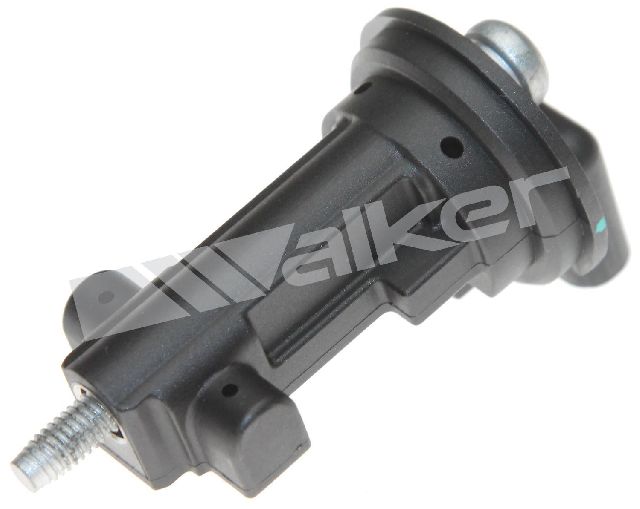
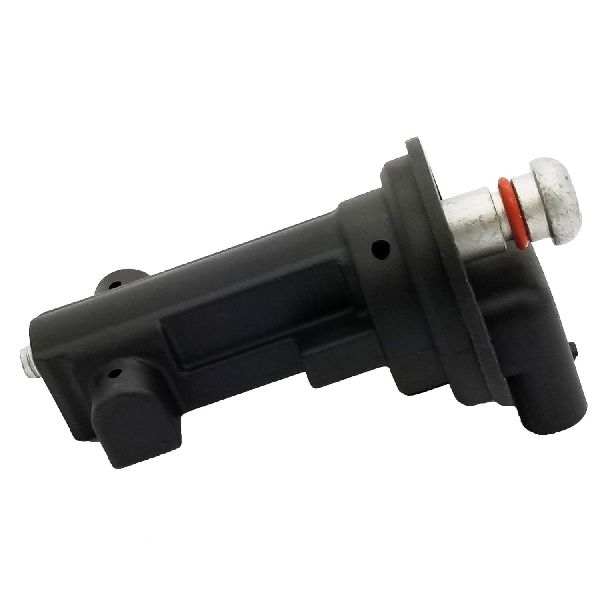
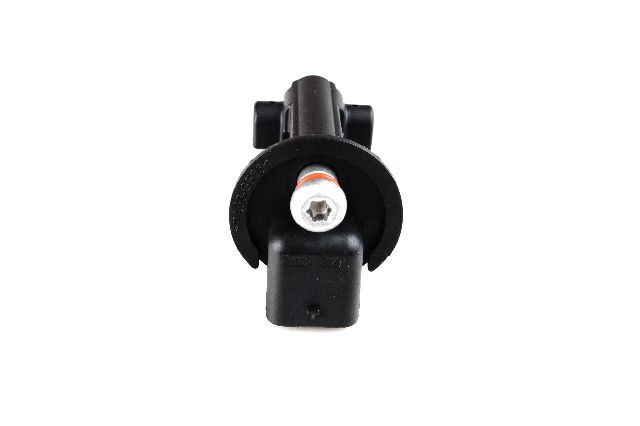
(OEM #05149141AF)— This sensor is a common failure point and provides the primary signal for camshaft position. A faulty sensor will directly cause this code. Using an OEM Mopar sensor is often recommended for reliability.
Trusted brands: Mopar, NTK/NGK, Delphi
OEM price range: $40-$60
Aftermarket price range: $25-$45 - VVT Solenoid / Oil Control Valve (Bank 2 Intake)
(OEM #05184101AH)— This solenoid controls oil flow to the cam phaser. If it gets clogged with sludge or fails electrically, it will prevent proper timing adjustments. Part number 05184101AG was superseded by 05184101AH.
Trusted brands: Mopar, Dorman, Hitachi
OEM price range: $50-$70
Aftermarket price range: $30-$50
Related Codes That Often Appear With This One
- P0016 — This is the equivalent code for Bank 1. It may appear during diagnosis if you swap a faulty Bank 2 sensor to Bank 1.
- P000D — This code is for the exhaust camshaft ('B' sensor) on the same bank (Bank 2). Seeing them together can point to a broader issue on that cylinder head, like oil starvation or a significant timing chain misalignment on that side.
- P0300, P0302, P0304, P0306 — These are misfire codes. Incorrect valve timing from the P0018 fault can cause misfires on the cylinders of Bank 2 (cylinders 2, 4, and 6).
- P06DD — This code indicates a problem with the dual-stage oil pump being stuck in low-pressure mode. Since the VVT system is oil-pressure dependent, an oil pump issue is a potential root cause for P0018 and other timing codes.
Technical Service Bulletins (TSBs) & Recalls
- While no TSB is specifically for P0018 on the Pacifica, related bulletins for the 3.6L engine exist. TSB 18-054-14 for 2014 models addressed replacing a cam sensor for intermittent crank issues, showing FCA's awareness of sensor problems. TSBs for other GM 3.6L engines with similar codes often point to stretched timing chains, providing valuable context.
Platform-Specific Known Issues
- Reddit Repair Story: 2017 Pacifica with 163k miles: A user on r/ChryslerPacifica reported getting a P0018 code and was quoted $2,000 to replace one camshaft or $6,000 for all four by a local shop. The community overwhelmingly advised getting a second opinion and checking the simple things first: oil level/condition and the camshaft position sensor. This highlights a common misdiagnosis where shops jump to the most expensive repair.
- Intermittent P0018 Fixed by VVT Solenoid: In the same Reddit thread, another user commented that they had an intermittent P0018 on their 2017 model which was resolved by replacing the VVT solenoid.
Mechanic-Grade Diagnostic Values
- VVT Solenoid (OCV) Coil Resistance — expected: 6.9 to 8.0 Ohms at 68°F (20°C).. Failure: A reading of OL (open/infinity) or near zero (short) indicates a failed solenoid coil.
- Camshaft Position Sensor Supply Voltage — expected: Approximately 5.0V with key on, engine off.. Failure: Voltage significantly lower than 5.0V or absent suggests a wiring or PCM issue.
- Camshaft Position Sensor Ground Circuit Resistance — expected: Less than 3.0 ohms to a known good ground.. Failure: Resistance higher than 3.0 ohms indicates a poor ground connection.
- Scan Tool Cam/Crank Correlation Angle Difference — expected: Close to 0 degrees at idle.. Failure: A consistent deviation greater than 5-10 degrees indicates a correlation fault.
Scan Tool Commands That Help
- Appcar DiagFCA / Witech (Dealer Tool): Cam Crank Relearn — This routine should be performed after any repair that could affect the learned relationship between the camshaft and crankshaft, such as replacing a sensor, timing chain, or camshaft. It forces the PCM to re-synchronize the sensor signals.
- Witech (Dealer Tool): VVT/Phaser Cleaning Routine — This is a service function that electronically cycles the VVT solenoids to help dislodge minor debris or sludge. It can be attempted as a low-cost diagnostic step before replacing a suspected sticky solenoid.
Wiring & Ground Locations
- Bank 2 Camshaft Position Sensor Connector — On the front valve cover (closer to the radiator), plugged into the intake camshaft position sensor.. This is the primary connection point to test for the 5V supply, ground, and signal integrity for the sensor causing the P0018 code. The Pentastar 3.6L in this vehicle uses a 4-wire sensor, making a wiring diagram essential for accurate testing.
- G302 Ground — Typically located on the right front of the vehicle, near the door sill or under the dash/kick panel area.. A poor ground connection at this location can cause intermittent and difficult-to-diagnose electrical issues for various engine sensors, including the camshaft position sensor.
Real Owner Repair Stories
- Reddit user on r/MechanicAdvice (Vehicle with 3.6L Pentastar engine) — Persistent P0018 code after timing chain and rocker arm replacement.
❌ Tried (didn't work) Replacing timing components, Replacing rocker arms, Replacing Bank 2 exhaust camshaft (first attempt)
✅ What actually fixed it The P0018 was resolved by replacing the Bank 2 exhaust cam a second time (due to an incorrect reluctor wheel angle on the first replacement) AND tightening loose oil galley plugs found behind the cam phasers. - YouTube channel "Pine Hollow Auto Diagnostics" (2014 Jeep Wrangler 3.6L (same engine family)) — P0018 code, engine in fail-safe mode (limp mode) with no VVT function.
❌ Tried (didn't work) A previous shop had replaced timing chains, slack adjusters, lifters, and rockers on the driver's side (Bank 2).
✅ What actually fixed it The diagnosis revealed the issue started after a shop replaced the Bank 1 (passenger side) intake cam with an aftermarket part that had an incorrect reluctor wheel, which was the true root cause. The P0018 on the opposite bank was a symptom of the PCM's confusion.
Documented NHTSA Reports
- NHTSA ODI #10702471: An owner of a vehicle with the same manufacturer and engine family reported receiving error code P0018 for a crankshaft/camshaft position correlation Bank 2 sensor. The owner noted that even after being told the car was repaired, the engine continued to shut down, requiring them to pull into parking lots to restart the vehicle.
OEM Part Supersession History
05184101AG→05184101AH— Standard part revision and improvement by the manufacturer.
Model Year Variations Within This Range
- 2017+: The 2017-2024 Pacifica uses the upgraded 3.6L Pentastar (PUG), which features changes like a two-step variable valve lift (VVL) system and an updated EGR. While P0018 causes are similar to the first-generation Pentastar, issues related to the VVL solenoids or their oil passages could also be a factor to consider in advanced diagnostics.
Diagnostic Flowchart
Other Known Issues on This Vehicle
Issues unrelated to this code that are worth knowing about as an owner of this generation:
- Rocker Arm / Lifter Failure ('Pentastar Tick') 🔴 High — Common on Pentastar engines, particularly earlier models, but can occur at any mileage, often after 50k miles. Presents as an audible ticking noise from the top of the engine. (Ref: While no direct recall for all models, Chrysler has faced class-action lawsuits and issued extended warranties for specific early models (e.g., 2011-2013 Jeep Wrangler) for cylinder head issues related to this problem.)
- ZF 9-Speed Automatic Transmission Problems 🔴 High — Widespread complaints, especially on 2017-2020 models. Symptoms include rough/jerky shifting, hesitation, sudden loss of power, and premature failure. (Ref: Multiple TSBs (e.g., 21-006-21) have been issued for software updates to improve shift logic. Some hybrid models were recalled for transmission wiring issues causing engine shutdown (NHTSA 23V-010).)
- Engine Stop-Start (ESS) System Failure 🟠 Medium — Extremely common. Owners report the 'Stop/Start Unavailable' message appearing on the dash. The issue is almost always a failing auxiliary battery, which has a short lifespan (1-2 years). (Ref: No recall, as it's considered a maintenance item. It's a well-known design flaw among owners, who often must replace the small 'Aux 14 AGM' battery frequently to clear the warning light.)
- Sudden Engine Shutdown 🔴 High — Reported across multiple model years, including the hybrid variant. The engine can shut off unexpectedly while driving, posing a significant safety risk. (Ref: Hybrid models have specific recalls for this (e.g., NHTSA 23V-010, 23V-844000) related to transmission wiring or software glitches in the Power Inverter Module.)
- Cracked/Leaking Oil Filter Housing 🟠 Medium — The plastic oil filter/cooler housing assembly located in the engine 'V' is prone to cracking from heat cycles, leading to significant oil leaks onto the top of the engine and bellhousing. (Ref: No recall, but it is a very common repair for high-mileage Pentastar engines. An oil leak from this housing can indirectly cause P0018 if the engine oil level becomes critically low.)
Used vs. New Parts: Buying Guide for This Vehicle
When a used part is the smart pick: For major mechanical components like a complete cylinder head or camshaft, a low-mileage used OEM part from a reputable salvage yard can be a cost-effective alternative to a new part, especially if the failure was due to a known issue like rocker arms on an older Pentastar version.
Donor-vehicle mileage cap: roughly under 75000 miles for the part to have meaningful remaining life.
What to inspect on the donor part:
- For a camshaft, inspect the lobes for any scoring or wear.
- Crucially, check that the tone wheel on the end of the camshaft is not loose, bent, or damaged.
- Verify the donor vehicle was not involved in a severe front-end collision that could have damaged engine components.
- Ask for the VIN of the donor vehicle to check its service history if possible.
OEM-only on this vehicle (don't cheap out):
- Camshaft Position Sensor
- Crankshaft Position Sensor
Aftermarket brands forum-validated for this vehicle:
- NTK/NGK (for sensors, if OEM is unavailable)
- Hitachi (for VVT solenoids)
Brands owners have reported issues with on this vehicle:
- Unnamed or 'generic' white-box sensors from online marketplaces are highly discouraged. Forum users consistently report premature failures, incorrect readings, and chasing codes after installing cheap electronic sensors.
Real Owner Stories
Aggregated from forums and TSBs cited above. Mileages and costs reflect what owners reported in those sources.
2017 Chrysler Pacifica 3.6L V6 — 163000 miles
Symptoms: The owner received a P0018 code and was quoted between $2,000 and $6,000 for camshaft replacements by a local shop.
What fixed it: The community recommended checking the oil level/condition and the camshaft position sensor first to avoid unnecessary camshaft replacement.
Cost: $2,000-$6,000
Source hint: r/ChryslerPacifica - 2017 Touring L Plus P0018
2017 Chrysler Pacifica 3.6L V6
Symptoms: Intermittent P0018 error code.
What fixed it: Replacing the VVT solenoid (Camshaft Phaser Actuator).
Source hint: Reddit r/ChryslerPacifica thread titled '2017 Touring L Plus P0018'
Chrysler Town and Country (3.6L Pentastar)
Symptoms: The vehicle displayed error code P0018 (Crankshaft/Camshaft Position Correlation Bank 2 Sensor) and experienced engine shutdowns while driving.
What fixed it: Although the owner was told the car was repaired after the initial P0018 diagnosis, the engine continued to shut down, highlighting the complexity of resolving correlation issues.
Source hint: NHTSA ODI #10702471
Related OBD-II Codes
Frequently Asked Questions
Is there a TSB for the 3.6L Pentastar engine regarding camshaft sensor issues?
What specific oil should I use in my 2017-2024 Chrysler Pacifica to prevent P0018?
Can a faulty VVT solenoid cause an intermittent P0018 on a 2017 Pacifica?
I was quoted $2,000 to replace a camshaft for a P0018 code on my Pacifica; is this necessary?
Does the 'Pentastar Tick' have anything to do with timing codes like P0018?
How can I test if the camshaft sensor is the cause of P0018 without buying a new part?
Helpful Videos
We Have This Part in Stock


The information in this article is provided for general reference and educational purposes only. Vehicle specifications, procedures, and part compatibility can vary by production date, trim level, and region. Always consult your vehicle's factory service manual and verify part numbers before purchasing or performing repairs. Safety-critical components such as airbags, seat belts, and braking systems should be installed by a qualified professional.
- Chrysler Pacifica:
- 🧭 Diagnostic Flowchart
- 🎬 Helpful Videos
- 🛍️ Shop This Part
- What's Unique About the 2017-2024 Chrysler Pacifica
- Symptoms You May Notice
- Most Likely Causes
- Rare But Worth Checking
- Diagnosis Steps
- Parts You'll Likely Need
- Related Codes That Often Appear With This One
- Technical Service Bulletins (TSBs) & Recalls
- Platform-Specific Known Issues
- Mechanic-Grade Diagnostic Values
- Scan Tool Commands That Help
- Wiring & Ground Locations
- Real Owner Repair Stories
- Documented NHTSA Reports
- OEM Part Supersession History
- Model Year Variations Within This Range
- Other Known Issues on This Vehicle
- Used vs. New Parts: Buying Guide for This Vehicle
- Real Owner Stories
- 2017 Chrysler Pacifica 3.6L V6 — 163000 miles
- 2017 Chrysler Pacifica 3.6L V6
- Chrysler Town and Country (3.6L Pentastar)
- Related OBD-II Codes
- Frequently Asked Questions
- 🎟️ Get 5% Off