

P0018 on 2011-2018 Ram 1500 5.7L HEMI: Crankshaft and Camshaft Correlation Causes and Fixes
P0018 indicates a timing mismatch between the crankshaft and camshaft on the passenger side (Bank 2). The most common fixes are an oil change with the correct 5W-20 oil, or replacing the VVT solenoid. A faulty camshaft position sensor is also a possibility, but oil-related issues are the primary suspect.
- P0018 on a 5.7L HEMI means the cam/crank timing is off, usually due to an issue on the passenger side.
- ALWAYS check your oil first. Low, old, or incorrect (non-5W-20) oil is a very common cause.
- The most likely failed parts are the VVT solenoid or the camshaft position sensor. Both are relatively inexpensive and accessible for DIY replacement.
- If you hear a rattling noise from the front of the engine, suspect a more serious timing chain issue and seek professional diagnosis.
- When replacing the camshaft position sensor, use an OEM Mopar part to avoid signal issues common with aftermarket sensors on this engine.
What's Unique About the 2011-2018 Ram 1500
The 5.7L HEMI is a pushrod engine with a single camshaft located inside the engine block, not in the cylinder heads. Because there is only one cam, codes that refer to different banks (like P0016 for Bank 1 and P0018 for Bank 2) don't point to separate camshafts. Instead, the 'Bank 2' designation in P0018 typically points to a problem in the VVT system components that serve the passenger side of the engine, such as the VVT solenoid, or an oil pressure issue affecting that bank. The code essentially flags that the cam phasing adjustment for Bank 2 is not where the PCM expects it to be relative to the crankshaft's position.
Symptoms You May Notice
- Check Engine Light is on
- Rough or erratic idle
- Engine stalling, especially at low speeds or when stopping
- Reduced engine power and poor acceleration
- Hesitation during acceleration
- Decreased fuel economy
- Rattling noise from the front of the engine on startup (indicates timing chain issue)
- Engine is hard to start
- Replacing the camshaft position sensor when the root cause is actually low/dirty engine oil or a faulty VVT solenoid.
- Assuming a major timing chain failure before checking the simpler and more common causes like oil quality and the VVT solenoid.
- Replacing the cam phaser when the VVT solenoid that controls it is the actual point of failure.
Most Likely Causes
- Low, Dirty, or Incorrect Viscosity Engine Oil 🔴 High Probability The HEMI's VVT and MDS (Multi-Displacement System) are hydraulically operated and extremely sensitive to oil pressure and cleanliness. Using oil other than the specified 5W-20 or extending oil change intervals can cause sludge to build up and clog passages in the VVT solenoid or cam phaser.
How to confirm: Check the oil level on the dipstick. Note the color and consistency of the oil. If it is low, black, or thick, it needs to be changed. This is the easiest and cheapest first step.
Typical fix: Perform an engine oil and filter change using a quality synthetic 5W-20 oil that meets manufacturer specifications (Chrysler MS-6395).
Est. part cost: $50-$100 - Failing VVT Solenoid (Oil Control Valve) 🔴 High Probability This solenoid controls oil flow to the cam phaser to adjust timing. It is a known failure point, often becoming clogged with debris from infrequent oil changes or failing electronically, causing it to get stuck.
How to confirm: After removing the air intake and serpentine belt, the solenoid is accessible on the front of the engine. It can be removed, inspected for clogged screens, and tested with a 12v source to see if it actuates. A professional can command it with a scan tool to observe the engine's response.
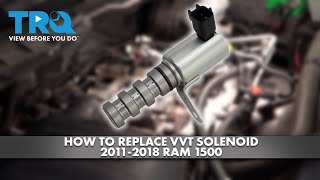
Typical fix: Replace the VVT solenoid. It is held in by a single 10mm bolt. 🎬 Watch: This step-by-step guide shows you how to replace the VVT solenoid. Many owners find this to be the definitive fix after an oil change doesn't resolve the issue.
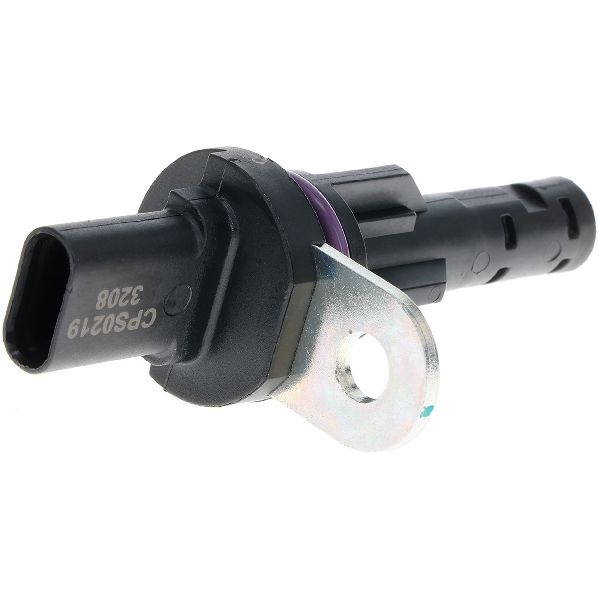
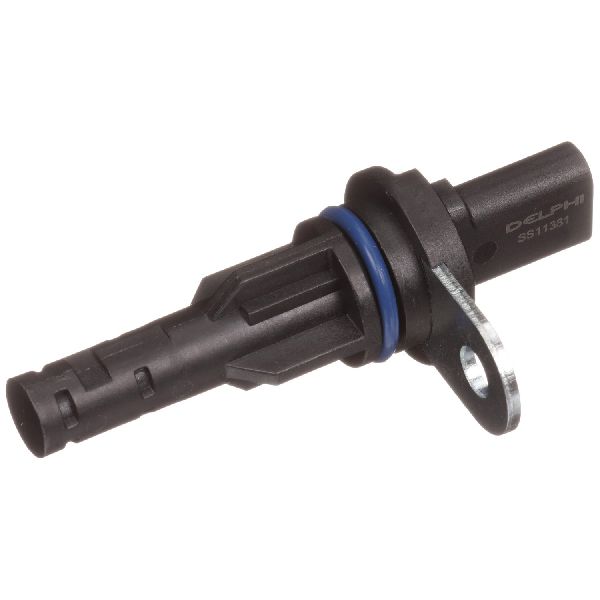
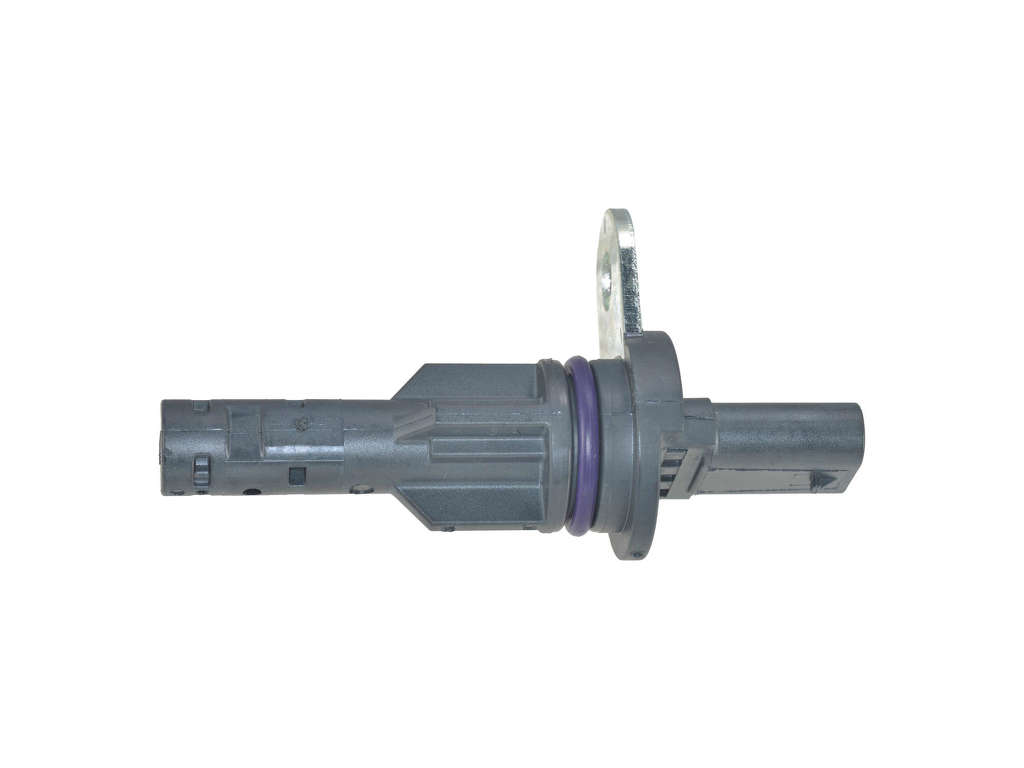
Est. part cost: $40-$120 - Failing Camshaft Position Sensor 🟡 Medium Probability → Shop Engine Camshaft Position Sensor The sensor provides the critical camshaft position signal to the PCM. It is a common failure item due to constant heat cycles. The 5.7L HEMI is known to be sensitive to the signal quality of aftermarket sensors, which can sometimes cause these codes even when new.
How to confirm: The sensor can be tested with a multimeter for proper voltage. However, failures are often intermittent (failing only when hot). Swapping with a known good sensor is a common diagnostic step. Given the single-cam design, a failure of this one sensor can trigger codes for either bank.
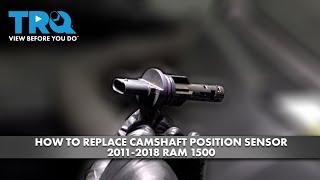
Typical fix: Replace the camshaft position sensor. Using an OEM Mopar part 🎬 See this walkthrough for replacing the camshaft position sensor. (Part No. 5149054AC) is highly recommended to avoid compatibility issues.
Est. part cost: $30-$90 - Stretched Timing Chain or Worn/Broken Guides ⚪ Low Probability → Shop Engine Timing Chain While generally robust, on higher mileage engines (typically over 100,000 miles) the timing chain can stretch. More commonly, the plastic timing chain guides can become brittle and break, allowing slack in the chain which causes a true timing correlation error.
How to confirm: This is a major job. A rattling noise from the front of the engine is a strong indicator. A mechanic can remove the valve covers to inspect the chain for slack or remove the timing cover for a full inspection. Finding plastic chunks in the oil pan during an oil change is another tell-tale sign.
Typical fix: Replace the timing chain, tensioners, and guides as a set. This is a labor-intensive repair, often costing over $1500.
Est. part cost: $200-$500
Rare But Worth Checking
- Failing Crankshaft Position Sensor: → Shop Engine Crankshaft Position Sensor The PCM compares cam and crank signals. If the crank sensor signal is erratic, it can falsely trigger a cam correlation code.
- Damaged Camshaft Tone Ring: → Shop Engine Camshaft The reluctor wheel (tone ring) on the camshaft itself can be damaged or, in rare cases, slip or 'walk' from its position, causing an incorrect signal to be sent by the sensor even if the mechanical timing is correct. This has been documented on similar Chrysler engines.
- PCM Software Glitch: While no specific TSB for P0018 was found, Chrysler has issued software updates for other timing-related codes on this powertrain to make the diagnostic logic less sensitive to momentary glitches. A dealer can check if any PCM updates are available for your vehicle.
- Failed Cam Phaser: → Shop Engine Timing Gear The VVT actuator, or cam phaser, can fail internally. It can get stuck in one position due to sludge or mechanical failure, which will prevent it from adjusting timing correctly and trigger a correlation code.
Diagnosis Steps
- Check the engine oil level and condition. If it is low, dirty, or the wrong viscosity, perform an oil and filter change with 5W-20 synthetic oil meeting Chrysler MS-6395 spec. Clear the codes and test drive.
- If the code returns, scan for any other accompanying trouble codes to help narrow the diagnosis.
- Visually inspect the wiring harness and connector for the camshaft position sensor and the VVT solenoid for any signs of damage, melting, or oil contamination.
- Using a capable scan tool, monitor the desired vs. actual camshaft position data for Bank 2. A significant, persistent deviation (e.g., more than 5-8 degrees) points to a mechanical or hydraulic issue.
- Remove and inspect the VVT solenoid on the passenger side of the engine. Check its screens for sludge or debris. Test its mechanical function with a 12V power source; you should hear a distinct click.
- Test the camshaft position sensor. If tests are inconclusive, consider replacing it with an OEM Mopar sensor (5149054AC), as they are a common failure item and aftermarket versions can cause issues.
- If a rattling noise is present and all other steps have failed, the issue is likely mechanical. A professional should inspect the timing chain, guides, and tensioners, which requires significant disassembly. Finding plastic in the oil pan is a strong confirmation.
Parts You'll Likely Need
- Engine Variable Valve Timing (VVT) Solenoid
(OEM #53032152AD)— This is the most common mechanical part to fail for this code. 🎬 Watch: A helpful video on replacing the variable valve timing solenoid. It gets clogged with oil sludge or fails electronically, preventing proper cam phasing. It has been superseded by part number 53032152AE.
Trusted brands: Mopar, Dorman
OEM price range: $70-$150
Aftermarket price range: $40-$80 - Camshaft Position Sensor
(OEM #5149054AC)— This sensor provides the primary signal for cam position. It's a common electronic failure point, and the HEMI engine is known to be sensitive to aftermarket sensor quality. This part number supersedes 5149054AB.
Trusted brands: Mopar, NTK, Delphi
OEM price range: $50-$90
Aftermarket price range: $30-$60 - Engine Oil and Filter — Correct oil viscosity (5W-20) and pressure are critical for the VVT system's operation. Old, dirty, or incorrect oil is a primary cause of VVT-related fault codes.
Trusted brands: Pennzoil, Mobil 1, Valvoline
OEM price range: $80-$120
Aftermarket price range: $50-$80
Related Codes That Often Appear With This One
- P0016 — This is the same correlation fault but for 'Bank 1'. Seeing both P0016 and P0018 together strongly points to a base mechanical timing problem (e.g., stretched chain) or a severe oil pressure/quality issue affecting the entire engine, as there is only one camshaft and timing chain.
- P0349 / P0345 — These are circuit-specific codes for the camshaft position sensor on Bank 2. If one of these is present with P0018, it strongly suggests the sensor itself or its wiring harness is the root cause.
- U1424 — This 'Implausible Engine Torque Signal' code often appears as a secondary fault. The transmission control module sets this code because it can't trust the torque data it's receiving from the engine computer due to the timing issue. A slipped tone ring has been documented as a cause for both P0018 and U1424 appearing together.
Platform-Specific Known Issues
- The notorious 'Hemi Tick' is often caused by failing MDS lifters, a problem related to the engine's oiling system. While not a direct cause of P0018, the underlying oil pressure or contamination issues that lead to lifter failure can also trigger VVT-related timing codes.
Mechanic-Grade Diagnostic Values
- VVT Solenoid Coil Resistance — expected: 10.3 Ohms ± 0.25 ohms at 68°F (20°C). Some sources state a wider range of 8 to 13.5 ohms is acceptable.. Failure: A reading of infinity (open circuit) or near-zero (short circuit) indicates a failed solenoid.
- Camshaft Position Sensor Supply Voltage — expected: 4.5 - 5.0 Volts at the sensor connector with key on, engine off.. Failure: No voltage or significantly low voltage points to a wiring or PCM issue, not a bad sensor.
- Camshaft Position Sensor Ground Circuit Resistance — expected: Less than 5.0 ohms between the ground pin at the sensor connector and the negative battery terminal.. Failure: Resistance higher than 5.0 ohms indicates a poor ground connection, which can cause erratic sensor signals.
- Scan Tool Live Data: Cam/Crank Difference — expected: At idle, the deviation between desired and actual cam position should be minimal, less than 2-3 degrees.. Failure: A large, steady deviation (e.g., more than 8-10 degrees) at idle points to a mechanical timing issue like a stretched chain or stuck phaser.
Scan Tool Commands That Help
- wiTECH (or equivalent professional scanner): VVT Solenoid Actuation Test — Use this bidirectional command to manually command the VVT solenoid on and off. If you can hear it click and see a change in engine RPM or live data for 'Actual Cam Position', the solenoid and its wiring are likely functional. If there's no response, it confirms a fault in the solenoid or its circuit.
- wiTECH (or equivalent professional scanner): VVT System Test — This is a guided diagnostic routine within the dealer tool. It automatically actuates the VVT system and monitors the response time and range of motion, helping to identify a slow or non-responsive phaser or solenoid without manual testing.
Wiring & Ground Locations
- G100 / G101 — Located on the left front of the engine block.. These are primary engine ground points. A loose or corroded connection here can create a poor ground for various engine sensors, including the camshaft position sensor, leading to intermittent or incorrect signals that can trigger correlation codes.
- Camshaft Position Sensor Connector — On the front timing cover of the engine, typically below the alternator.. This 3-wire connector is the primary point for testing the 5V supply, ground, and signal circuit for the camshaft sensor. Damage or oil contamination here is common.
- PCM Connector C2 (K900 Pin) — This is the sensor ground pin at the main Powertrain Control Module connector.. When diagnosing a potential bad ground, checking for continuity and low resistance (<5 ohms) between the ground pin at the sensor and this pin at the PCM connector confirms the integrity of the ground wire itself.
Real Owner Repair Stories
- YouTube video regarding a 2016 Jeep Cherokee (relevant FCA platform) (2016 Jeep Cherokee, engine not specified but diagnosis is relevant.) — Vehicle going into limp mode, reverse gear sometimes not working, Check Engine Light on with codes P0018 and U1424.
❌ Tried (didn't work) Initial diagnosis was inconclusive, pointing towards either a timing or transmission communication issue.
✅ What actually fixed it The tone ring on the camshaft had physically slipped out of its correct position. Even though it was off by only a few degrees, it was enough to cause the correlation error (P0018) and the implausible torque signal (U1424). The final repair was replacing the entire camshaft. - Reddit user in r/ram_trucks (2013 Ram 1500 5.7L, 180,000 miles) — Developed a bad engine tick and a misfire on cylinder 3.
❌ Tried (didn't work) The user was faced with repairing the high-mileage engine or replacing it.
✅ What actually fixed it The root cause was a failed lifter and a destroyed cam lobe on cylinder 3 (the 'Hemi tick'). The owner opted to replace the entire engine with a Mopar remanufactured unit rather than attempting a cam and lifter job on the high-mileage block. This highlights how a seemingly simple code can be a symptom of the infamous Hemi lifter failure. - NHTSA ODI #11574577 — An owner reported that the P0018 error code and engine warning light appeared repeatedly over several months, requiring multiple attempts at repair.
OEM Part Supersession History
53032152AC, 53032152AD, 68060345AA→53032152AE— Standard part revision and consolidation by Mopar. The part is listed as 'Multi-Displacement Solenoid' but functions as the VVT solenoid on these engines.
Heads up: The new part number 53032152AE is the correct service replacement for the earlier versions and is fully compatible.
Model Year Variations Within This Range
- 2011-2012 vs 2013+: For 2013, the 5.7L HEMI received a slight power increase (to 395 hp) and was paired with the new 8-speed automatic transmission later in the model year. While forum discussions mention potential changes to the crankshaft reluctor wheel (tone ring) and crank sensor around this time, one user who performed a swap confirmed a 2013 engine was a direct drop-in for a 2012 with no PCM or sensor changes needed, suggesting the core timing components remained compatible for this specific swap. However, when sourcing parts, it is critical to verify by VIN due to mid-year changes.
Diagnostic Flowchart
Other Known Issues on This Vehicle
Issues unrelated to this code that are worth knowing about as an owner of this generation:
- Camshaft/Lifter Failure ('HEMI Tick') 🔴 High → Shop Engine Camshaft — Common, especially on engines with over 70,000-100,000 miles, often attributed to extended idling and insufficient lubrication to the camshaft lobes at low RPM.
- Broken Exhaust Manifold Bolts 🟠 Medium — Extremely common. The cast iron manifolds warp from heat cycles, snapping the steel bolts holding them to the aluminum cylinder heads. This causes a ticking noise, often mistaken for lifter tick, that is loudest on a cold start and may quiet down as the engine warms up.
- Water Pump Failure 🟠 Medium → Shop Engine Water Pump — A frequent failure item, often identified by a coolant leak from the sweep hole or a grinding noise from the front of the engine.
- Totally Integrated Power Module (TIPM) Failure 🔴 High — More common on earlier years of this generation (2011-2013). A faulty TIPM can cause a wide range of bizarre electrical issues, from the fuel pump not running to the horn going off randomly. (Ref: While no direct recall for all models, it was the subject of a class-action lawsuit.)
Used vs. New Parts: Buying Guide for This Vehicle
When a used part is the smart pick: For this specific repair, used parts are generally not recommended for the common failure items. The only exception might be a major structural component like a timing cover if it were physically damaged, which is not a typical cause of P0018.
Donor-vehicle mileage cap: roughly under 75000 miles for the part to have meaningful remaining life.
What to inspect on the donor part:
- If considering a used VVT solenoid, inspect the mesh screens for any tears or embedded sludge.
- For any used electronic sensor, ensure the connector pins are straight, clean, and free of corrosion.
- Avoid parts from engines that show heavy external oil leaks or signs of severe overheating (discolored plastic, melted connectors).
OEM-only on this vehicle (don't cheap out):
- Camshaft Position Sensor: The 5.7L HEMI is notoriously sensitive to the signal from this sensor. Aftermarket versions are widely reported in forums to be dead-on-arrival, fail quickly, or cause persistent codes even when new. Using an OEM Mopar sensor (5149054AC) is critical for a reliable repair.
- VVT Solenoid: While some aftermarket brands exist, the OEM Mopar solenoid (53032152AE) is the most reliable choice. Given the labor involved if the part fails prematurely, the higher cost of the OEM part is often justified.
Aftermarket brands forum-validated for this vehicle:
- NTK / Delphi: For sensors, if an OEM part is unavailable, NTK and Delphi are reputable OEM suppliers and are generally considered the next-best option.
Brands owners have reported issues with on this vehicle:
- Unbranded / 'White-box' sensors: Avoid generic, no-name sensors from online marketplaces. They are a common source of persistent diagnostic headaches for this specific engine and code.
Real Owner Stories
Aggregated from forums and TSBs cited above. Mileages and costs reflect what owners reported in those sources.
2017 Ram 1500 5.7L HEMI
Symptoms: Owner reported an exhaust tick on cold starts specifically on the passenger side.
What fixed it: Replacing warped OEM manifolds with aftermarket headers to prevent recurrence of warped manifolds and broken bolts.
Source hint: DodgeForum.com - In a discussion about 'Best fix for exhaust manifold leaks'
2016 Jeep Cherokee (Related Engine Family)
Symptoms: Vehicle presented with P0018 and U1424 codes; previously misdiagnosed as a phaser issue.
What fixed it: Repairing a slightly slipped tone ring on the exhaust camshaft.
Source hint: iATN (International Automotive Technicians Network) documentation
2017 Ram 1500 5.7L HEMI
Symptoms: Engine ticking after running for short periods of time.
What fixed it: Diagnosis of either lifter failure or exhaust bolts/warped manifolds.
Source hint: RamForum.com - A thread titled '2017 ram 1500 5.7 hemi ticking after running for short periods of time'
2011-2018 Ram 1500 5.7L HEMI — ~100000 miles
Symptoms: Rattling noise from the front of the engine and finding plastic chunks in the oil pan.
What fixed it: Replacing the timing chain, tensioners, and guides as a set.
Source hint: Article Context - Common Causes: Stretched Timing Chain or Worn/Broken Guides
Ram 1500 Owner
Symptoms: An owner reported in NHTSA ODI #11574577 that the P0018 error code and engine warning light appeared on 04/20/23 and again on 06/07/23, leading them to take the vehicle in for repair.
Source hint: NHTSA ODI #11574577
Related OBD-II Codes
Frequently Asked Questions
Can using the wrong oil weight in my 5.7L HEMI cause the P0018 code?
I'm hearing a rattling noise from the front of my Ram 1500 engine on startup along with the P0018 code. What does this mean?
Should I use an aftermarket camshaft position sensor to fix this code?
Is the 'Hemi Tick' related to the P0018 code?
How can I tell if my VVT solenoid is the problem?
Helpful Videos
We Have This Part in Stock


The information in this article is provided for general reference and educational purposes only. Vehicle specifications, procedures, and part compatibility can vary by production date, trim level, and region. Always consult your vehicle's factory service manual and verify part numbers before purchasing or performing repairs. Safety-critical components such as airbags, seat belts, and braking systems should be installed by a qualified professional.
- Ram 1500:
- 🧭 Diagnostic Flowchart
- 🎬 Helpful Videos
- 🛍️ Shop This Part
- What's Unique About the 2011-2018 Ram 1500
- Symptoms You May Notice
- Most Likely Causes
- Rare But Worth Checking
- Diagnosis Steps
- Parts You'll Likely Need
- Related Codes That Often Appear With This One
- Platform-Specific Known Issues
- Mechanic-Grade Diagnostic Values
- Scan Tool Commands That Help
- Wiring & Ground Locations
- Real Owner Repair Stories
- OEM Part Supersession History
- Model Year Variations Within This Range
- Other Known Issues on This Vehicle
- Used vs. New Parts: Buying Guide for This Vehicle
- Real Owner Stories
- 2017 Ram 1500 5.7L HEMI
- 2016 Jeep Cherokee (Related Engine Family)
- 2017 Ram 1500 5.7L HEMI
- 2011-2018 Ram 1500 5.7L HEMI — ~100000 miles
- Ram 1500 Owner
- Related OBD-II Codes
- Frequently Asked Questions
- 🎟️ Get 5% Off