

P0019 on 2015-2019 Ford Fiesta: Causes for a Confusing Camshaft Correlation Code
P0019 is very unusual for a Fiesta as it refers to 'Bank 2', which the engine doesn't have. However, Ford service bulletins confirm it points to a Variable Camshaft Timing (VCT) issue, most often a sticking VCT solenoid due to dirty oil. Start with an oil change and inspect the VCT solenoids. TSB SSM 50067 suggests cycling the solenoid with a scan tool to clear debris before replacement.
- Do not be alarmed by the 'Bank 2' definition of P0019; your Ford Fiesta does not have a Bank 2. Treat this as a general VCT system fault.
- The first and most important diagnostic step is to check your engine oil. Low or dirty oil is a primary cause of this issue.
- According to Ford, the most likely part to fail is the VCT solenoid, which can get stuck. This is a relatively inexpensive and accessible part to replace.
- Only suspect a more serious mechanical issue like a stretched timing belt if an oil change and VCT solenoid replacement do not resolve the code.
What's Unique About the 2015-2019 Ford FIESTA
The core confusion with P0019 on a Fiesta is that the vehicle physically lacks a 'Bank 2'. This code should not appear. However, Ford has issued multiple Technical Service Bulletins (TSBs) that group P0019 with all other camshaft correlation codes (P0016, P0017, etc.) and attribute them to a common cause across many Ford engines: sticking VCT solenoids. This means that if you see P0019, you should ignore the 'Bank 2' reference and diagnose the Variable Camshaft Timing (VCT) system as you would for a Bank 1 code, such as P0017.
Diagnostic Flowchart
Tap your situation to follow the diagnostic path that matches what you're seeing on this vehicle.
Symptoms You May Notice
- Check Engine Light is on
- Rough or fluctuating idle
- Engine hesitation or stumbling on acceleration
- Loss of engine power
- Reduced fuel economy
- Engine may be hard to start or may stall
- Engine rattling or knocking noises, especially at idle
- Replacing the crankshaft position sensor when the code specifically points to a camshaft correlation issue.
- Replacing timing components (an expensive job) before first checking for low/dirty oil or a faulty VCT solenoid, which are far more common and cheaper to fix.
- Confusing the 'Bank 2' designation and attempting to find a non-existent sensor or component.
Most Likely Causes
- Low or Dirty Engine Oil 🔴 High Probability The VCT system is hydraulic and relies on clean oil at the proper pressure. Ford TSBs cite 'small debris' as a primary cause of VCT issues, which is directly related to oil condition and maintenance intervals.
How to confirm: Check the oil level on the dipstick and inspect its color and consistency. If it is low, black, or sludgy, it needs to be changed. Even if the oil looks clean on the dipstick, it may still contain contaminants causing the issue.
Typical fix: Perform a complete engine oil and filter change using the manufacturer-specified grade of oil (e.g., 5W-20 for the 1.6L). Clear codes and re-test.
Est. part cost: $30-$70 - Sticking or Failed VCT Solenoid 🔴 High Probability Multiple Ford TSBs (SSM 50067, SSM 48423, SSM 47170) explicitly state that this family of codes may be due to small debris causing the VCT solenoid to stick. This is the most cited cause in both official documents and owner forums.
How to confirm: Use a capable scan tool to perform pinpoint test HK12, which cycles the solenoid 10 times to attempt to clear debris. A more straightforward method is to swap the exhaust VCT solenoid with the intake solenoid (they are identical on the 1.6L). If the code changes to P0016 (Intake Cam), the solenoid is faulty. You can also remove the solenoid and test it by applying 12V power to see if the internal plunger actuates with an audible click.
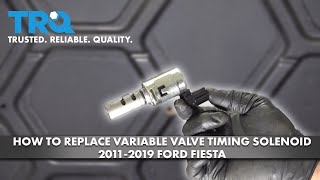
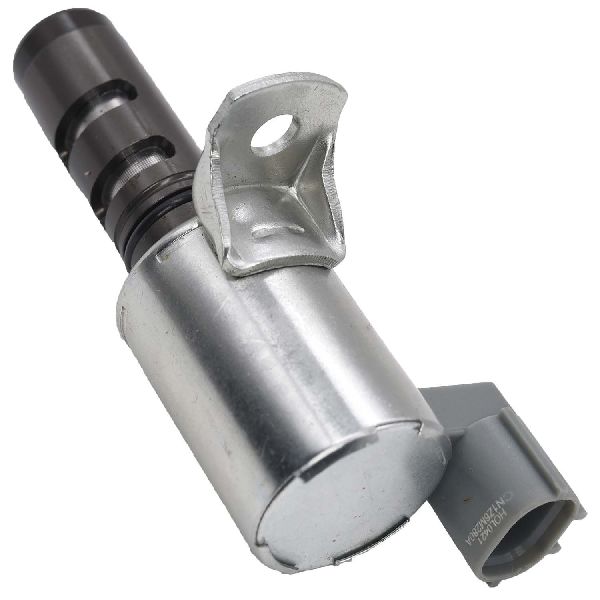
Typical fix: Replace the faulty VCT solenoid. 🎬 Watch: How to replace the VVT solenoid on your Fiesta. It is highly recommended to change the engine oil and filter at the same time to prevent the new solenoid from failing due to the same debris. Some owners report success simply by removing and cleaning the solenoid with brake cleaner.
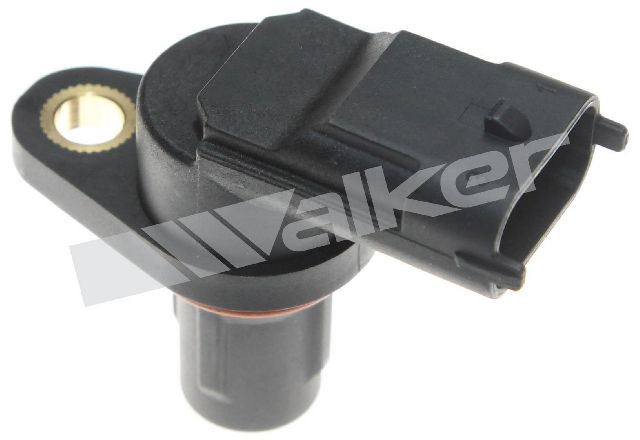
Est. part cost: $40-$90 - Failed Camshaft Position Sensor 🟡 Medium Probability → Shop Engine Camshaft Position Sensor Sensors can fail over time due to heat cycles and vibration, sending incorrect data to the PCM, which then triggers a false correlation code.
How to confirm: Test the sensor's voltage output with a multimeter to ensure it is within the specifications found in a repair manual. Check for a consistent signal with an oscilloscope. A simpler, though less definitive, test is to swap it with the intake camshaft sensor (if identical) and see if the code changes.
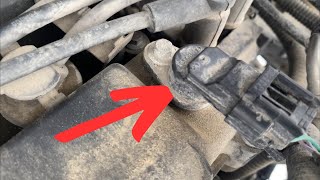
Typical fix: Replace the camshaft position sensor for the exhaust camshaft. 🎬 See this guide to locate and replace your camshaft sensors.
Est. part cost: $30-$60 - Stretched Timing Belt or Failed Tensioner ⚪ Low Probability → Shop Engine Timing Chain The 1.6L engine uses a timing belt that has a finite service life. The 1.0L EcoBoost uses a 'wet belt' that runs in oil. If not replaced at the recommended interval (typically around 100,000-150,000 miles for the 1.6L), it can stretch or the tensioner can weaken, causing timing to become inaccurate.
How to confirm: This requires physical inspection of the timing belt and its components, which involves significant engine disassembly. Check for slack in the belt, worn or cracked teeth, or a weak tensioner pulley. This is typically diagnosed after all sensor and solenoid possibilities are exhausted.
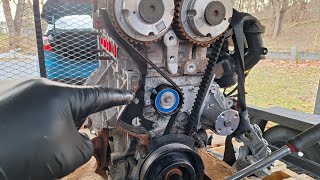
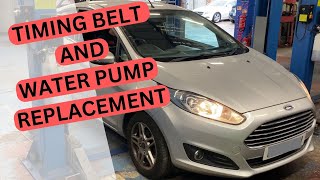
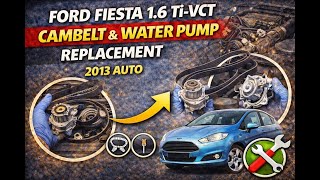
Typical fix: Replace the timing belt, tensioner, and water pump as a kit. 🎬 Watch: A complete walkthrough of the timing belt replacement process. This is a complex job best left to professionals.
Est. part cost: $150-$250
Rare But Worth Checking
- Damaged VCT Phaser: The VCT phaser (the gear on the end of the camshaft) can fail mechanically, becoming stuck or developing internal burrs that prevent proper movement. This is less common than a solenoid or oil issue but can happen on higher mileage engines.
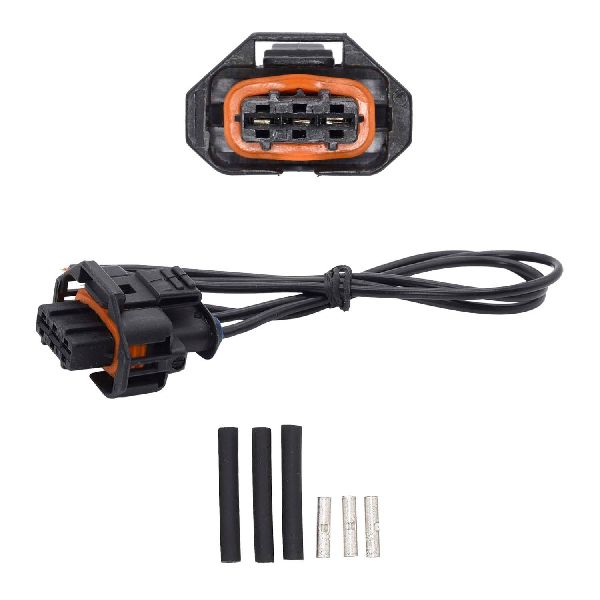
- Wiring or Connector Issue: Frayed wires or a corroded connector for the VCT solenoid or camshaft position sensor can cause an intermittent signal, leading to the code. A visual inspection and wiggle test of the harness is recommended.
- Failed Powertrain Control Module (PCM): → Shop Engine Control Module (ECM) This is extremely rare and should only be considered after all other possibilities have been exhaustively ruled out.
Diagnosis Steps
- Confirm the code with a scanner. Note that P0019 is for 'Bank 2' and the Fiesta engine only has Bank 1. Acknowledge this is an anomaly but treat it as a Bank 1 exhaust cam issue.
- Check the engine oil level and condition. If low, dirty, or overdue for a change, replace the oil and filter with the correct Ford-spec oil. Clear the code and drive to see if it returns.
- If the code returns, inspect the wiring and connector for the exhaust VCT solenoid and the exhaust camshaft position sensor for any visible damage or corrosion.
- Using a scan tool with bi-directional controls, follow the procedure in TSB SSM 50067: perform pinpoint test HK12 to cycle the affected VCT solenoid 10 times to attempt to clear debris. Clear codes and re-test.
- If the code persists, perform a practical swap test: Exchange the exhaust VCT solenoid with the intake VCT solenoid. Clear codes and run the engine. If the code changes to P0016 (for the intake cam), the solenoid you moved is faulty and needs replacement.
- If solenoids and wiring are good, test the camshaft position sensor itself, potentially by swapping it with the intake sensor.
- If all electronic components test good, the problem is likely mechanical. The next step is to inspect the timing belt for stretching, damage, or improper tension. This is an advanced repair and may require a professional.
- As a final, rare possibility, inspect the VCT phaser for damage or sticking, which may require valve cover removal.
Parts You'll Likely Need
- Engine Variable Valve Timing (VVT) Solenoid
(OEM #CN1Z-6M280-F)— This is the most common cause of VCT-related codes on this platform, as identified by Ford's own service bulletins. It gets stuck due to oil debris. This part number supersedes CN1Z-6M280-A and CN1Z-6M280-C.
Trusted brands: Motorcraft, Dorman, Standard Motor Products (SMP), TRQ
OEM price range: $60-$80
Aftermarket price range: $30-$60 - Engine Camshaft Position Sensor
(OEM #4M5Z-6B288-A)— If the solenoid is not the issue, the sensor providing the position data to the PCM could be faulty.
Trusted brands: Motorcraft, Bosch, Denso, NTK
OEM price range: $35-$60
Aftermarket price range: $25-$45 - Timing Belt Kit — If simpler fixes fail and the vehicle has high mileage, a stretched timing belt is the likely mechanical cause of the correlation error.
Trusted brands: Gates, Continental, Dayco
OEM price range: $150-$200
Related Codes That Often Appear With This One
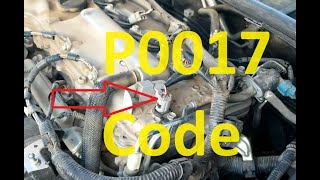
- P0017 — Crankshaft Position - Camshaft Position Correlation (Bank 1 Sensor B). This is the 'correct' code for an exhaust cam timing issue on a Fiesta. Seeing P0019 instead of or with P0017 points to the same underlying VCT system problem.
- P0016 — Crankshaft Position - Camshaft Position Correlation (Bank 1 Sensor A). If both intake and exhaust timing are off, you may see both codes, pointing to a more significant issue like a stretched timing belt or low oil pressure affecting the entire VCT system.
- P0300, P0305, P0306, P0307, P0308 — In V-type engines where P0019 is a valid code, the timing issue on one bank can cause misfires on all cylinders of that bank. While not directly applicable to the Fiesta's inline engine, it shows the relationship between timing codes and misfire codes.
Technical Service Bulletins (TSBs) & Recalls
- SSM 50067: VCT codes due to sticking solenoid from debris.
- SSM 48423: VCT codes due to sticking solenoid from debris.
- SSM 54366: VCT codes, references pinpoint tests for diagnosis.
- SSM 47170: VCT codes due to sticking solenoid from debris.
Platform-Specific Known Issues
- Ford Technical Service Bulletin #SSM 50067 states that various 2015-2021 Ford vehicles may show codes like P0019 due to 'small debris causing the VCT solenoid to stick.' It specifically recommends running pinpoint test HK12 to cycle the solenoid 10 times to try and clear it before replacement.
- Similar bulletins #SSM 48423, #SSM 54366, and #SSM 47170 reiterate the same issue, advising against component replacement before performing the diagnostic test to clear debris. [pass 1]
- source — A Reddit user with a P0019 code on a different vehicle noted that after two oil changes didn't fix the issue, they removed and cleaned a 'gunked up' VVT solenoid with Sea Foam. While it didn't immediately solve their problem, it highlights a common DIY step before purchasing new parts.
- source — Multiple YouTube videos demonstrate the replacement of VCT solenoids on the Ford Fiesta 1.6L engine. The process involves removing the engine cover, disconnecting the electrical connector, removing a single 8mm bolt, and carefully wiggling the solenoid out of the valve cover. Lubricating the O-ring on the new solenoid with fresh oil is recommended for easier installation.
Mechanic-Grade Diagnostic Values
- VCT Solenoid Internal Resistance — expected: Conflicting reports exist. One source suggests 6.9-7.9 Ohms at 68°F (20°C), while forum users report a specification of 8-12 Ohms, with solenoids reading 7.9-8.0 Ohms being considered faulty.. Failure: A reading of 0 ohms (short), infinite resistance (open circuit), or a value outside the expected range.
- Camshaft Position Sensor (3-wire Hall Effect) Signal Voltage — expected: With the key on and engine off, the signal wire should read approximately 4.8-5.0 volts relative to ground.. Failure: When a ferrous metal object (like a socket) is passed in front of the sensor, the voltage should drop to 0 volts. If the voltage does not switch, the sensor is likely faulty.
- Camshaft Position Sensor (3-wire Hall Effect) Power and Ground Check — expected: With key on, engine off: The power supply pin should have ~5V. The ground pin, when tested with the red multimeter probe on the positive battery terminal, should read battery voltage (~12.6V).. Failure: Absence of 5V power or a bad ground reading indicates a wiring or PCM issue, not a faulty sensor.
Scan Tool Commands That Help
- Ford IDS (or equivalent professional scanner): Pinpoint Test HK11 / HK12 — This is a Ford-specified diagnostic routine mentioned in TSBs SSM 50067 and SSM 46450. It commands the VCT solenoid to cycle on and off 10 times, which can dislodge small debris causing the solenoid to stick. It should be used after an oil change but before replacing the solenoid.
Wiring & Ground Locations
- Main Engine Ground Strap — A heavy black cable that attaches to the vehicle body under the battery tray and connects to a bolt on the top of the transmission housing or bell housing.. A poor engine ground can cause erratic voltage signals for all engine sensors, including the camshaft and crankshaft position sensors, leading to false correlation codes.
- ECM/PCM Ground — Located on the frame rail below the air filter box.. This is the direct ground reference for the Powertrain Control Module. Corrosion or a loose connection here can cause unpredictable PCM behavior and incorrect interpretation of sensor data.
Real Owner Repair Stories
- Ford-Trucks.com forum user (2011 Ford F-350 6.2L (Note: Different vehicle, but same code and VCT system principle)) — P0019 code plus multiple misfire codes (P0300, P0305-P0308) and rough idle.
❌ Tried (didn't work) Initial diagnosis confirmed the timing chain had not jumped a tooth.
✅ What actually fixed it The VCT phaser (sprocket assembly) was removed from the camshaft, disassembled, cleaned of suspected internal burrs or debris, and reinstalled. This resolved the codes and rough running, suggesting the phaser was mechanically stuck despite the timing appearing correct at rest.
When the Usual Fixes Don't Work
- While an oil and filter change or VCT solenoid replacement are the most common and successful fixes for P0019, forum discussions and mechanic reports show instances where these steps do not resolve the code. In these more stubborn cases, the root cause is often mechanical. For the 1.6L engine, this could be a stretched timing belt that has not yet skipped a tooth but has enough slack to create a correlation error. For the 1.0L EcoBoost, it is frequently due to oil pressure loss from a degrading wet belt. In very rare cases across Ford engines, the VCT phaser itself can become mechanically jammed with debris, a fault that is only found by removing and disassembling the phaser.
OEM Part Supersession History
CN1Z-6M280-A, CN1Z-6M280-C, CN1Z-6M280-H→CN1Z-6M280-F— Part revision and improvement by the manufacturer.
Heads up: The newer part number is the correct service replacement for the older versions. Using old stock or used older part numbers is not recommended.
Model Year Variations Within This Range
- 2015-2019 (with 1.0L EcoBoost I3 engine): The 1.0L EcoBoost engine uses a timing belt that runs in oil (a 'wet belt'). This design is known to have a specific failure mode where the belt material degrades over time, contaminating the engine oil with rubber particles. This debris can clog the oil pump pickup tube, starving the VCT system of oil pressure and triggering correlation codes like P0019. This is a distinct cause not present on the 1.6L Ti-VCT engine, which uses a traditional dry timing belt.
Helpful Videos
We Have This Part in Stock


The information in this article is provided for general reference and educational purposes only. Vehicle specifications, procedures, and part compatibility can vary by production date, trim level, and region. Always consult your vehicle's factory service manual and verify part numbers before purchasing or performing repairs. Safety-critical components such as airbags, seat belts, and braking systems should be installed by a qualified professional.
- Ford FIESTA:
- 🧭 Diagnostic Flowchart
- 🎬 Helpful Videos
- 🛍️ Shop This Part
- What's Unique About the 2015-2019 Ford FIESTA
- Symptoms You May Notice
- Most Likely Causes
- Rare But Worth Checking
- Diagnosis Steps
- Parts You'll Likely Need
- Related Codes That Often Appear With This One
- Technical Service Bulletins (TSBs) & Recalls
- Platform-Specific Known Issues
- Mechanic-Grade Diagnostic Values
- Scan Tool Commands That Help
- Wiring & Ground Locations
- Real Owner Repair Stories
- When the Usual Fixes Don't Work
- OEM Part Supersession History
- Model Year Variations Within This Range
- 🎟️ Get 5% Off